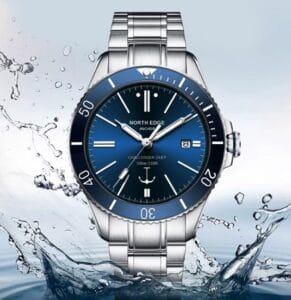
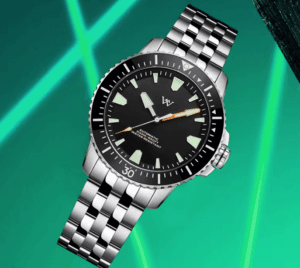
North Edge is best known for digital instruments—altimeters, hiking watches, and rugged smart-adjacent tools built from plastic and aluminum rather than steel. The North Edge Anchor marks a clear departure from that history. This is North Edge’s attempt to step into the mechanical watch space with a fully stainless-steel automatic piece, complete with a ceramic bezel and synthetic sapphire crystal. It’s a bold move, and one that deserves to be evaluated on its own terms.
The Anchor positions itself visually as a diver but functionally as something more ambiguous. At around $85 before tax, it offers a specification list that reads impressively on paper. In practice, the experience is more nuanced. Some elements feel genuinely well executed, while others reveal the growing pains of a brand still learning the mechanical language. On the wrist, it’s large, heavy, and unmistakably present—yet not without charm. This is a watch that feels fresh, even if it doesn’t feel fully resolved. Explore other diver watches we reviewed.

Design & Case
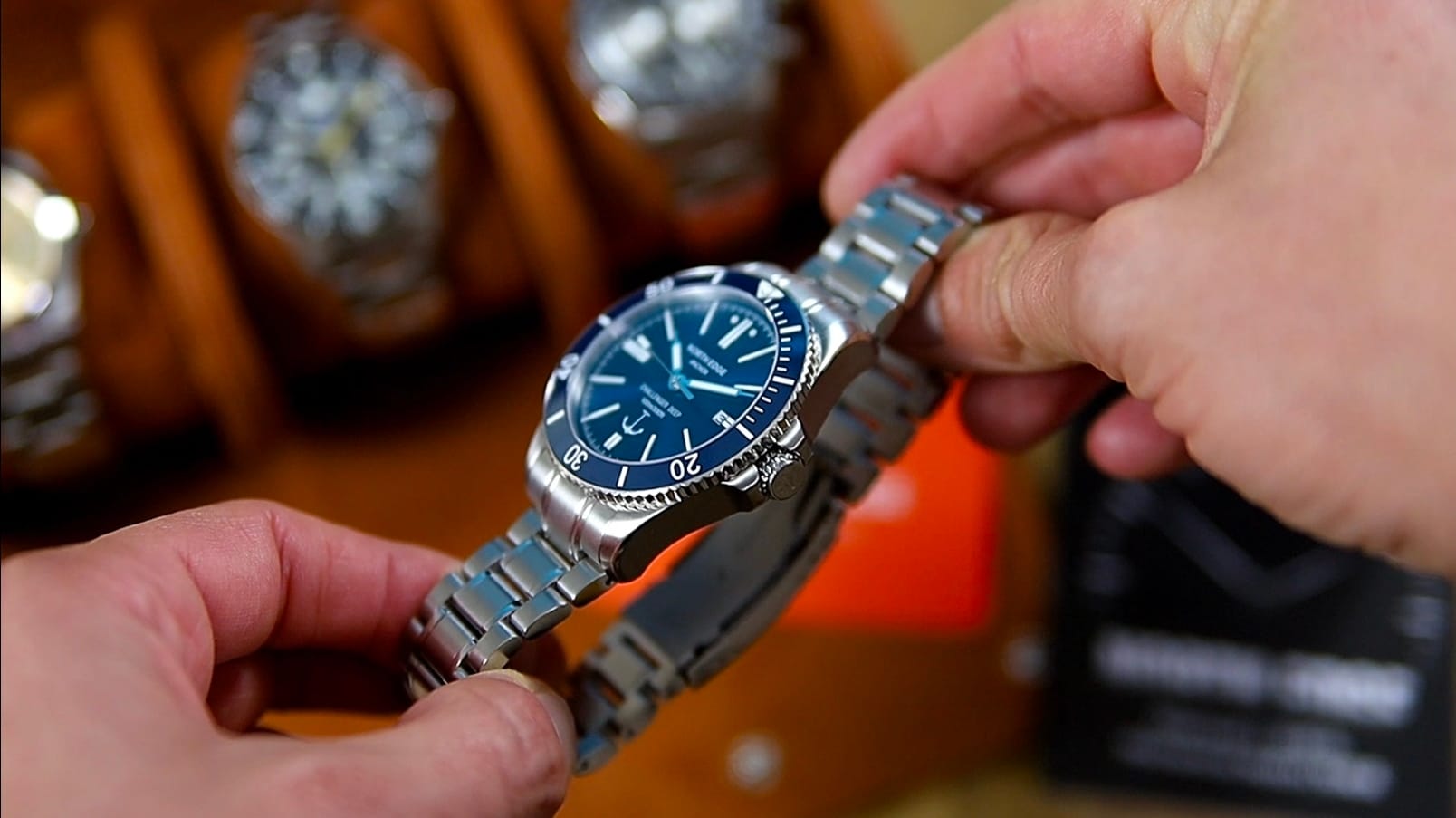
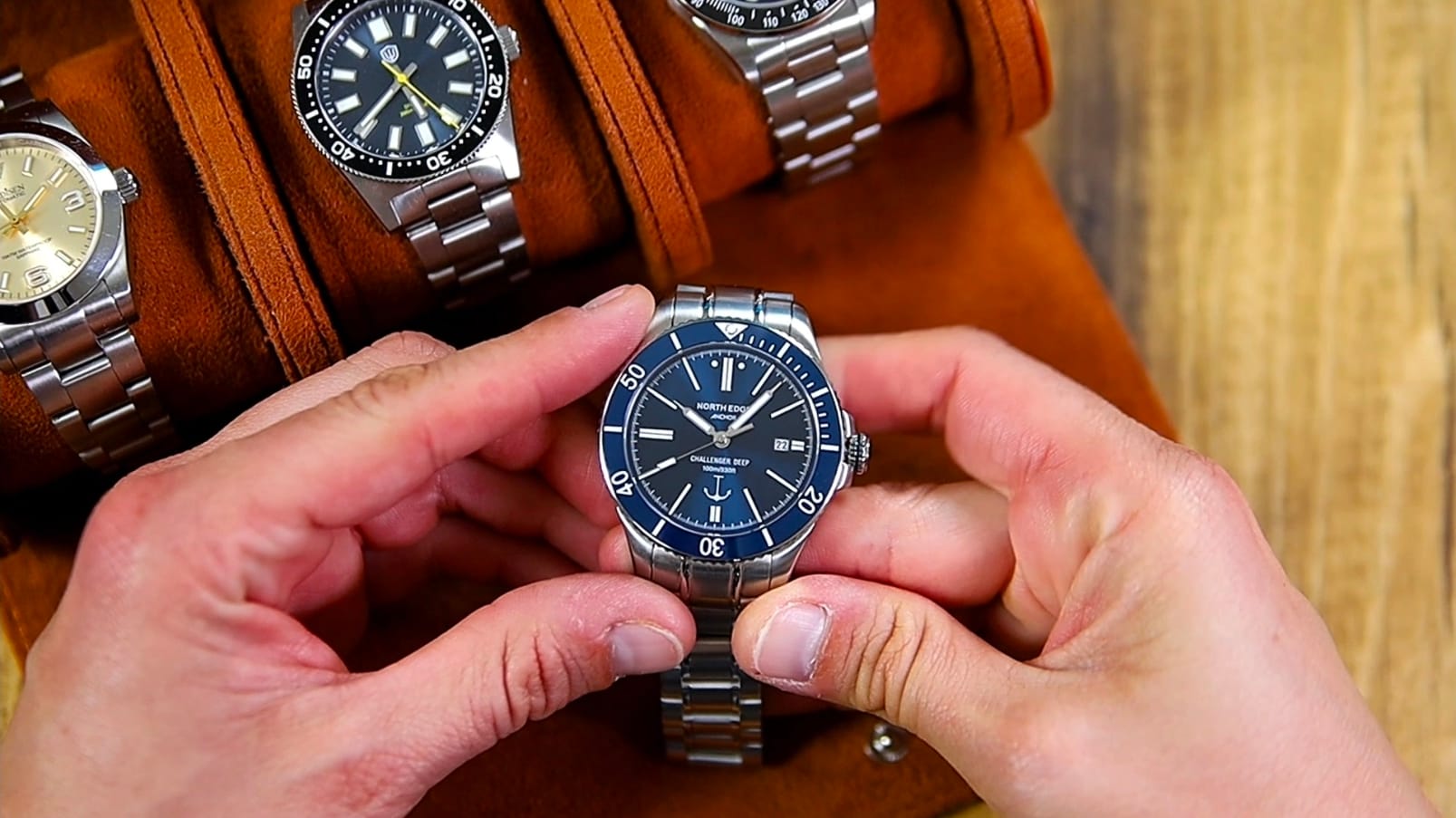
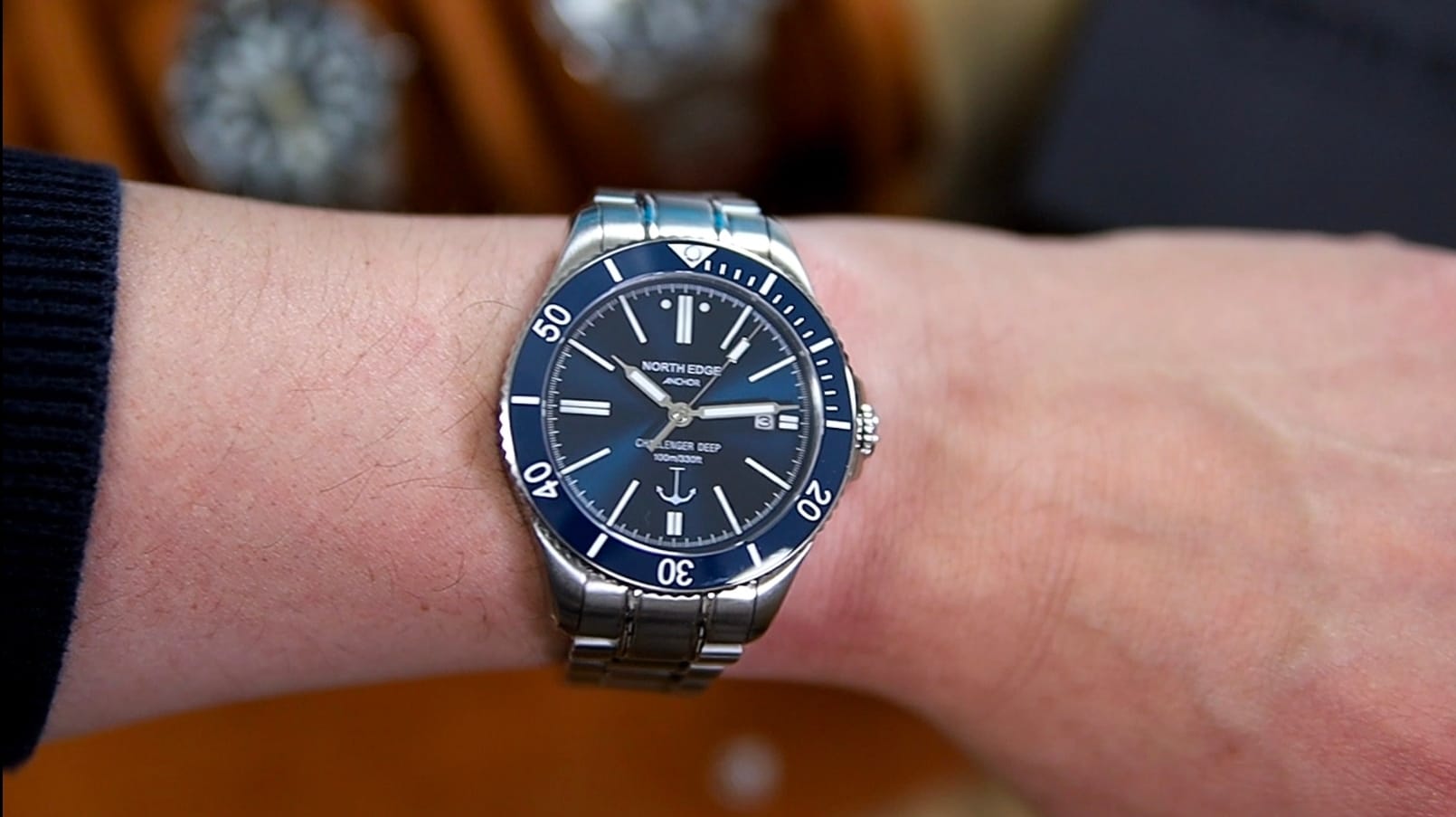
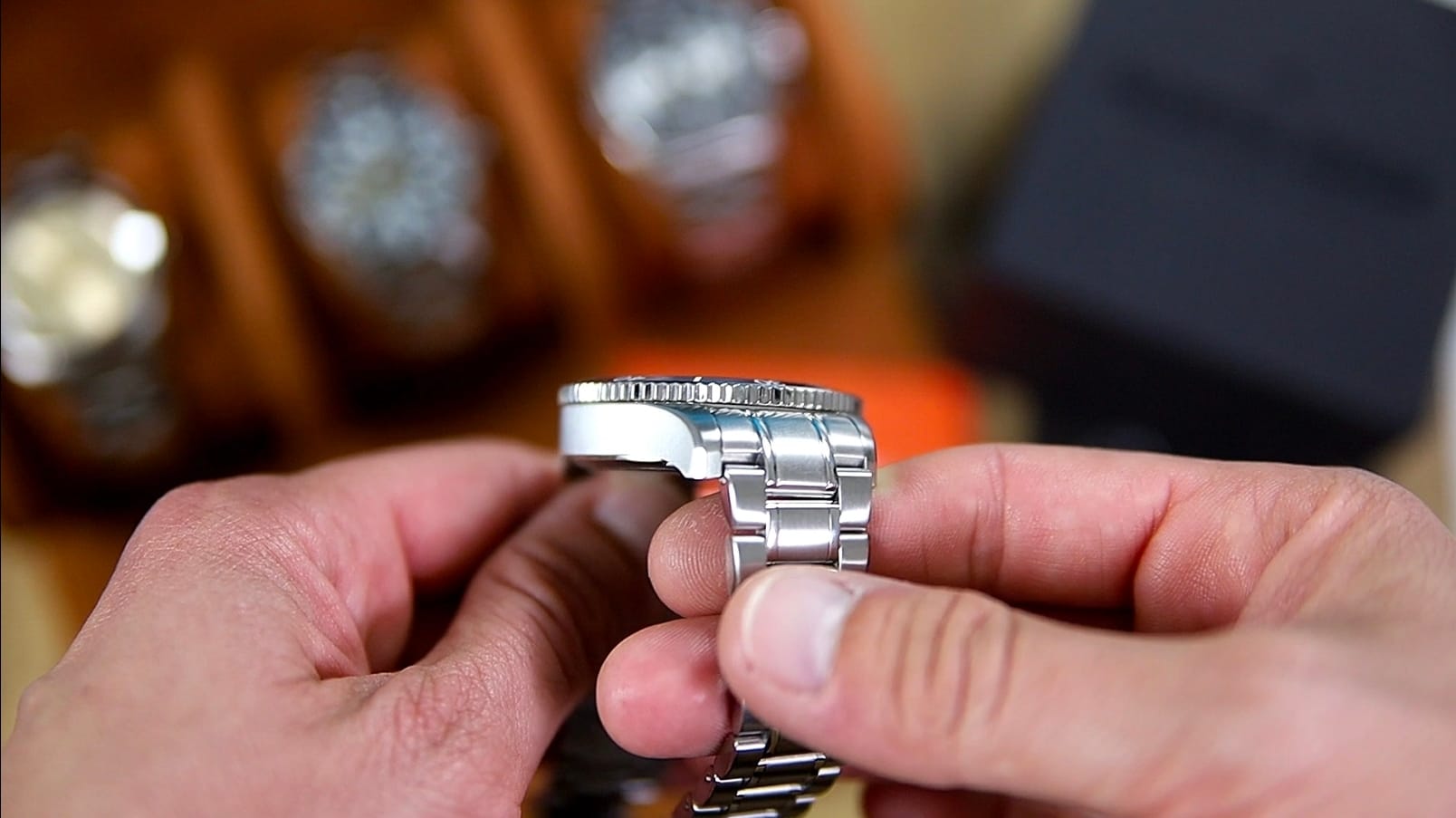
The Anchor does not hide its scale. The case measures 41.7 mm in diameter, 12.44 mm thick, and—due to protruding male end links—a substantial 55.5 mm lug-to-lug. Weight is equally assertive at 166 g, giving the watch undeniable heft. On paper, these dimensions sound extreme, yet on a 6.5-inch wrist, the aggressive downturn of the lugs allows it to sit flatter than expected, with only minimal overhang.
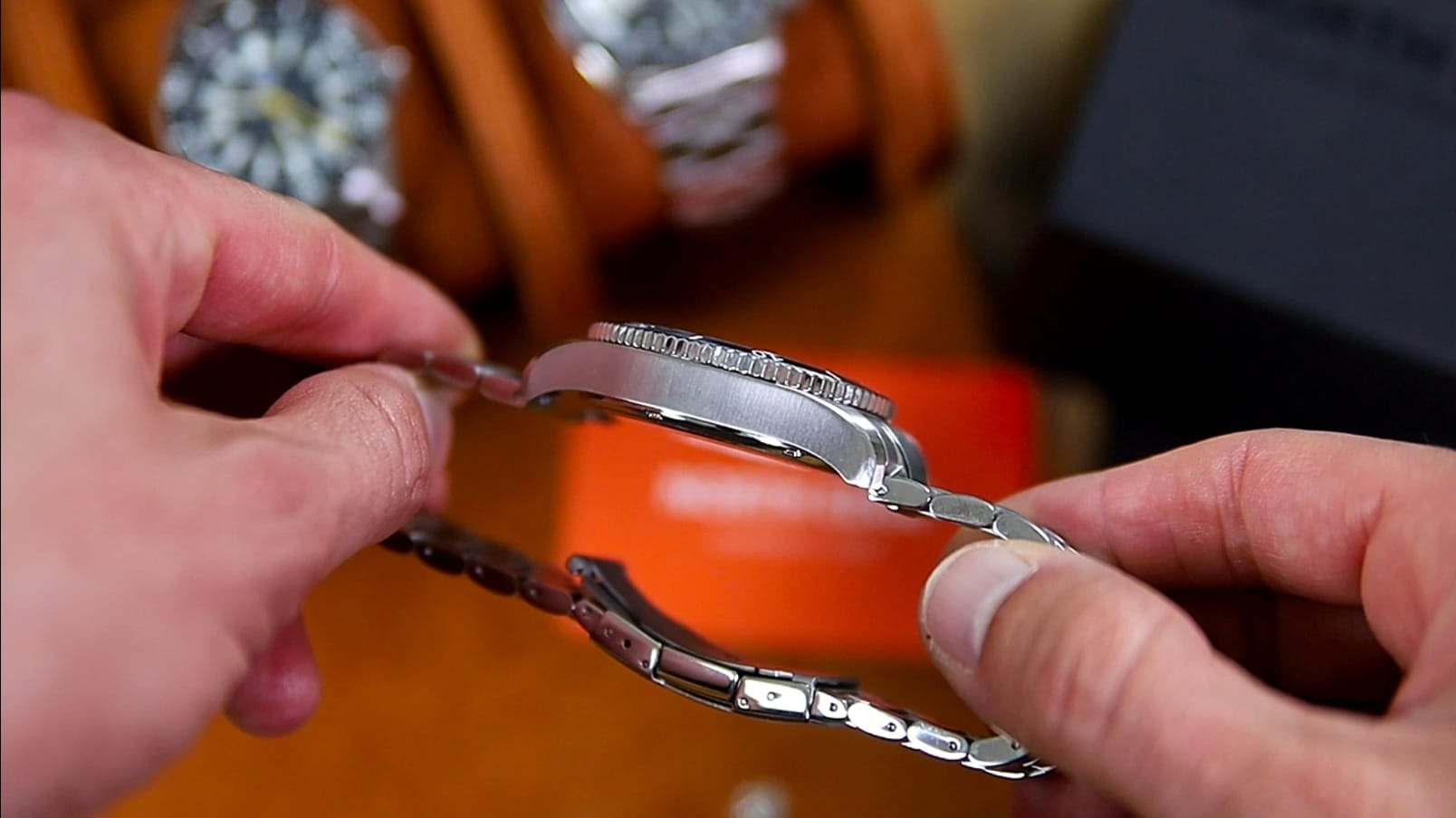
The case finishing is distinctive. The flanks are vertically brushed, an unusual choice that absorbs glare and emphasizes the height of the mid-case. As the case transitions into the lugs, polished bevels flare outward, creating sharp contrast against the radial brushing on the lug tops. There is some visual dissonance between the brushing direction of the lugs and the end links, though this feels more like a quirk than a structural flaw.
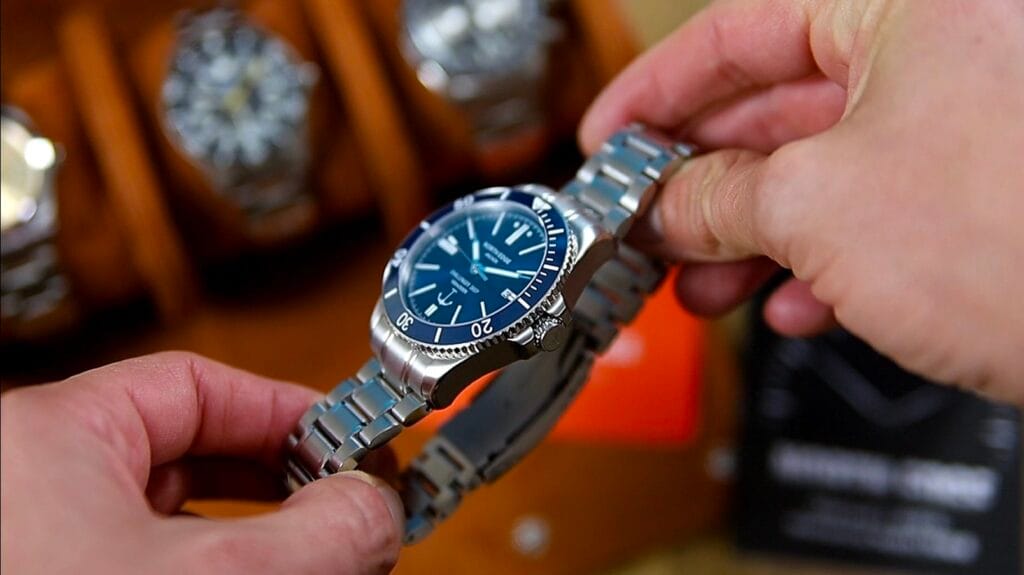
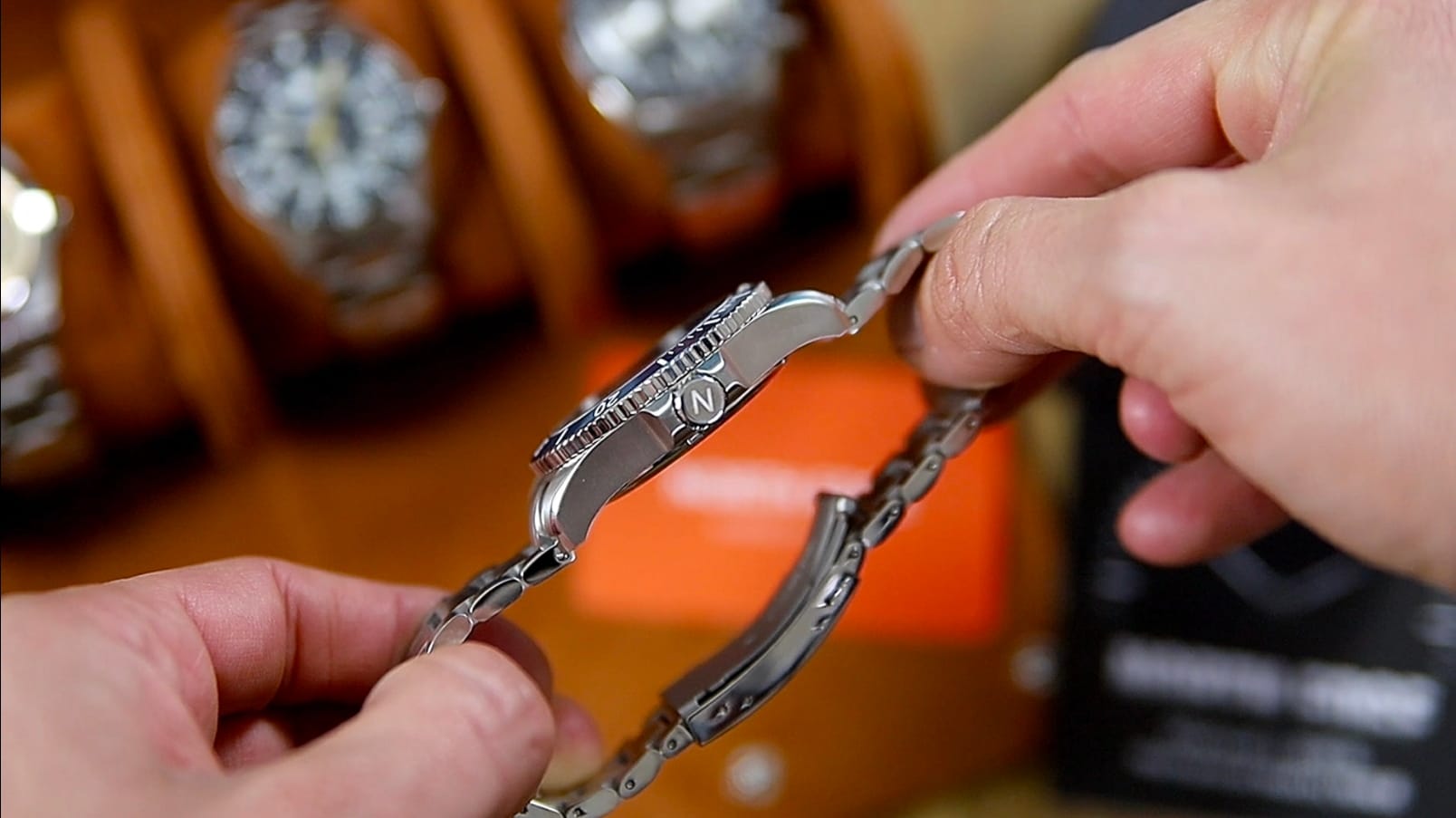
Up top sits a tall stainless-steel bezel fitted with a ceramic insert. The bezel’s coin edge is broad, deep, and highly polished, providing both excellent grip and bright light play. There is a slight overhang—less than a millimeter—which aids usability. At three o’clock, a 6.8 mm signed crown features two-part knurling and a contrasting blue sleeve through its midsection. It’s proportionally sound, though visually somewhat diminished by the towering case wall. Semi-guards protect it well, and tactility is positive, but it remains a push-pull crown—a notable compromise for a watch styled as a diver.
Movement & Crown
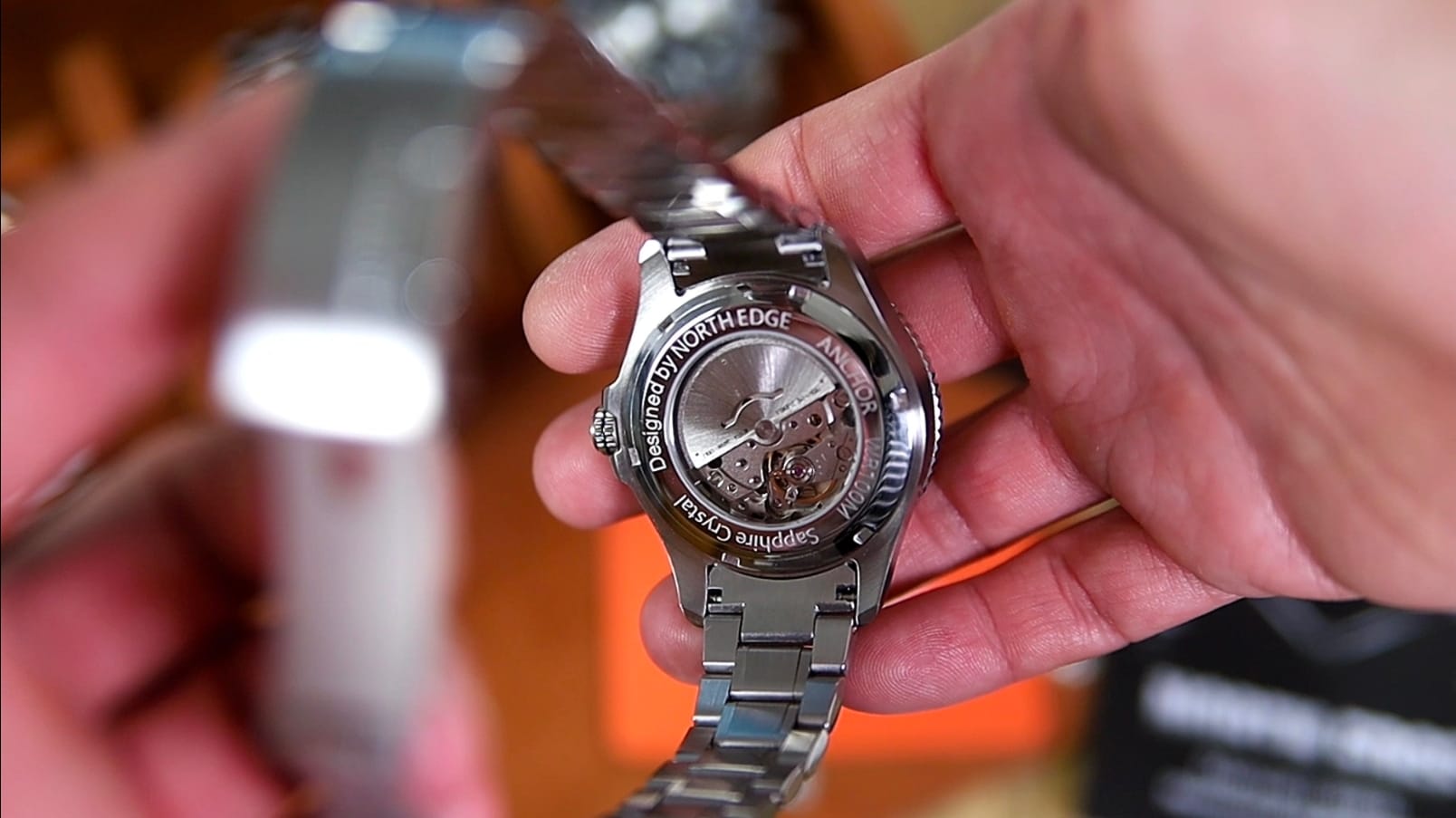
Inside the Anchor is the Miyota 8215 automatic movement, a familiar Japanese workhorse. It runs with 21 jewels, beats at 21,600 vibrations per hour, and offers a power reserve of roughly 42 hours. Accuracy is typically rated within ±20 to ±40 seconds per day, depending on regulation. It’s not a glamorous caliber, but it is proven, robust, and easy to service—an appropriate choice for a brand entering the mechanical space.
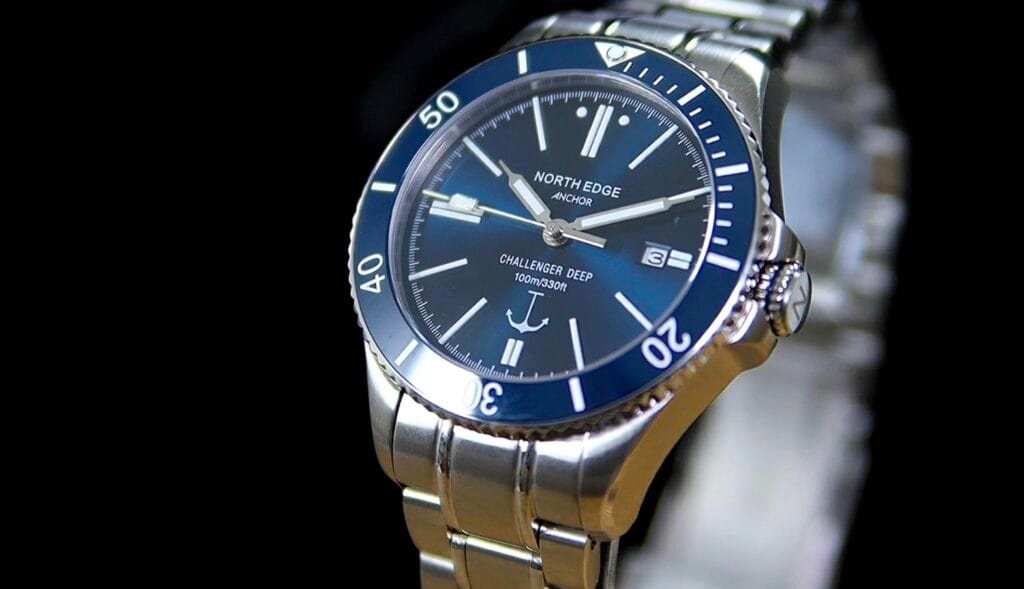
Crown interaction is straightforward. Despite the watch’s diver-like appearance, the crown is push-pull rather than screw-down, which immediately reframes expectations. Operation is positive, and the semi-guards provide some protection, but the lack of a screw-down mechanism stands out when paired with a rotating dive bezel and 100 m depth rating. This feels like a design compromise rather than an oversight—likely balancing cost, thickness, and ease of use.
Viewed through the exhibition caseback, the Miyota 8215 is clearly visible behind a mineral crystal window. The presentation reinforces the idea that this watch is meant to showcase North Edge’s entry into mechanical watchmaking rather than hide it.
Bezel
The bezel is one of the Anchor’s strongest components. It’s a unidirectional rotating bezel with firm, audible clicks, and resistance that feels deliberately weighted. This is not a light, free-spinning mechanism. There is heavy preload on the click spring, giving the bezel a purposeful, tool-like character.
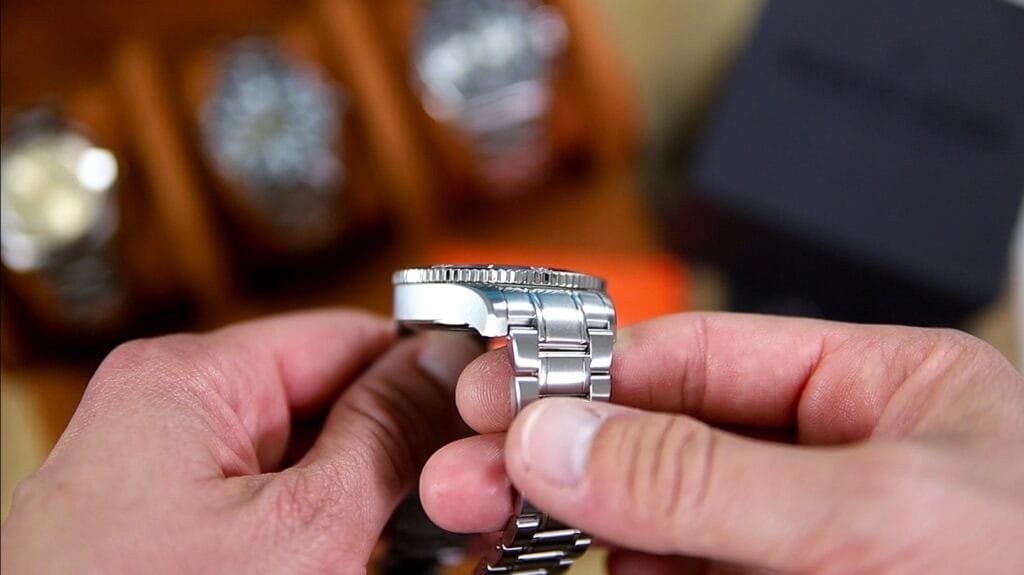
Back-play is virtually nonexistent. Once the bezel snaps into a detent, it stays put. Between clicks, there is a trace of elastic spring tension—not slop, but the natural flex of the indexing system before it locks home. In practice, this allows for fine alignment without introducing mechanical vagueness.
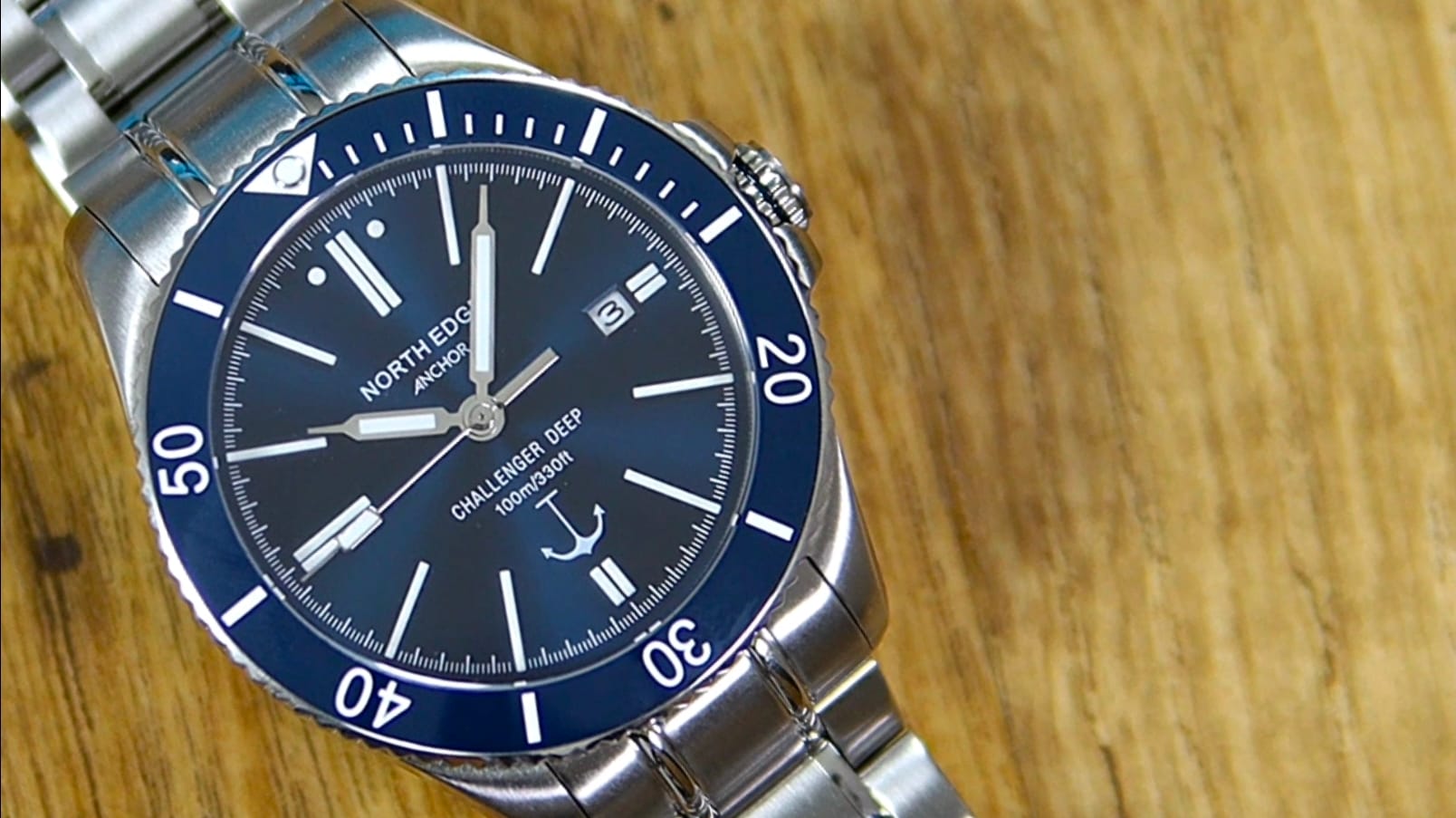
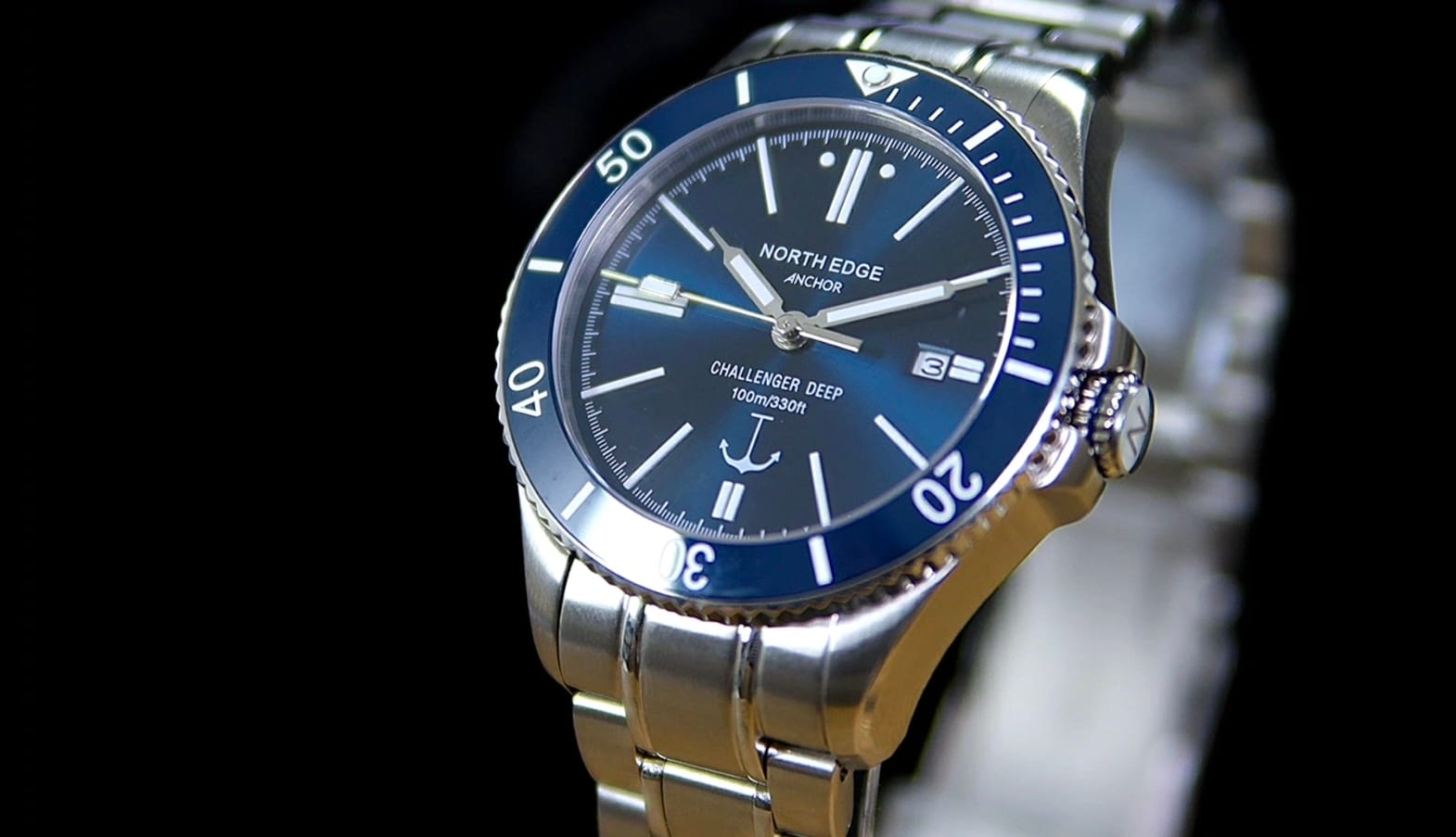
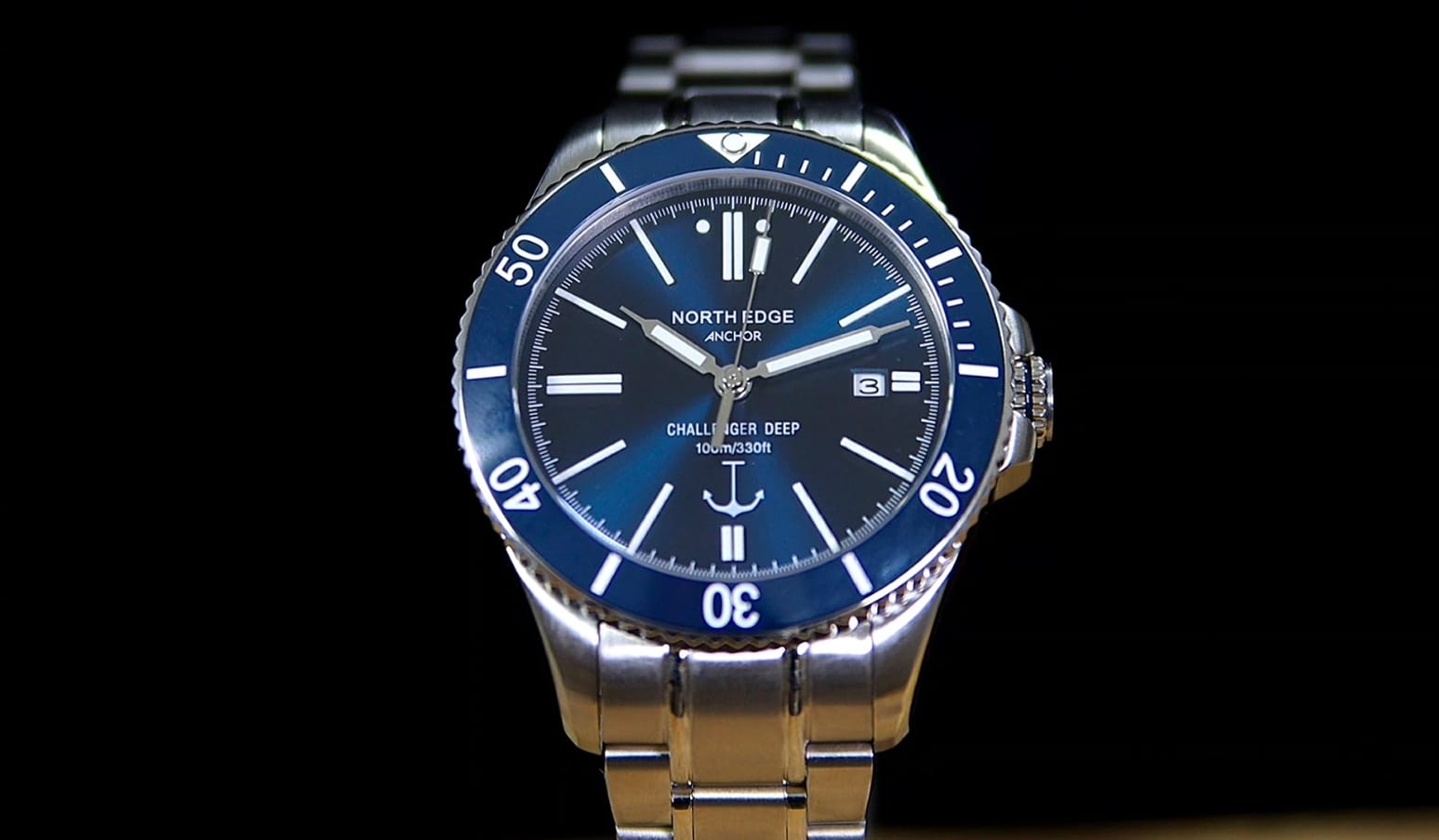
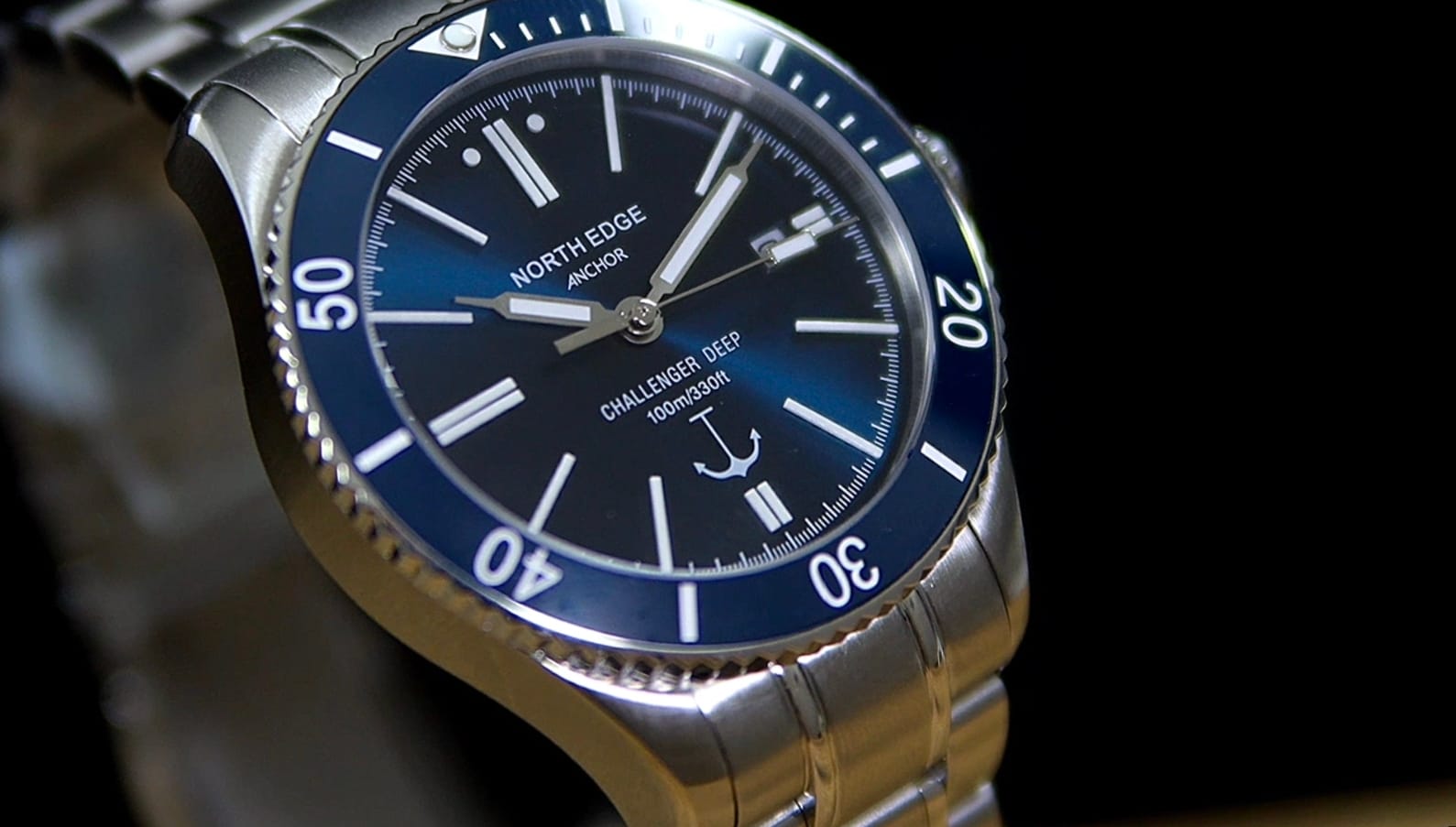
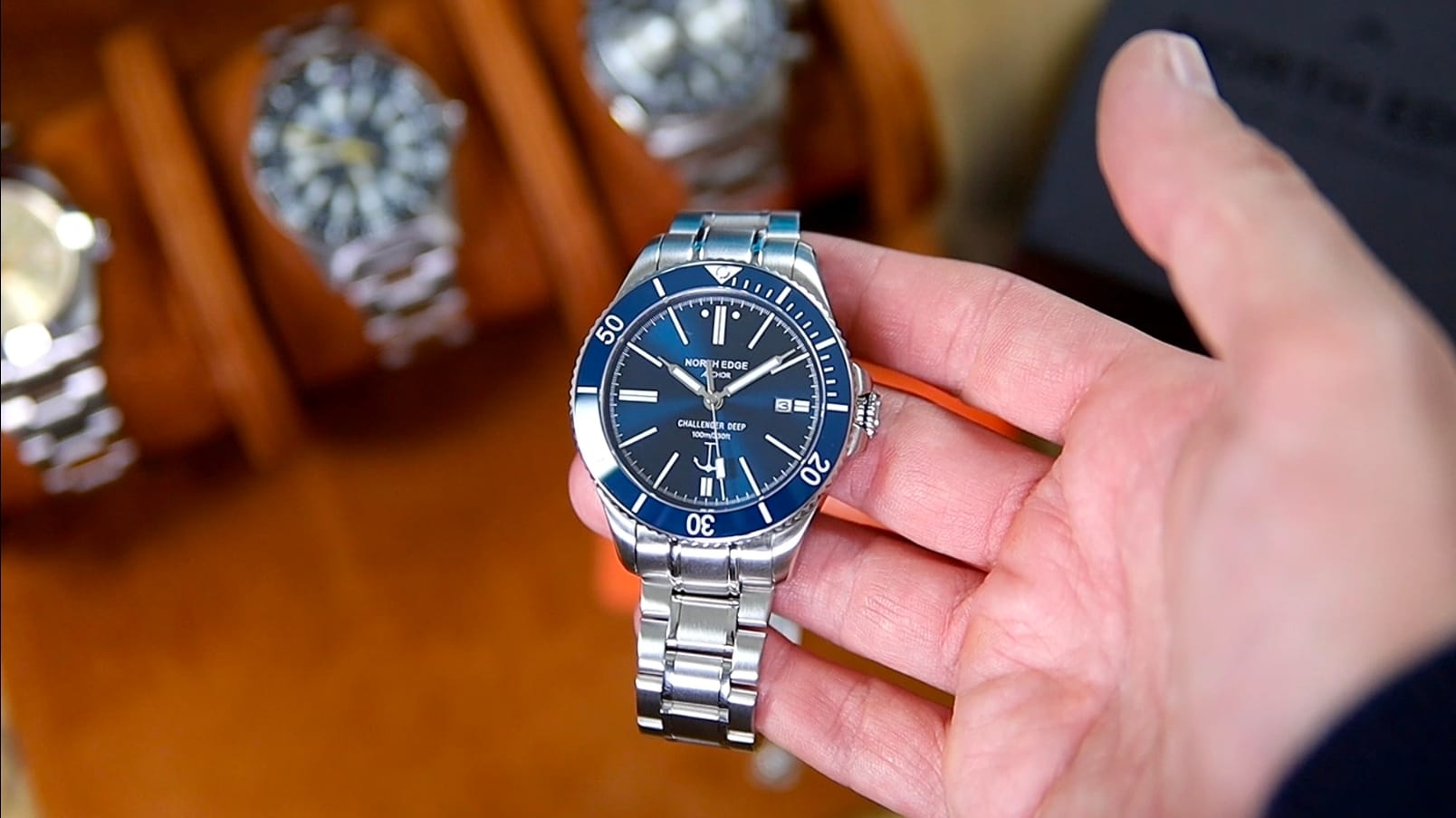
The navy blue ceramic insert is glossy and richly saturated, visually echoing the sunburst dial beneath. White markings mirror the applied indices and handset, reinforcing design symmetry. The bezel is tall, proud, and highly tactile—arguably one of the most confidently executed elements of the entire watch. The bezel on the Anchor is notably more impressive than on the North Edge Triton.
Bracelet
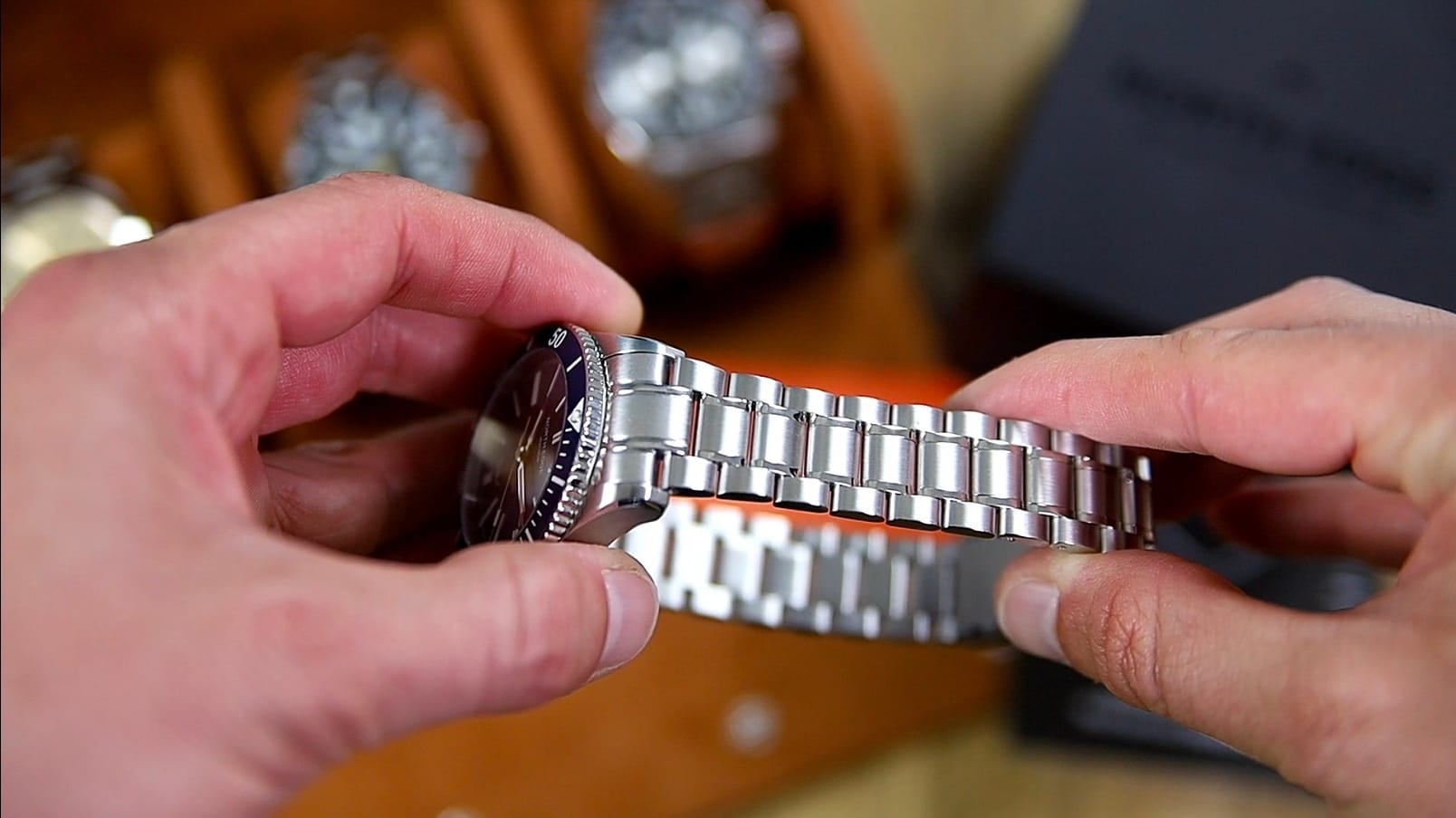
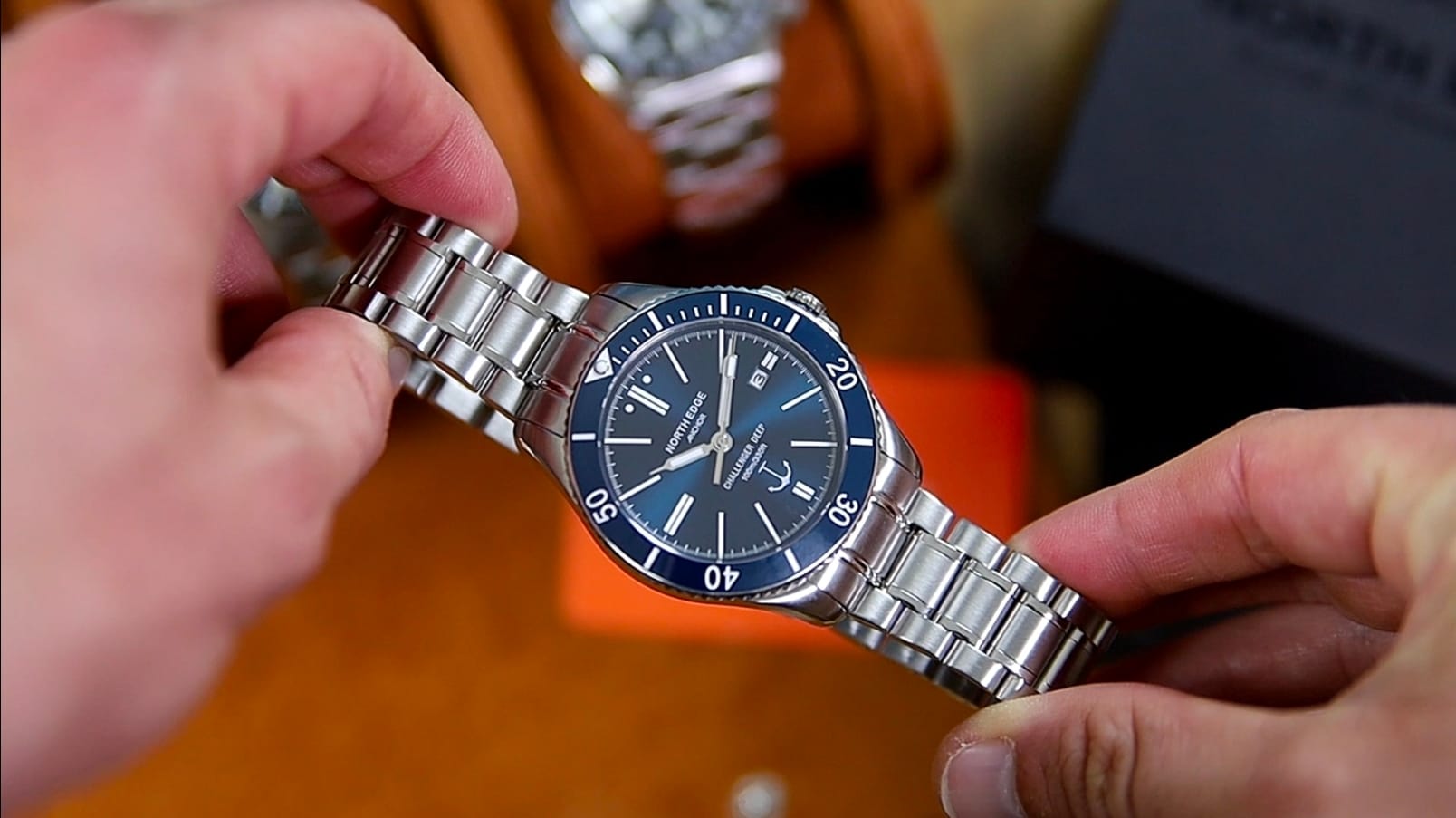
The bracelet integrates at 20 mm at the lugs, tapering neatly to 18 mm at the clasp. While technically a three-link design, it cleverly mimics a five-link appearance by using polished shoulders flanking a brushed center link. This interplay of finishes adds visual interest and elevates what could otherwise be a very standard bracelet.
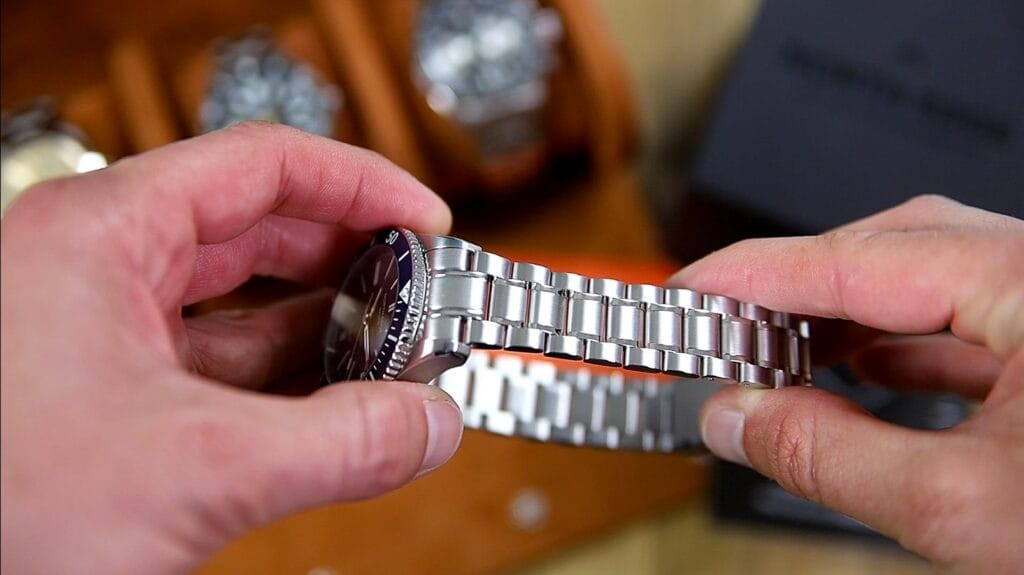
Links are relatively short—around 7 mm—which improves articulation and allows the bracelet to drape well on the wrist. Construction uses push pins rather than screws, and while tolerances are not flawless (gaps are visible when the bracelet is stretched), fluidity in motion is genuinely good.
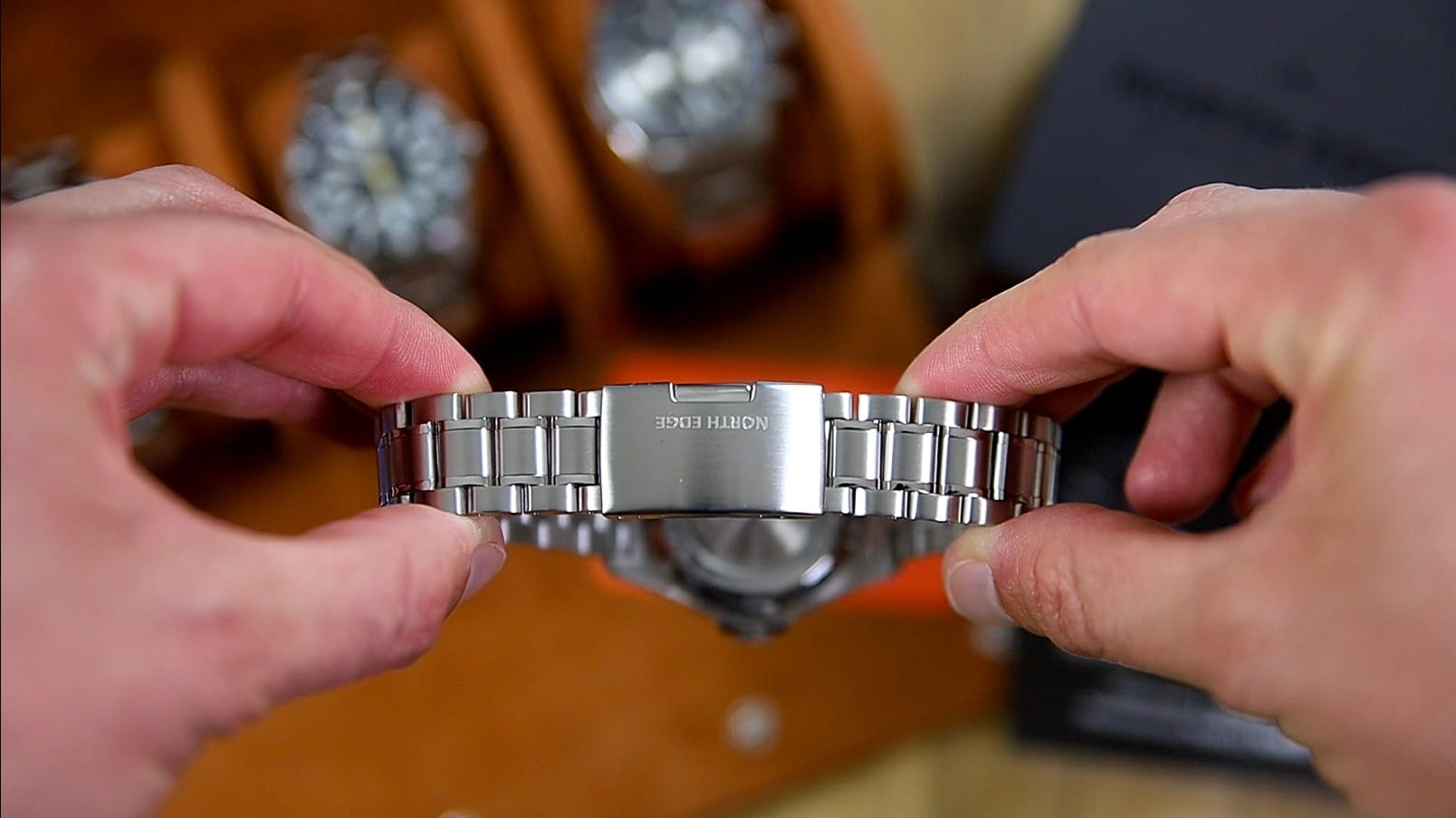
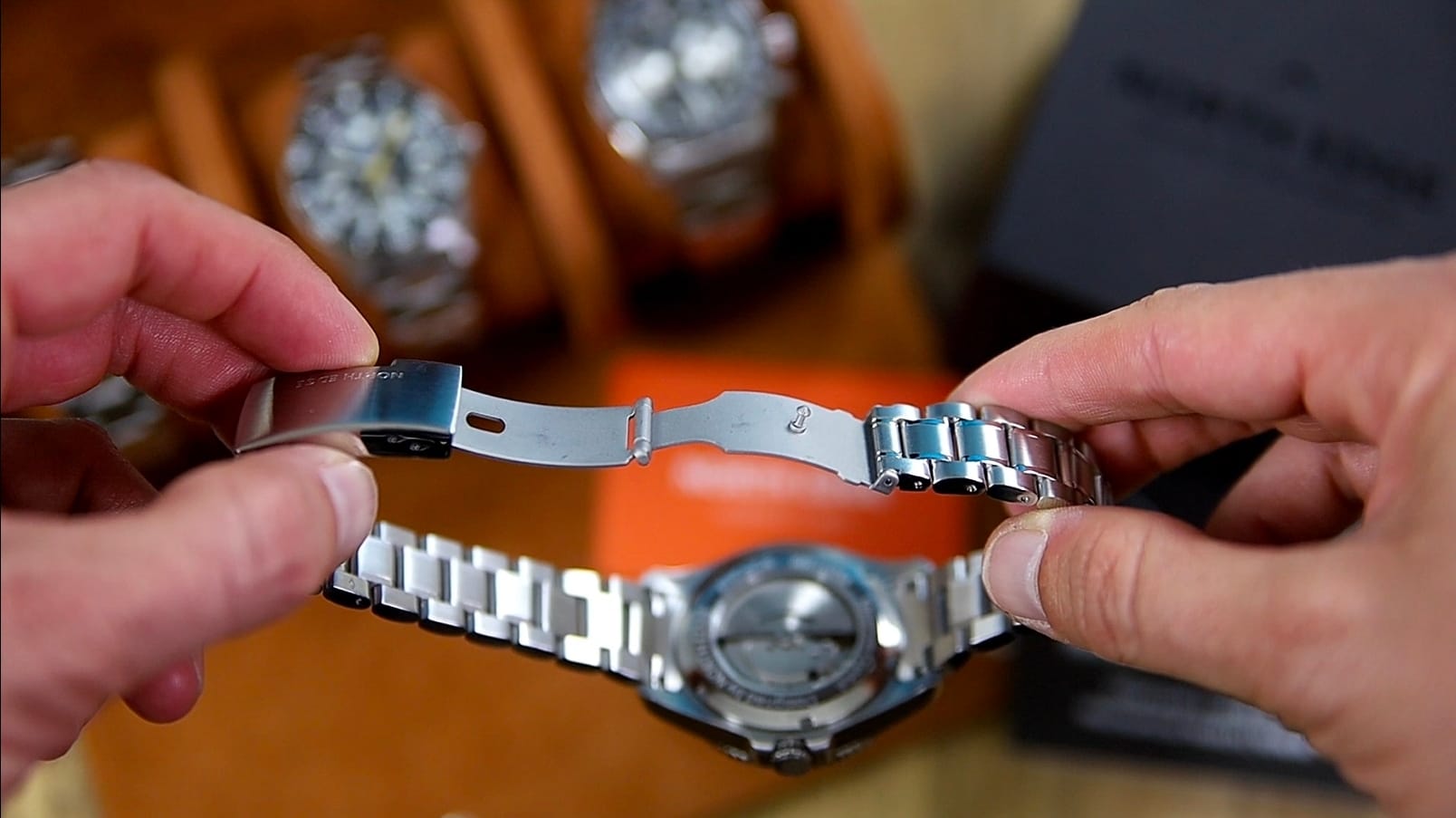
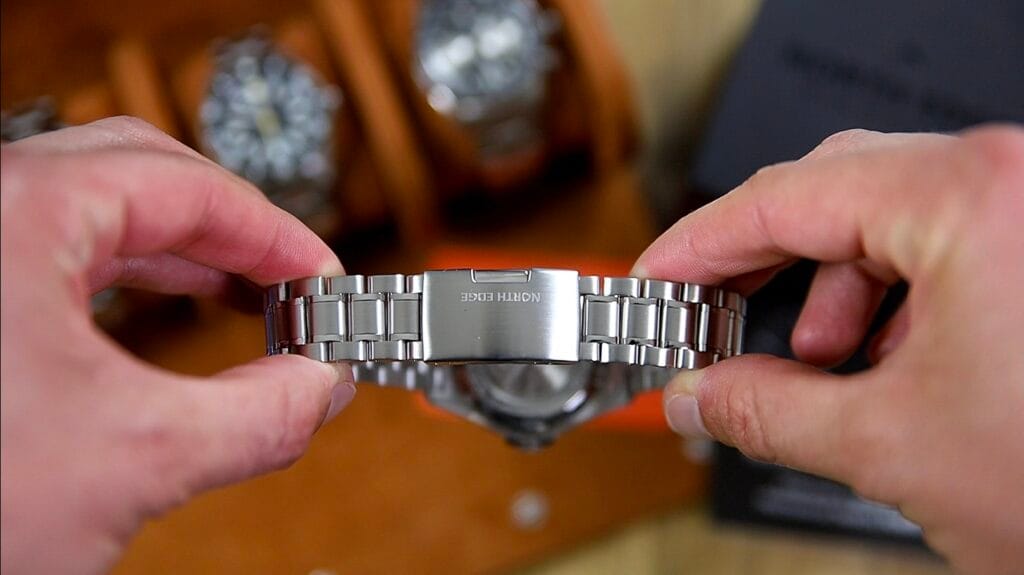
The clasp is milled and signed, offering two micro-adjustment positions. However, compromises appear here as well. The clasp uses a single-pusher release, giving it a sportier, more casual feel, and inside you’ll find a pressed folding wing rather than a fully milled assembly. It’s functional, but not especially refined.
Crystal & Dial
Covering the dial is a flat slab of synthetic sapphire crystal, raised slightly above the ceramic bezel. Though not listed on the spec sheet, it is clearly anti-reflective coated, revealing a subtle purple flash under angled light. Legibility is strong, with good contrast between the crystal, dial, and indices.
The dial itself is offered in black, green, and blue, with the blue variant feeling most thematically appropriate given the “Anchor” name. It features a sunburst finish that shifts tone across the radius as light moves. A printed minute track runs around the edge, with applied hour indices marking the hours.
Here, harmony begins to falter. Elongated batons appear at the cardinal points, but proportions vary: the double baton at 3 is truncated for the date window, the double baton at 6 is shortened to accommodate the oversized anchor logo, while the indices at 9 and 12 remain longer. This inconsistency creates visual imbalance.
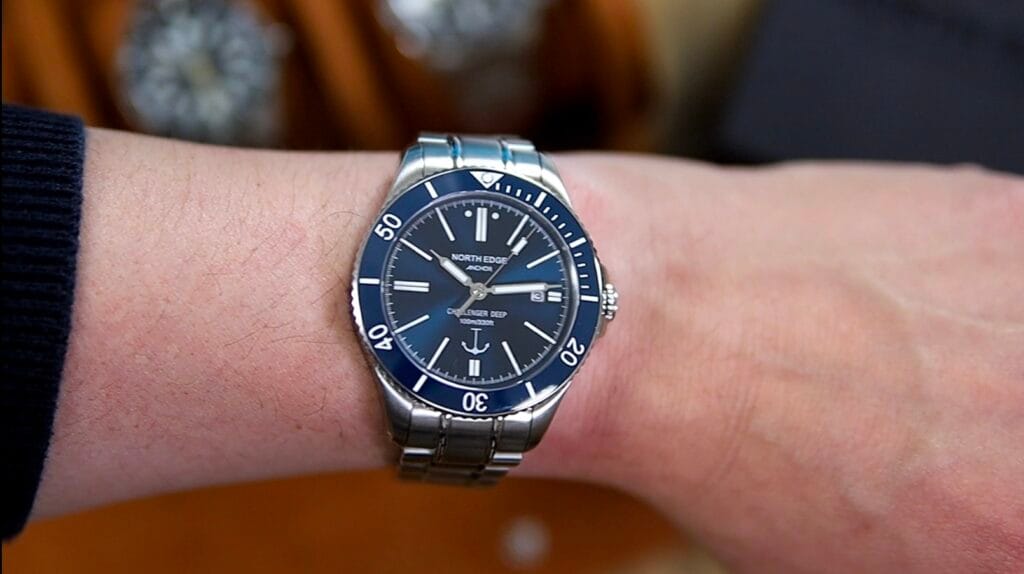
Text placement adds to the density. Under 12 sits the brand wordmark; above six are the anchor emblem, Challenger Deep, and 100 m depth rating. These elements push upward toward the pinion, compressing the dial’s open space. The date aperture is unframed and slightly small, further contributing to visual busyness.
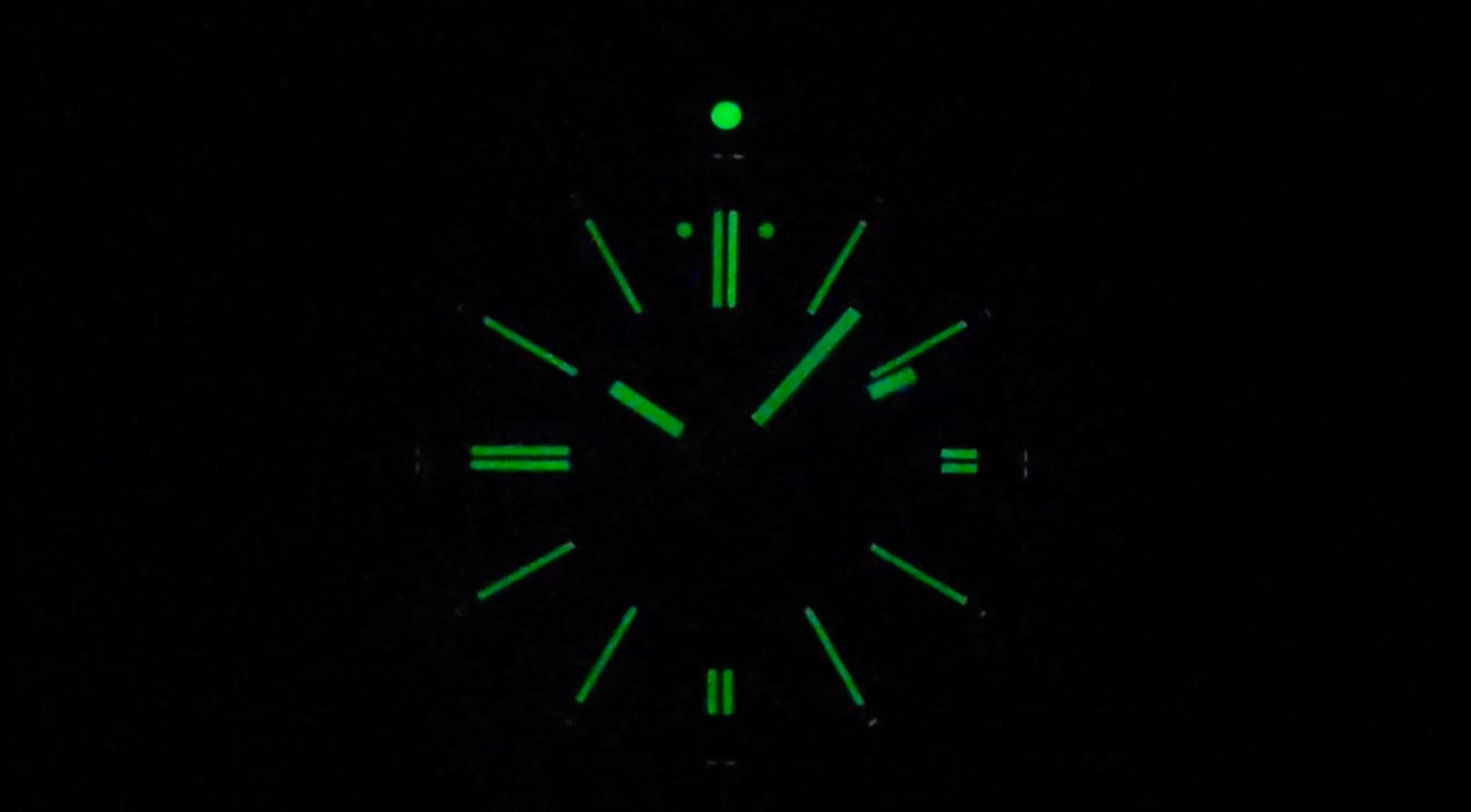
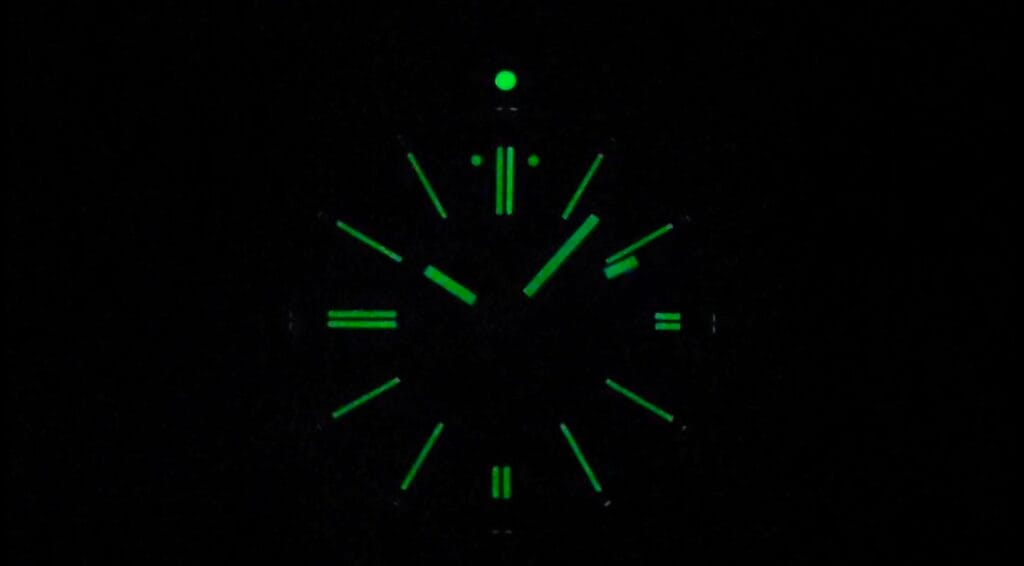
Lume is present on the applied indices and hands, glowing green in darkness. Performance is serviceable but uneven—the lower half fades faster, and overall longevity is limited. It works, but it doesn’t reinforce the Anchor as a serious diver.
Summary
The North Edge Anchor is a watch of contrasts. On one hand, it delivers a lot for around $85 before tax: full stainless-steel construction, a ceramic bezel, synthetic sapphire crystal, automatic movement, and an exhibition caseback. The bezel action is genuinely impressive, the sunburst dial is visually appealing, and the overall presence is bold and confident. You may want to check out another similar priced and interesting diver watch by Cadisen C8245M.
On the other hand, compromises are evident. The push-pull crown, uneven dial proportions, modest lume performance, and bracelet shortcuts remind you that North Edge is new to mechanical watchmaking. And yet, that newness is part of the appeal. The Anchor feels fresh—not because it’s perfect, but because it’s different. In this $50 – $200 segment of the market, small differences in execution often matter more than raw specifications.
This is not a fully mature diver, nor does it pretend to be. Instead, it represents a brand testing the waters, learning the language, and offering something distinct at an accessible price. For collectors open to experimentation and willing to accept imperfections in exchange for originality, the Anchor is an intriguing first effort. You may want to explore other pieces in the $50 – $200 range to get a feel for the expected level of refinement in that price category.
North Edge Anchor Specifications
| Specification | Details |
|---|---|
| Model | North Edge Anchor |
| Case Diameter | 41.7 mm |
| Case Thickness | 12.44 mm |
| Lug-to-Lug | 55.5 mm |
| Weight | 166 g |
| Lug Width | 20 mm (tapers to 18 mm) |
| Case Material | Stainless steel |
| Case Finish | Vertically brushed flanks, polished bevels |
| Bezel | Unidirectional. Bezel Insert: Navy blue ceramic |
| Crown | 6.8 mm push-pull, signed |
| Crystal | Synthetic sapphire with AR. Exhibition: mineral crystal |
| Movement | Miyota 8215 automatic, 21 jewels, 21,600bph, power reserve 42hrs |
| Bracelet/Strap | Stainless steel, multi-finish, push pins |
| Clasp | Milled, signed, single pusher, micro-adjustments 2 positions |
| Water Resistance | 100 m |
| Dial | Blue sunburst (black, green also available) |
| Lume | Green (hands and indices) |
| Approx. Price | ~$85 before tax |