Why Water Resistance Numbers Mislead Buyers
Most people treat water resistance as a box to tick. If the number looks high enough, the watch must be safe. That assumption is where problems begin.
Water resistance isn’t a promise and it isn’t a guarantee. It’s the result of multiple design choices working together — some visible, many not — and those choices matter far more than the depth rating printed on the watch. Once you understand how pressure, heat, movement, and wear affect sealing in real use, it becomes clear why two watches with the same rating can perform very differently.
What Water Resistance Numbers Actually Measure
Water-resistance ratings are derived from static pressure tests performed in controlled conditions. The watch is stationary, new, and sealed with fresh gaskets. The test checks whether water penetrates the case at a given pressure — nothing more.
What the number does not account for includes:
- Arm movement and dynamic pressure spikes
- Temperature changes (hot showers, cold water)
- Aging or compressed gaskets
- Crown manipulation during use
- Micro-deformation of components over time
This is why two watches with identical ratings can behave very differently once worn outside a laboratory. Seeing this implemented on the wrist often clarifies the theory.
Why Watch Type Matters More Than the Rating
Different watch types approach water resistance with fundamentally different design priorities.
Dress Watches
Typically rated 30–50m, dress watches prioritise thinness and elegance:
- Slim cases
- Thin crystals
- Push-pull crowns
- Minimal gasket redundancy
They are designed for incidental moisture, not immersion.
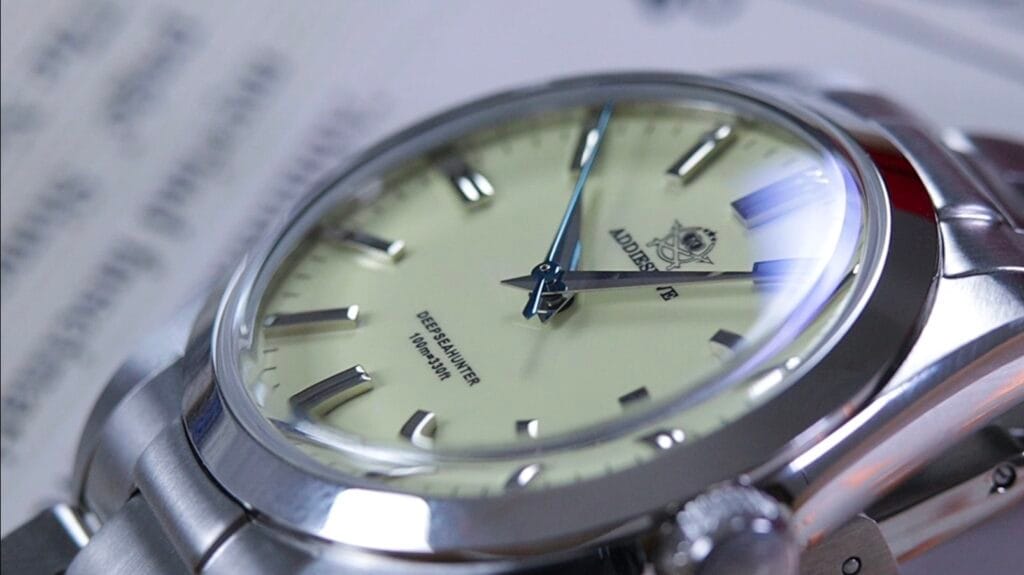
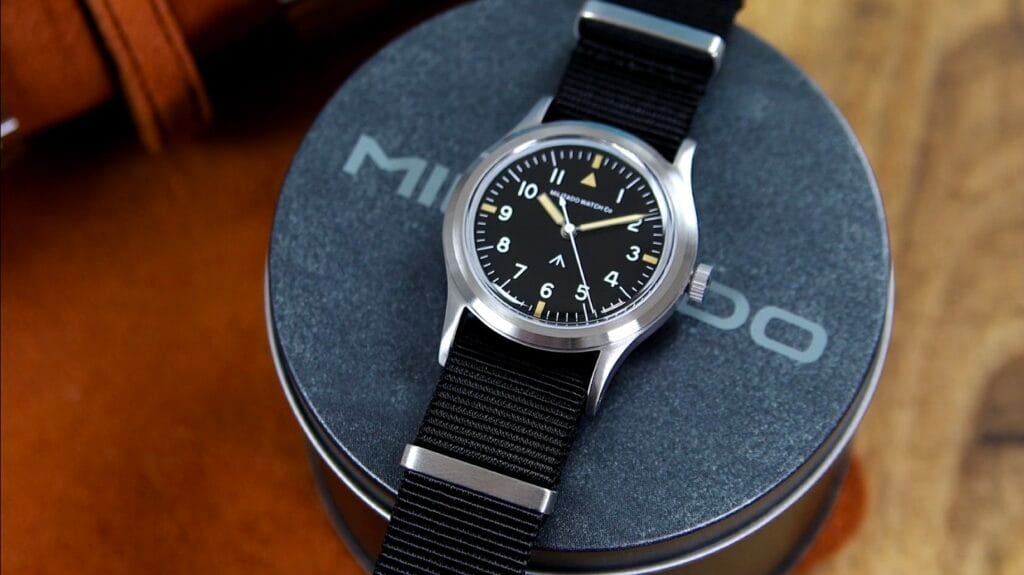
Field Watches
Commonly rated 50–100m, field watches often offer:
- Thicker mid-cases
- More robust crown tubes
- Practical sealing without excessive bulk
A well-executed 100m field watch can be more water-secure than a poorly executed diver with a higher rating.
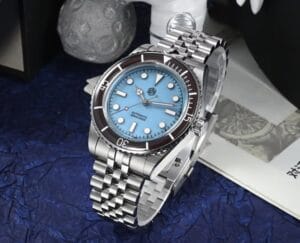
Dive Watches
Usually rated 200–300m, dive watches focus on redundancy:
- Screw-down crowns
- Thicker crystals
- Heavier case construction
- Multiple sealing interfaces
The goal is sustained exposure, not just survival.

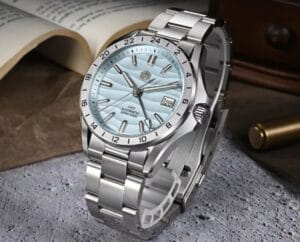
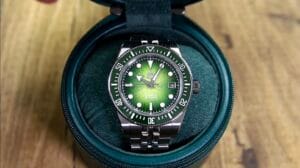
Compressor and Dual-Compressor Watches
These are often misunderstood. Instead of relying purely on static sealing, they use pressure-activated designs that improve sealing as depth increases — a fundamentally different approach to water resistance.
Crowns: The Most Common Failure Point
If water enters a watch, it almost always enters through the crown assembly.
Push-Pull Crowns
- Rely on gasket compression alone
- Perfectly viable up to 100m when well executed
- Simpler, thinner, fewer user-error scenarios
A properly engineered push-pull crown can outperform a poorly designed screw-down crown.
Screw-Down Crowns
- Add mechanical compression to the gasket
- Reduce accidental crown movement
- Increase protection against user error
They do not automatically make a watch “more waterproof.” They make it harder for the wearer to compromise the seal. Execution matters more than threads.
Compressor and Dual-Compressor Case Designs
Compressor cases take a different philosophy: external pressure improves sealing rather than defeating it.
Single-Compressor Designs
- One crown
- Internal rotating bezel
- Caseback and crystal compress inward under pressure
- Sealing improves as depth increases
Dual-Compressor Designs
- Two crowns: one for time setting, one for bezel control
- Independent sealing for each crown
- Internal bezel avoids external bezel openings
In practice, a well-designed dual-compressor watch rated to 200m can be more secure than a conventional diver with a higher number but weaker execution.
Internal vs External Bezels
External rotating bezels require:
- A bezel gasket
- A tension or click-spring system
- A physical opening between bezel and case
Each of these is a potential ingress point.
Internal bezels:
- Are fully enclosed within the case
- Are adjusted via a sealed crown
- Eliminate external bezel openings
From a purely water-resistance perspective, internal bezels are inherently safer — at the cost of complexity and thickness.
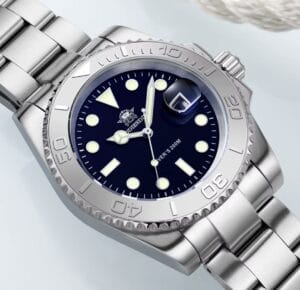
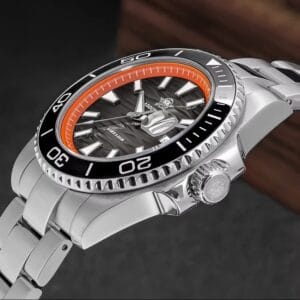
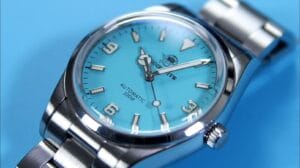
Crystal Thickness and Structural Integrity
Crystal thickness is rarely advertised, yet it plays a major role in water resistance.
- Thin crystals flex more easily under pressure
- Flexing compromises gasket compression
- Thicker crystals resist deformation
- Domed profiles distribute pressure more evenly
This is why serious dive watches accept increased case height: rigidity matters more than elegance when pressure is involved.
Case Construction and Caseback Design
Water resistance depends on system integrity, including:
- Mid-case rigidity
- Caseback threading depth
- Uniform gasket compression
Snap-on casebacks are inherently less secure at higher ratings than screw-down casebacks. A 100m watch with precise machining can be safer than a loosely executed 200m design.
Gaskets: The Consumable Component
Gaskets:
- Age
- Harden
- Shrink
- Fail silently
Water resistance is not permanent. A watch rated to 300m when new may be unsafe years later without gasket replacement or pressure testing. Maintenance matters more than numbers.
Helium Escape Valves: Purpose vs Perception
Helium escape valves are designed for saturation diving, where helium enters the case and expands during decompression.
For:
- Swimming
- Snorkelling
- Recreational diving
- Daily wear
They offer no practical benefit. Their presence does not improve sealing elsewhere and often serves as a visual shorthand for “serious dive watch” rather than functional necessity.
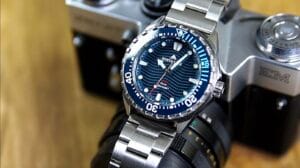
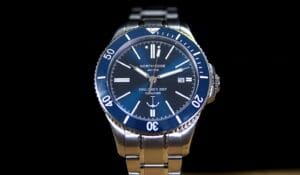
Why Dynamic Conditions Break Static Ratings
Static tests do not simulate:
- Arm movement
- Sudden pressure spikes
- Thermal expansion and contraction
A forceful arm stroke can generate pressure far exceeding the implied rating. Hot water expands seals; cold water contracts them. This is why showers are often more dangerous to watches than swimming.
How to Evaluate Water Resistance Properly
Instead of asking “How many metres?”, ask:
- What type of watch is this designed to be?
- How is the crown sealed and protected?
- Is the bezel internal or external?
- Does crystal thickness support the rating?
- Is this a design intended for long-term maintenance?
For most buyers:
- 100m, well executed, is sufficient
- 200m+ adds redundancy, not necessity
- Design quality beats headline numbers every time
Key Takeaways
- Water resistance is a system, not a number
- Crowns are the most common failure point
- Internal bezels reduce potential ingress
- Crystal thickness matters more than ratings
- Gaskets degrade over time
- Helium valves are rarely relevant
- Construction quality outweighs depth claims
FAQs
Is 100m water resistance enough for swimming?
Yes — if the watch is well executed and properly maintained. Many 100m watches outperform poorly designed higher-rated models.
Are screw-down crowns always better?
They reduce user error but do not guarantee superior sealing. Execution and tolerances matter more than the mechanism itself.
Can I shower with a water-resistant watch?
It’s not recommended. Heat and pressure changes during showers are more damaging than calm water immersion.
Do helium escape valves improve water resistance?
No. They serve a very specific purpose for saturation diving and provide no benefit for everyday or recreational use.
Does water resistance last forever?
No. Gaskets age and degrade. Regular pressure testing and maintenance are essential.