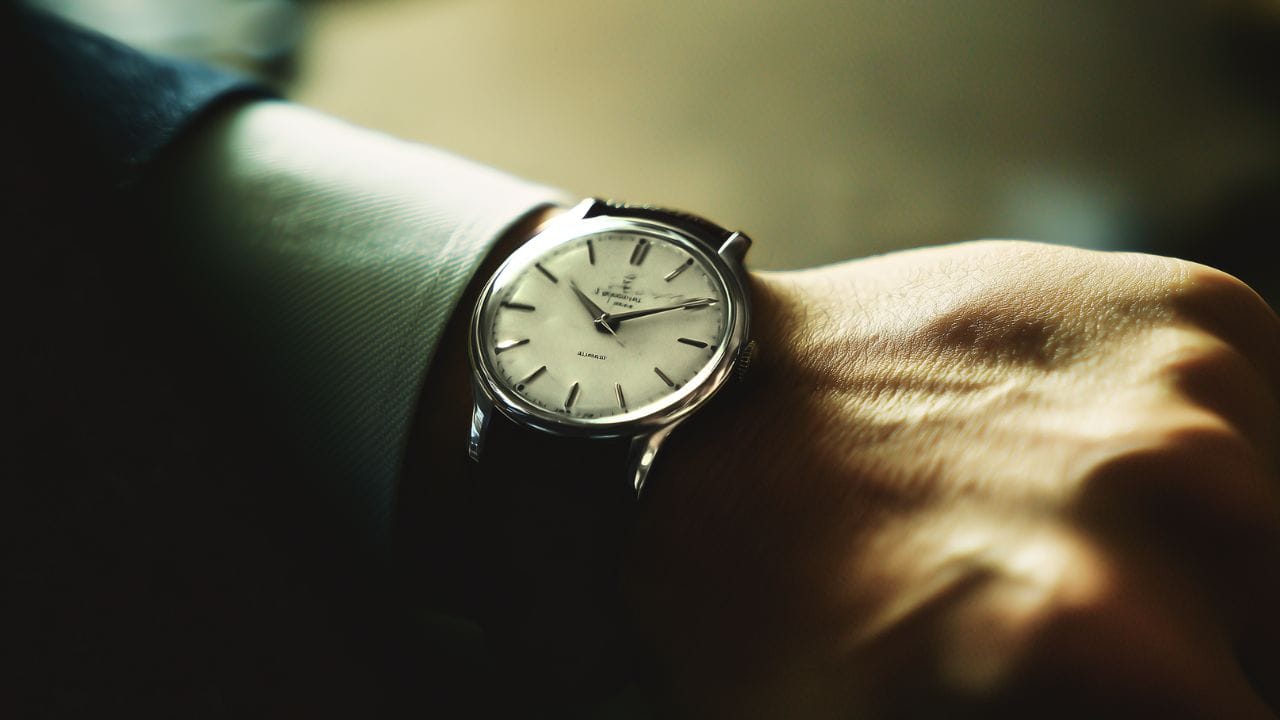
Automatic vs Quartz: What Actually Matters in Daily Wear
I own both automatic watches and quartz watches, and I wear them for different reasons. On my right wrist, I usually have a fitness tracker. On my left, I’m almost always wearing a proper wristwatch. Sometimes it’s an automatic. Sometimes it’s quartz. That choice isn’t about ideology or brand loyalty — it’s about how the watch behaves once it’s on your wrist and forgotten about for the day.
A lot of watch content frames this discussion as a debate: mechanical soul versus quartz convenience. That framing misses the point. In daily wear, what matters isn’t romance or purity — it’s reliability, tolerance, durability, and how much attention the watch demands from you over time.
This guide isn’t about convincing anyone to choose sides. It’s about understanding what you actually gain — and what you quietly give up — when you choose automatic vs quartz, especially in the budget and enthusiast space where most people are buying. Have you seen our article, a Crash Course into Wristwatches? It tries to convey the true purpose of the daily wear watch.
The Real Difference Isn’t Accuracy — It’s Behaviour
Everyone starts with accuracy because it’s the easiest metric to compare. Quartz watches are more accurate. That’s not controversial. A typical quartz movement will lose or gain seconds per month, while a mechanical watch measures deviation per day. On paper, quartz wins immediately.
But accuracy alone doesn’t define daily wear.
Living With an Automatic Watch
Automatic watches are mechanical systems that rely on motion, friction, and regulation. They don’t just tell time — they respond to how they’re worn.
In daily use, that means:
- They need to be worn regularly or manually wound
- They will drift over time
- They are more sensitive to shock and positional variance
- They reward consistency more than precision
I enjoy that interaction. I don’t mind resetting a watch every few days. I don’t mind checking it against my phone in the morning. What I do care about is whether the movement is stable, predictable, and robust enough not to feel fragile.
This is where movement choice matters far more than whether a watch is “automatic” in principle.
Living With a Quartz Watch
Quartz watches behave more like appliances — and that’s not an insult.
A good quartz movement:
- Keeps time regardless of wear patterns
- Shrugs off shock better than most mechanical movements
- Requires almost no interaction beyond battery changes
- Maintains consistency even in cheap cases
In daily wear, quartz is forgiving. You can rotate watches freely. You can leave it in a drawer. You can travel, knock it, forget it, and it will still be correct when you come back.
This is why quartz dominates tool watches, field watches, and everyday beaters — not because it’s soulless, but because it’s resilient.
Durability Isn’t Automatic vs Quartz — It’s Design vs Reality
One of the biggest misconceptions is that automatic watches are inherently less durable. That’s not quite true.
What is true is that quartz movements:
- Have fewer moving parts
- Are less sensitive to shock
- Are less affected by lubrication breakdown
Mechanical movements, especially budget ones, rely on oils that age and migrate. Poor lubrication or inconsistent assembly can affect long-term performance far more than most buyers realise.
So when people say, “Quartz is more durable,” what they really mean is:
Quartz tolerates neglect better.
That matters in daily wear.
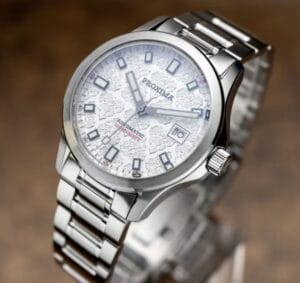

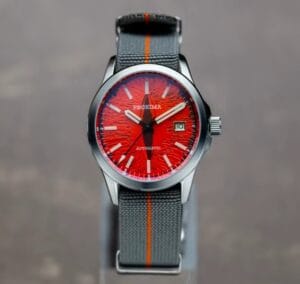
Where Budget Movements Enter the Conversation
This is where the discussion becomes real for most enthusiasts — because budget watches don’t use mythical in-house movements. They use proven, mass-produced calibres with known characteristics.
Below is a grounded look at the most common movements you’ll encounter, starting from the most basic and working upward. This isn’t about ranking — it’s about understanding what you’re actually wearing.
Entry-Level Chinese Automatics (Pearl / DG Family)
The Pearl and DG movements (often referred to as DG2813, DG3804, etc.) are among the most common ultra-budget automatic movements on the market.
Typical characteristics:
- Beat rate: 21,600 vibrations per hour (6 ticks per second)
- Jewels: usually 21
- Power reserve: ~36–40 hours
- Accuracy: often rated around ±30–40 seconds per day (real-world variance can be wider)
These movements are simple, inexpensive, and widely produced. They’re often used in watches where cost is the primary constraint.
The criticism they receive usually isn’t about design — it’s about execution. Lubrication can be inconsistent. Quality control varies. Some examples run well for years; others develop issues early. They’re serviceable in theory, but in practice often replaced rather than repaired.
That doesn’t make them “bad.” It makes them honest budget solutions with limited refinement.
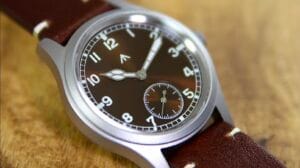
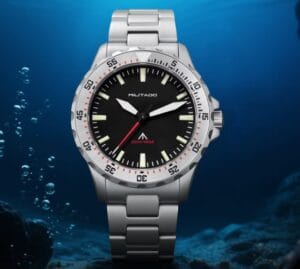
Seagull Mechanical Movements
Seagull sits in a different position. They produce both very basic automatics and more refined mechanical movements, including hand-wound chronograph calibres.
Typical Seagull automatic characteristics:
- Beat rate: 21,600 or 28,800 vph depending on calibre
- Jewels: commonly 21–25
- Power reserve: ~40 hours
- Accuracy: often tighter than entry-level DG movements when regulated
Seagull movements tend to show better consistency and finishing than the lowest-tier automatics, though they still reflect mass production. In daily wear, they often feel more stable — especially in watches where the manufacturer has taken the time to regulate them properly.
Miyota Automatics (Citizen Group)
Miyota movements, produced by the Citizen Group, are some of the most widely used automatics in the affordable watch space.
Two of the most common:
- Miyota 8215 (date)
- Miyota 8205 (day-date)
Typical specs:
- Beat rate: 21,600 vph
- Jewels: 21
- Power reserve: ~42 hours
- Accuracy: often quoted around −20/+40 seconds per day
Earlier versions of the 8200 series were not hackable, meaning the seconds hand wouldn’t stop when setting the time. Newer iterations do hack, which significantly improves usability.
The crown action on Miyotas is often described as a bit “grindy,” especially when hand-winding. That’s not a defect — it’s a characteristic of the winding system and gearing.
In daily wear, Miyotas are tough. They tolerate shock well, hold power reliably, and rarely fail catastrophically. They don’t feel refined — they feel utilitarian.
Seiko NH Series (Seiko Group)
The NH series is arguably the backbone of the modern budget automatic market.
Common variants:
- NH35 – date
- NH36 – day-date
- NH38 – no date
- NH34 – GMT
Typical specs:
- Beat rate: 21,600 vph
- Jewels: 24
- Power reserve: ~41 hours
- Accuracy: usually quoted around −20/+40 seconds per day
These movements are valued not because they’re precise, but because they’re forgiving. The Magic Lever winding system is extremely efficient, allowing the watch to build power quickly from wrist movement. You can’t overwind them, and they tend to keep running even when abused slightly.
In daily wear, NH movements feel stable. They start easily, tolerate rotation between watches, and are widely serviceable. That’s why so many microbrands rely on them — not because they’re glamorous, but because they work.
PT5000 and ETA-Style Clones
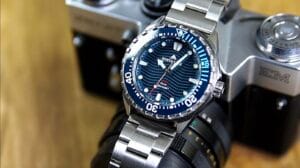
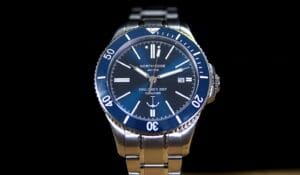
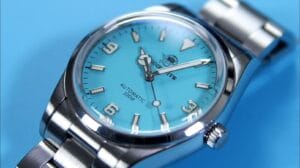
The PT5000 is a high-beat automatic designed as a clone of the ETA 2824 architecture.
Typical specs:
- Beat rate: 28,800 vph
- Jewels: 25
- Power reserve: ~38–40 hours
- Accuracy: often regulated tighter than entry-level automatics
These movements feel more refined. The higher beat rate produces smoother seconds motion and often better perceived precision. However, they are also more sensitive to shock and lubrication quality.
In daily wear, PT5000-equipped watches feel closer to traditional Swiss movements — but they demand better execution from the brand using them.
Swiss Benchmarks: ETA & Sellita
Movements like the ETA 2824 or Sellita SW200 represent the reference point for what “refined” mass-produced automatics feel like.
Typical traits:
- Consistent regulation
- Smoother winding
- Better long-term stability
- Higher service costs
They’re not magic. They’re just well-finished, tightly controlled evolutions of proven designs.
Quartz Movements in Daily Wear
Quartz movements from Seiko and Miyota dominate the affordable market for a reason.
Typical quartz characteristics:
- Accuracy: ±15–20 seconds per month
- Shock resistance: very high
- Maintenance: battery every 2–3 years
- Longevity: decades with minimal care
Quartz doesn’t drift daily. It doesn’t care how you wear it. It doesn’t care if you forget it. For many use cases — travel, field watches, work watches — quartz simply makes more sense.
Final Thoughts
I don’t believe one type replaces the other. I believe they coexist because they solve different problems.
If I want something I can put on and forget, I reach for quartz.
If I want something I interact with and appreciate mechanically, I wear an automatic.
Understanding the movements — not just the labels — makes that choice obvious. If you are ready to delve deeper, I have prepared a thorough guide on automatic and quartz movements we commonly see in affordable Chinese and Swiss watches alike.
MOVEMENT COMPARISON TABLE
| Movement | Type | Origin / Group | Beat Rate | Jewels | Power Reserve | Typical Accuracy (Quoted) | Hacking | Hand-Winding | Seconds Behaviour | Notable Characteristics | Daily Wear Notes |
|---|---|---|---|---|---|---|---|---|---|---|---|
| DG2813 (Pearl) | Automatic | China (PTS / Pearl) | 21,600 bph | ~21 | ~36–40 h | ±30–40 sec/day | Usually No | Yes | Mechanical sweep | Very low-cost automatic, simple architecture, variable QC | Works when well assembled; consistency varies widely |
| Seagull ST16 | Automatic | China (Tianjin Seagull) | 21,600 bph | ~21 | ~36 h | ±20–30 sec/day | Often Yes | Yes | Mechanical sweep | Step-up budget automatic, better consistency than DG | Solid entry mechanical when regulated |
| Seagull ST17 | Automatic (small seconds) | China (Seagull) | 21,600 bph | ~21 | ~40 h | ±20–30 sec/day | Usually No | Yes | Mechanical sweep | Small seconds layout, vintage-oriented | Chosen for dial design more than performance |
| Seagull ST18 | Automatic (thin) | China (Seagull) | 28,800 bph | 21–24 | ~42 h | ±15–25 sec/day | Yes | Yes | Mechanical sweep | Thinner, higher-beat architecture (2892-style) | Enables slimmer cases when used properly |
| Seagull ST21 / TY2130 | Automatic | China (Seagull) | 28,800 bph | ~25 | ~40 h | ±15–25 sec/day | Yes | Yes | Mechanical sweep | Mainstream high-beat Seagull workhorse | Feels more “modern” than ST16/ST17 |
| Seagull ST19 | Manual chronograph | China (Seagull) | 21,600 bph | ~22 | ~40+ h | ±20–30 sec/day | No | Manual only | Mechanical sweep | Column-wheel chronograph heritage | Interactive, not “set-and-forget” |
| Seagull ST25 | Automatic (modular) | China (Seagull) | 21,600 bph | Varies | ~40–45 h | ±20–30 sec/day | Varies | Yes | Mechanical sweep | Used for big date / moonphase variants | Thickness and case design matter a lot |
| Miyota 8215 | Automatic | Japan (Citizen Group) | 21,600 bph | 21 | ~42 h | −20/+40 sec/day | Earlier: No / Newer: Yes | Yes | Mechanical sweep | Extremely robust, noisy rotor | Tough daily-wear movement |
| Miyota 8205 | Automatic (day-date) | Japan (Citizen Group) | 21,600 bph | 21 | ~42 h | −20/+40 sec/day | Earlier: No / Newer: Yes | Yes | Mechanical sweep | Day-date variant of 8215 | Same strengths and trade-offs |
| Miyota 9015 | Automatic | Japan (Citizen Group) | 28,800 bph | 24 | ~42 h | −10/+30 sec/day | Yes | Yes | Mechanical sweep | Thinner, smoother, more refined | Strong non-Swiss “upgrade” option |
| Seiko NH35 | Automatic | Japan (Seiko Group) | 21,600 bph | 24 | ~41 h | −20/+40 sec/day | Yes | Yes | Mechanical sweep | Magic Lever winding, very forgiving | Excellent for rotation and daily wear |
| Seiko NH36 | Automatic (day-date) | Japan (Seiko Group) | 21,600 bph | 24 | ~41 h | −20/+40 sec/day | Yes | Yes | Mechanical sweep | Day-date NH variant | Same behaviour as NH35 |
| Seiko NH38 | Automatic (no date) | Japan (Seiko Group) | 21,600 bph | 24 | ~41 h | −20/+40 sec/day | Yes | Yes | Mechanical sweep | No-date layout | Cleaner dials, same reliability |
| Seiko NH34 | Automatic GMT | Japan (Seiko Group) | 21,600 bph | 24 | ~41 h | −20/+40 sec/day | Yes | Yes | Mechanical sweep | Affordable caller-GMT | Practical, accessible GMT ownership |
| PT5000 | Automatic | China (ETA-style clone) | 28,800 bph | 25 | ~38–40 h | ±10–20 sec/day | Yes | Yes | Mechanical sweep | ETA 2824-style architecture | QC matters more than specs |
| Sellita SW200-1 | Automatic | Switzerland | 28,800 bph | 26 | ~38–41 h | Depends on grade | Yes | Yes | Mechanical sweep | Mainstream Swiss workhorse | Consistent, serviceable, predictable |
| Sellita SW300-1 | Automatic (thin) | Switzerland | 28,800 bph | 25 | ~42 h | Depends on grade | Yes | Yes | Mechanical sweep | Thinner, more refined than SW200 | Enables slimmer, more elegant cases |
| Miyota 2035 | Quartz (3-hand) | Japan (Citizen Group) | N/A | N/A | ~3 years (battery) | ±20 sec/month | N/A | N/A | 1 tick/sec | Ubiquitous quartz baseline | Invisible, reliable daily wearer |
| Miyota 2115 | Quartz (date) | Japan (Citizen Group) | N/A | N/A | ~3 years | ±20 sec/month | N/A | N/A | 1 tick/sec | Date-equipped quartz | Same strengths as 2035 |
| Seiko PC21 | Quartz (budget) | Japan (Seiko Group) | N/A | N/A | ~2–3 years | ±20–30 sec/month | N/A | N/A | 1 tick/sec | Very low-cost quartz | Disposable but functional |
| Seiko VH31 | Quartz (sweep seconds) | Japan (Seiko Group) | ~4 ticks/sec | N/A | ~2 years | ±15–20 sec/month | N/A | N/A | Smooth quartz sweep | Mechanical-like seconds motion | Great daily wear compromise |
| Ronda 515 | Quartz (date) | Switzerland | N/A | N/A | ~45 months | ±20 sec/month | N/A | N/A | 1 tick/sec | Entry-Swiss quartz | Reliable, traditional feel |
| ETA 955.112 | Quartz | Switzerland | N/A | N/A | ~3–4 years | ±10–20 sec/month | N/A | N/A | 1 tick/sec | Swiss quartz benchmark | Long-term stability |