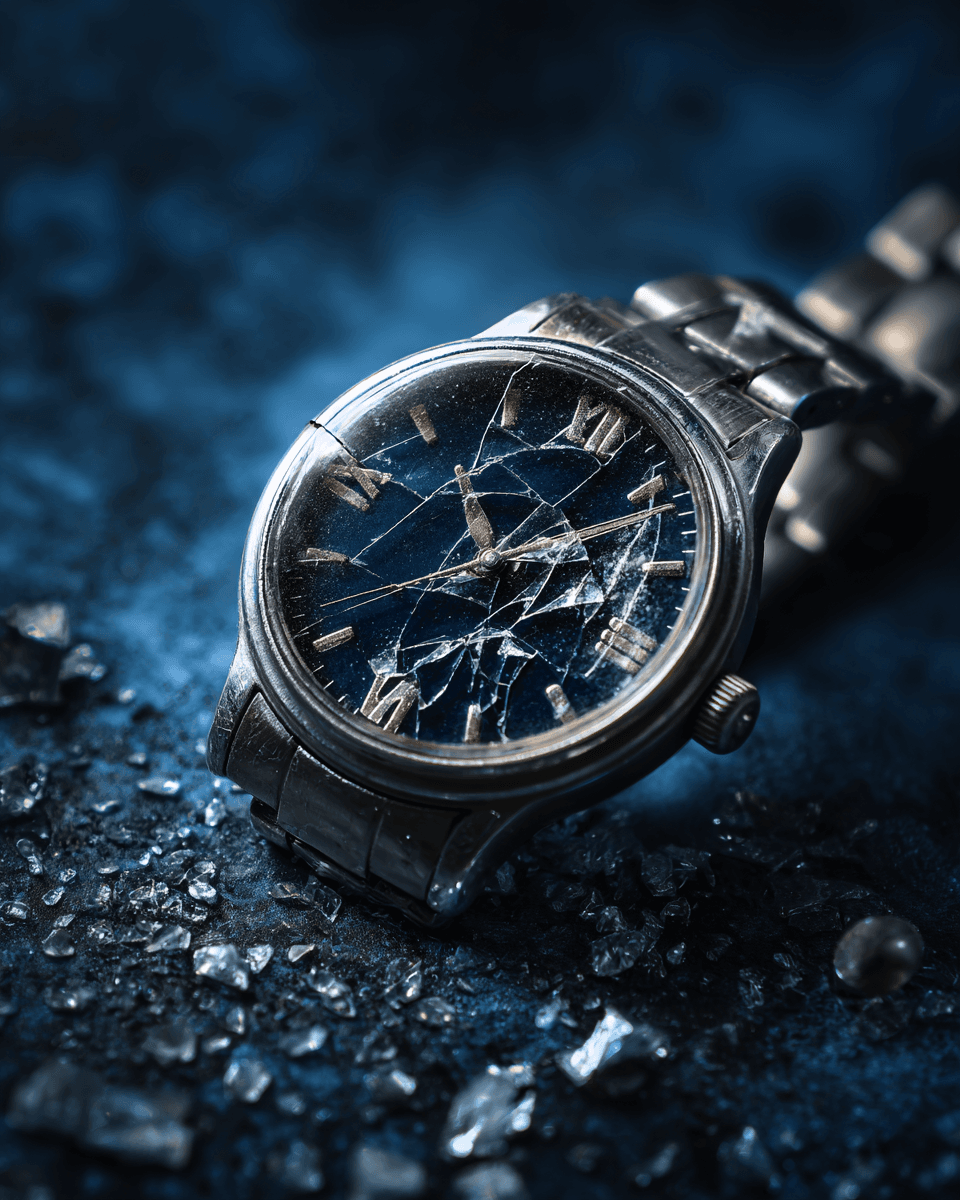
Magnetism and Watches: What It Does and Why It Matters
Most people assume that if a mechanical watch stops keeping time properly, something must be broken. A worn gear. A slipping mainspring. A need for regulation. In reality, one of the most common causes of dramatic time gain in modern mechanical watches leaves no visible trace at all. No scratch. No dent. No cracked crystal. Just a silent shift in behavior.
Magnetism.
It is one of the most overlooked forces acting on a mechanical watch, and yet it is one of the most common. In a world filled with laptops, tablets, magnetic clasps, phone mounts, speakers, wireless chargers, and induction cooktops, the environment around us is saturated with magnetic fields. Mechanical watches, elegant and precise as they are, were not originally designed for this landscape.
Understanding magnetism is not about paranoia. It is about literacy. If you own a mechanical watch, magnetism is part of the ownership equation. And once you understand what it does, you begin to see timekeeping anomalies in a completely different light.
Why Magnetism Matters — and Why It Isn’t Catastrophic
Magnetism does not destroy a watch. That is the first misconception to remove.
What magnetism does is interfere with the regulating organ of the movement — specifically, the balance spring, more commonly called the hairspring. This ultra-thin spiral of metal controls the oscillation of the balance wheel. Its expansion and contraction govern the rhythm of the movement. Every tick is dependent on the consistency of that spring’s breathing.
When a hairspring becomes magnetized, its coils begin to attract one another at microscopic points of contact. Instead of expanding and contracting freely in concentric form, certain sections cling together. The effective working length of the spring shortens. A shorter spring oscillates more quickly. The watch runs fast.
Often dramatically fast.
It is not uncommon for a magnetized watch to gain minutes per day rather than seconds. The change can appear sudden and alarming, especially if the watch had been performing within acceptable tolerances only days earlier.
Yet nothing inside is broken. There are no worn pivots, no stripped teeth, no cracked jewels. The movement is simply being influenced by a field it was not meant to endure.
That distinction matters. Magnetism is serious, but it is rarely permanent.



The Mechanical Sensitivity of the Hairspring
To appreciate why magnetism has such a profound effect, it helps to understand the balance system in practical terms. In a traditional mechanical movement, the balance wheel oscillates at a fixed frequency — often 21,600 or 28,800 vibrations per hour in modern calibers. The hairspring regulates that oscillation by controlling how quickly the balance returns to its neutral position.
The spring must breathe evenly. Its coils must remain concentric. Any distortion alters the timing of the oscillation.
Historically, watchmakers devoted enormous attention to the metallurgy of the hairspring. Alloys were developed to improve resistance to temperature variation and positional error. Yet magnetism remained a persistent vulnerability because most traditional hairsprings were made from ferrous materials.
When exposed to a magnetic field, even briefly, these materials can retain residual magnetism. The coils no longer behave independently. They cling slightly. The geometry changes. The rate increases.
On a timing machine, the evidence is clear. The rate spikes upward. The trace becomes unstable. Beat error may fluctuate. The amplitude can shift depending on the degree of magnetization.
To the wearer, all of this manifests as a watch that is racing ahead of real time.
The Modern Magnetic Landscape
A century ago, magnetism was an occupational hazard. Engineers, factory workers, naval personnel, and scientific professionals encountered strong magnetic fields in industrial environments. Anti-magnetic watches were specialized tools.
Today, the risk is ambient.
Consumer electronics contain magnets everywhere. Tablet covers rely on magnetic clasps. Phone mounts in cars are magnetized. Bluetooth speakers generate fields strong enough to influence delicate mechanical components. Laptop lids often contain magnets that trigger sleep functions. Even handbag closures and kitchen appliances can pose a risk.
The irony is that the exposure often occurs casually. A watch set down next to a tablet overnight. A desk with integrated speakers. A drawer lined with magnetic accessories.
The exposure may not be dramatic. It does not require laboratory-grade equipment. It simply requires proximity.
Quartz watches are largely immune because they rely on a quartz crystal oscillator rather than a mechanical balance spring. While extremely strong fields can disrupt quartz motors temporarily, everyday exposure rarely causes persistent deviation. Mechanical watches, by contrast, depend on physical elasticity and metallic components. That reliance makes them beautifully analog — and uniquely sensitive.

Demagnetization: A Reversible Condition
One of the most reassuring aspects of magnetization is its reversibility. Unlike mechanical wear, which requires part replacement or lubrication, magnetization can typically be corrected without disassembly.
A watchmaker uses a demagnetizer — a compact device that generates an alternating magnetic field. When activated and withdrawn properly, it neutralizes residual magnetism in the movement’s components. The process takes seconds. The watch need not be opened. No parts are removed.
This is why magnetism should not be feared, but understood. A magnetized watch is not a damaged watch. It is a watch temporarily influenced by its environment.
The danger lies not in magnetism itself, but in misdiagnosis. Owners often assume that a sudden gain in time means the movement requires regulation or service. In many cases, demagnetization restores normal performance immediately.
Knowledge prevents unnecessary intervention.
Anti-Magnetic Engineering: Shielding and Material Science
Watchmakers have been confronting magnetism for generations. Early solutions relied on shielding. By enclosing the movement within a soft iron inner cage, magnetic fields could be redirected around the delicate components rather than through them. This approach was particularly common in tool watches designed for engineers and scientific professionals.
The trade-off was thickness and the elimination of display casebacks. The protective cage required space. Yet the benefit was stability.
As materials science advanced, a new approach emerged. Rather than shielding the movement, manufacturers began modifying the materials within it. Alloys were developed for hairsprings to reduce magnetic susceptibility. More recently, silicon hairsprings have become prominent. Silicon is non-ferrous and therefore resistant to magnetization. Its adoption marked a significant shift in anti-magnetic engineering.
Modern anti-magnetic watches may withstand exposure levels far exceeding everyday environmental conditions. However, the term “anti-magnetic” can be imprecise. Without a defined resistance threshold, the label offers little context.
For most wearers, the question is not whether a watch can survive extreme laboratory conditions. It is whether it can coexist with modern electronics. In that regard, thoughtful engineering matters.



Recognizing the Symptoms in Real Life
The hallmark of magnetization is sudden and pronounced gain. A watch that was running within ten seconds per day may suddenly advance several minutes in a single day. The deviation is consistent and often persists regardless of position.
Unlike issues caused by low amplitude or lubrication breakdown — which tend to produce erratic, inconsistent performance — magnetization usually produces persistent acceleration.
There are informal ways to suspect magnetization. Holding the watch near a compass can reveal subtle interaction, though this is not definitive. A timing machine offers clearer evidence. Ultimately, the most reliable test is demagnetization itself. If the rate returns immediately to normal afterward, the diagnosis is confirmed.
The key is awareness. Mechanical watches rarely change behavior abruptly without cause. Magnetism is one of the few forces capable of producing such a dramatic shift without physical damage.
Durability, Stability, and Modern Ownership
Magnetism occupies an unusual position in the durability discussion. It does not scratch steel. It does not crack sapphire. It does not compromise water resistance. Yet it directly affects performance.
In that sense, magnetism is a stability issue rather than a structural one.
Modern mechanical watches are robust in many ways. They tolerate vibration, moderate shock, and daily wear remarkably well. But magnetism operates invisibly. You do not feel it happening. You only notice its effect afterward.
For enthusiasts, this understanding transforms ownership. Rather than assuming that mechanical deviation signals fragility, you recognize environmental influence. You adjust habits accordingly. You avoid resting your watch directly against magnetic clasps. You are mindful of speaker proximity. You treat magnetism as part of the mechanical ecosystem.


Why This Matters for Serious Enthusiasts
Understanding magnetism is part of understanding how a mechanical watch truly works. It bridges material science, environmental awareness, and regulating theory. It demystifies sudden timekeeping changes and places them within a rational framework.
It also separates marketing language from engineering reality. Anti-magnetic claims are meaningful only when understood in context. A watch’s resistance to magnetism depends on materials, construction, and design philosophy — not simply branding.
For a collector or daily wearer, magnetism is not an abstract concept. It is a practical factor. And in the modern world, it is increasingly relevant.
Once you grasp how magnetism interacts with the balance system, timekeeping anomalies become less mysterious. They become predictable, diagnosable, and solvable.
FAQ
Here are the most common questions about Magnetism and Watches.
What causes a watch to become magnetized?
A watch becomes magnetized when its internal steel components are exposed to a magnetic field. The most sensitive part is the hairspring. Everyday items like speakers, magnetic phone mounts, tablet covers, and charging docks can generate enough magnetic force to affect a mechanical movement.
How can I tell if my watch is magnetized?
The most common symptom is sudden, significant time gain — often minutes per day. If your watch was previously stable and begins running dramatically fast without impact or damage, magnetization is likely.
Can magnetism permanently damage a watch?
In most cases, no. Magnetization is reversible. A watchmaker can demagnetize the movement in seconds using a dedicated tool. Permanent damage is extremely rare.
Do quartz watches suffer from magnetism?
Quartz watches are largely unaffected because they rely on a quartz oscillator rather than a balance spring. While strong magnetic fields can affect motors or components temporarily, everyday exposure rarely causes lasting issues.
How strong does a magnet need to be to affect a watch?
It does not need to be industrially strong. Common consumer electronics generate sufficient magnetic fields to affect traditional mechanical movements, especially when in direct contact.
What is a soft iron inner cage?
A soft iron inner cage is a protective enclosure surrounding the movement. It redirects magnetic fields around the movement rather than allowing them to pass through delicate components.
Are silicon hairsprings completely immune to magnetism?
Silicon is non-ferrous and therefore highly resistant to magnetic influence. However, other steel components within the movement may still respond to extreme fields.
How often should I demagnetize my watch?
There is no routine schedule. Demagnetization is only necessary if symptoms appear. Regular exposure without symptoms does not require preventive demagnetization.
Does anti-magnetic mean the watch is indestructible?
No. Anti-magnetic resistance has limits. It improves stability against typical exposure but does not make a watch immune to extremely strong magnetic fields.
Can magnetism affect vintage watches more severely?
Yes. Vintage movements often use traditional steel alloys without modern anti-magnetic treatments. They are generally more vulnerable to everyday magnetic exposure.
Will placing my watch near my phone always magnetize it?
Not necessarily. Brief proximity usually causes no issue. Direct contact with strong magnetic sources is more likely to cause magnetization.
Should I choose an anti-magnetic watch for daily wear?
If you frequently interact with electronic devices or prefer added stability, choosing a watch with modern anti-magnetic engineering can provide peace of mind. For many users, it is a practical upgrade rather than a luxury feature.