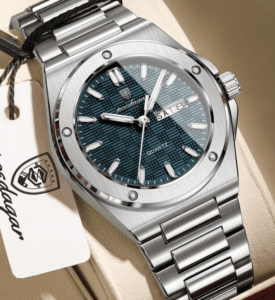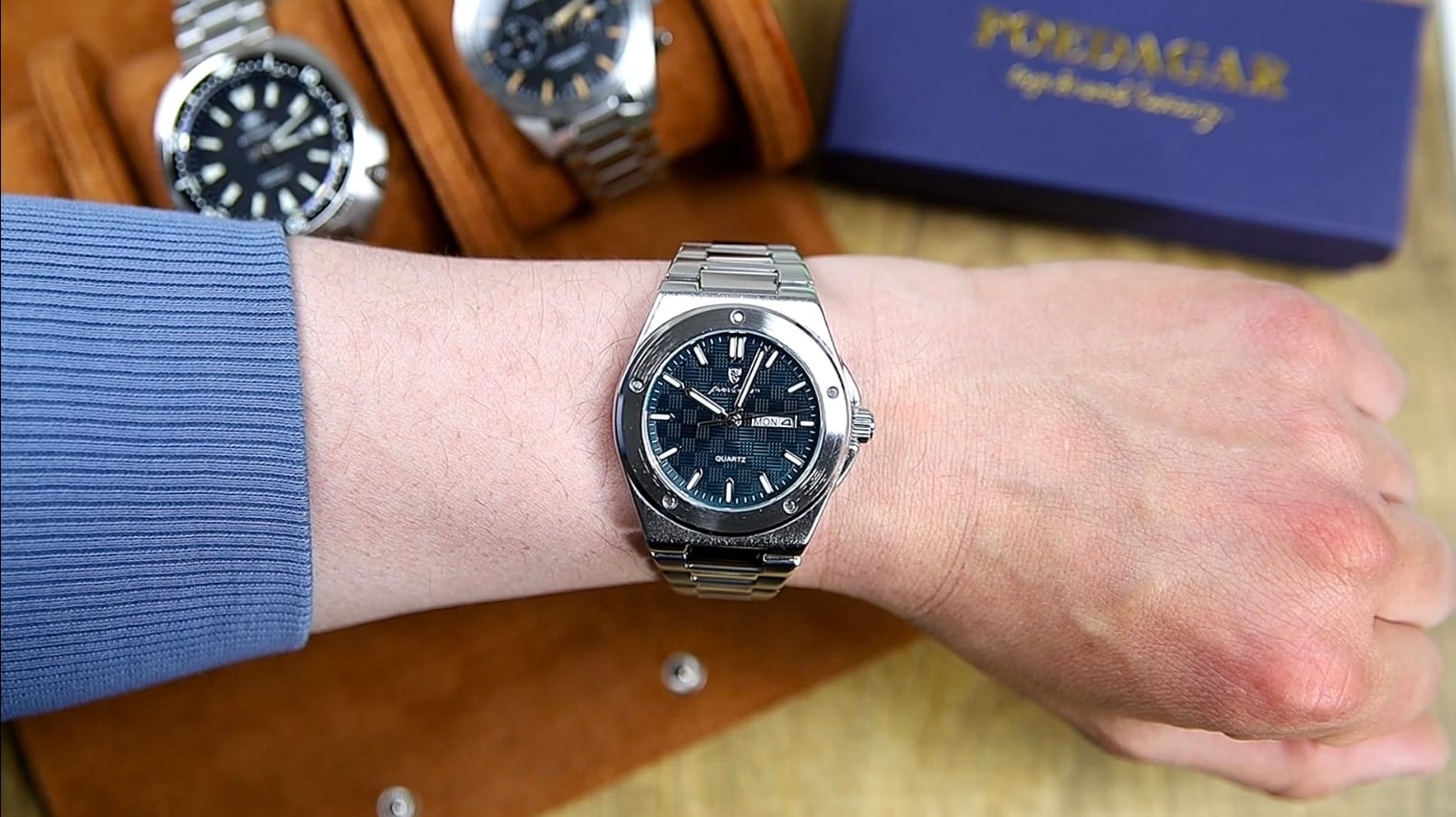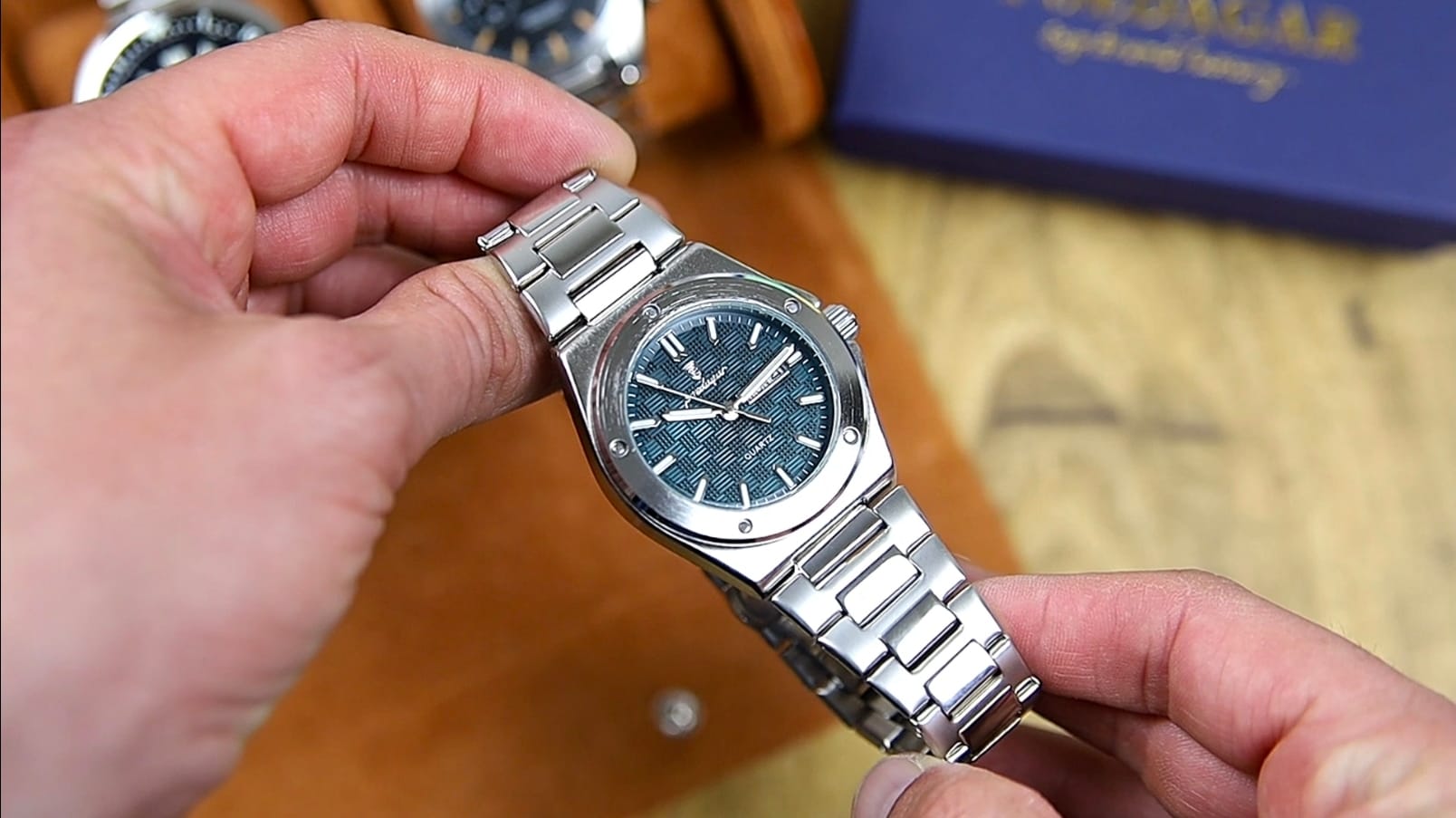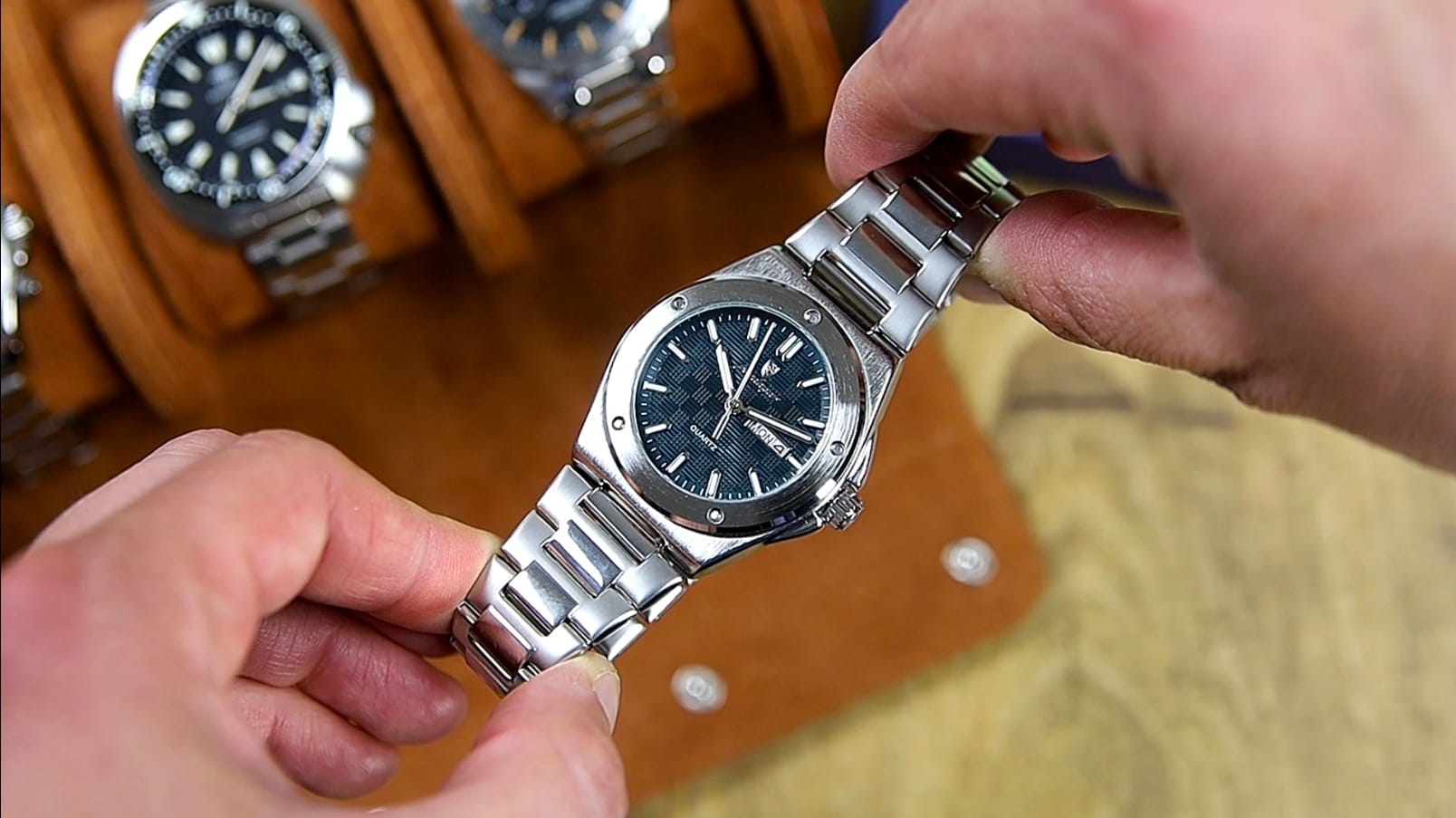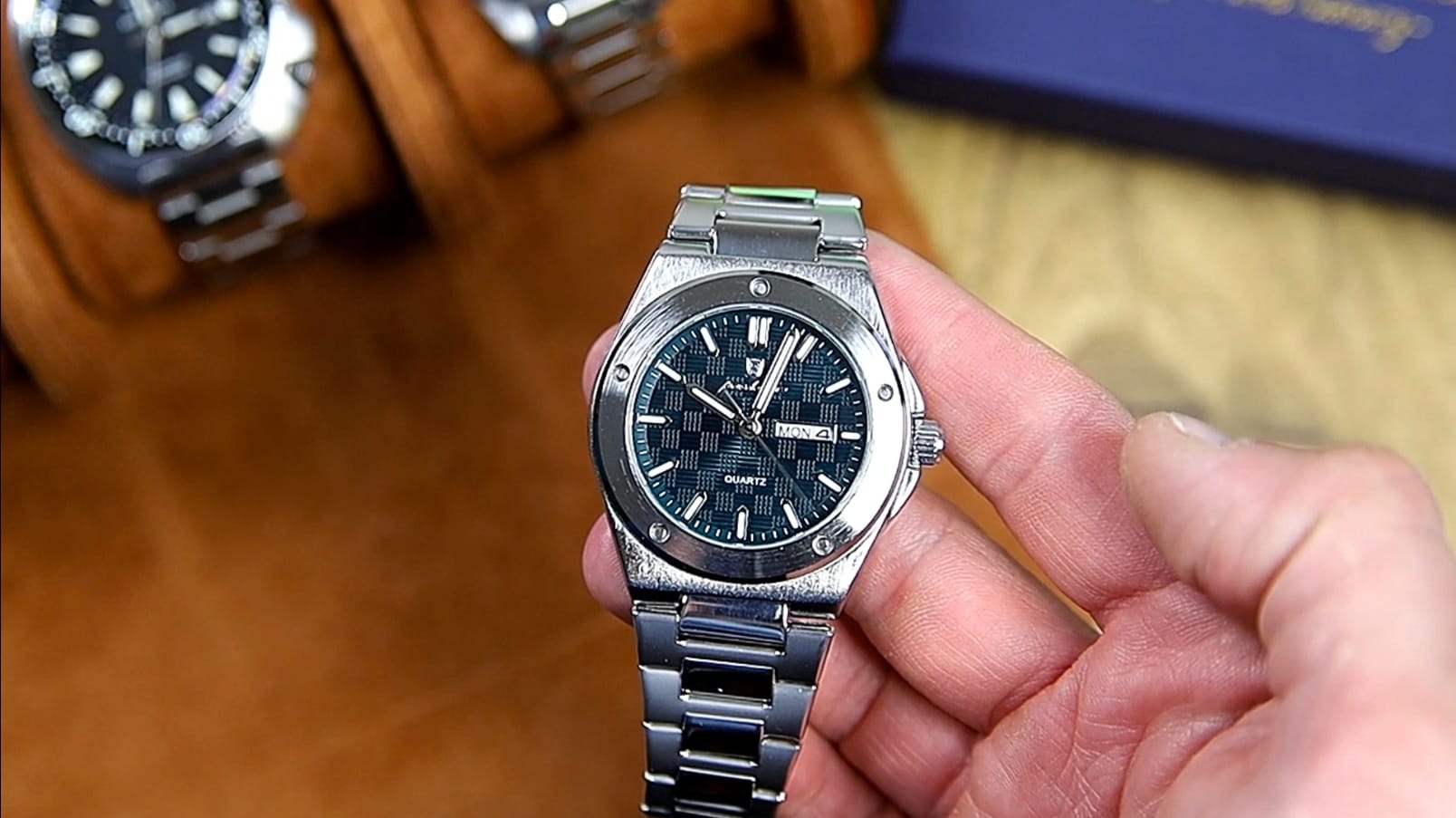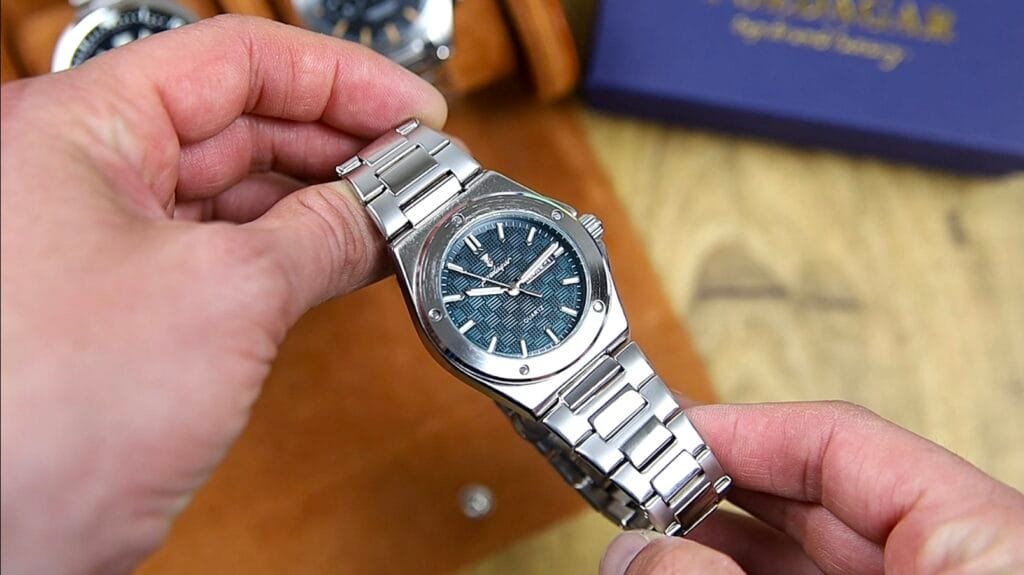
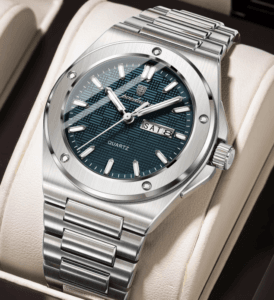
The Poedagar 696 is a very unusual kind of budget watch because of what it is trying to do. At around $18, it takes clear inspiration from the Ingenieur design language, with an integrated bracelet-style case, a fixed circular bezel with five recessed screws, and a textured grid dial that does much of the visual heavy lifting. At roughly this sub $50 level of spend, buyers are spoiled for choice, with several strong competitors available.
The materials are important to state clearly. The case is zinc alloy, the bracelet is stainless steel, and the crystal is mineral. This is not a premium steel sports watch in construction, but visually, especially from a distance, it does a convincing job of capturing that integrated sports-watch presence. For a wider view of how this watch compares within the brand, you may want to revisit our other Poedagar reviews.

Design & Case
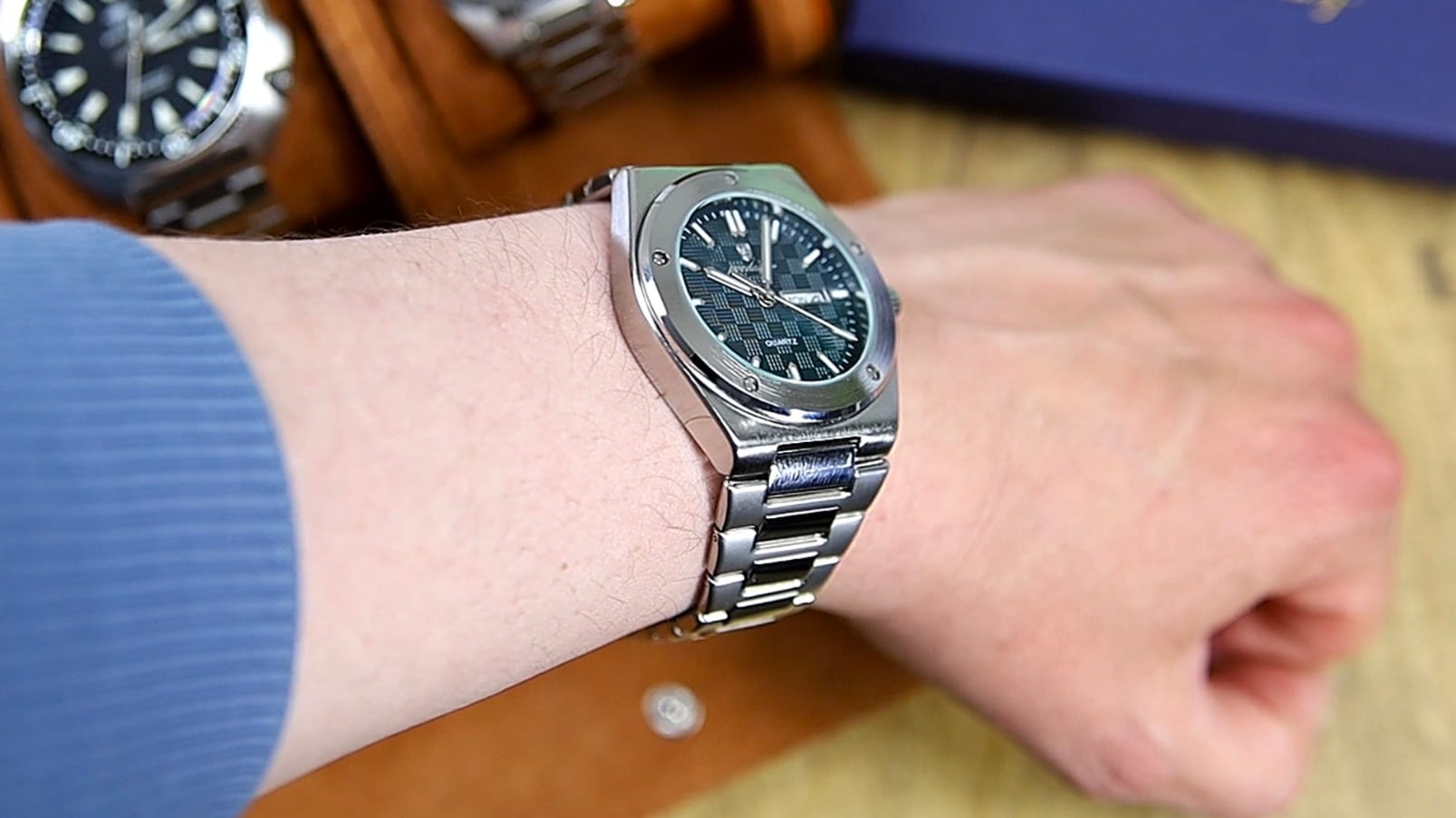
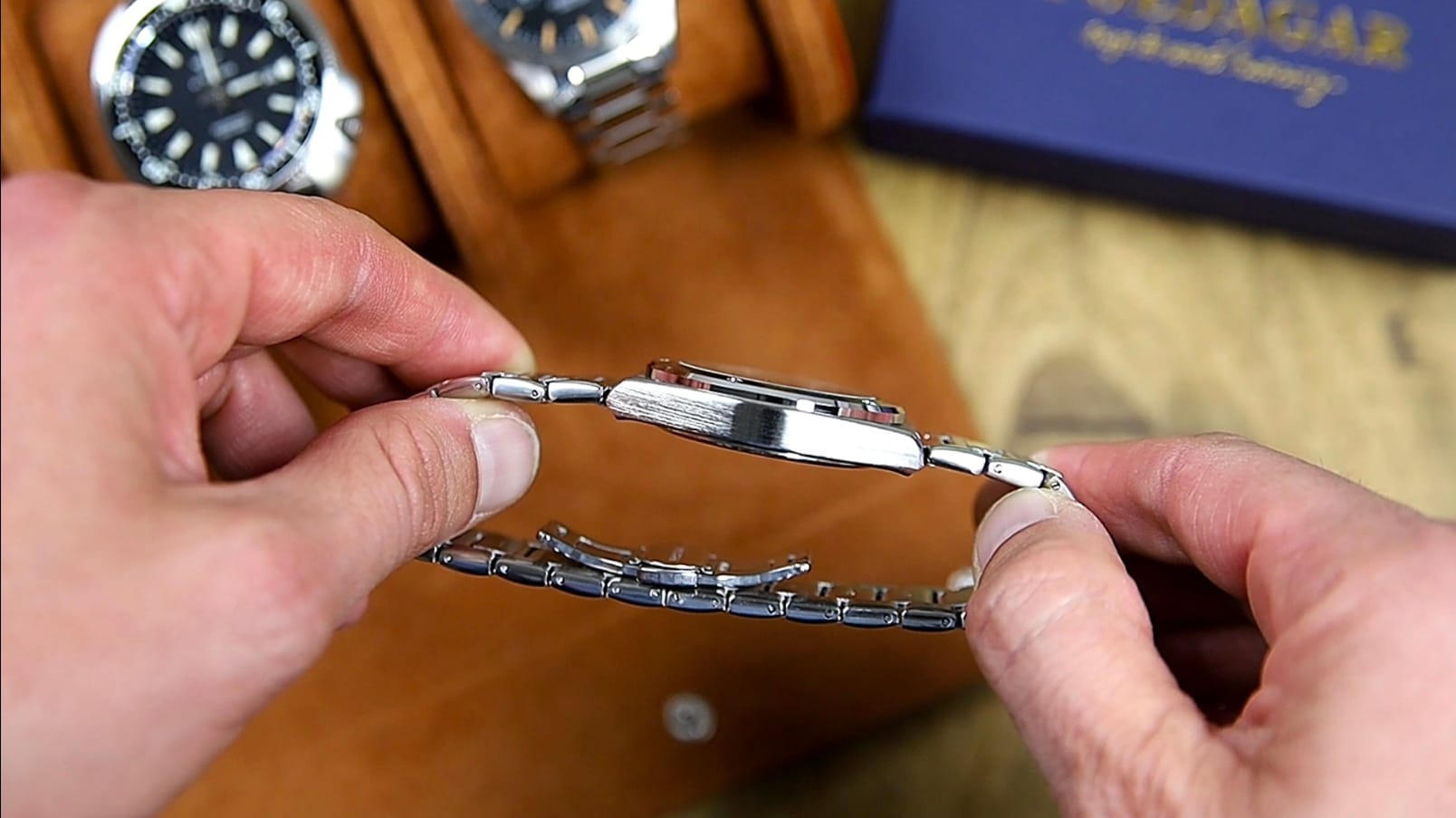
The Poedagar 696 measures around 41mm in case diameter, while the fixed bezel itself is closer to 40.4mm, which is really the visual footprint of the watch. Thickness is 10mm, and the lug-to-lug length is 45.4mm, so the proportions are more manageable than the broad integrated design might first suggest.
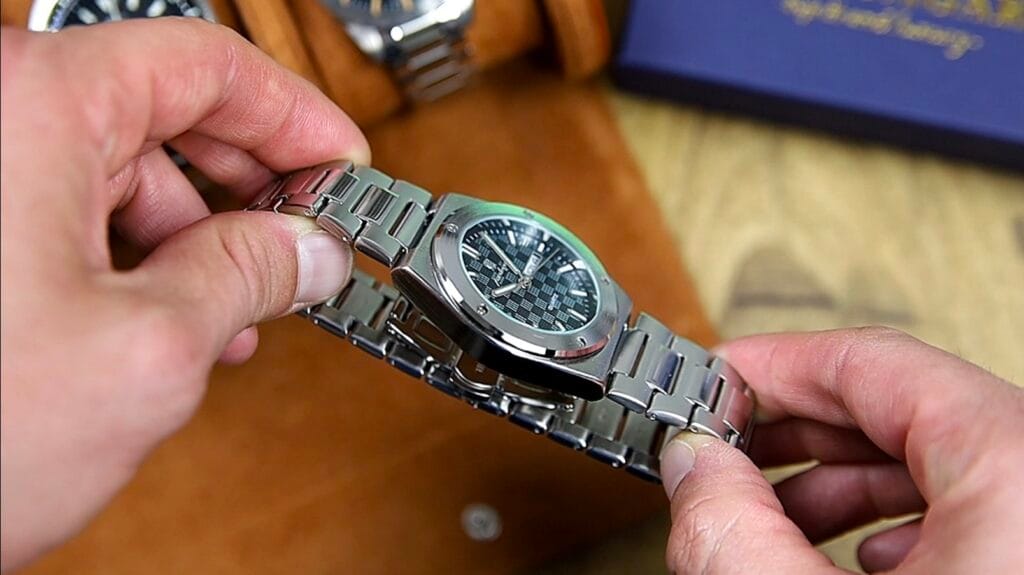
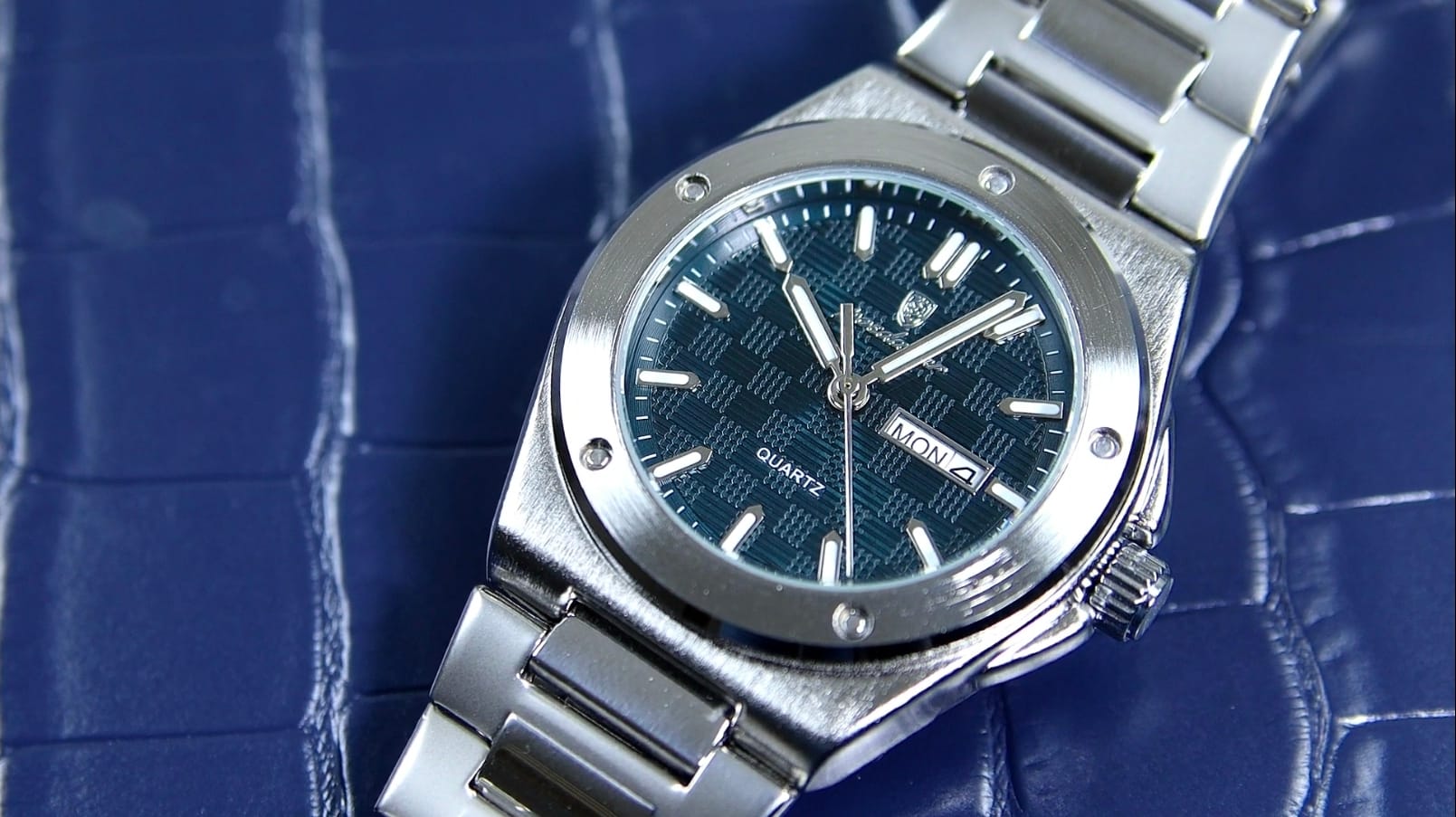
The case architecture is where the watch becomes interesting for the price. The flank is slab-sided and horizontally brushed, giving the watch a bold, flat side profile. Above it, the fixed bezel rises with a radially brushed top surface, a polished edge, and five recessed screws that create the industrial frame around the dial.
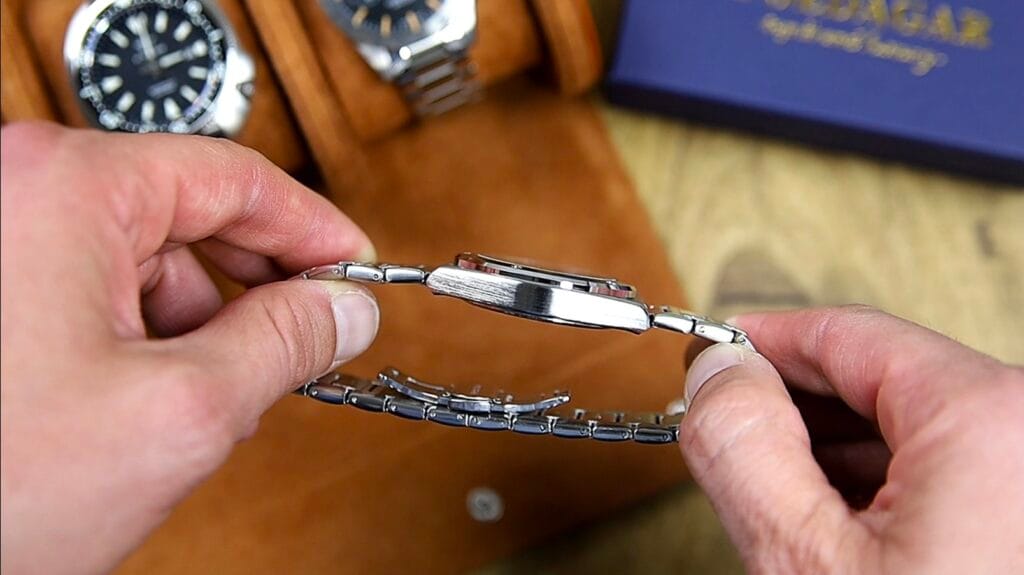
The transitions between surfaces show the limits of the construction. The bevels are smooth to the touch, but visually they are soft rather than sharply cut. The shape and design language are clearly there, but the finishing does not have the crisp precision that would push the watch into a more refined category.
Movement & Crown
The Poedagar 696 is a quartz watch, and the movement supports the day-date complication at 3 o’clock. That complication is one of the practical advantages of the watch, especially given the daily-beater character of the design.
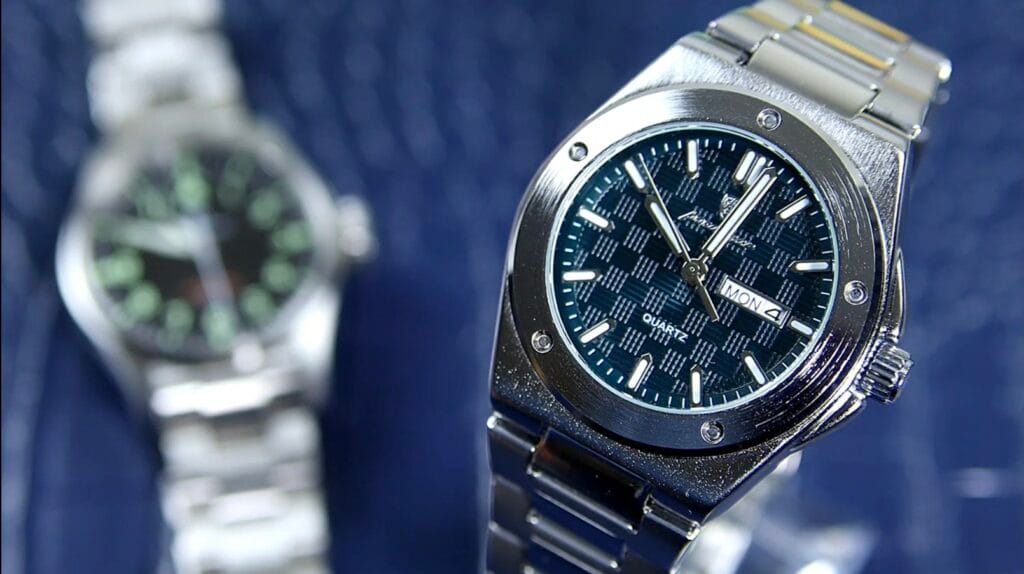
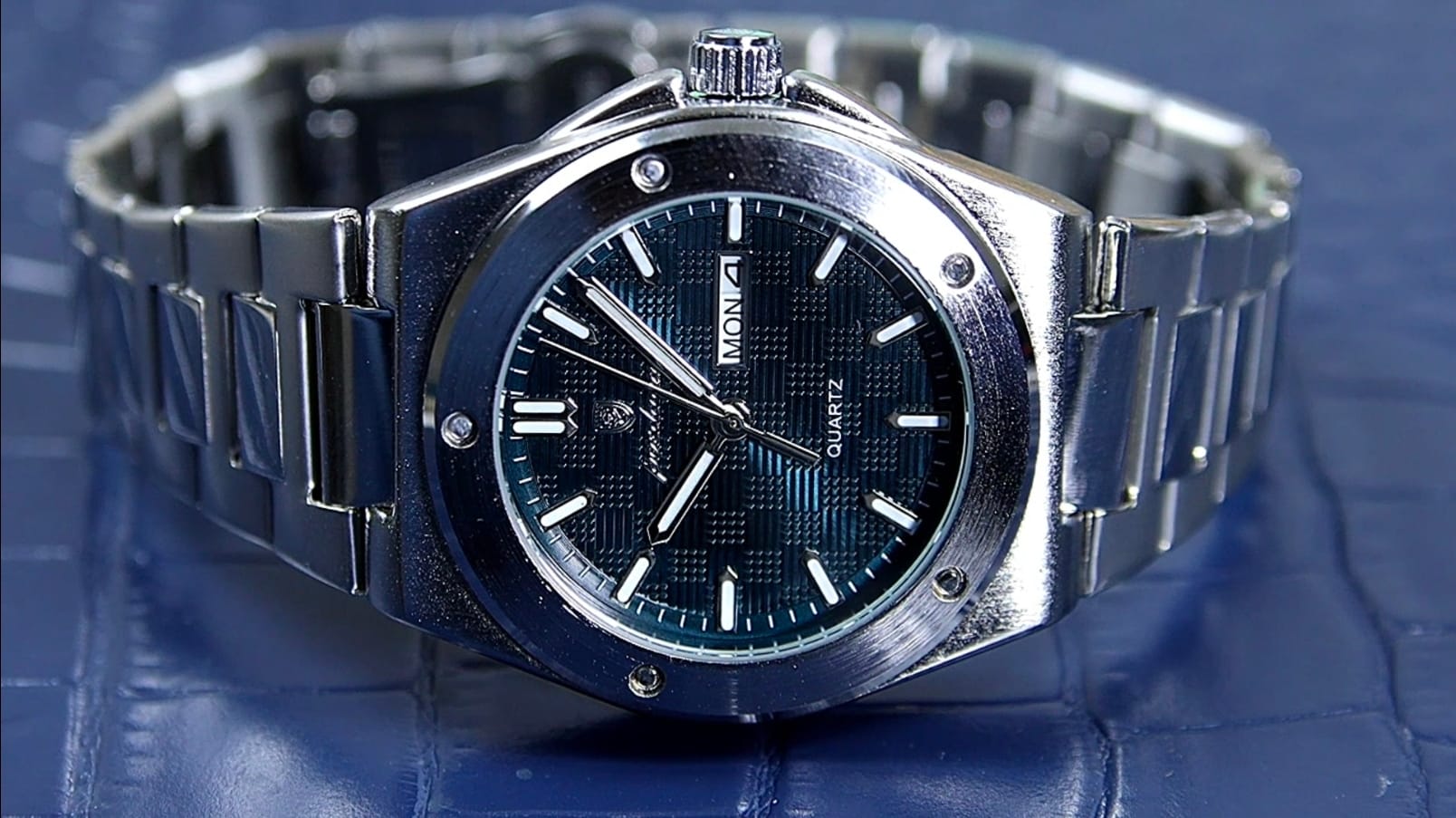
On the right-hand side, there is a guarded push-pull crown measuring 4.8mm across. The crown is signed, which is a nice touch at this price point, and it handles both time setting and the day-date display.
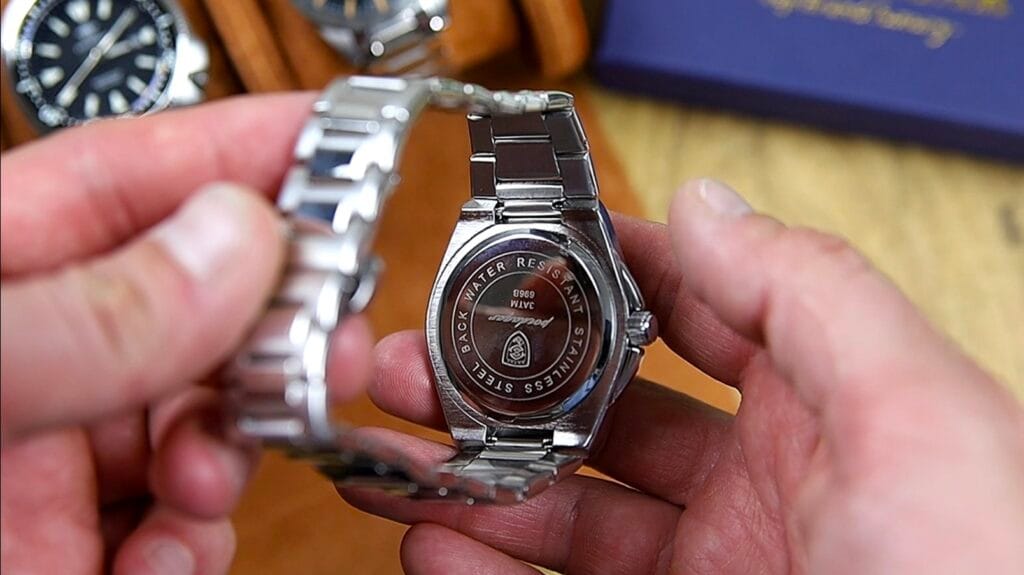
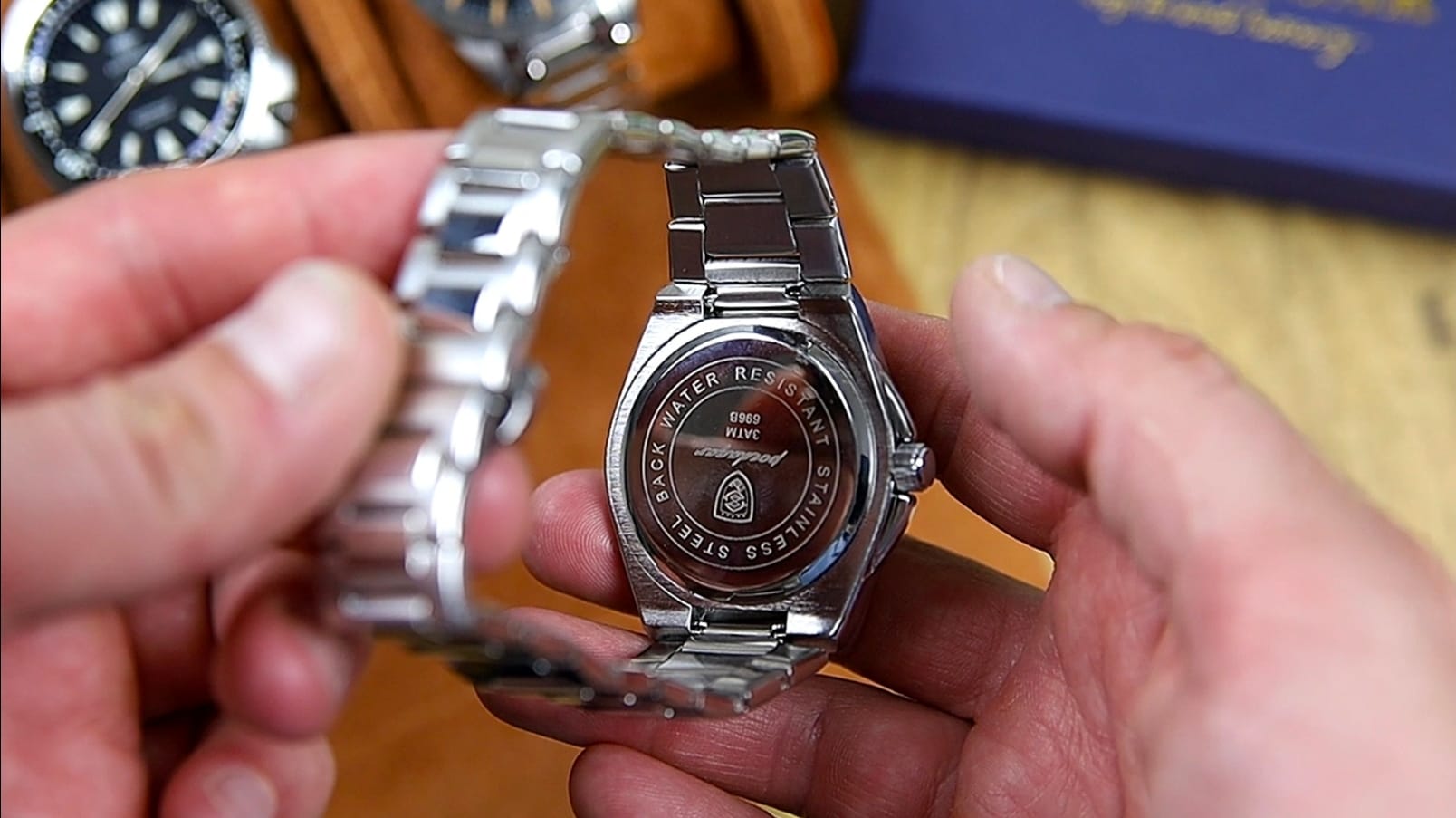
The caseback is a snap-on type, with the model and brand information etched in the center. The watch carries a stated 30 meters of water resistance, which fits the general super-budget construction rather than suggesting any serious water-use intent. If you’re currently shopping within the field / everyday watches category, there are several comparable models worth considering.
Bezel
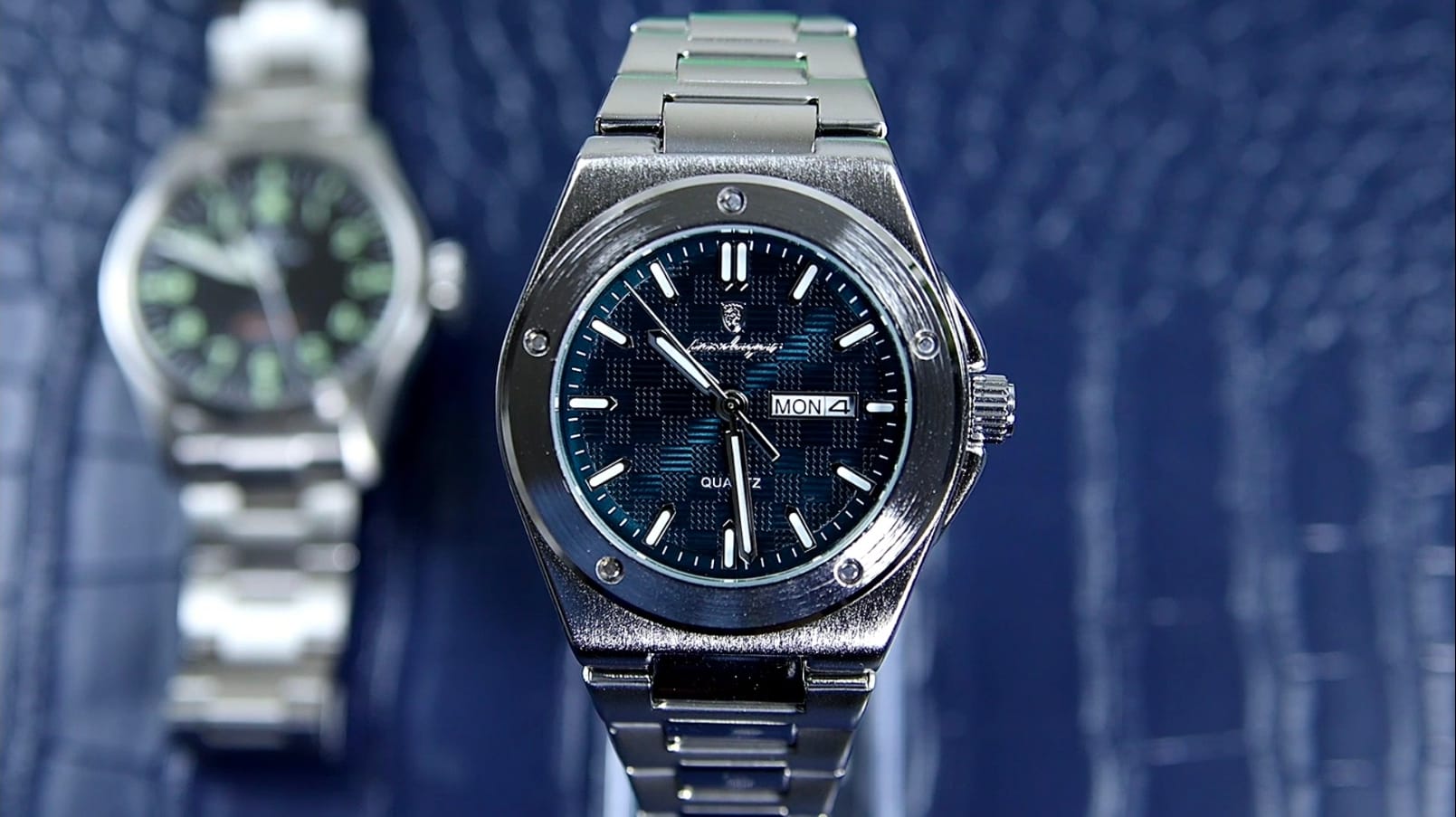
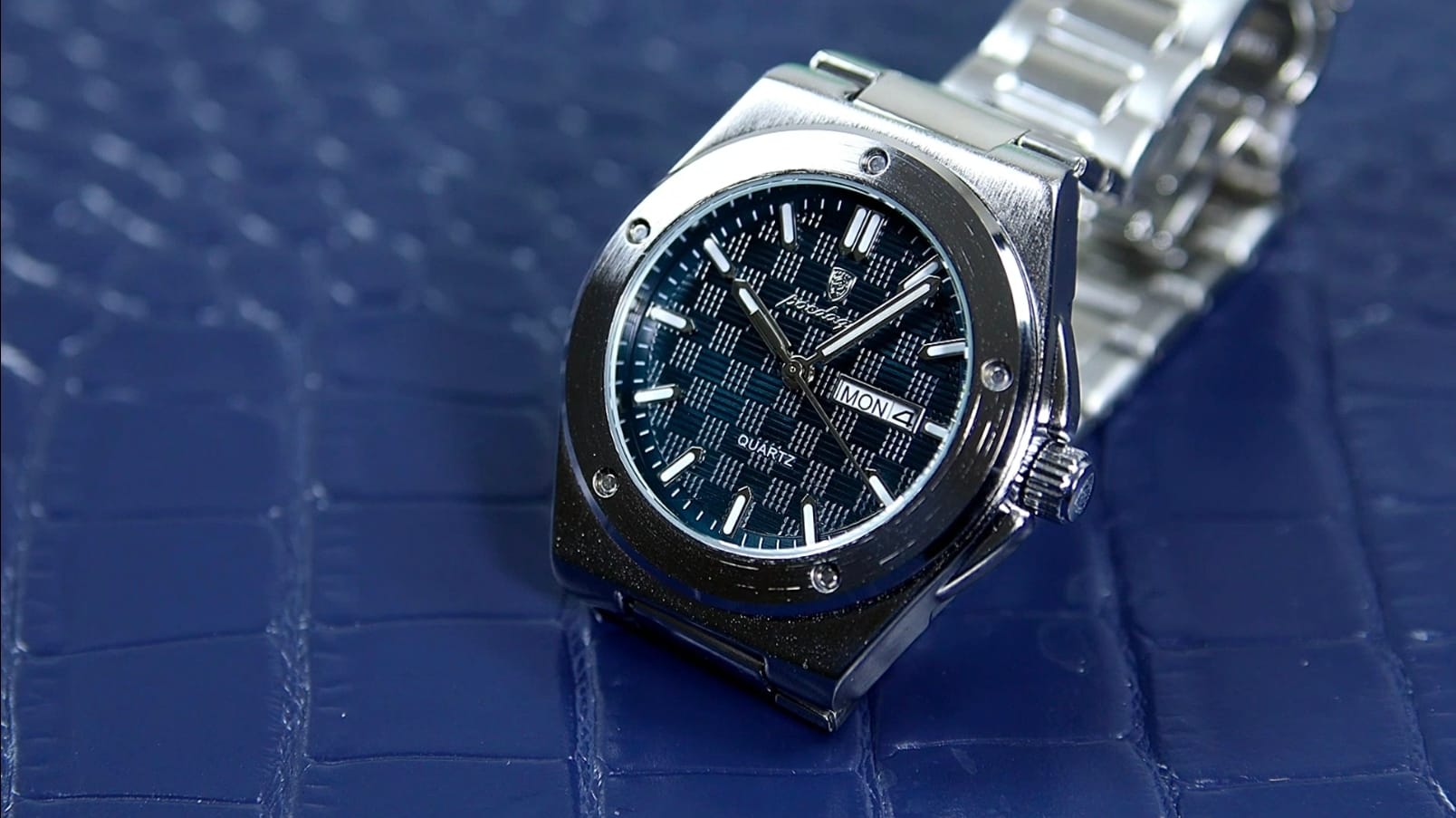
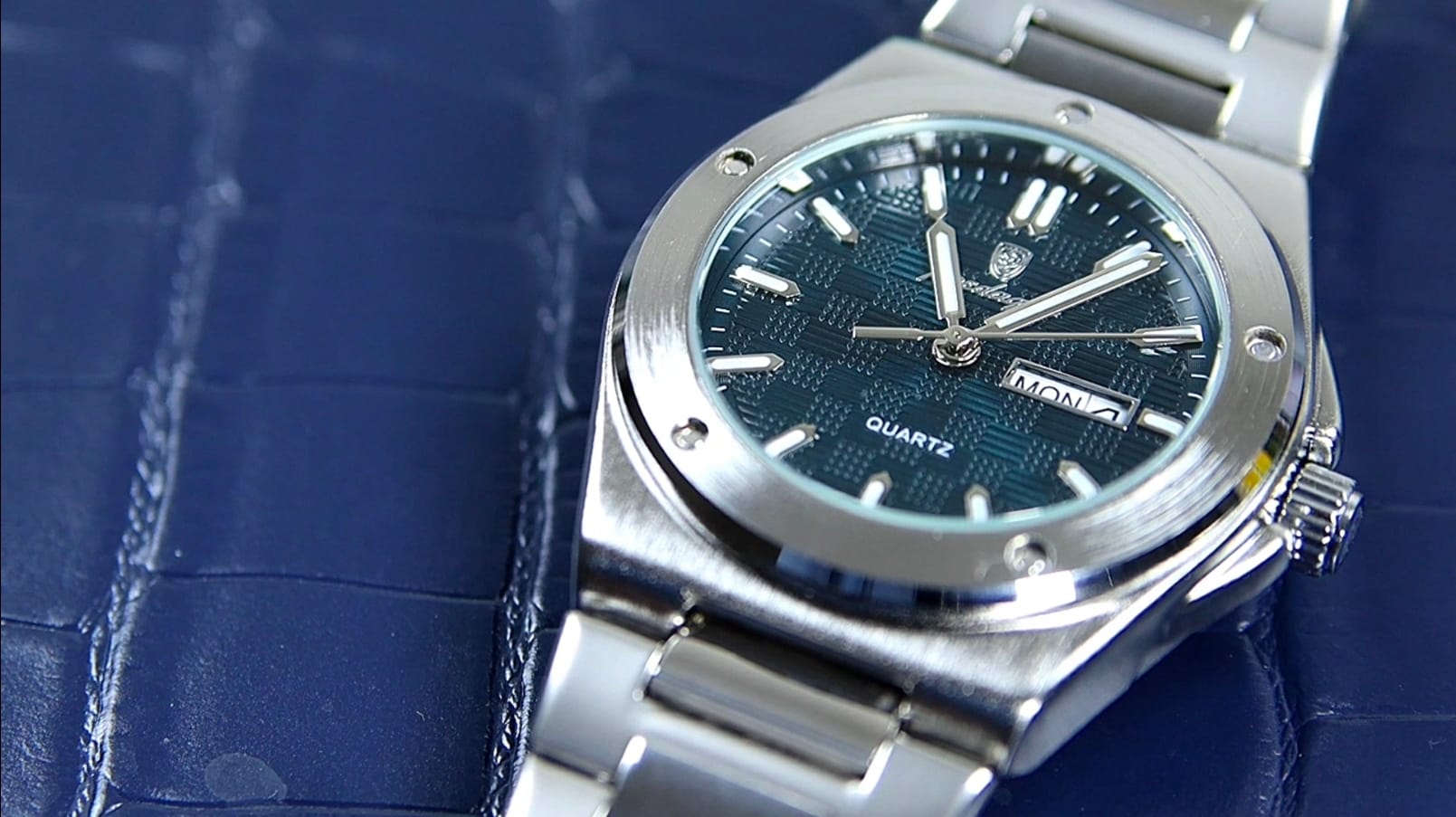
The fixed bezel is central to the watch’s character. It is circular, radially brushed across the top, and framed by five recessed screws. This is the detail that most clearly connects the 696 to the integrated engineer-style design language.
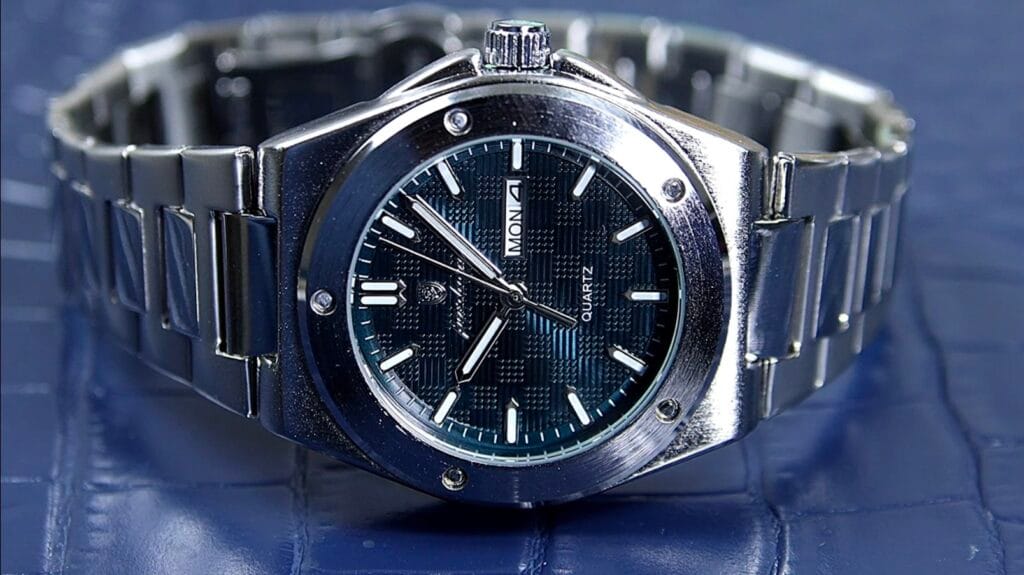
There is no rotating functionality here, so the bezel is purely architectural and visual. It creates a defined metallic frame around the dial and gives the watch that industrial sports-watch stance.
The mineral crystal sits almost perfectly in line with the top of the bezel. There is no awkward raised glass lip disrupting the profile, and while there is no anti-reflective coating, legibility when looking straight down remains perfectly fine.
Bracelet
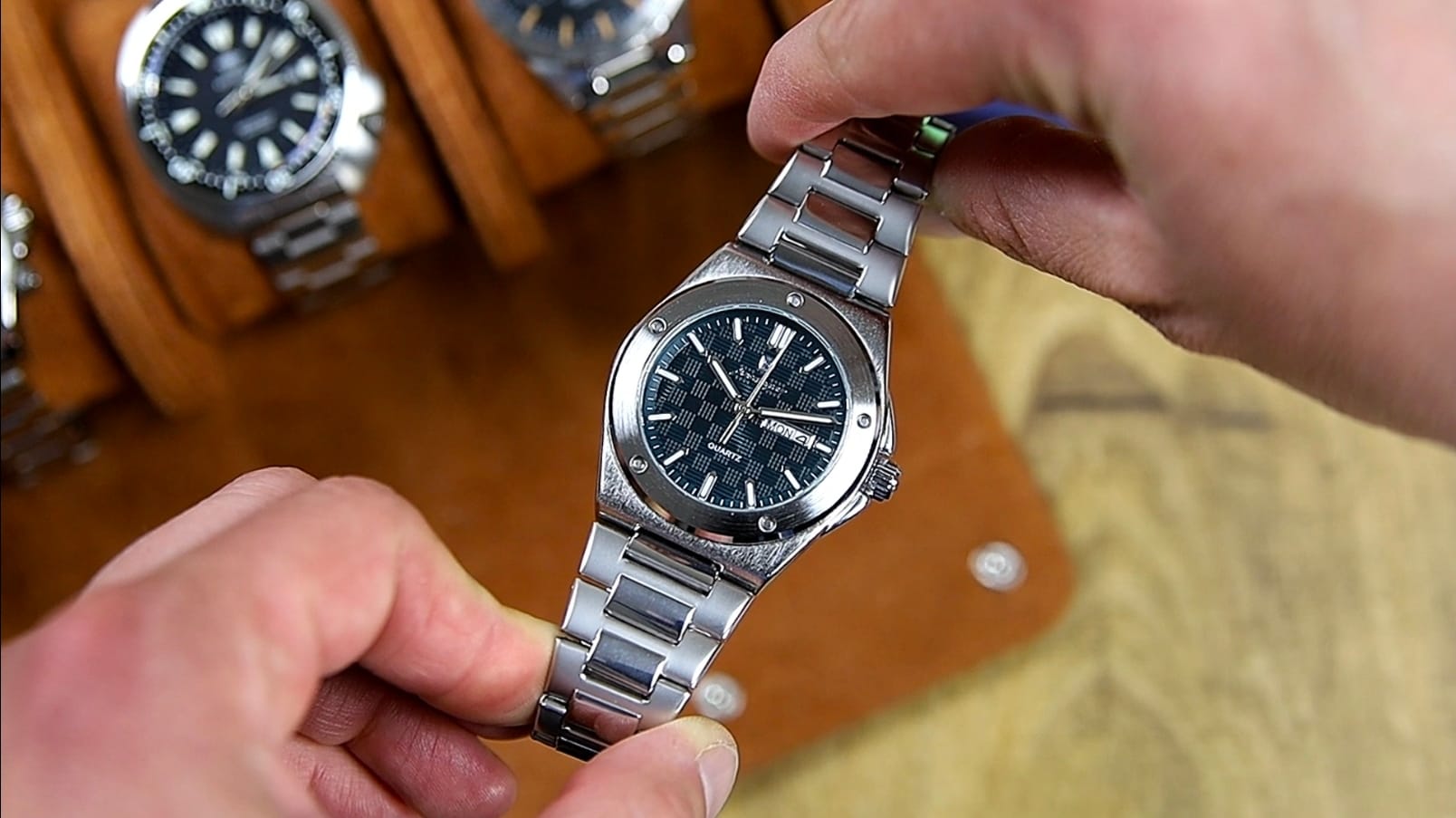
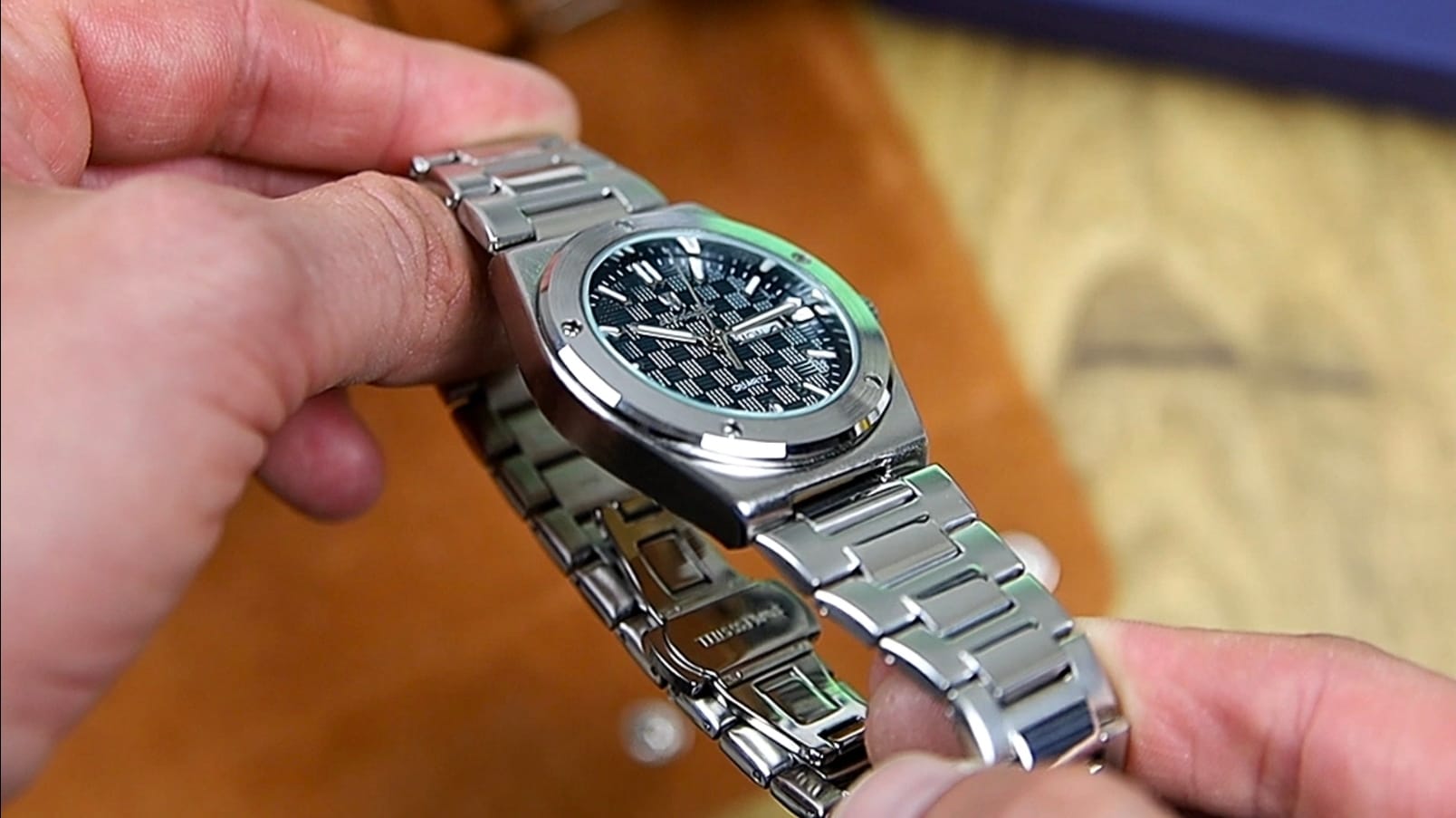
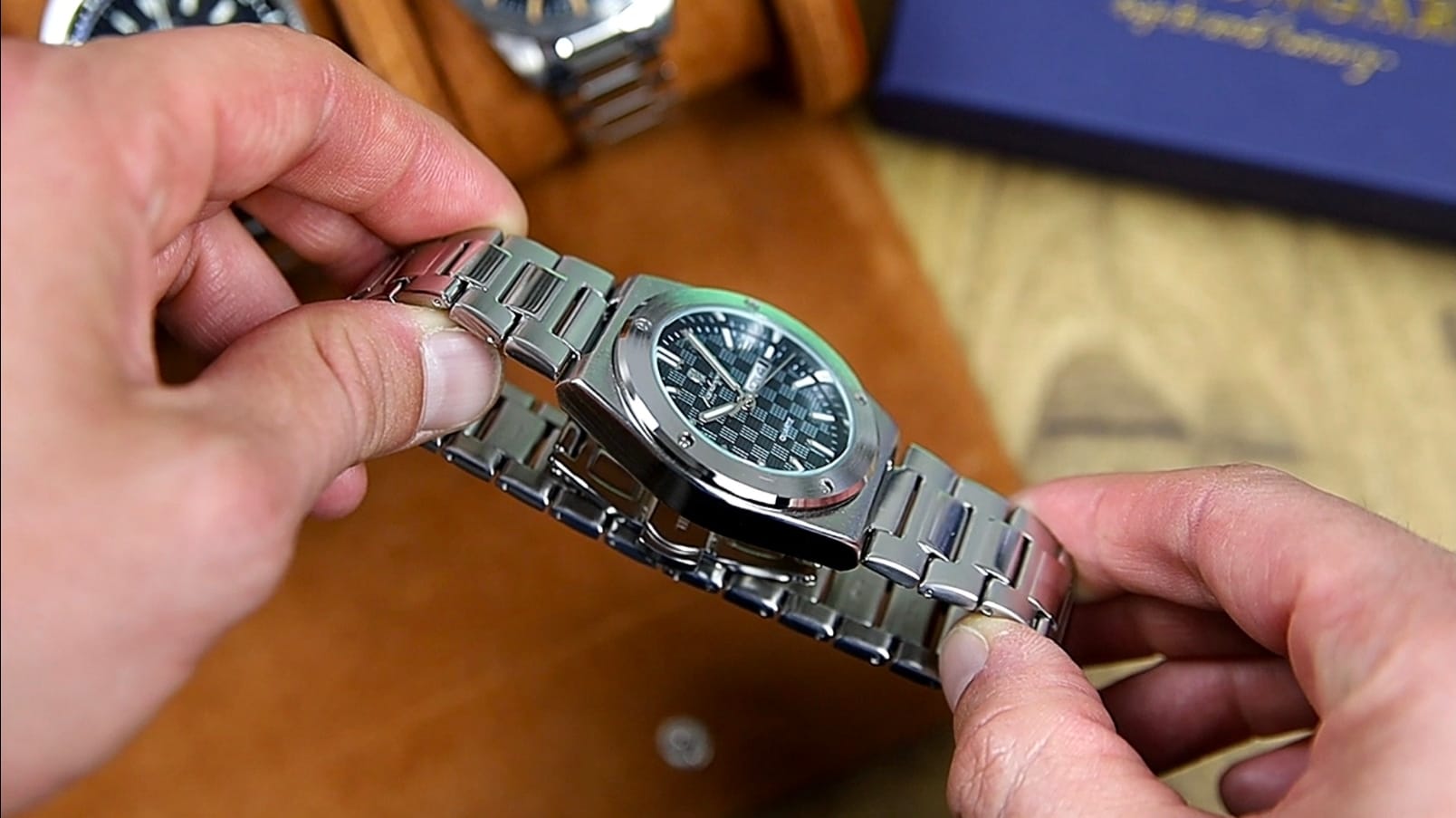
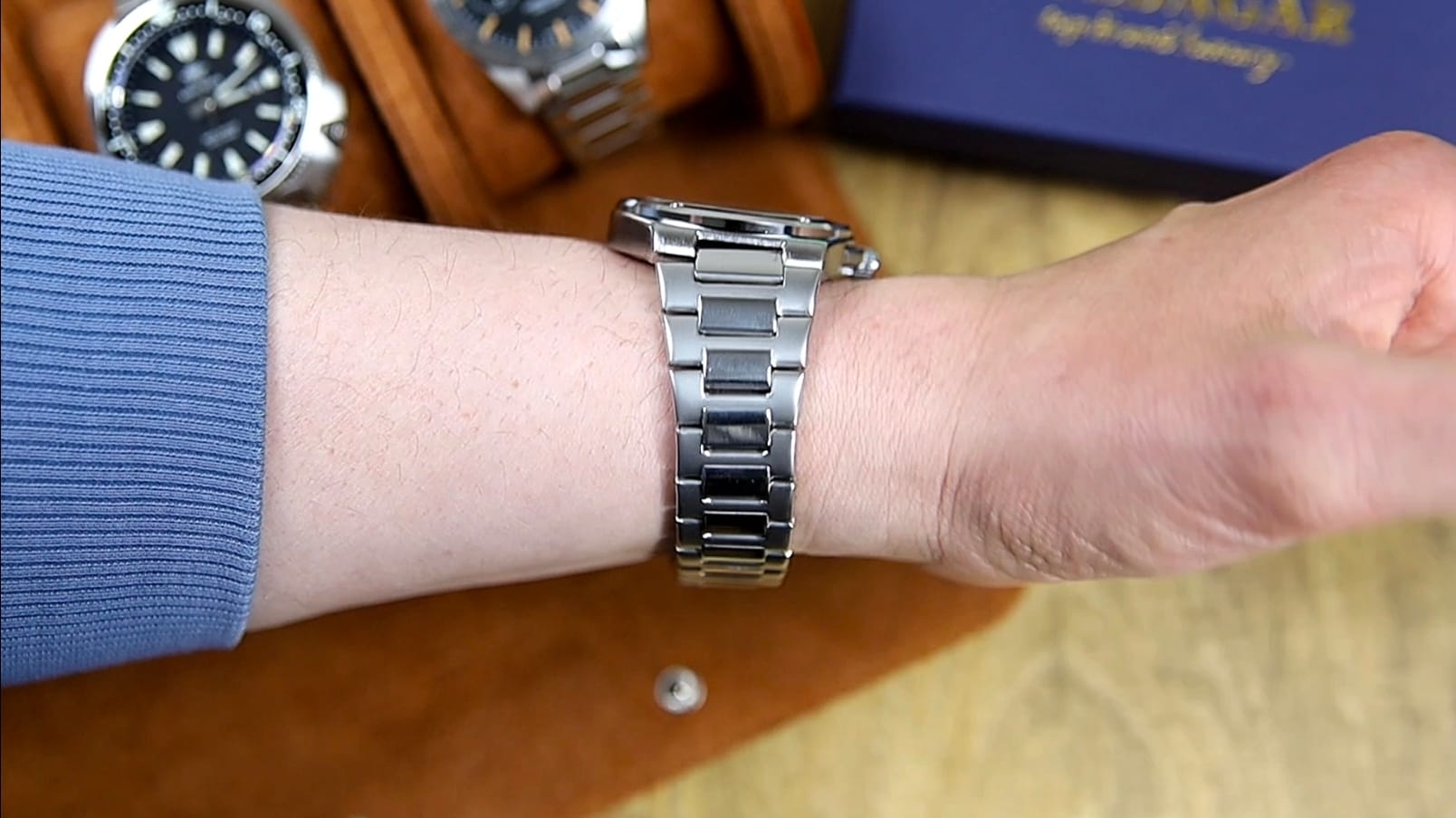
The bracelet is not the strongest part of the watch, although at under $20, expectations have to be kept realistic. It is a stainless steel link bracelet with a butterfly clasp, and the integrated look is important to the overall design.
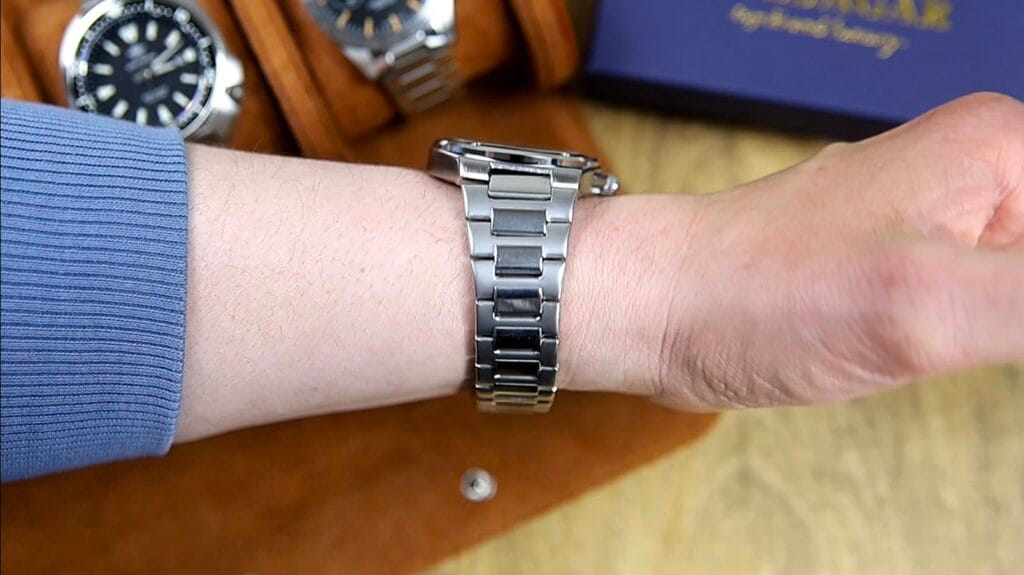
At the case integration point, the bracelet is 25mm wide, tapering down to 18mm at the clasp. That gives the watch a broad sporty stance at the head while keeping the clasp end more manageable.
Visually, the bracelet mimics a two-link H-style integrated bracelet, with polished center links and brushed outer H-style portions. Structurally, it is really a single-link pressed stainless steel bracelet shaped to imitate that more complex construction.
It is held together by push pins, and in the hand, there is some light rattle. Tolerances are only mediocre, and when the bracelet is stretched or flexed, visible gaps open between the links. Link fluidity and articulation are also fairly average, although the short roughly 8mm links should still help it drape reasonably well on the wrist.
The butterfly clasp is basic but closes securely. It is also signed, which pairs well with the signed crown and gives the Poedagar 696 a more complete appearance than expected at this price.
Crystal & Dial
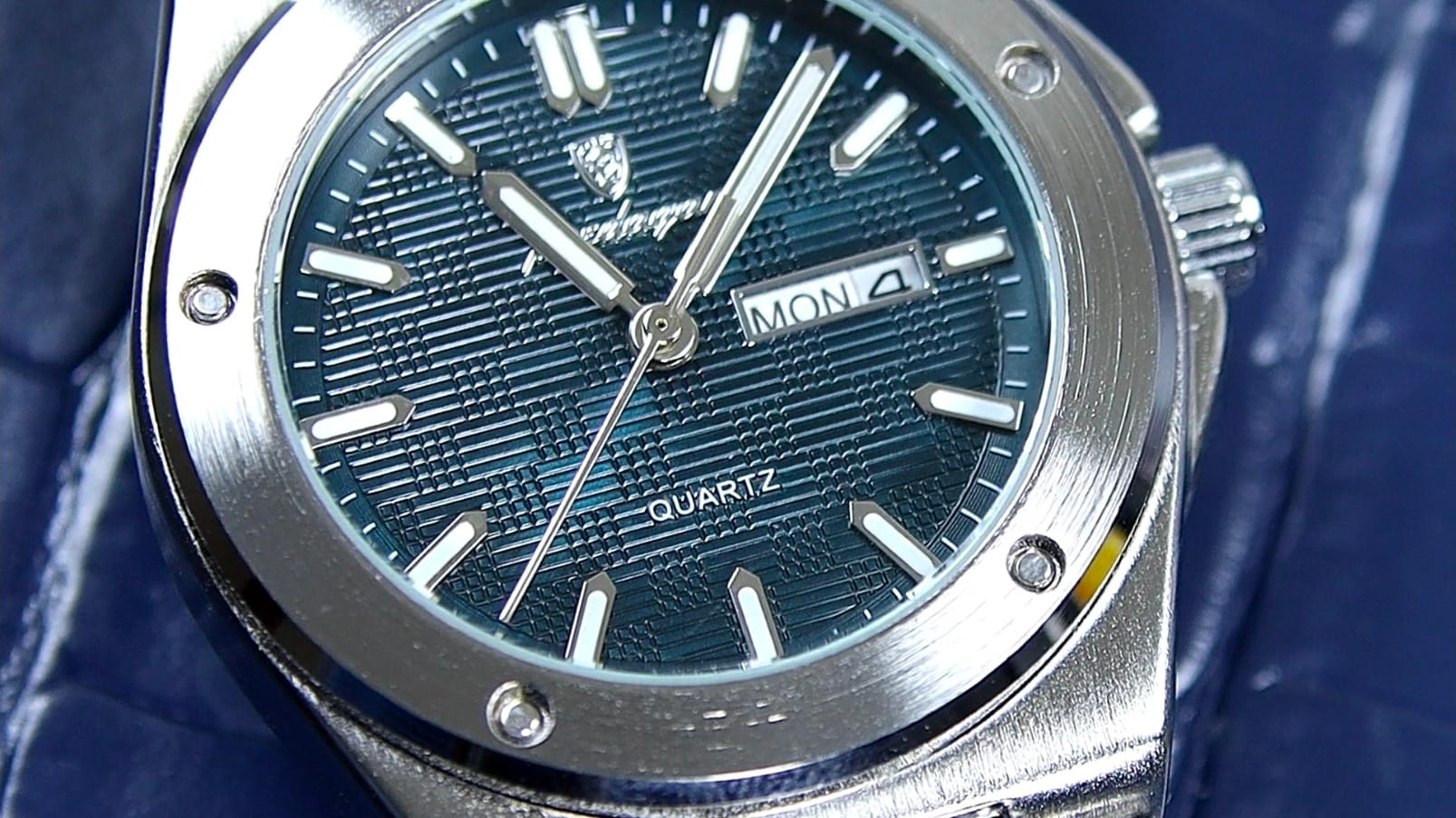
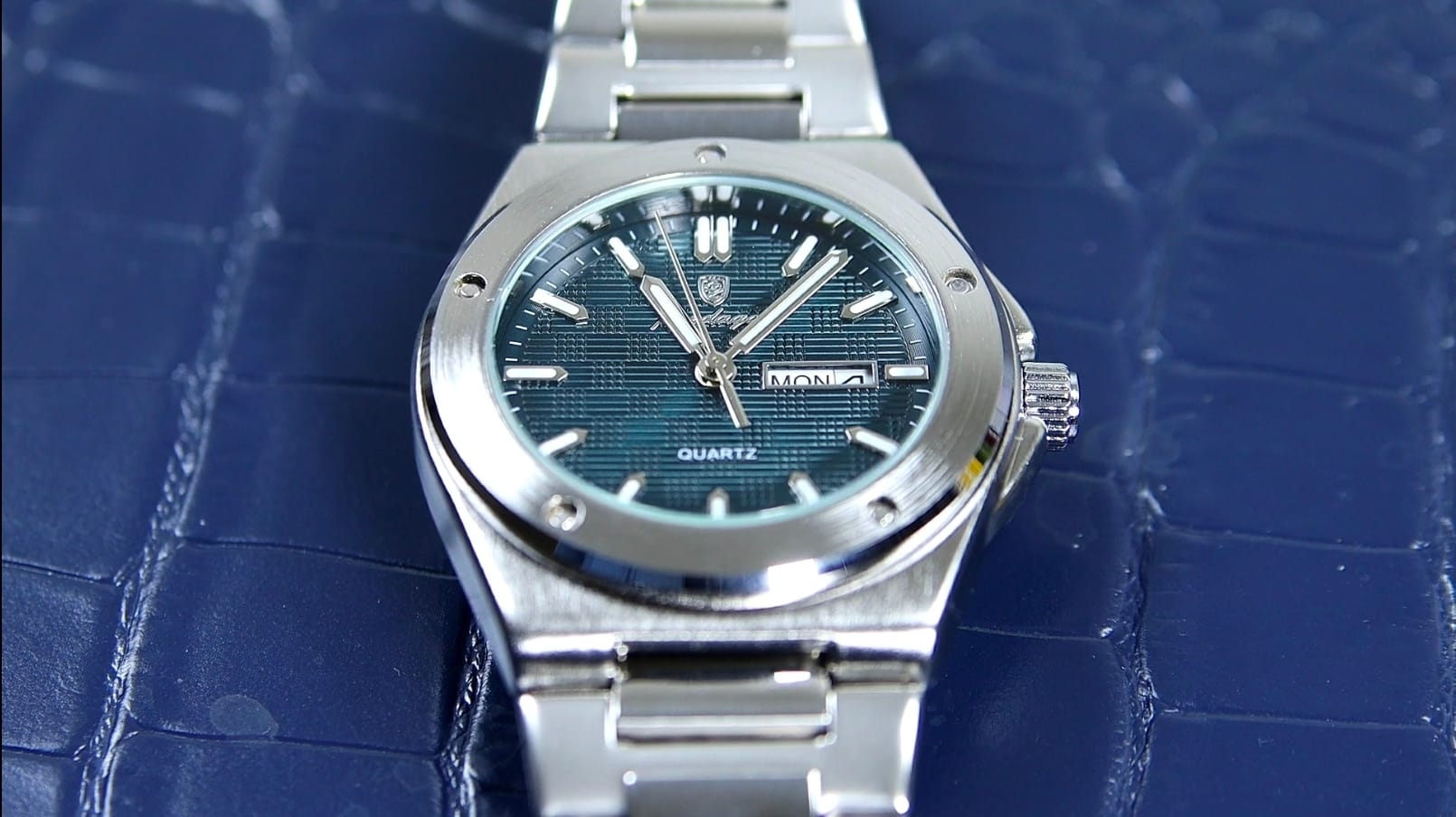
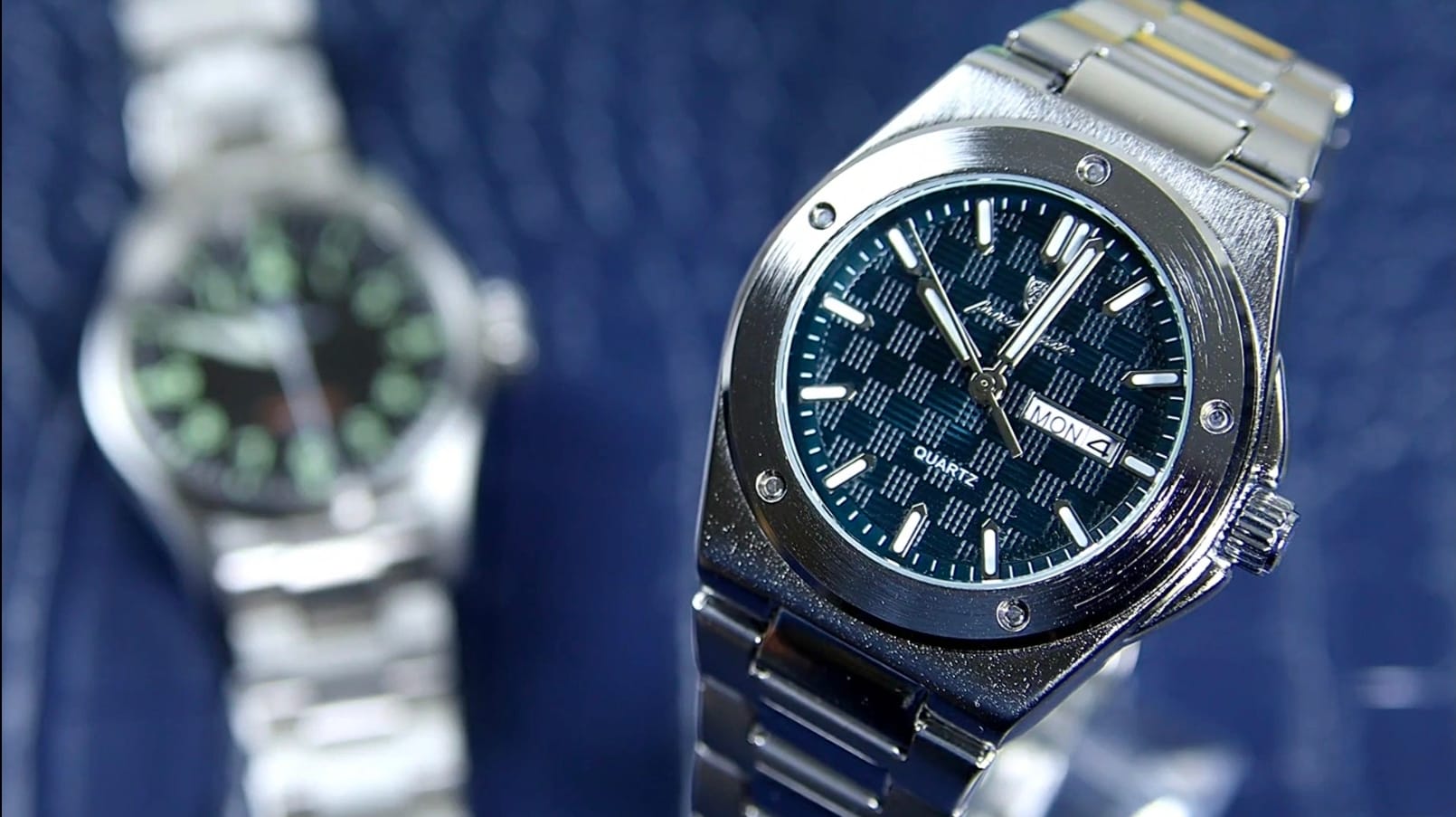
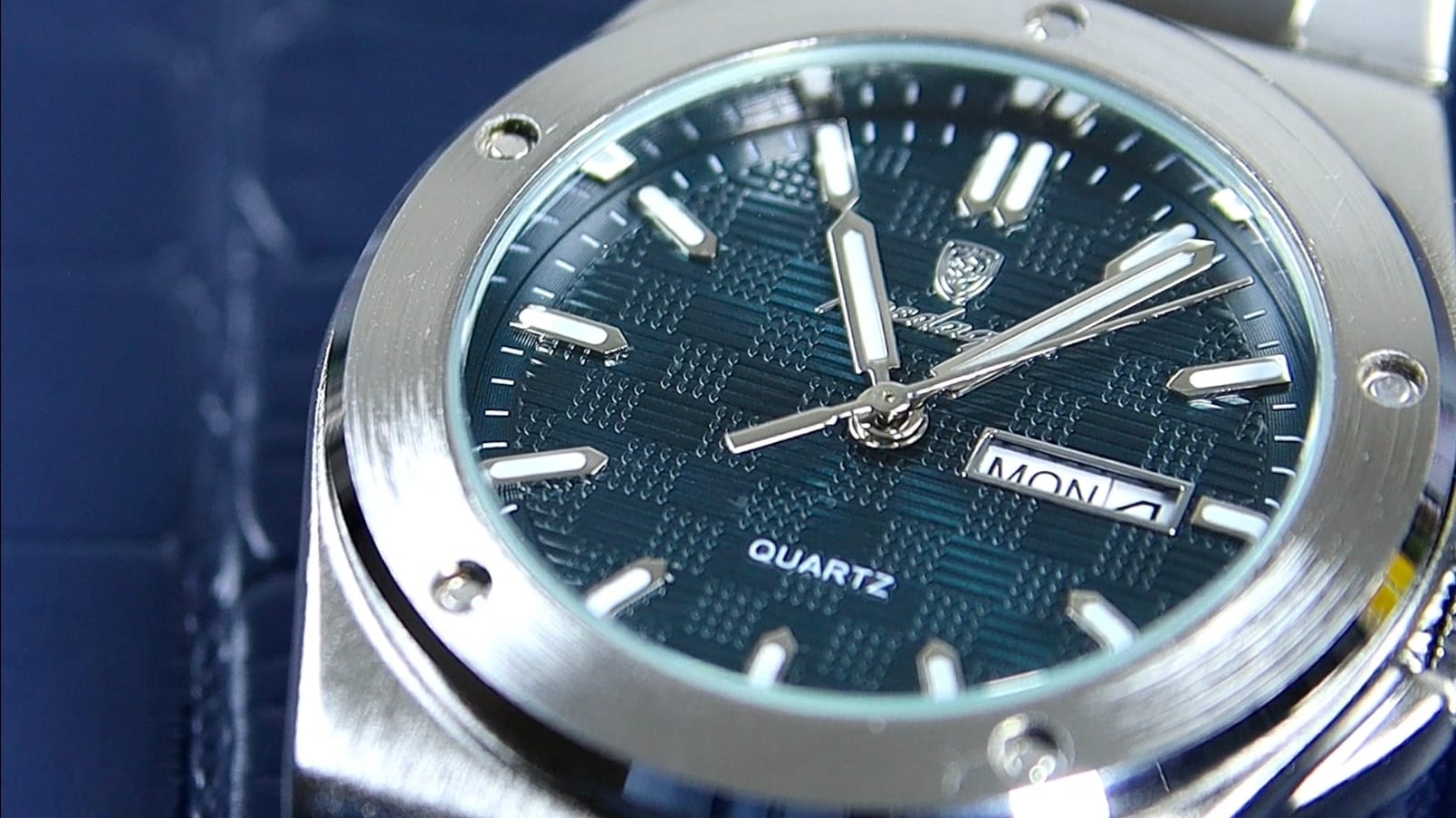
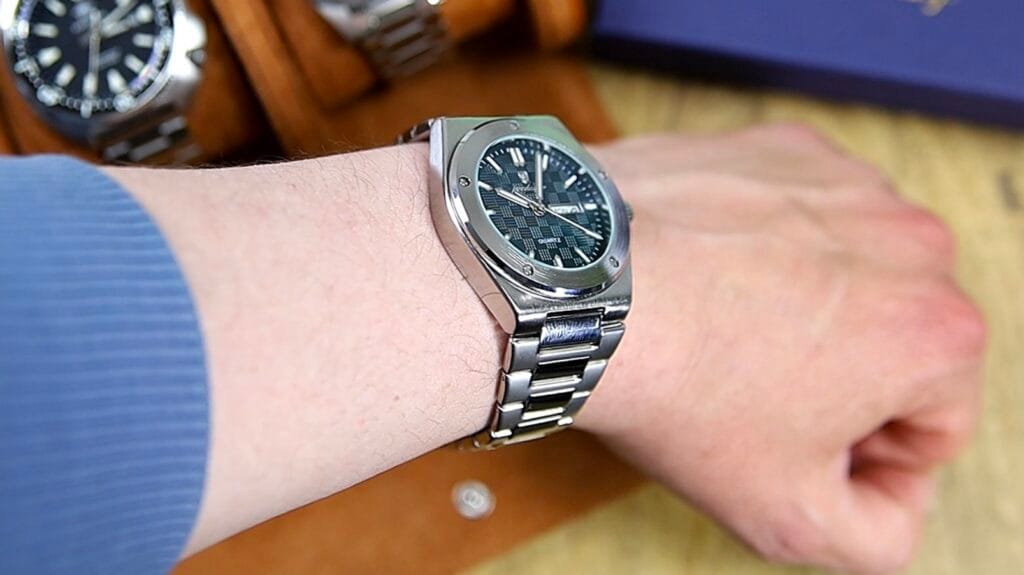
The dial is the reason this watch stands out. Beneath the flat mineral crystal, the eye drops through a mirror-polished vertical rehaut. It does not slope inward; it drops straight down like a polished wall around the edge, giving the dial more depth before reaching the main surface.
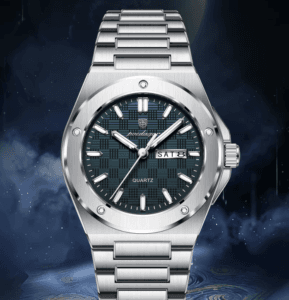
The dial itself has a blue checkered grid texture. It is not just a flat printed pattern, but has a layered, woven, almost architectural look, like a tiny geometric mesh under the indices. As the watch moves, the blue shifts between darker teal, brighter blue, and almost black at some angles.
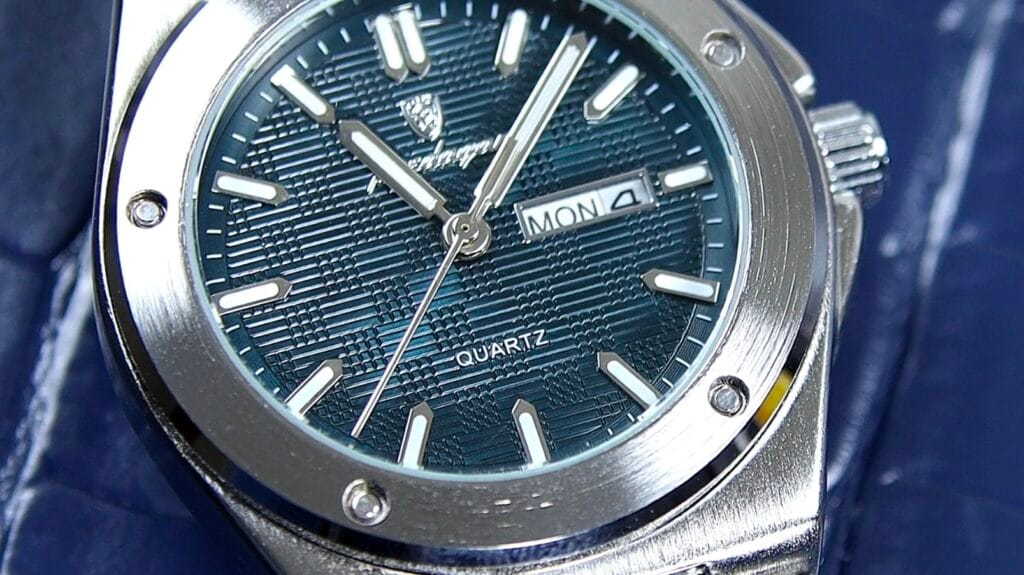
Around the edge is a white printed minute chapter, while the hour markers are applied elongated batons edged in chrome with white lume plots at the center. At 12, there is a double baton. At 3, even with the framed day-date window, Poedagar keeps a shortened applied marker in place, which helps the dial avoid feeling visually empty on that side.
The day-date complication is practical, though slightly quirky. Instead of two different day languages, it appears to repeat English twice, such as Monday, Monday, and Tuesday, Tuesday. Sunday appears in red, which is a traditional touch.
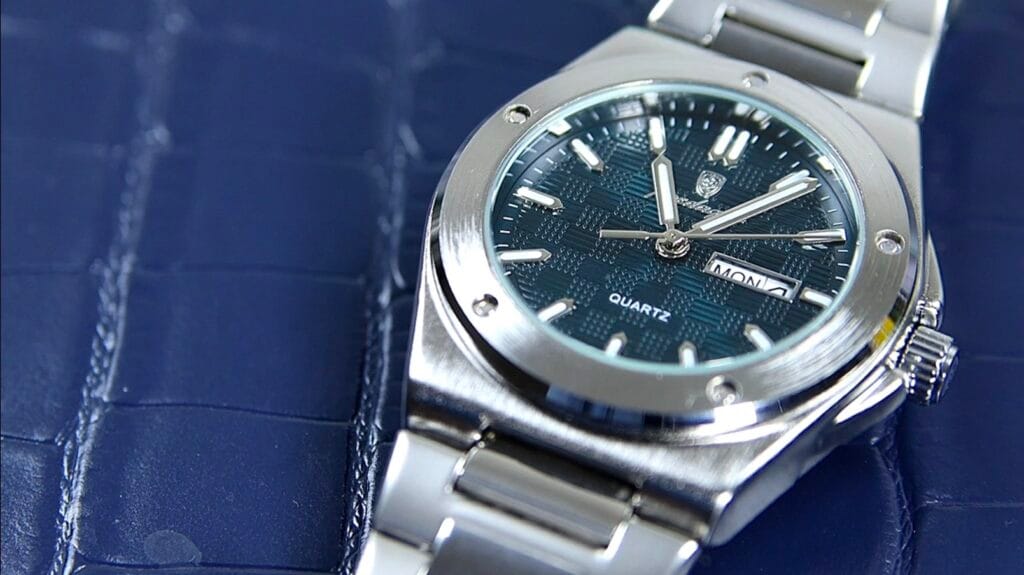
Branding is more restrained than on some older Poedagar models. There is an applied chrome emblem and cursive Poedagar name under 12, with only the word “Quartz” above 6. The hands are chrome-edged batons with lume plots, and the seconds hand is a simple chrome pointer.
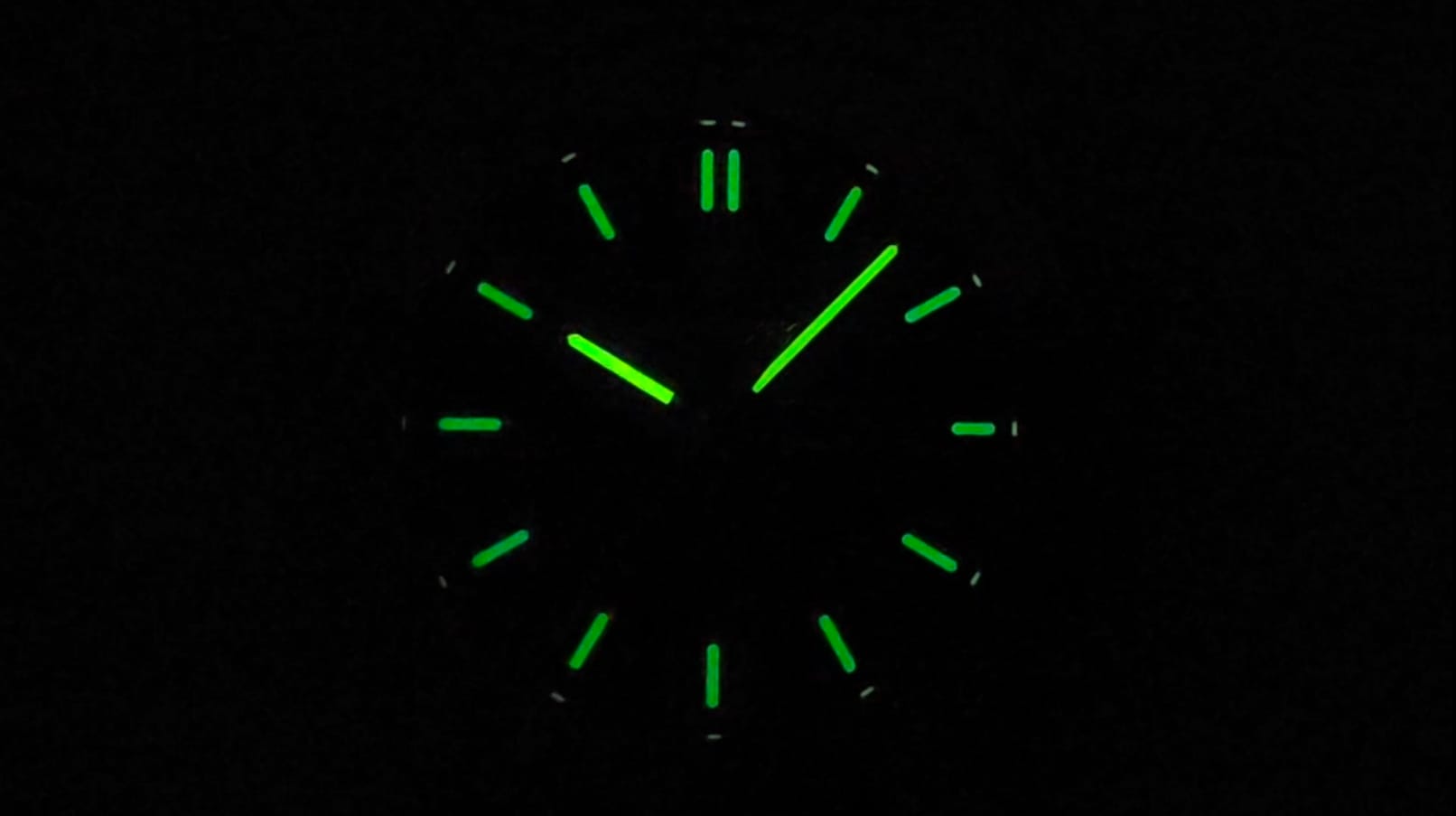
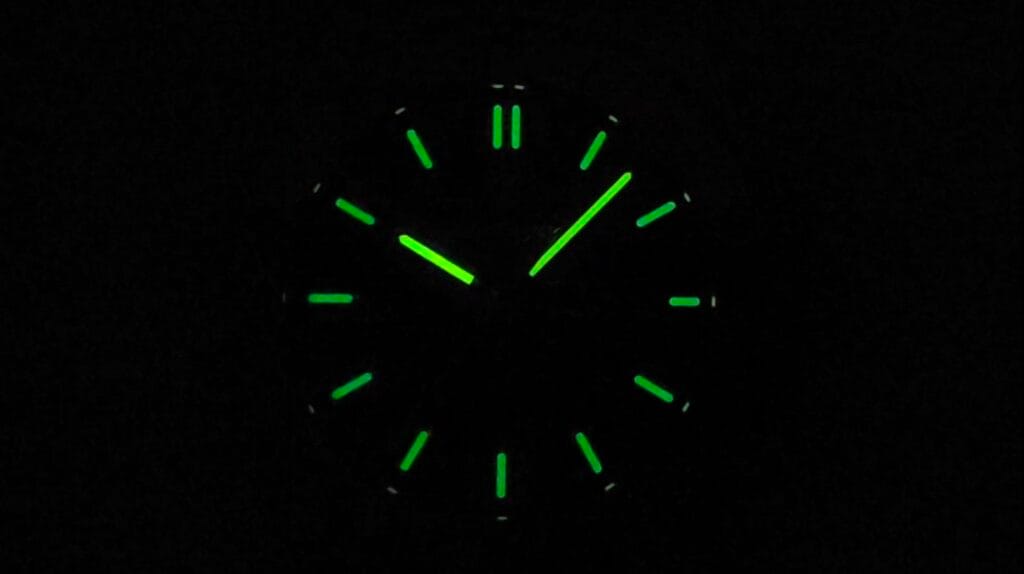
In the dark, the lume glows green across the hands and indices. It is not exceptional, but it is bright after charging and more usable than expected, rather than being purely decorative.
Summary
The Poedagar 696 is a super-budget watch, and the construction has to be understood in that context. The zinc alloy case, mineral crystal, pressed stainless steel bracelet, snap-on caseback, and 30 meters of water resistance all place it firmly in affordable territory.
What makes it interesting is how much visual character the watch manages to deliver despite those limitations. The integrated engineer-style case architecture, fixed five-screw bezel, signed crown, signed butterfly clasp, and day-date complication all help build the impression from a distance.
The bracelet is rattly, the tolerances are mediocre, and the case finishing is soft rather than sharply defined. But the dial is the real surprise. The blue checkered grid texture, polished vertical rehaut, applied markers, restrained branding, and usable green lume make the 696 more visually compelling than its price and materials would suggest. If this kind of versatile daily watch is on your shortlist, our Comparison Tool helps you place comparable watches side by side and see how their specifications differ before deciding.
Poedagar 696 Specifications
| Specification | Details |
|---|---|
| Model | Poedagar 696 |
| Dimensions | |
| Case Diameter | Around 41mm |
| Case Width | Fixed bezel measures closer to 40.4mm |
| Case Thickness | 10mm |
| Lug-to-Lug | 45.4mm |
| Crown | Signed guarded crown measuring 4.8mm |
| Crown Type | Push-pull |
| Design | |
| Case Material | Zinc alloy |
| Case Finish | Horizontally brushed slab-sided flank, radially brushed bezel, polished bezel edge, soft visual bevels |
| Crystal | Flat mineral crystal |
| Caseback | Snap-on caseback with model and brand information etched in the center |
| Bracelet/Strap | Pressed stainless steel integrated-style bracelet with push pins, light rattle, visible gaps, and average articulation |
| Bracelet Taper | 25mm at case integration to 18mm at clasp |
| Clasp | Signed butterfly clasp |
| Bezel | Fixed circular bezel with radial brushing and five recessed screws |
| Dial | Blue checkered grid texture with mirror-polished vertical rehaut and white printed minute chapter |
| Dial Color | Blue, shifting between darker teal, brighter blue, and near black |
| Dial Text | Applied chrome emblem and cursive Poedagar under 12; Quartz above 6 |
| Rehaut | Mirror-polished vertical rehaut |
| Indices | Applied chrome-edged elongated batons with white lume plots; double baton at 12 |
| Date | Day-date complication at 3 |
| Hands | Chrome-edged baton hands with lume plots; simple chrome seconds hand |
| Lume | Green lume on hands and indices; bright after charging, not exceptional |
| Water Resistance | 30m |
| Movement | |
| Movement | Quartz movement |
| Price | |
| Approx. Price | Around $18 |