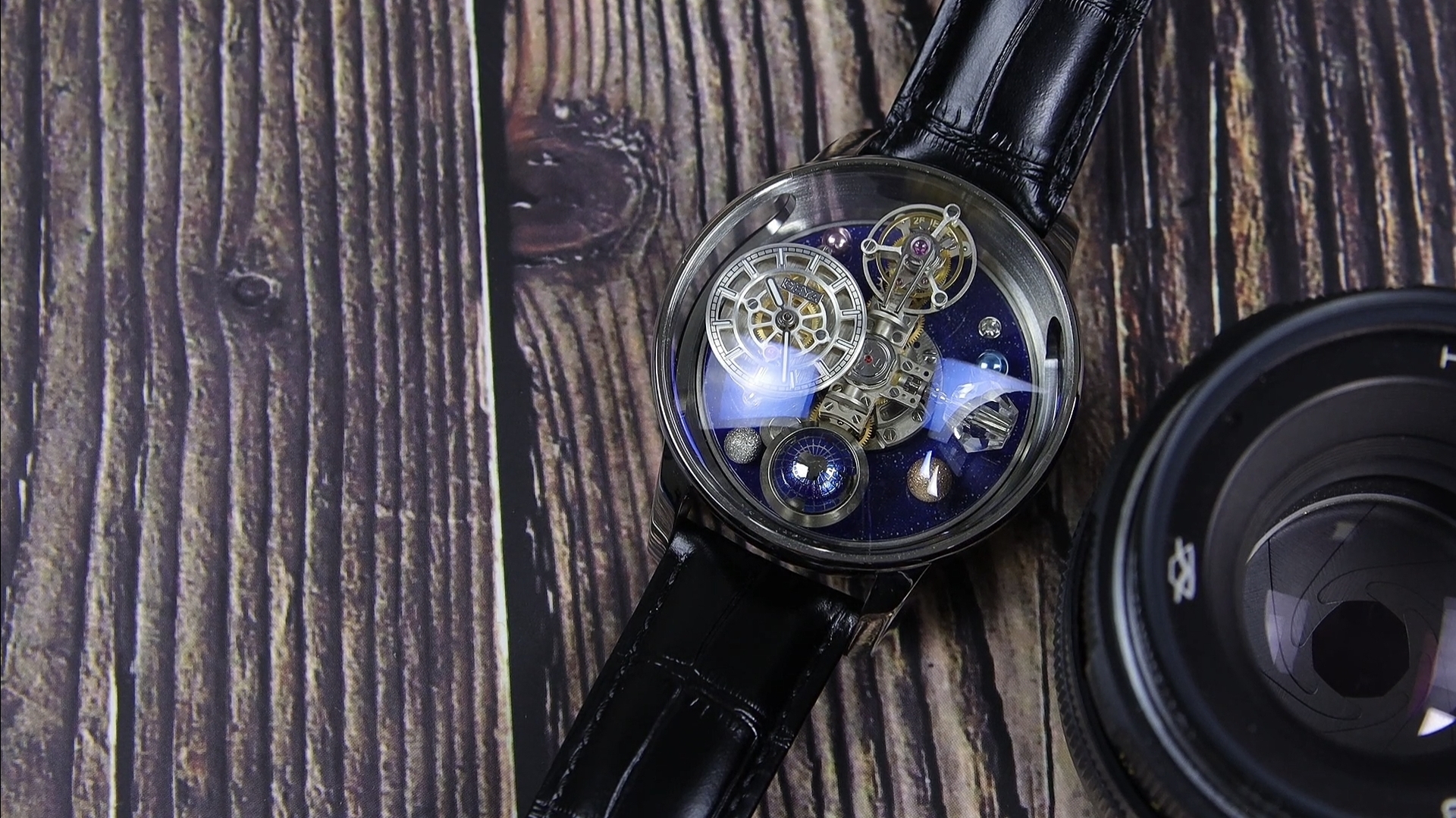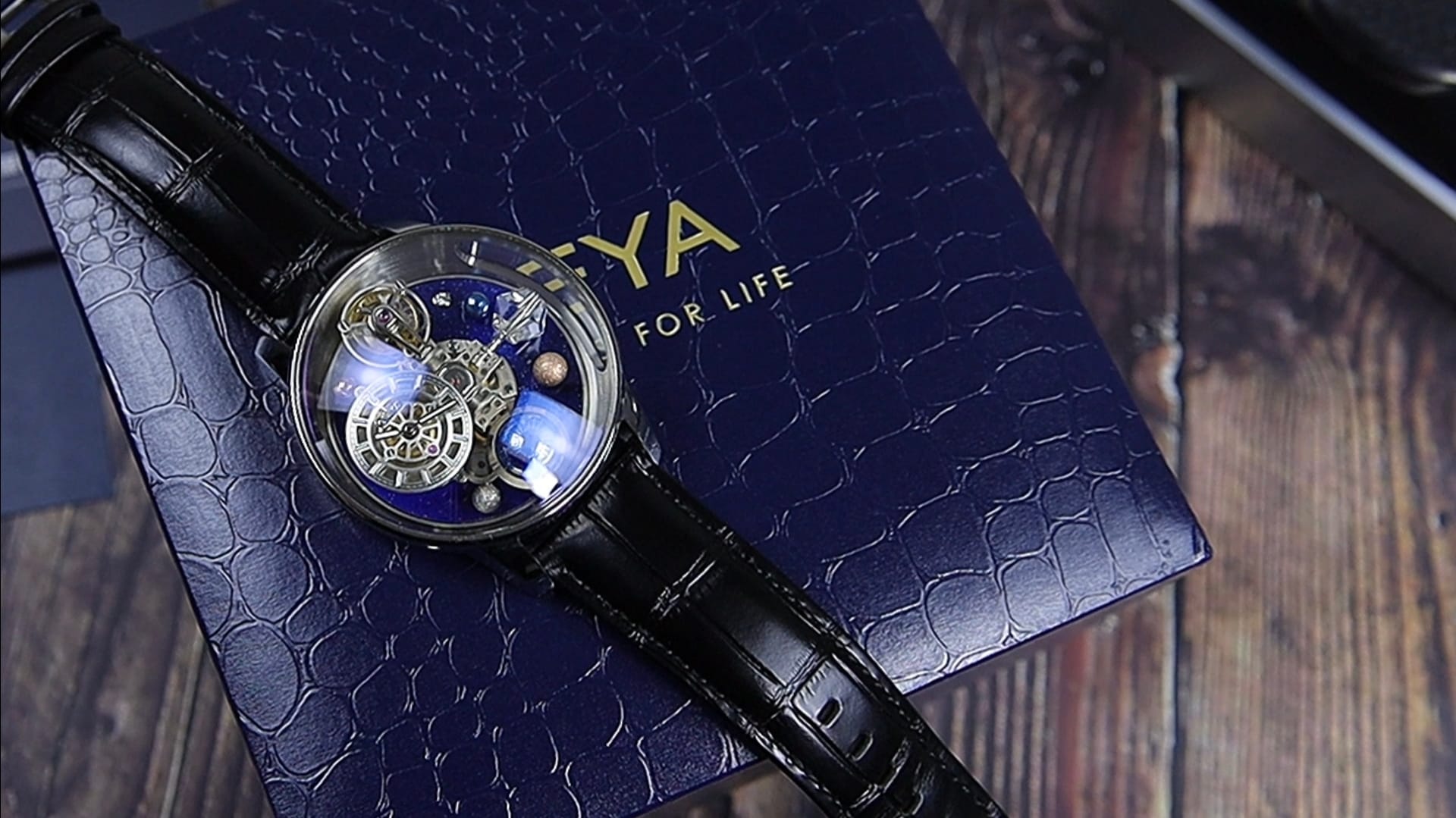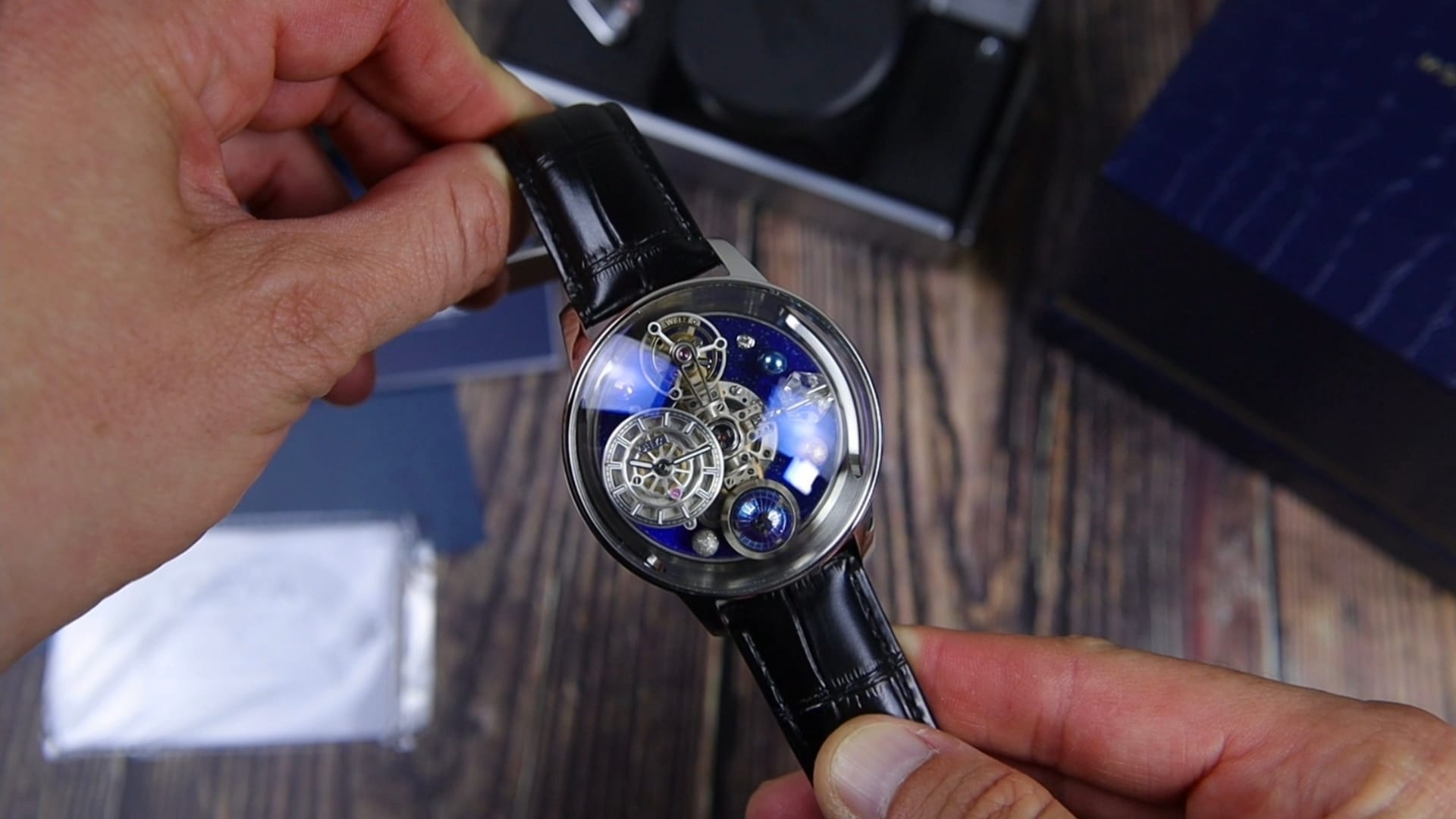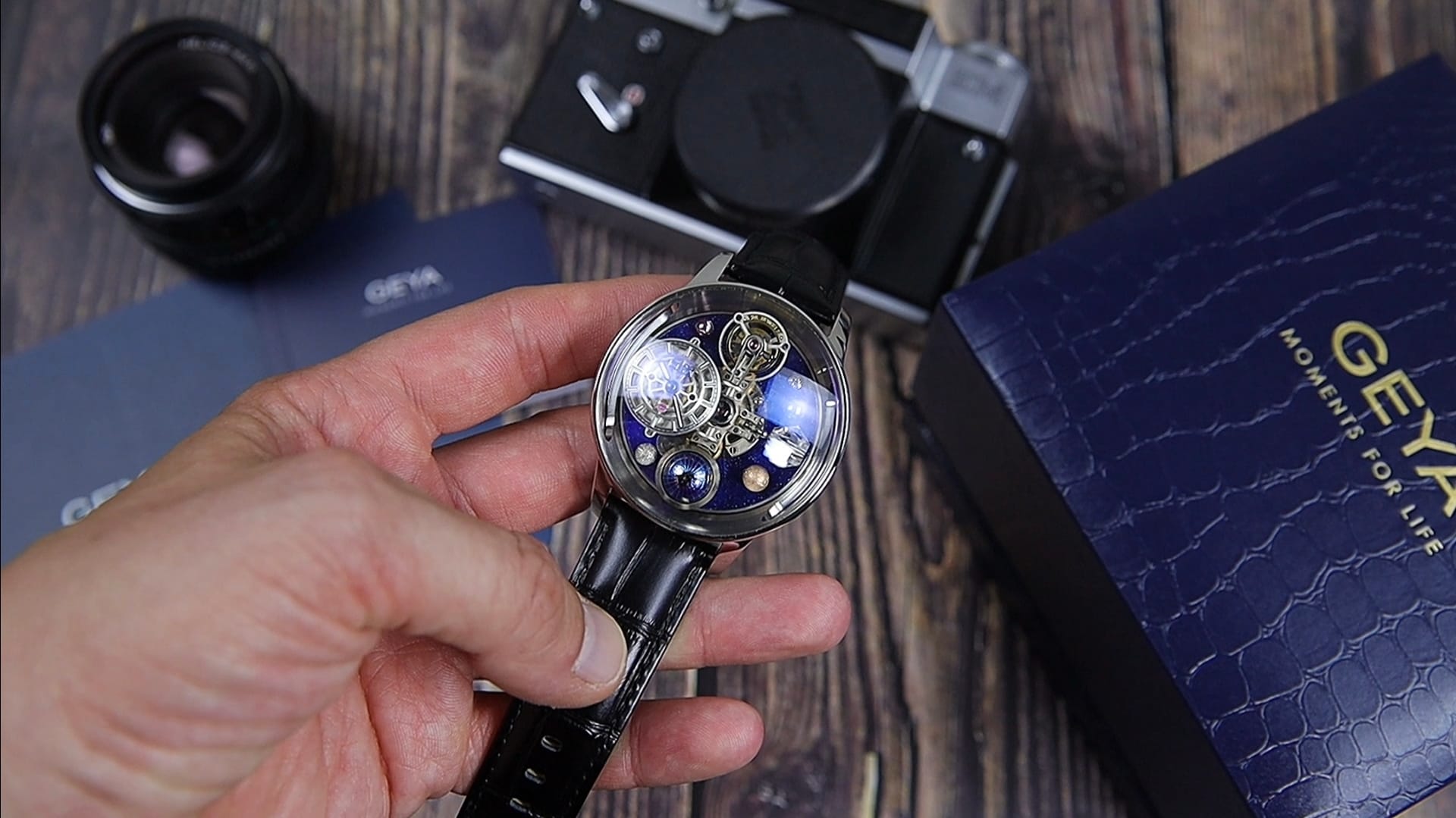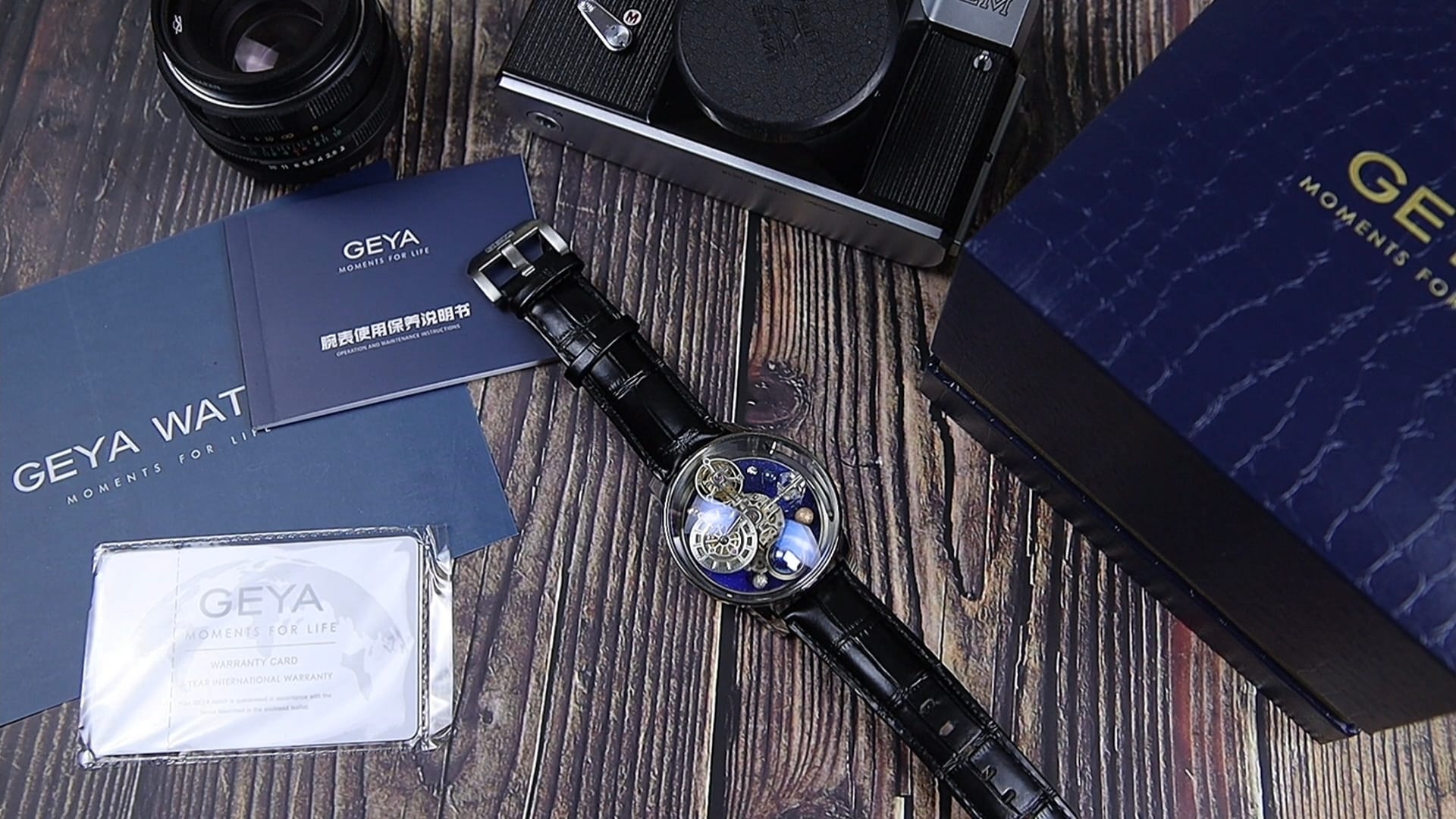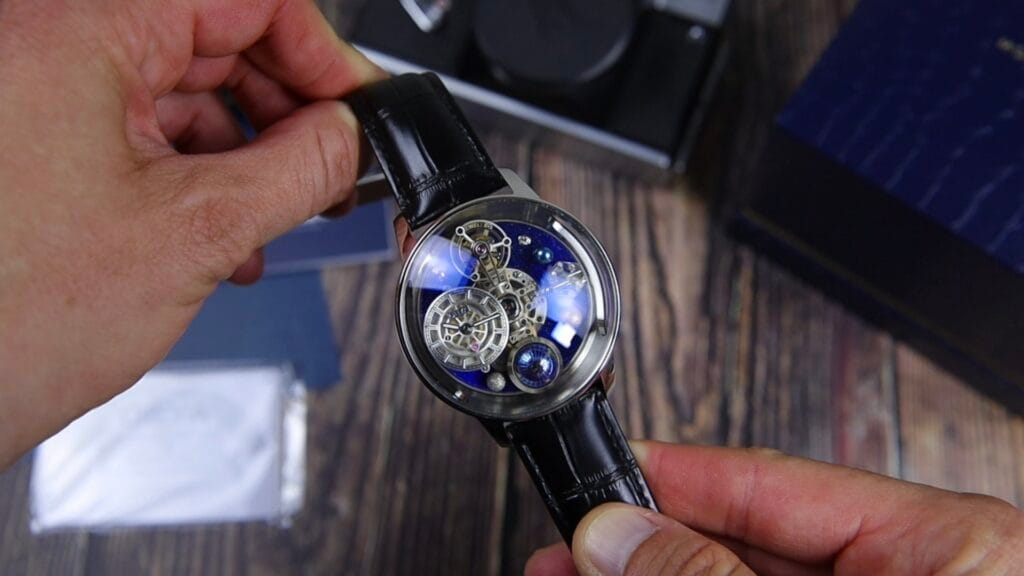
The GEYA G78182 is one of the most unusual watches I have had in for review. It combines a practical Swiss quartz timekeeping display with a separate manually wound mechanical planetary flywheel system, creating something that feels part watch, part kinetic sculpture, and part wrist-mounted planetarium.
There is no conventional crown on the case flanks. The sides are opened up with mineral crystal exhibition windows, the time is adjusted from the back, and the upper dial animation is powered by a separate in-house mechanical movement. It is theatrical, technical, and genuinely different.

Design & Case
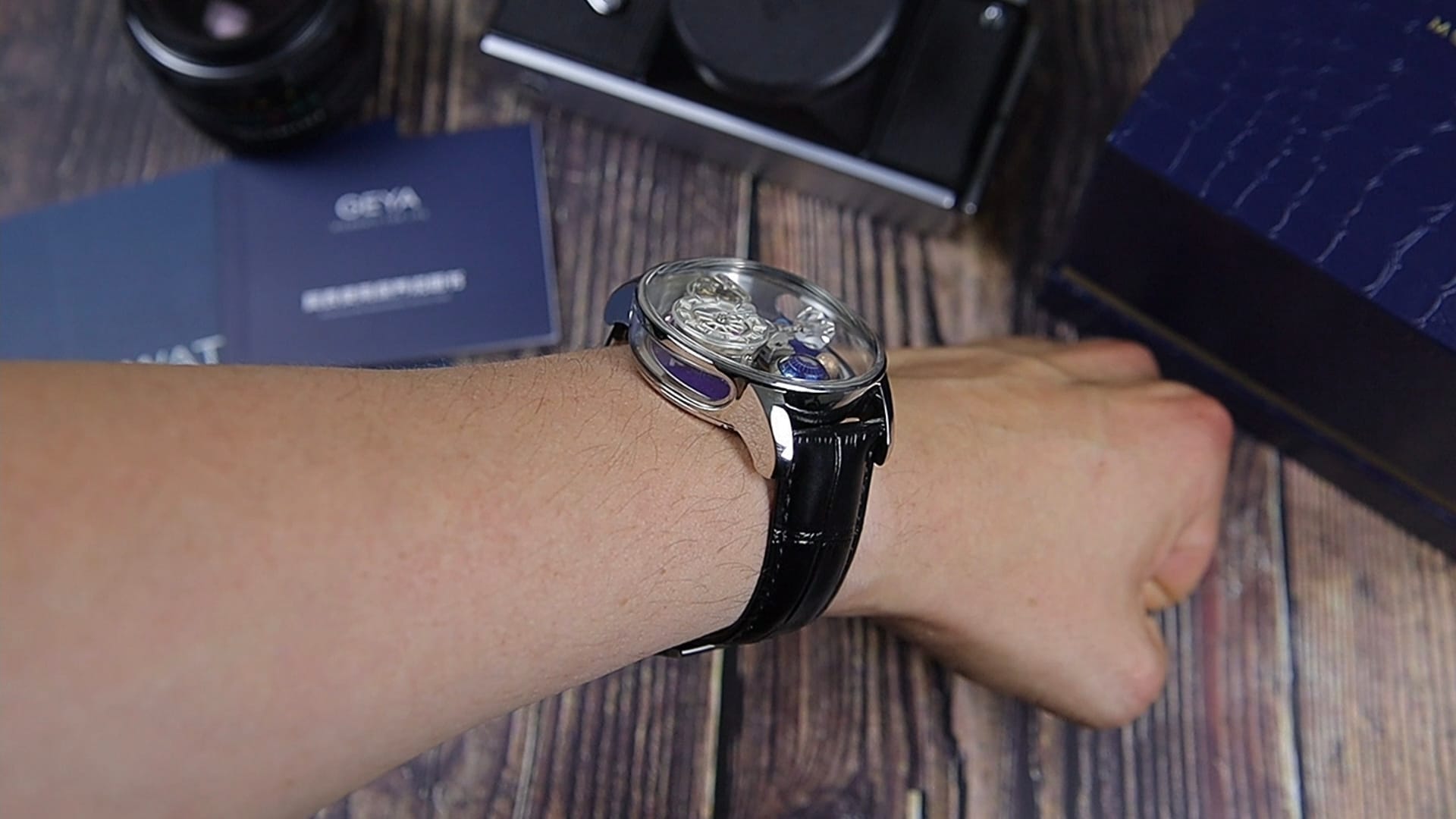
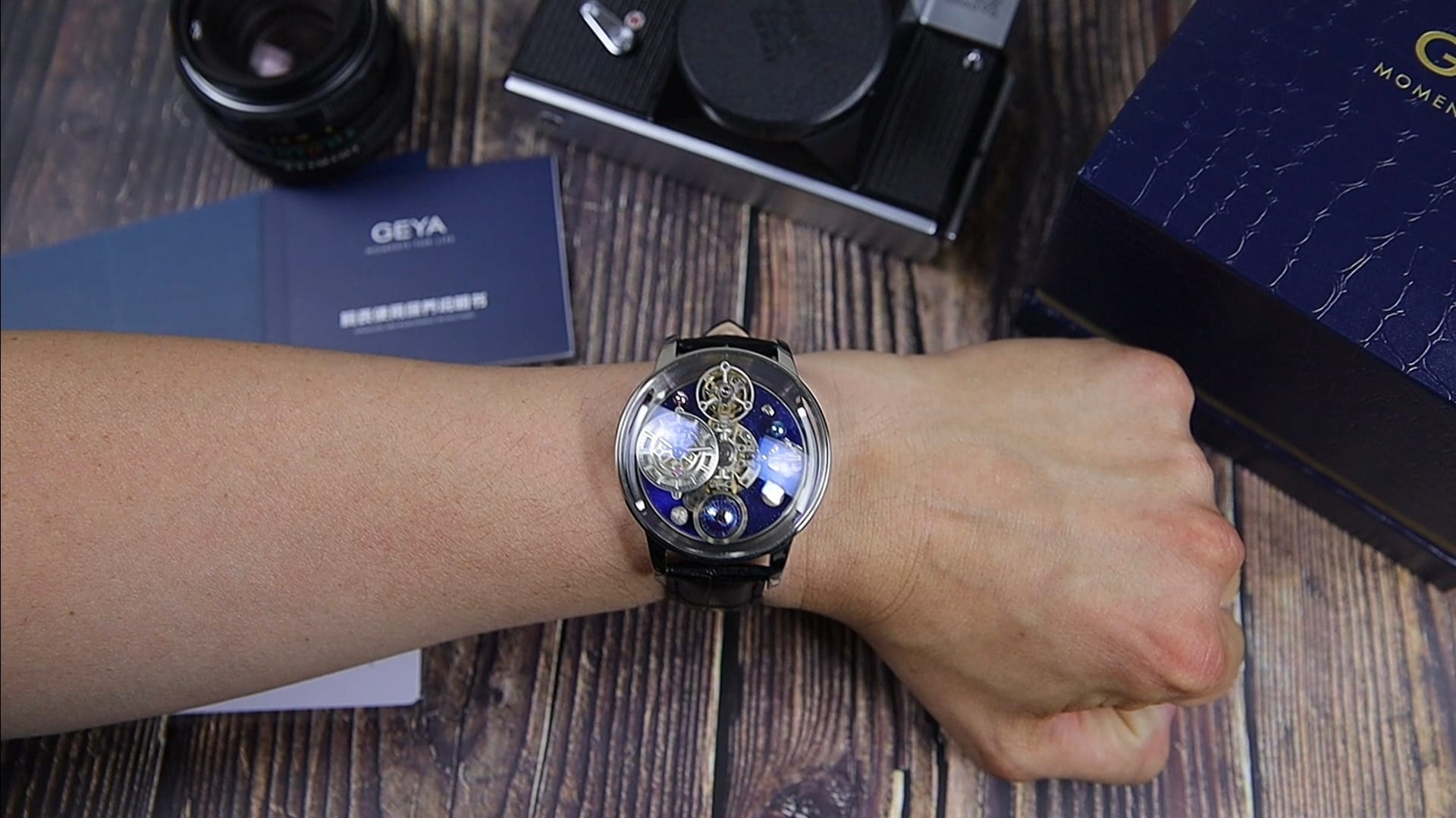
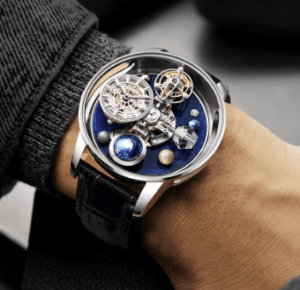
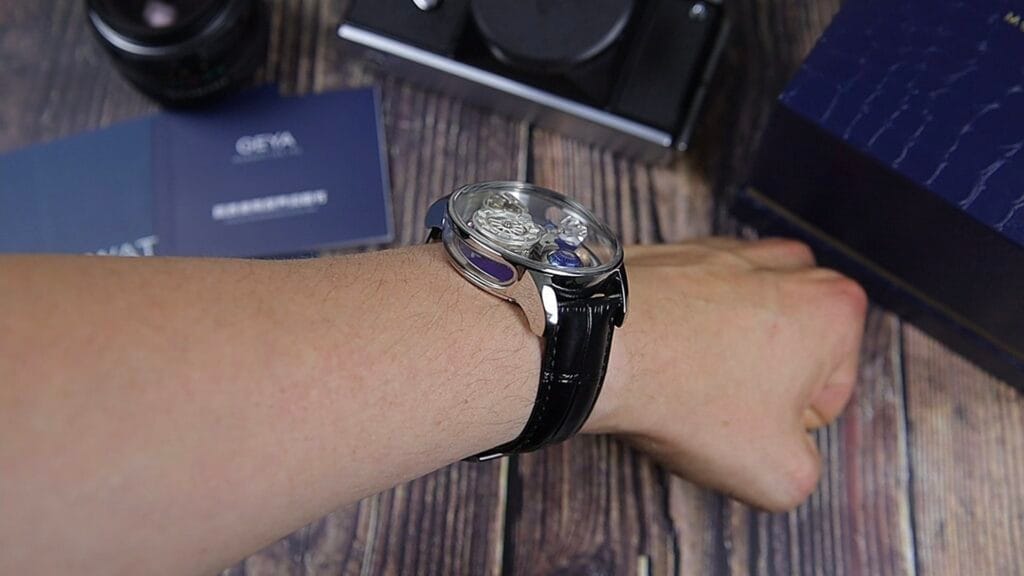
The GEYA G78182 is a large watch, measuring 46mm across, 53mm lug-to-lug, and 20mm thick, with a 22mm lug width. Much of that height comes from the heavily spherical domed mineral crystal with anti-reflective coating.
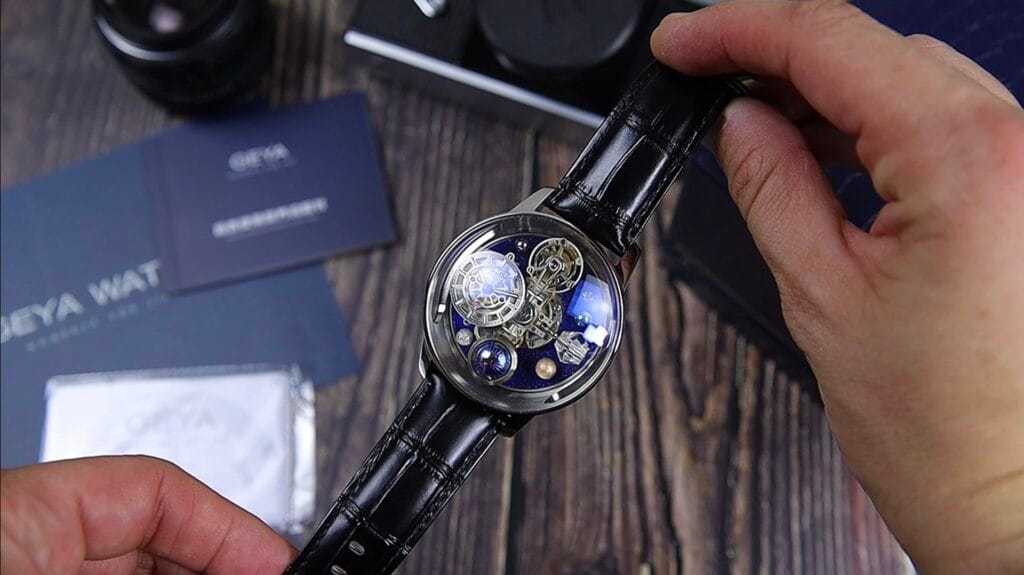
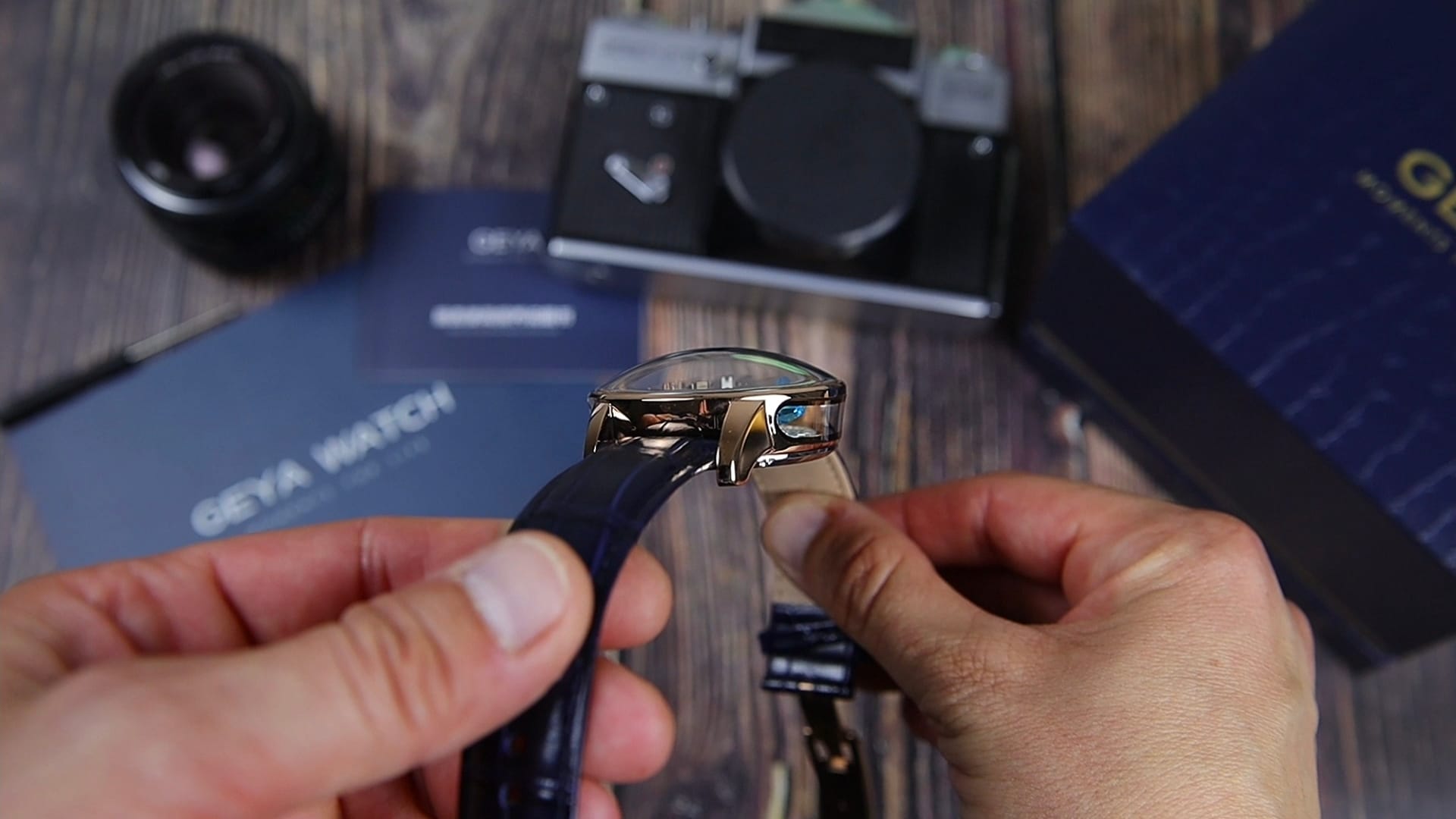
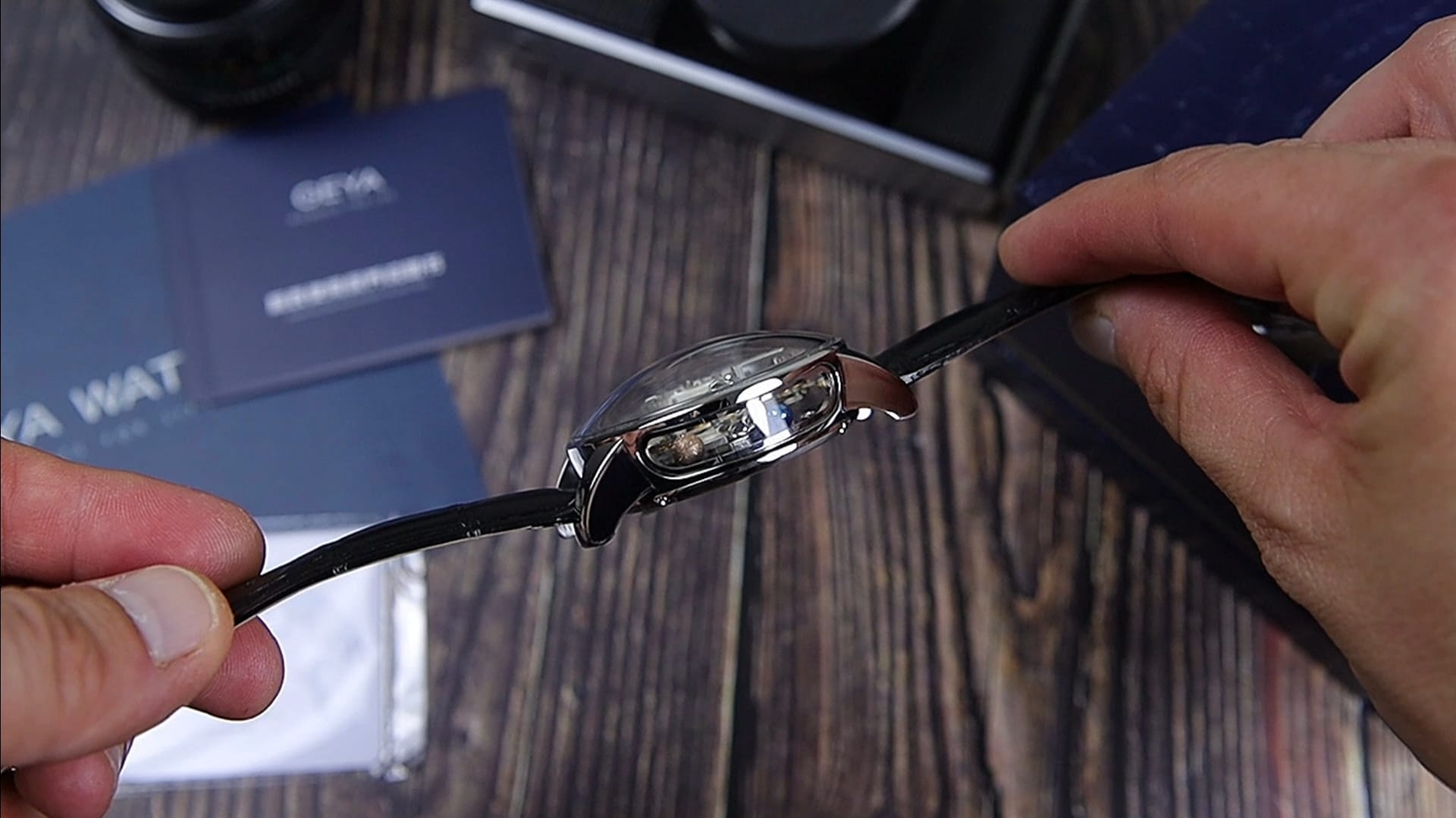
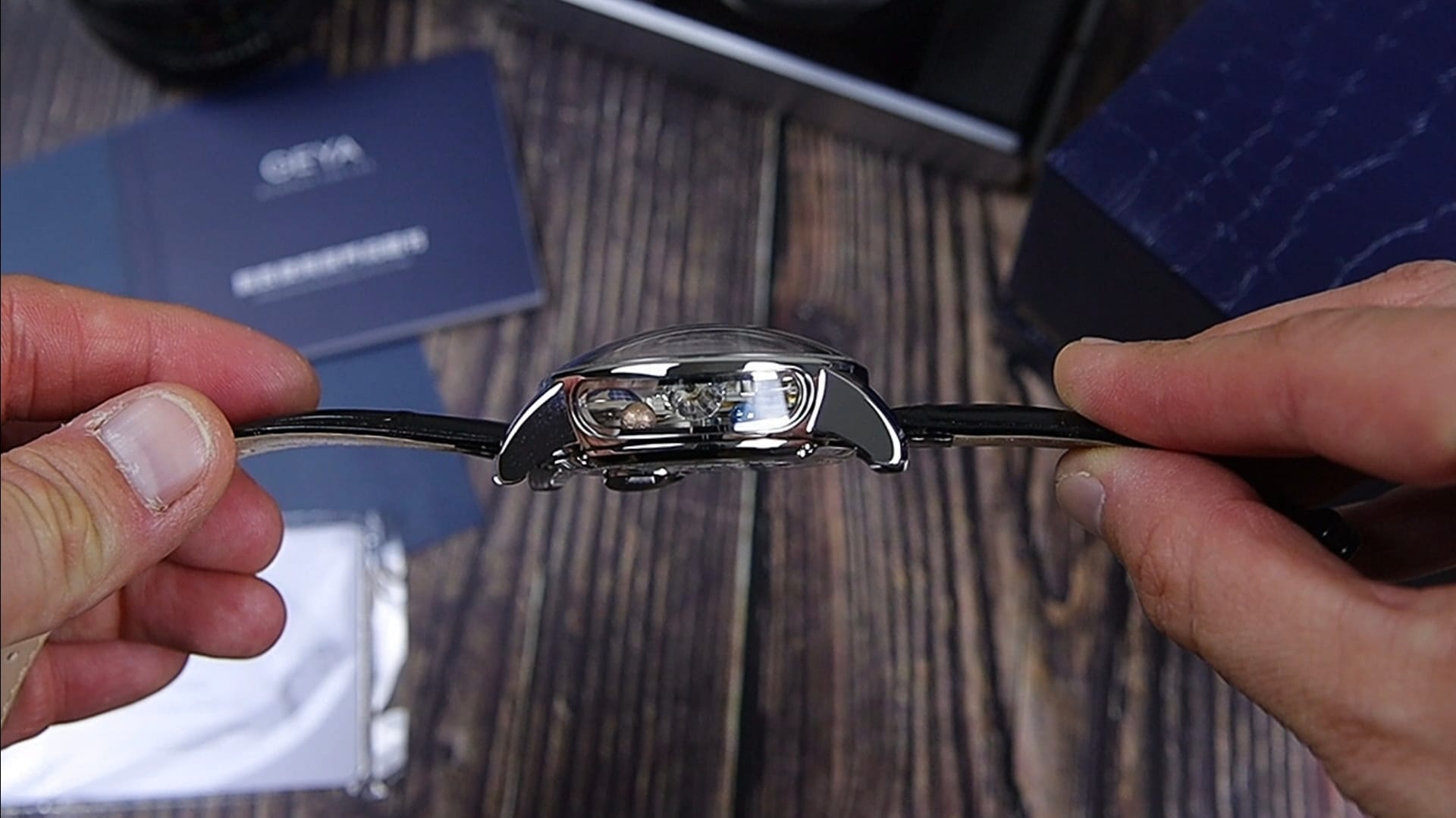
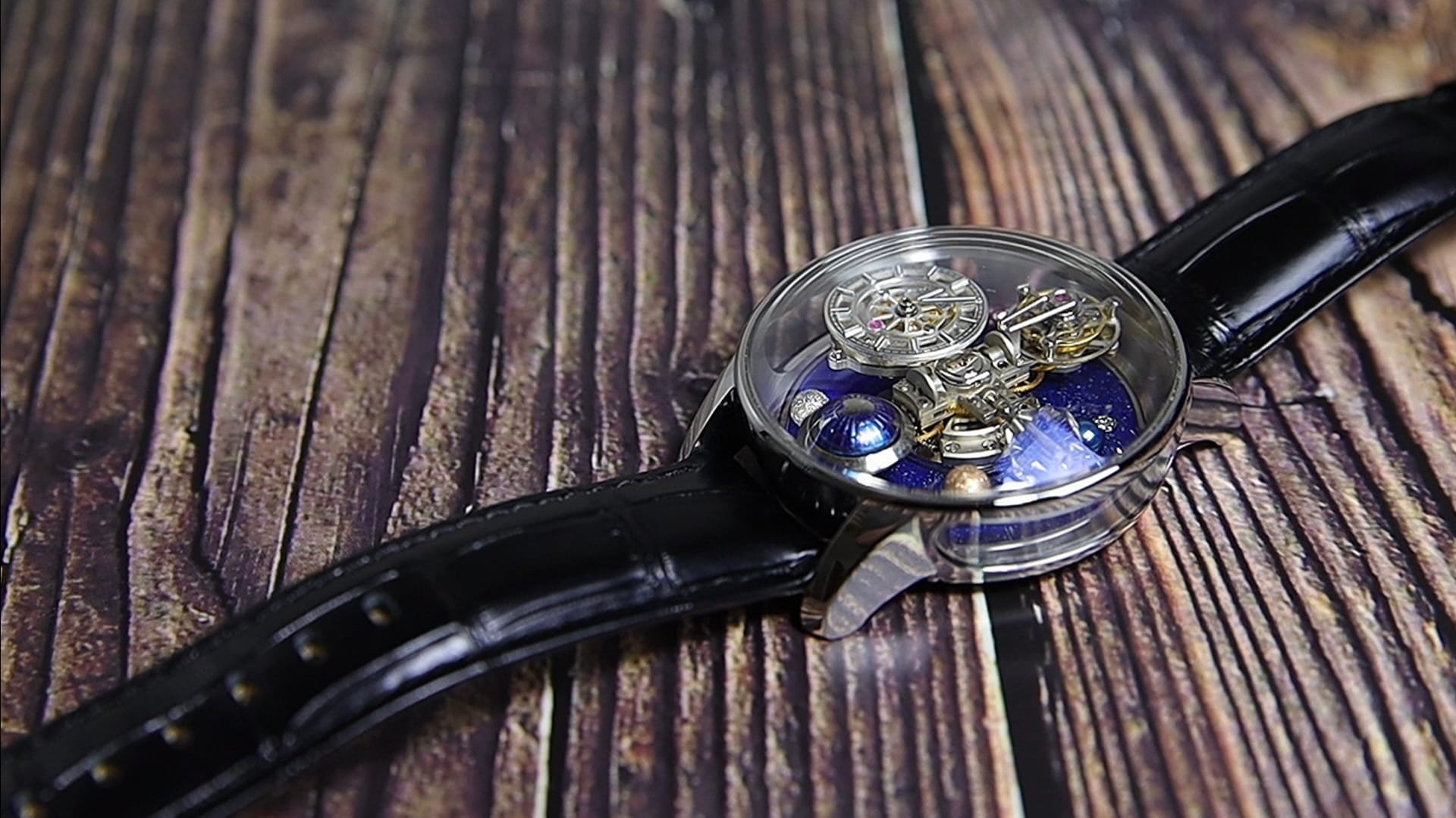
That crystal defines the entire profile. From the side, it rises dramatically above the fully polished 316L stainless steel case, but the dome still feels connected to the rest of the design. Its outer curve flows visually toward the aggressively downturned lugs.
The lugs are chunky, but they fall away sharply. On a 6.5-inch wrist, the watch remains large, but the lug profile helps control overhang and keeps the case sitting better than the headline dimensions suggest.
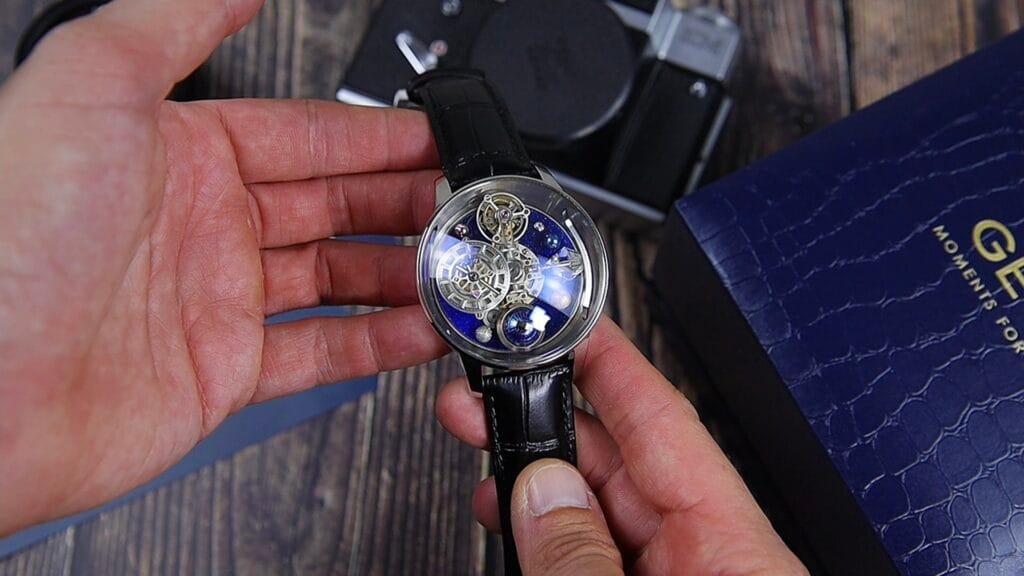
The case flanks are the most distinctive architectural feature. Mineral crystal inserts run from lug to lug across the midcase, creating exhibition-style side windows that allow light to enter from the sides as well as from above. If you’re currently shopping within the dressy everyday watches category, there are several comparable models worth considering.
Movement & Crown
The GEYA uses a dual movement setup. On the left side of the dial, the actual timekeeping is powered by the Swiss Ronda 756 quartz movement. This is a two-hand quartz movement with an accuracy rating of minus 10 to plus 20 seconds per month and a battery life of up to five years.
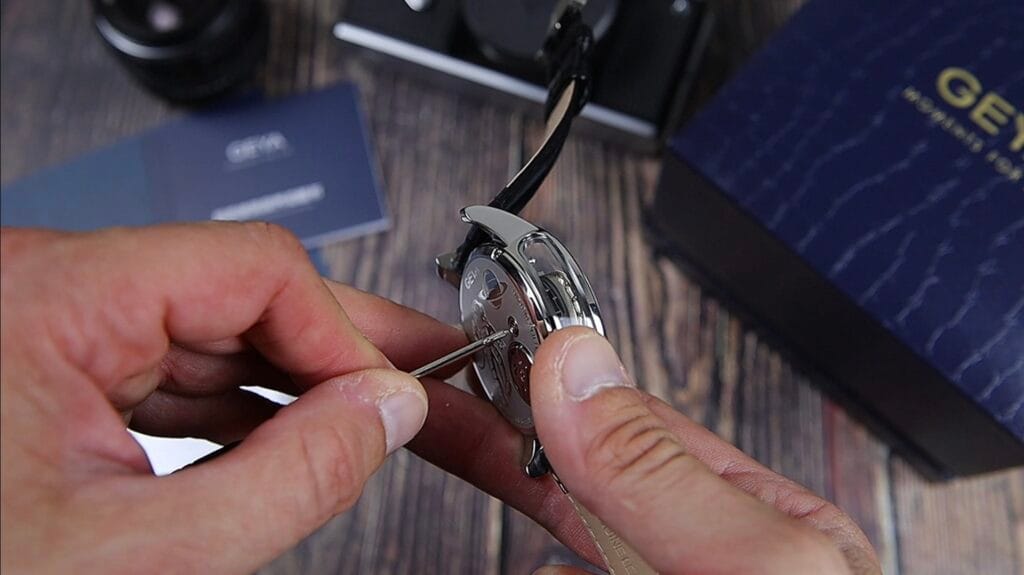
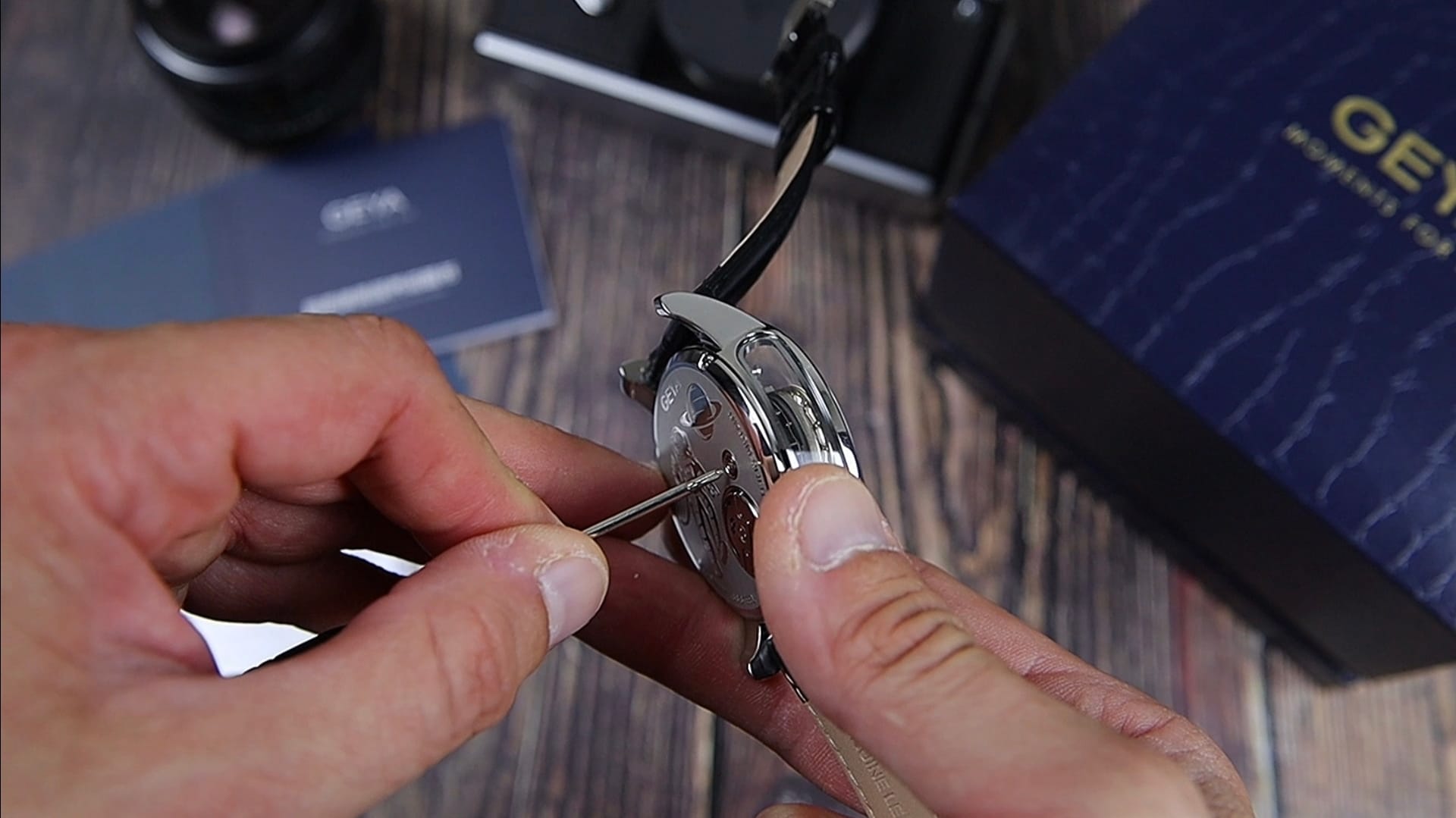
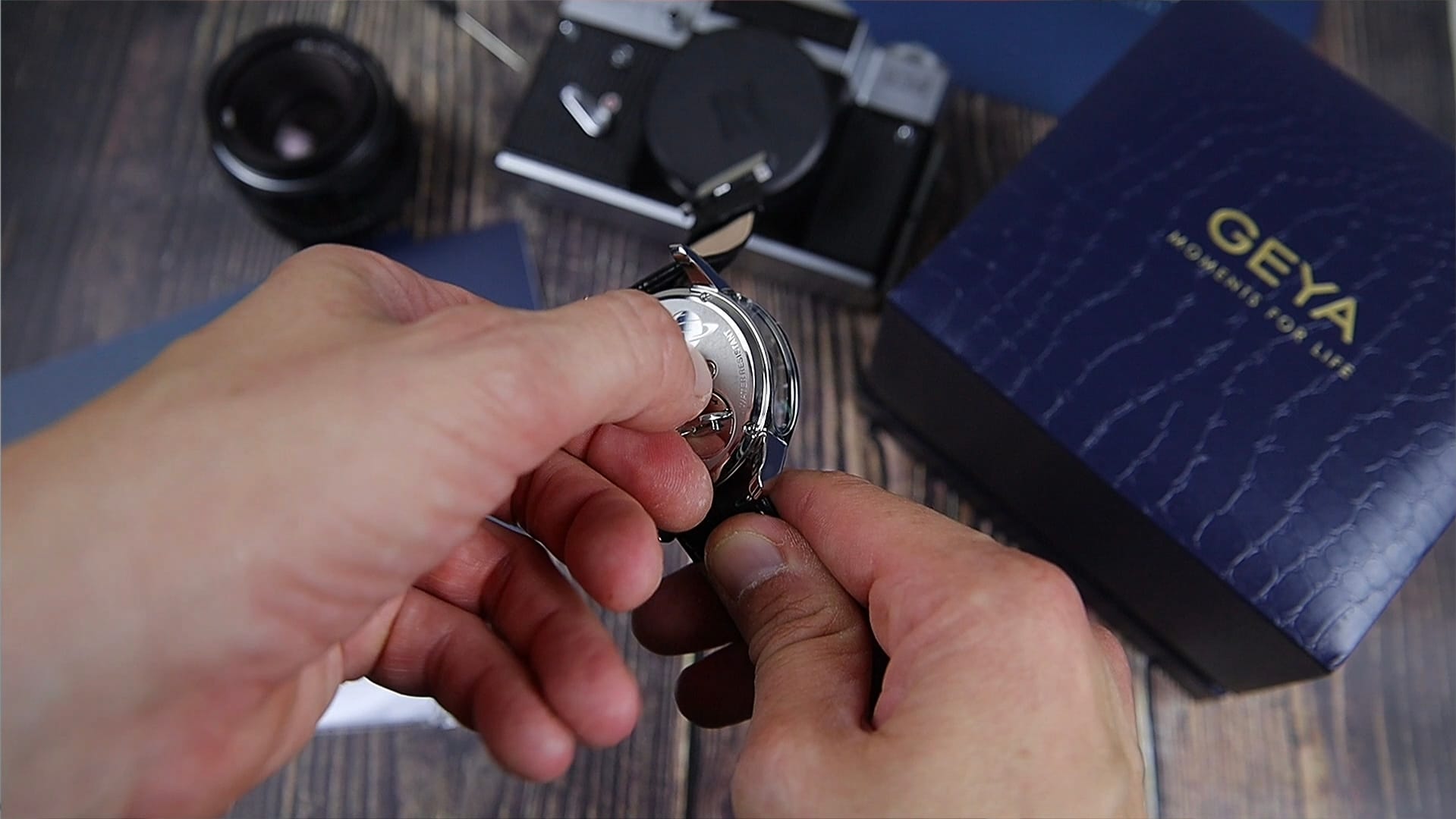
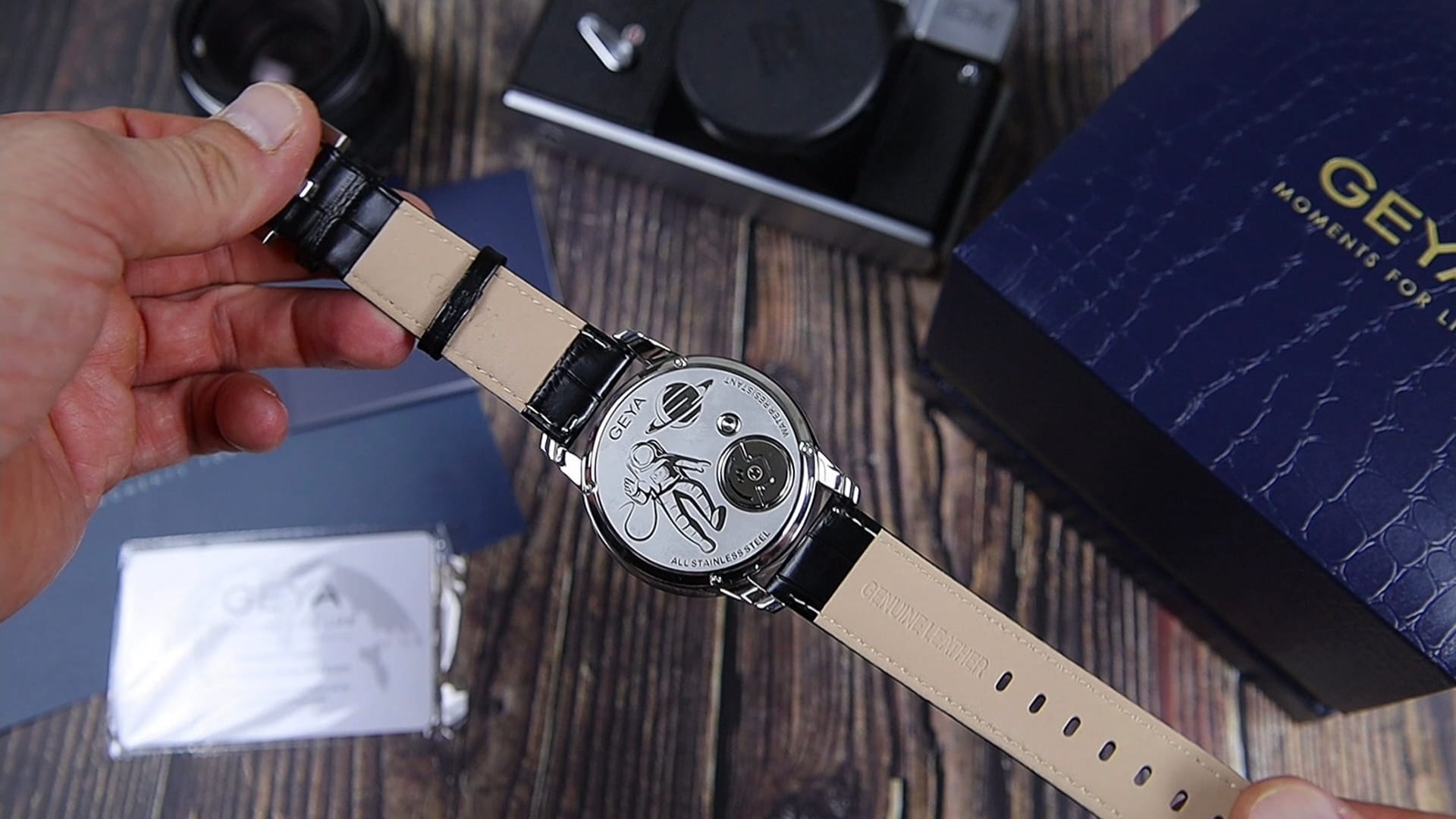
Time setting is handled through GEYA’s electric time-setting system, using a pressure-sensitive point on the caseback. That crownless layout immediately changes the way you interact with the watch.
The visual display is powered separately by the M1T9-TDC, GEYA’s in-house manually wound planetary flywheel movement. This movement drives the upper mechanical theatre of the watch while the Ronda quartz movement handles the timekeeping.
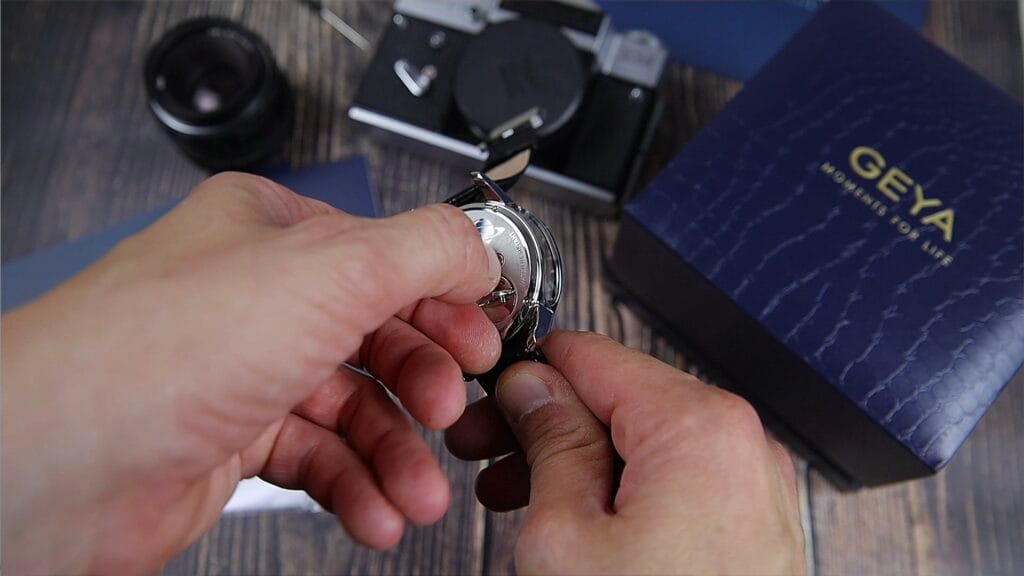
To wind the planetary flywheel, you use the lever on the back. Around 18 clockwise rotations powers the display, and a full wind gives approximately 48 hours of continuous mechanical motion. GEYA warns against overwinding or winding anticlockwise because that can damage the mainspring.
Bezel
The upper profile is dominated by the heavily spherical domed mineral crystal. It rises above the polished case and creates the visual height that makes the watch feel like a miniature display chamber.
That dome is not just a cover over the dial. It shapes the whole viewing experience, especially when combined with the side exhibition windows. Light enters from the top and the flanks, giving the watch an open, dimensional character.
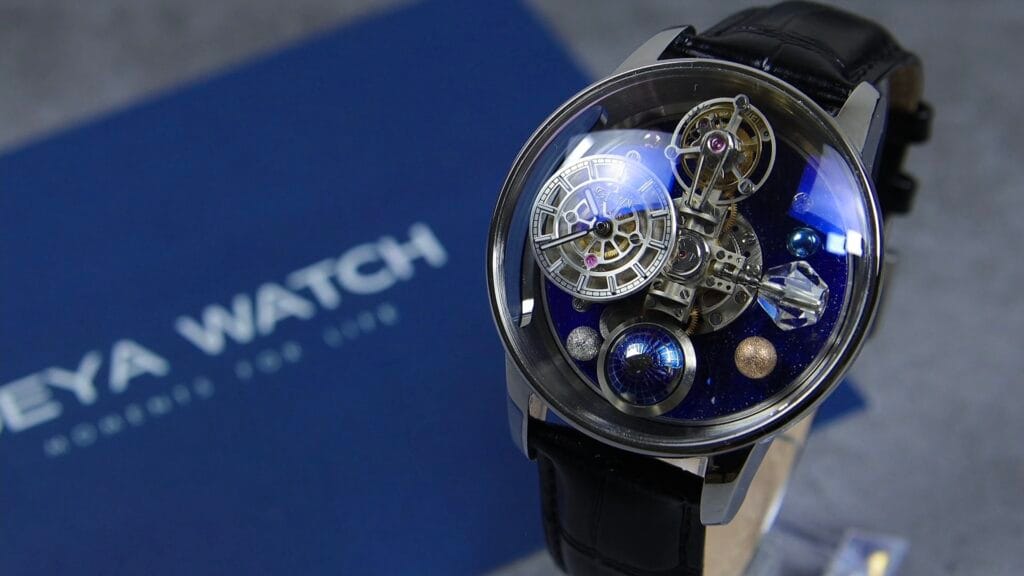
The polished case edge beneath the dome keeps the exterior clean, allowing the visual focus to remain on the dial construction, planetary elements, and moving mechanical display. The whole front profile feels built around the crystal, the depth beneath it, and the sense of theatre inside the case.
The crystal also works with the downturned lugs visually. From the side, the curve of the dome and the case architecture feel connected rather than separate.
Strap
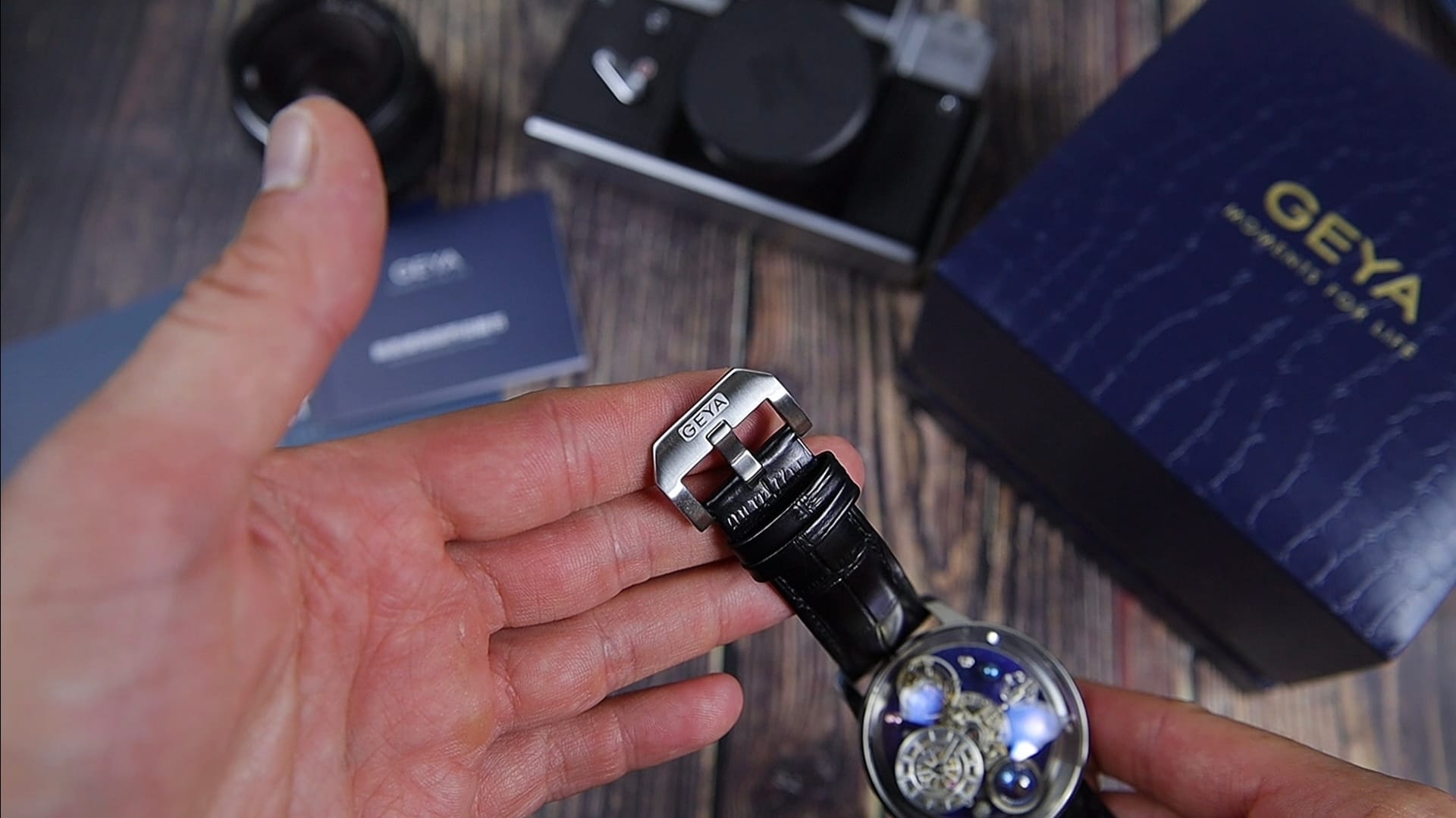
The watch comes on a 22mm black leather strap with a crocodile-style pattern on the outer surface. It is cushioned, stitched in black around the outer edge, and feels soft, pliable, and genuinely high quality in the hand.
The strap does not feel stiff or generic. With a watch this large and theatrical, that matters, because the strap has to feel like part of the overall package rather than a simple attachment.
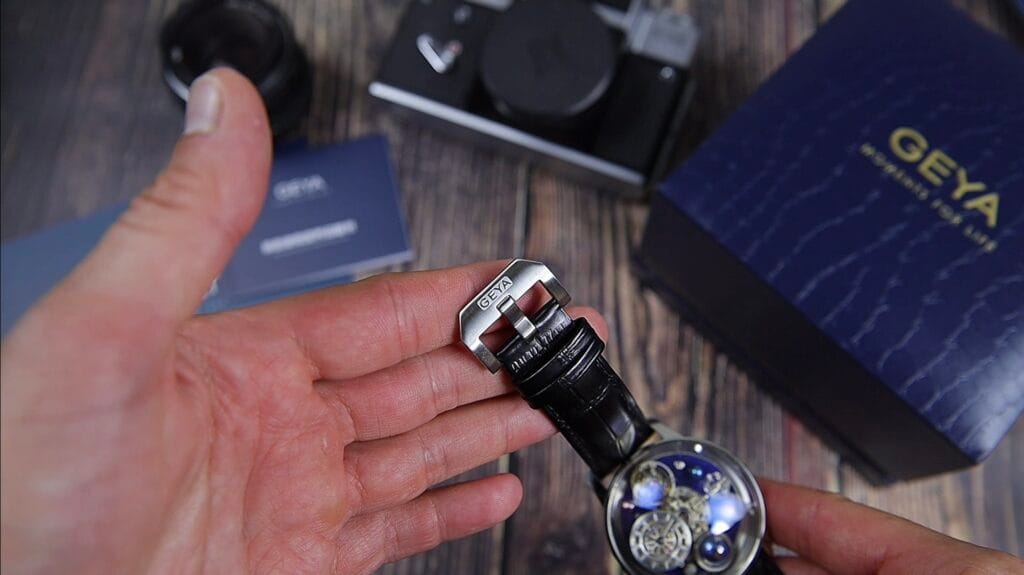
Flip it over and the beige underside carries clear detailing. One side is stamped genuine leather, while the other side is stamped with the GEYA brand name. The strap also uses quick-release spring bars, making strap changes easy.
There are two leather floating keepers, and the clasp is an oversized milled stainless steel unit. It is brushed rather than polished, which suits daily wear because it should hide micro scratches better over time.
The caseback is secured by four screws at the edges and houses both the pressure-sensitive time-setting point and the lever for winding the mechanical planetary display. The crownless setup gives the watch 50 meters of water resistance.
Crystal & Dial
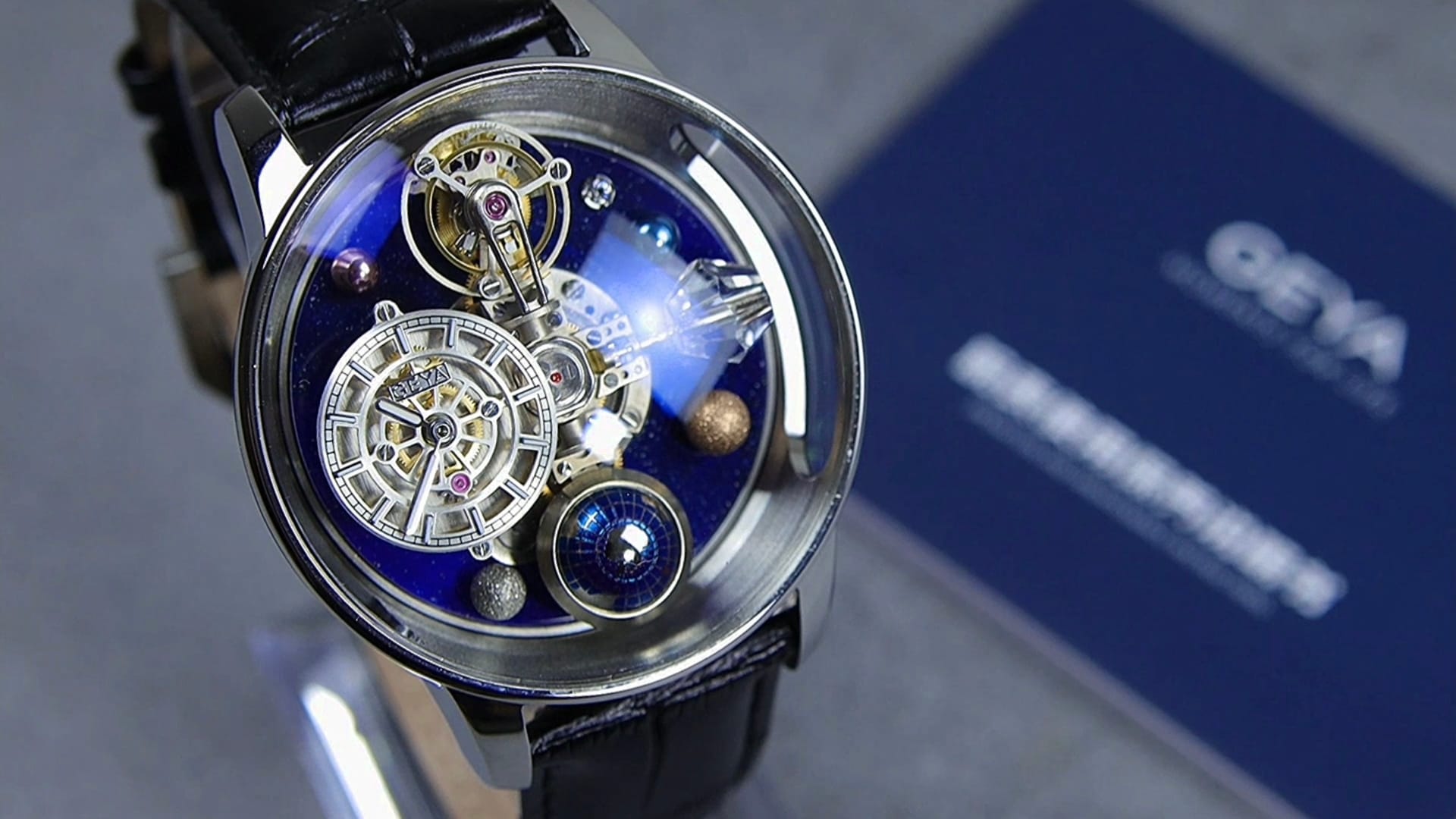
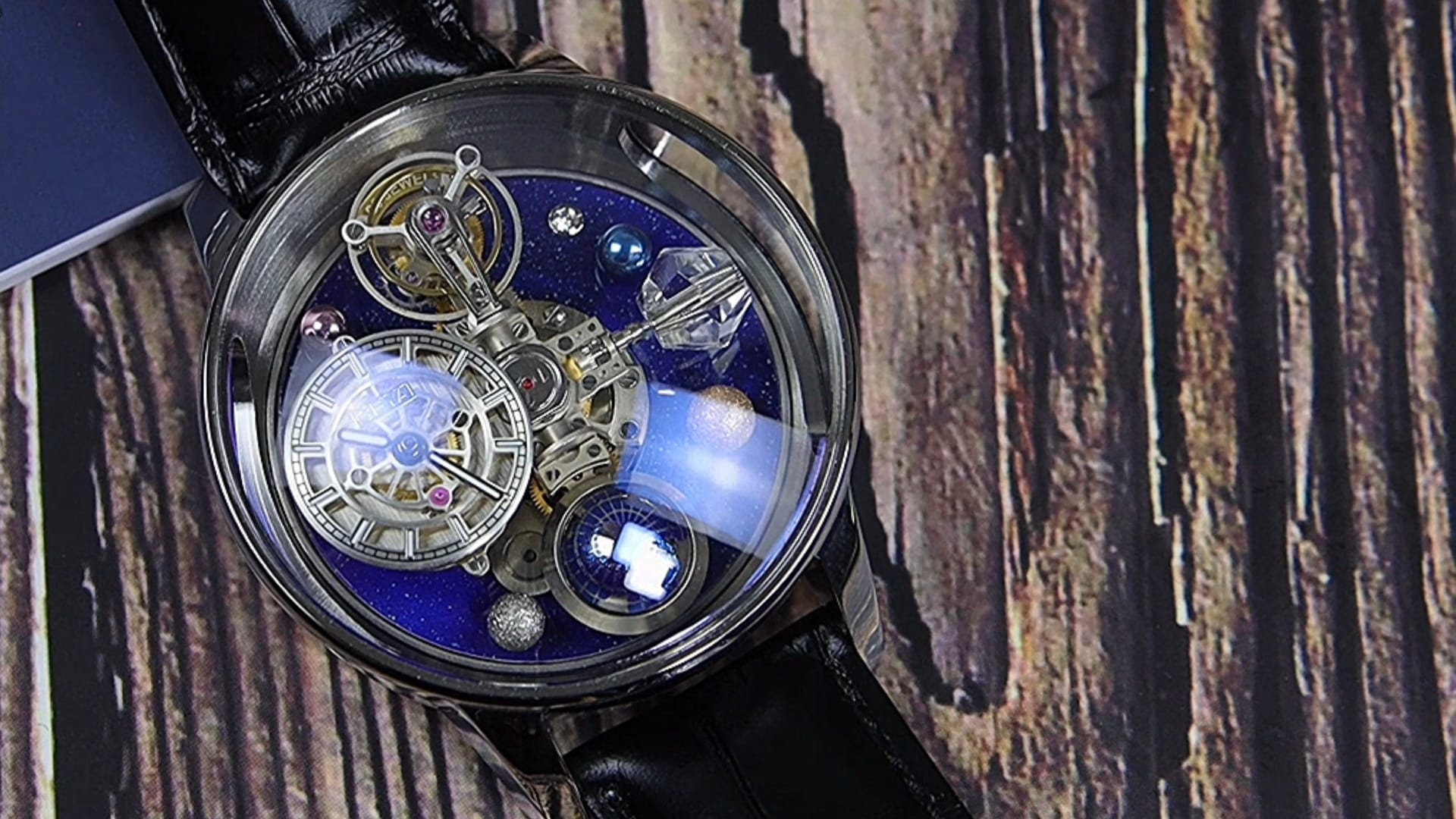
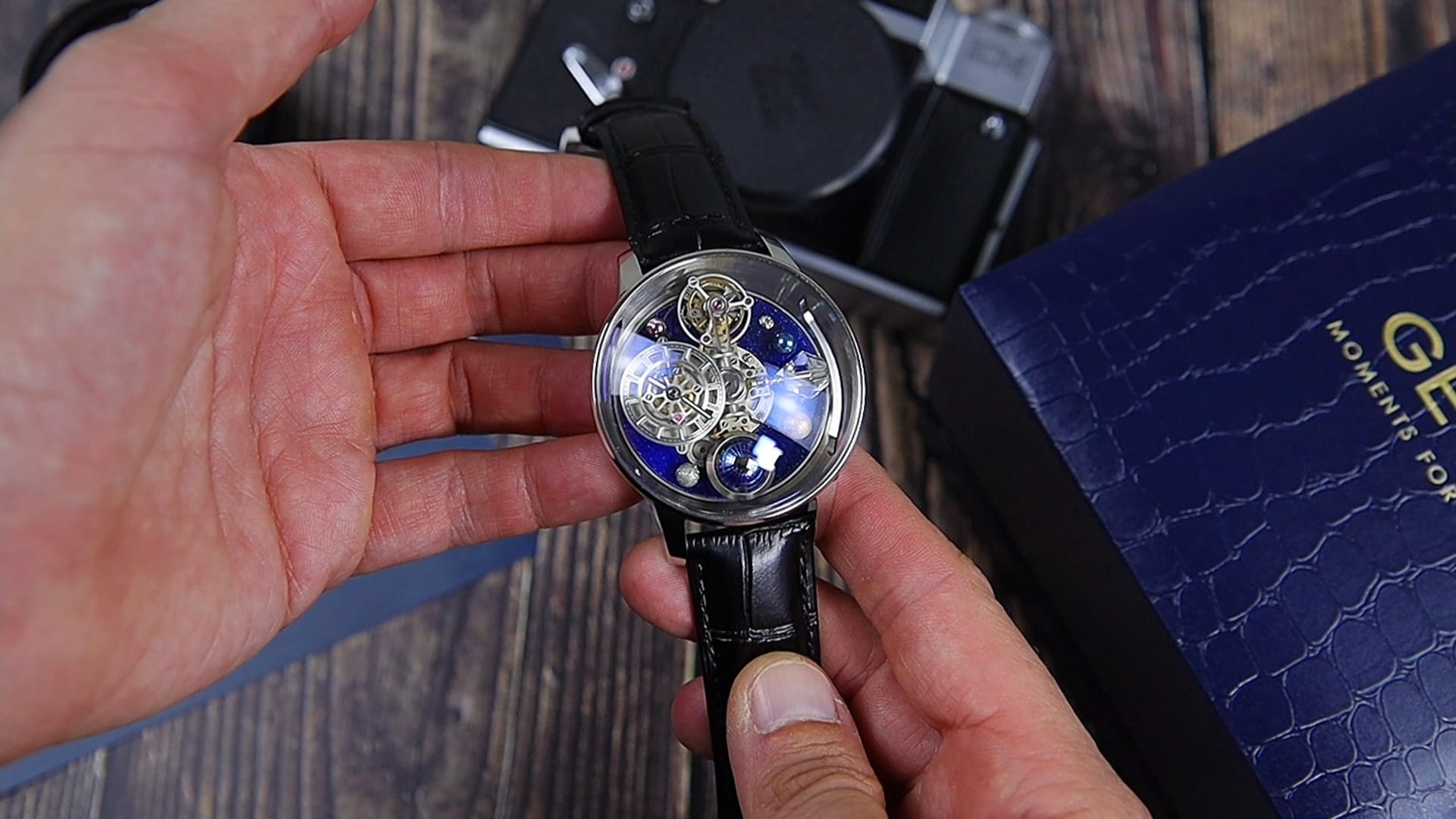
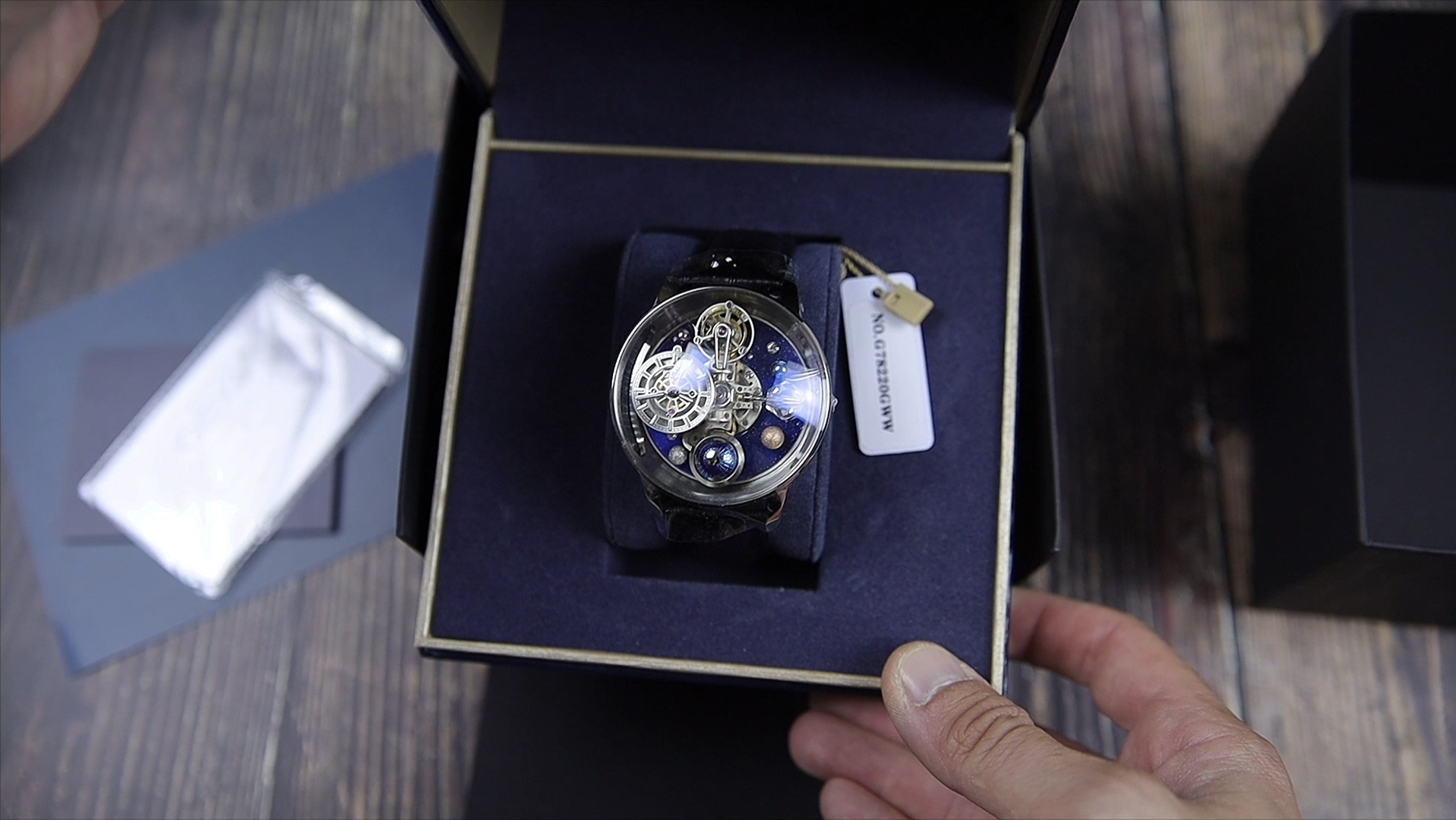
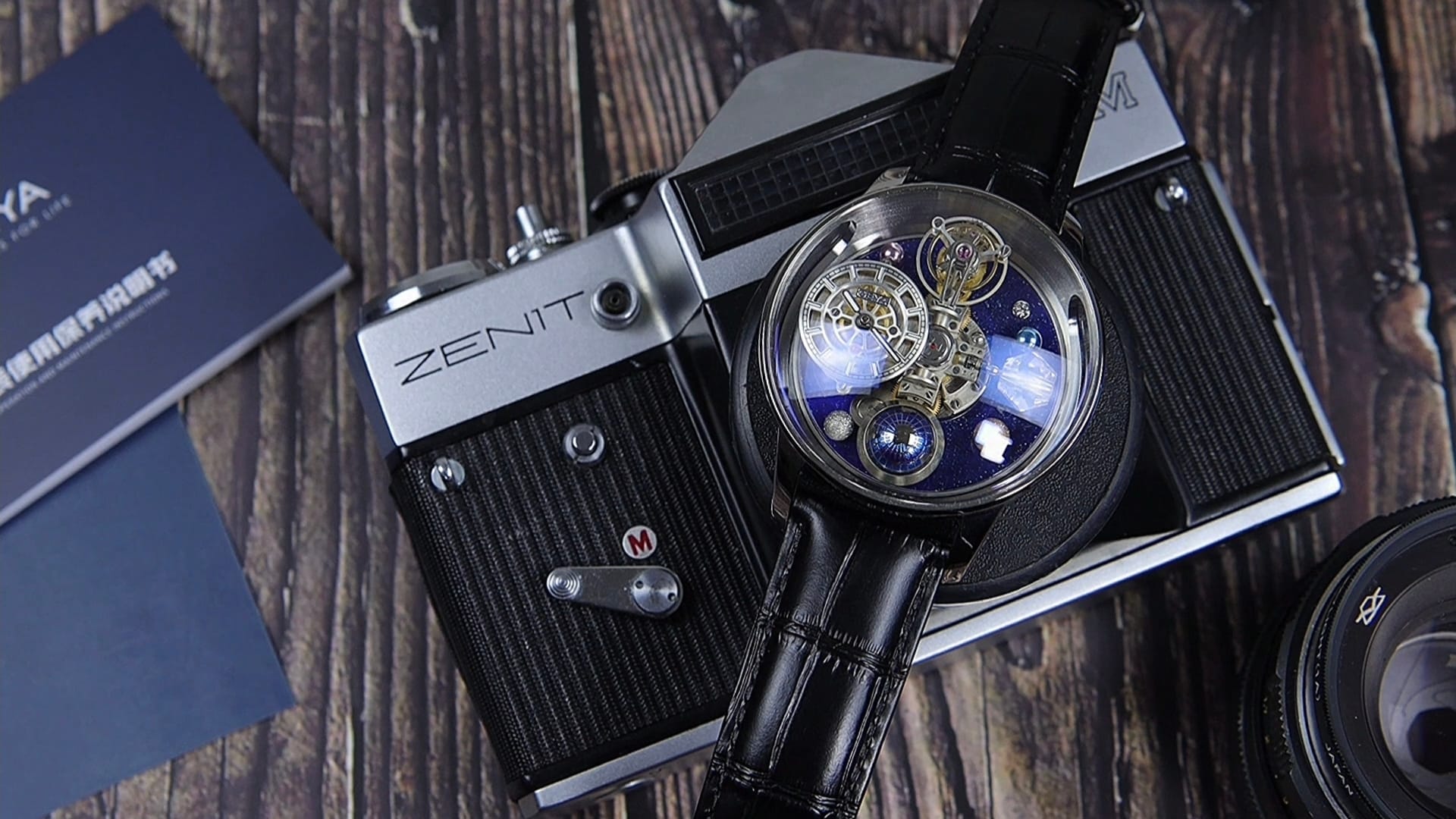
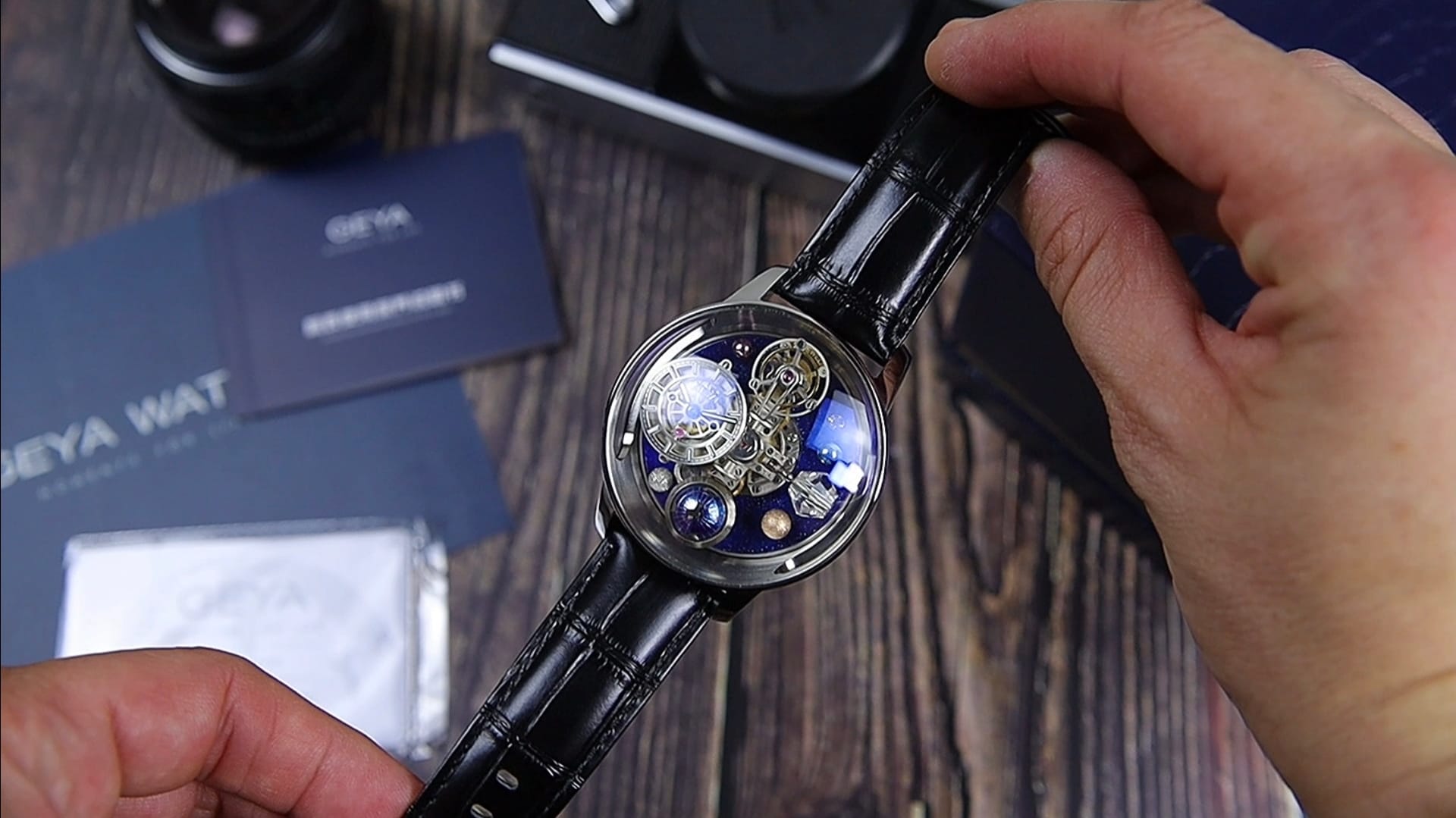
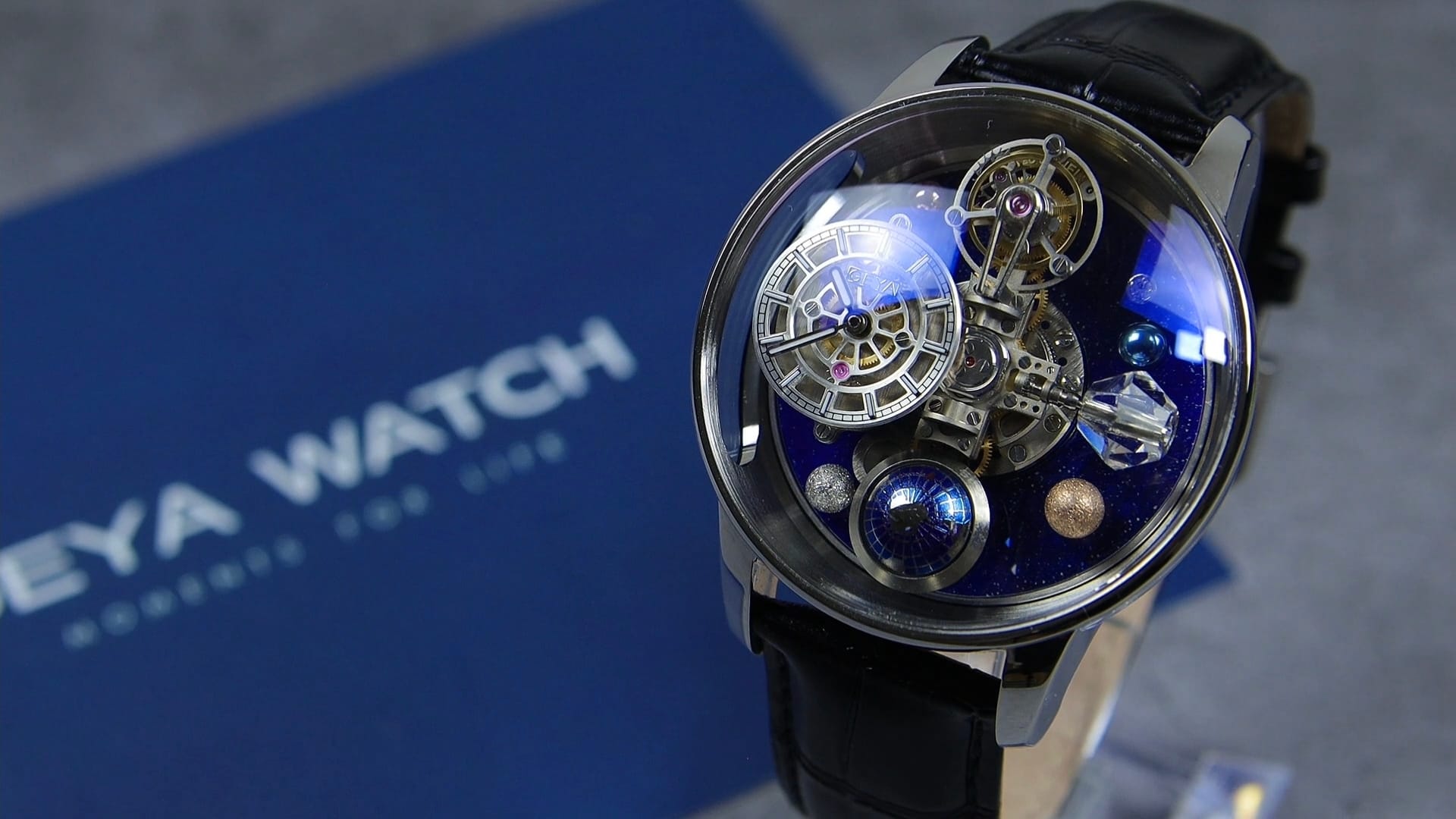
Under the heavily domed mineral crystal, the display has an open, airy quality, almost like a small mechanical compartment under glass. The effect becomes stronger from the sides, where the exhibition flanks let light enter from different angles.
The backdrop is a deep blue crystalline surface. It is not heavily raised, but visually it creates a stardust effect, giving the display a sense of depth and space.
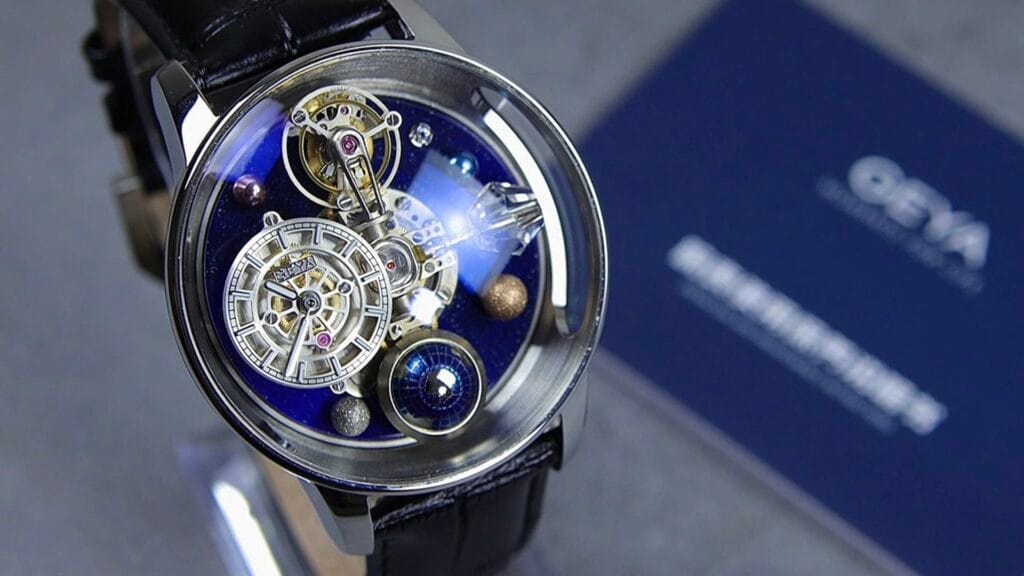
Across that backdrop sit spherical planetary elements. They are textured, they catch the light, and they reinforce the celestial planetarium-style presentation.
On the left side is the quartz timekeeping display, which also carries the only dial branding under 12. Up top is the exposed oscillating mechanical element, moving left and right while rotating clockwise. Toward the lower section, the blue sphere rotates once per second clockwise.
The lume is applied to the timekeeping indices and baton hands, glowing green in the dark. It is not diver-grade, but it keeps the time readable during darker hours. The overall display feels less like a conventional dial and more like a tiny mechanical stage under glass.
Summary
The GEYA G78182 is not a conventional watch experience. It is a large, theatrical piece built around an unusual dual movement concept: a Swiss Ronda 756 quartz movement for accurate timekeeping and an in-house manually wound M1T9-TDC planetary flywheel movement for the mechanical display.
The case architecture supports that idea. The heavily spherical domed mineral crystal, polished 316L stainless steel case, exhibition side flanks, and crownless setup all make the watch feel more like a mechanical object under observation than a standard wristwatch.
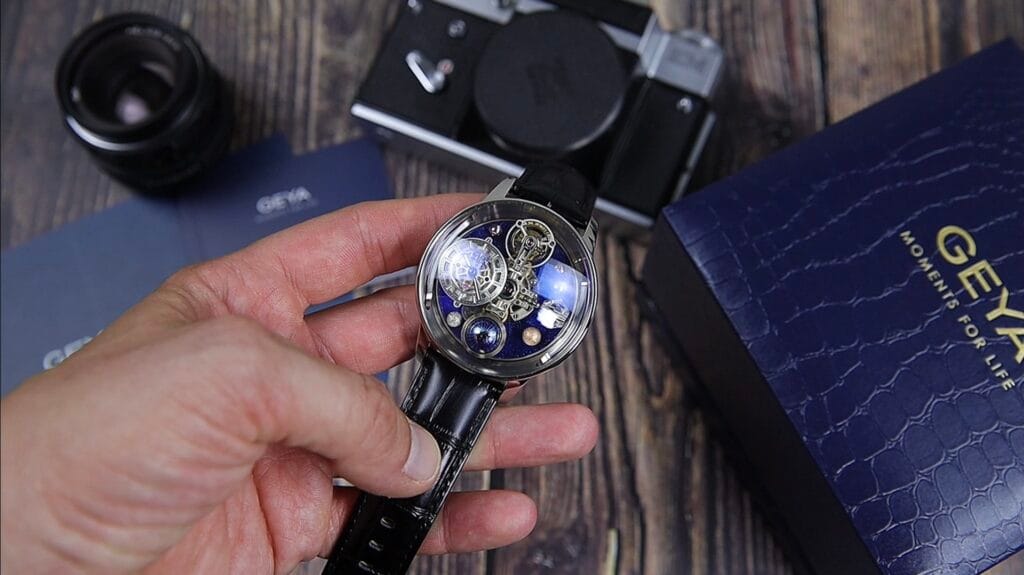
It is large at 46mm across, 53mm lug-to-lug, and 20mm thick, and even on a 6.5-inch wrist it feels substantial. But the downturned lugs help the case sit better than expected.
What makes it memorable is the theatre: the deep blue crystalline backdrop, textured planetary spheres, oscillating upper mechanism, rotating blue sphere, luminous timekeeping display, and side-window light flow. It is unusual, open, and genuinely different. At roughly this level of spend, above $500, buyers are spoiled for choice, with several strong competitors available.
GEYA G78182 Specifications
| Specification | Details |
|---|---|
| Model | GEYA G78182 Interstellar Navigator |
| Dimensions | |
| Case Diameter | 46mm |
| Case Thickness | 20mm |
| Lug-to-Lug | 53mm |
| Lug Width | 22mm |
| Design | |
| Case Material | 316L stainless steel |
| Case Finish | Fully polished case with mineral crystal exhibition side windows |
| Crystal | Heavily spherical domed mineral crystal with anti-reflective coating |
| Caseback | Four-screw caseback with pressure-sensitive time-setting point and manual winding lever |
| Bracelet/Strap | Black crocodile-style genuine leather quick-release strap with beige underside |
| Clasp | Oversized brushed milled stainless steel clasp |
| Dial | Deep blue crystalline backdrop with textured planetary elements and mechanical display |
| Dial Text | GEYA branding under 12 on the timekeeping section |
| Hands | Baton hands on the quartz timekeeping display |
| Lume | Green lume on timekeeping indices and baton hands |
| Water Resistance | 50m |
| Movement | |
| Movement | Swiss Ronda 756 quartz timekeeping movement and GEYA M1T9-TDC manually wound planetary flywheel movement |
| Power Reserve | Planetary display runs around 48 hours on a full wind |
| Additional Details | |
| Timekeeping Accuracy | Ronda 756 rated minus 10 to plus 20 seconds per month |
| Battery Life | Ronda 756 battery life up to five years |
| Winding | Around 18 clockwise rotations of the rear lever power the display |
| Display | Upper oscillating element moves left and right while rotating clockwise; lower blue sphere rotates once per second clockwise |