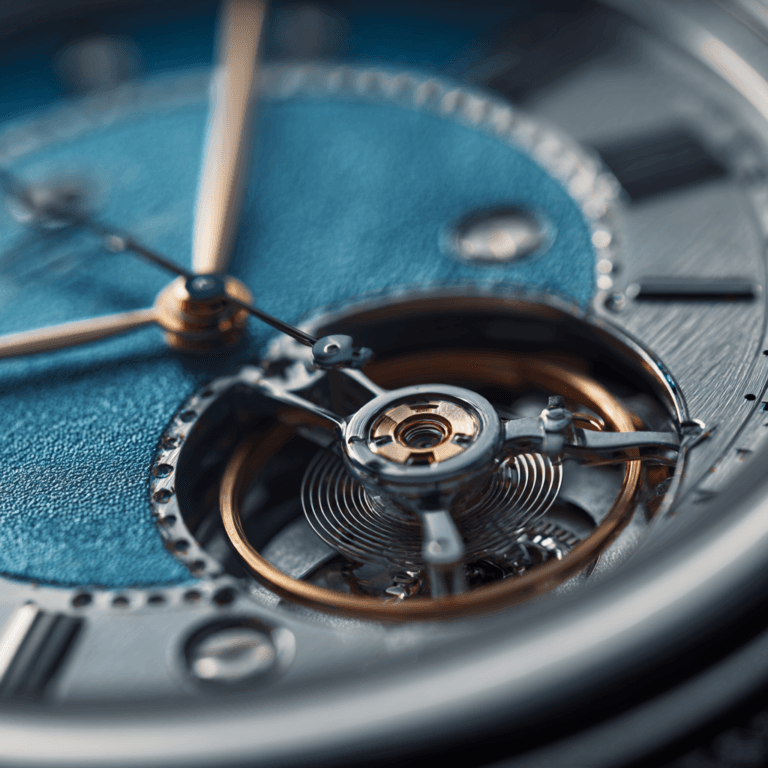
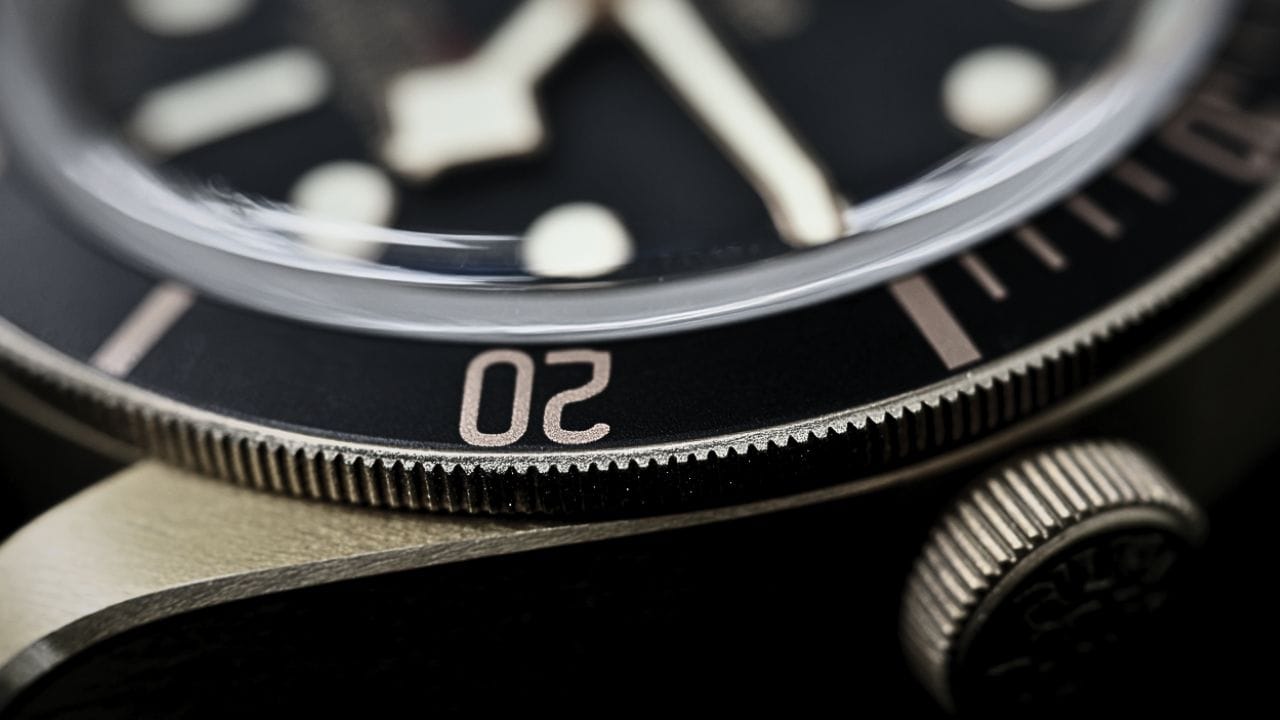
What Actually Makes a Watch “Well Finished”?
If you spend enough time around watches, you’ll notice something interesting. People talk about movements. They argue about water resistance. They obsess over sapphire versus mineral crystal. But when someone handles a watch in person and says, quietly, “This feels well made,” they’re usually reacting to something else.
They’re reacting to watch finishing.
Finishing is the invisible layer of quality that separates a watch that looks good in photos from one that feels coherent, deliberate, and considered in the hand. It is the difference between a case that merely exists and one that has been shaped, brushed, polished, and assembled with intent. It’s the difference between hands that catch the light and hands that disappear. It’s what transforms steel and brass into something that feels like an object of care.
To understand what makes a watch well finished, we have to look beyond brand prestige and price brackets. Finishing is not exclusive to haute horology. It’s a discipline — one rooted in centuries of craft — and its principles apply just as much to an affordable mechanical watch as they do to a grand complication.
Let’s break down what really matters.
Finishing Is About Surfaces — and How They Meet
At its most basic level, finishing is the treatment of surfaces. But that definition is too simple. What truly defines good finishing is how those surfaces relate to one another.
A brushed surface can be executed poorly or beautifully. A polished bevel can look soft and undefined, or sharp and deliberate. The key is contrast, precision, and control.
1. Surface Texture Consistency
Take brushing, for example. On a well-finished case, the brushing is:
- Straight and directional
- Even in grain
- Free of waviness
- Consistent across planes
The grain should flow logically with the geometry of the case. If a case flank is vertically brushed, the lines should be clean and uninterrupted from lug to lug. On a bracelet, brushing should align across links in a way that feels intentional, not random.
Inconsistent brushing is often the first sign of rushed manufacturing. When the grain direction changes abruptly or looks fuzzy, the eye detects it immediately — even if you can’t articulate why.
Polishing, on the other hand, demands clarity. A mirror-polished surface should reflect cleanly without distortion caused by uneven metal removal. Poor polishing rounds edges unintentionally. Good polishing respects the architecture of the case.
And architecture is where finishing really comes alive.
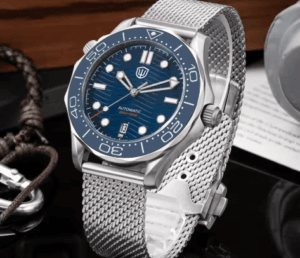

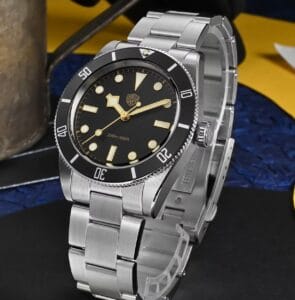
The Importance of Edges and Transitions
Edges tell you everything about a watch.
When two surfaces meet — say, a brushed lug top and a polished bevel — the transition between them must be crisp. That line should be sharp and defined, not blurred. It’s the clarity of that intersection that gives the watch visual structure.
In higher-end horology, this discipline is taken further through techniques like anglage — the careful beveling and polishing of edges, especially on movement components. But even on an accessible watch, you can see echoes of this principle.
A case with:
- Clean chamfers
- Defined lug edges
- Symmetrical transitions
- Balanced proportions
will feel deliberate.
A case where the edges are soft, asymmetrical, or inconsistent often feels vague, even if the watch has strong specifications.
This idea — that finishing enhances geometry — is central to traditional watchmaking philosophy. Historically, finishing was not purely decorative. It was a mark of skill. Clean bevels and consistent striping indicated care and control in manufacturing. That mindset still matters.
Dial Finishing: Where Subtlety Lives
The dial is where finishing becomes more nuanced.
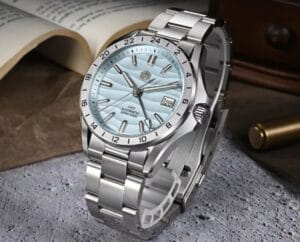
Unlike a case, which reflects light boldly, the dial interacts with light in complex, controlled ways. Good dial finishing isn’t about shine — it’s about depth and texture. When we talk about dial finishing, we are not simply talking about color or layout. We’re talking about technique.
Historically, watch dials were made using a wide range of methods: fired enamel, lacquer, engine-turning, pressed metal, galvanic treatments, sunray brushing, and later, electroplating and modern stamping processes. Each technique produces a different interaction with light — and light is the key to perceived refinement.
Here are key elements to evaluate:
1. Surface Treatment
- Matte dials should be even and free of blotching.
- Sunburst dials should radiate evenly from their center point.
- Textured dials (like enamel, lacquer, or grain finishes) should feel intentional, not irregular.
A sunburst dial, when properly executed, produces a radial effect that shifts smoothly as light moves. A poorly executed one may look flat or uneven.
2. Applied vs Printed Markers
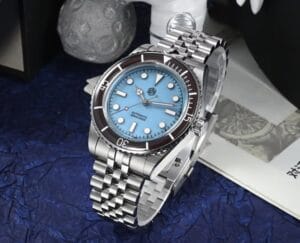
Applied indices — small metal markers fixed to the dial — add dimensionality. But quality matters.
Well-finished applied markers have:
- Cleanly cut edges
- Polished facets that catch light
- Even alignment
- Consistent lume application
Misaligned markers or uneven lume quickly undermine the impression of quality.
Printed dials can also be excellent. Crisp typography, sharp minute tracks, and precise alignment show attention to detail. Blurred printing or inconsistent spacing suggests compromise.
Typography itself matters. In watchmaking history, dial printing has always been an art form. Clear, balanced text demonstrates design discipline.

Hands: The Most Underrated Component
Hands are the moving architecture of the dial.
They are also one of the clearest indicators of finishing discipline.
Different hand styles carry different historical and aesthetic associations. Dauphine hands, with their sharp central ridges and polished facets, are designed to reflect light dramatically. Sword hands offer bold legibility. Leaf hands bring curvature and elegance. Cathedral hands evoke early military design. Pencil hands are minimalist and modern. Mercedes hands, syringe hands, baton hands — each carries lineage.
What matters in finishing is not the name, but the execution.
Well-finished hands exhibit symmetry. Their surfaces are polished or brushed cleanly. Their edges are defined. If faceted, the planes meet in crisp lines rather than rounded approximations.
Well-finished hands exhibit:
- Clean polishing or brushing
- Defined edges
- Symmetry
- Proper length relative to markers
Faceted hands — those with polished planes and defined ridges — reflect light dynamically. That reflection gives the dial life. Flat, stamped hands with soft edges often look dull.
Even small details matter. If the seconds hand doesn’t align precisely with the minute track, or if the central pinion is messy, the illusion of precision fades.
In traditional horology, hands were frequently heat-blued, polished, or carefully beveled. While many modern watches use more industrial processes, the principle remains: clarity and proportional balance signal care.
Movement Finishing: Decorative vs Functional
Now we move inside the watch.
Movement finishing is where the romantic side of watchmaking often lives. Techniques like Geneva stripes (Côtes de Genève), perlage (circular graining), and polished screw heads originated as both decorative and protective treatments.
But it’s important to distinguish between:
- Decorative finishing
- Structural finishing
- Precision finishing
Decorative finishing includes striping, perlage, and engraved rotors. These enhance visual appeal but do not necessarily improve performance.
Structural finishing includes beveled bridges and polished edges that reduce microscopic burrs and improve longevity.
Precision finishing includes tight tolerances, careful gear cutting, and proper regulation.
A well-finished movement should display:
- Even striping
- Cleanly executed perlage
- No visible machining debris
- Properly seated screws
- Clean jewel settings
In the accessible segment, finishing may be machine-applied. That’s fine. What matters is consistency and cleanliness.
What doesn’t count as finishing? Simply exposing the movement through a display caseback without adding care to its appearance. For a deep dive into budget automatic movements, the types, their specifications read our The Affordable Automatic Watch Movements Buying Guide.



Bezel Engineering and Tactile Feedback
Finishing is not only visual. It’s tactile. The bezel is one of the few interactive elements of a watch. Its finishing is both visual and mechanical.
A well-executed bezel rotates with even resistance. The clicks should be distinct, not mushy. There should be no grinding sensation. The insert should align precisely with the dial markers.
Historically, the unidirectional dive bezel was developed as a safety mechanism. Its teeth, click springs, and ratchet systems evolved over time to balance durability with tactile clarity. In modern watches, tolerances in the bezel assembly determine whether the action feels secure or loose.
Ceramic inserts often allow for sharper engraving and more durable surfaces. Aluminum inserts, by contrast, may fade over time but can carry a softer vintage character. Finishing quality lies not in the material alone but in the execution of the engraving, the filling, and the seating within the bezel ring.
The knurling or grip pattern around the bezel edge must be evenly machined. If it feels sharp in one area and dull in another, the finishing lacks consistency.
Bezel engineering is one of the fastest ways to detect attention — or the absence of it.
A well-finished bezel rotates with:
- Even resistance
- No backplay
- Distinct click engagement
- Minimal wobble
The click spring, detent system, and machining tolerances determine this feel. A gritty or inconsistent bezel undermines the impression of quality.
The insert material also matters. Ceramic inserts often present sharper engraving and more consistent filling than aluminum, but execution matters more than material alone.
A well-finished bezel is both mechanically precise and visually cohesive. We’ve also written an article on how Water Resistance Numbers Mislead Buyers.
Bracelet and Clasp Finishing
Bracelets reveal shortcuts quickly.
Look for:
- Clean brushing across links
- Even polishing where applicable
- Tight tolerances between links
- Smooth articulation
- No sharp internal edges
The clasp should close securely without rattling. The action should feel firm but controlled.
In higher watchmaking, bracelets often display alternating brushed and polished surfaces with razor-sharp transitions. Even in affordable watches, attention to link finishing and clasp tolerances dramatically changes perception.
A bracelet with sloppy end link fit, inconsistent brushing, or loose tolerances feels unfinished.

Proportion and Coherence
One of the most overlooked aspects of finishing is coherence.
A watch can have polished elements, brushed elements, applied markers, and a decorated rotor — but if these elements don’t harmonize, the watch feels chaotic.
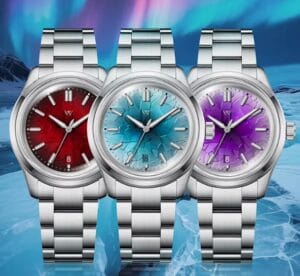
Well-finished watches display:
- Proportional balance
- Design restraint
- Consistent surface logic
- Intentional contrast
Finishing is not about adding more. It’s about refining what’s there.
Tolerances: The Invisible Standard
True finishing extends into tolerances — the microscopic allowances in manufacturing.
Signs of good tolerances include:
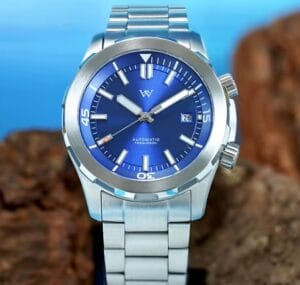
- No visible gaps between bezel and case
- Even crown threading
- Centered date wheels
- Proper alignment of rehaut and dial
When tolerances are tight, the watch feels solid. When they’re loose, small inconsistencies accumulate.
Traditional horology placed enormous emphasis on these invisible details. Today, CNC manufacturing allows high precision, but care still matters.
Does Price Guarantee Finishing?
No.
Price often correlates with finishing quality, but it does not guarantee it.
Some affordable watches demonstrate excellent case brushing and tight assembly tolerances. Some expensive watches rely heavily on brand cachet while offering relatively simple finishing.
What matters is execution.



The Emotional Component
There is one more dimension to finishing that is difficult to quantify: emotional resonance.
When light plays across a chamfered lug, when the hands catch sunlight at an angle, when the bracelet articulates fluidly — the watch feels intentional.
This feeling has deep roots in watchmaking history. Finishing has always been a statement of pride. It signals that the object was made not just to function, but to endure and be appreciated.
That philosophy still matters.
How to Evaluate Finishing in Practice
When assessing a watch, take your time.
- Tilt it under light.
- Examine edge transitions.
- Run your finger lightly across lug edges and bracelet links.
- Rotate the bezel slowly.
- Inspect dial printing closely.
- Check alignment of markers and hands.
- Look at how surfaces interact, not just individually, but together.
The more you train your eye, the more quickly you’ll spot refinement.
Final Thoughts
Finishing is not decoration. It is discipline. It is the controlled shaping of metal, the thoughtful treatment of surfaces, the respect for geometry, and the precision of assembly. It’s what transforms raw components into a cohesive object.
A well-finished watch does not need to be extravagant. It needs to be deliberate. When brushing is straight, edges are crisp, markers are aligned, tolerances are tight, and surfaces speak to one another — that’s finishing.
And once you learn to see it, you’ll never unsee it again.


FAQ
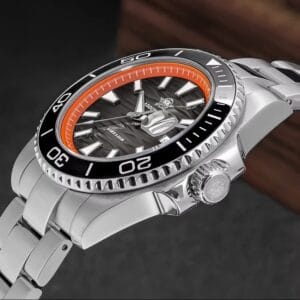
Here are the most common questions about the Benyar BY5179.
What does “watch finishing” actually mean?
Watch finishing refers to the refinement of a watch’s surfaces and edges. In traditional horology, the term primarily described decorative and structural treatments applied to movement components, such as beveling and striping. In modern usage, it also includes case brushing, polishing, dial surface treatments, hand finishing, and bracelet execution. Finishing is about how materials are shaped and completed — not about specifications or brand prestige.
Does watch finishing affect accuracy?
No, finishing does not directly affect timekeeping accuracy. Accuracy depends on movement design, regulation, and mechanical tolerances. A beautifully decorated movement can run poorly if it is not properly regulated, while a simple industrial movement can keep excellent time. Finishing influences aesthetics and perceived quality, but it does not determine precision.
What is the difference between movement finishing and case finishing?
Movement finishing refers to decorative and structural refinement applied to internal components, such as Geneva stripes, perlage, and polished bevels. Case finishing refers to external surface treatments like brushing, polishing, chamfering, and edge transitions. Both involve surface refinement, but one affects the internal mechanism visually, while the other defines the watch’s external appearance and tactile quality.
Is applied dial furniture better than printed markers?
Applied markers are not automatically better than printed ones. Applied indices add depth and dimensionality, but their quality depends on alignment, polishing, and lume execution. Printed markers can be equally refined if the typography is sharp and spacing is precise. The difference lies in execution rather than method.
How can I tell if a watch case is well finished?
A well-finished case shows consistent brushing, clean polishing, and crisp transitions between surfaces. Edges should be defined rather than rounded unintentionally. Under light, brushed surfaces should appear even, and polished surfaces should reflect cleanly without distortion. Precision in geometry is often the clearest sign of finishing discipline.
Does higher price always mean better finishing?
No, price does not guarantee superior finishing. While higher-end watches often include more labor-intensive techniques, execution matters more than cost alone. Some affordable watches demonstrate excellent brushing and tight tolerances, while some expensive models prioritize brand prestige over surface refinement.
What are common finishing flaws in watches?
Common finishing flaws include uneven brushing, soft or inconsistent chamfers, misaligned dial markers, poorly applied lume, loose bezel action, and bracelet links with excessive play. These issues do not necessarily affect function, but they reduce the perception of refinement.
What is anglage in watchmaking?
Anglage is the process of beveling and polishing the edges of movement components. Traditionally performed by hand, it creates a sloped, polished edge where two surfaces meet. Anglage improves aesthetics and removes burrs from metal edges. It is considered a hallmark of high-level movement finishing.
Does finishing affect durability?
Finishing can indirectly influence durability. Proper edge treatment reduces corrosion points, and consistent surface refinement removes microscopic irregularities. However, durability depends primarily on material quality, construction, and gasket integrity. Finishing reflects manufacturing care rather than structural strength alone.
Why do some simple watches feel more refined than complex ones?
Refinement often comes from coherence rather than complexity. A simple watch with consistent surface treatment, balanced proportions, and tight tolerances can feel more deliberate than a complex design with mismatched textures or excessive decoration. Finishing is about discipline, not ornamentation.
Is a display caseback necessary to appreciate finishing?
No, a display caseback is not required. Many well-finished watches have solid casebacks, especially tool watches. Movement finishing becomes visible through a display caseback, but external finishing — case geometry, dial execution, and bracelet construction — remains equally important.
Can a budget watch be well finished?
Yes, a budget watch can be well finished within its manufacturing constraints. Modern CNC machining allows precise case brushing and consistent geometry even at lower price points. While hand-applied decorative techniques are rare in affordable watches, disciplined industrial finishing can still produce excellent results.