
Watch Size Explained: How to Choose the Right Watch for Your Wrist
Few aspects of buying a watch generate as much confusion as watch size. Most listings present a single number — 36 mm, 40 mm, 42 mm — as if that measurement alone determines whether a watch will suit your wrist. Yet anyone who has spent time trying on different watches quickly discovers that two watches with identical diameters can wear completely differently.
One might feel compact and balanced, while another feels oversized and awkward. The difference comes down to the geometry of the watch: the way the case is shaped, the length and curvature of the lugs, the thickness of the case, and the size of the dial opening. Each of these elements contributes to the way a watch occupies space on the wrist.
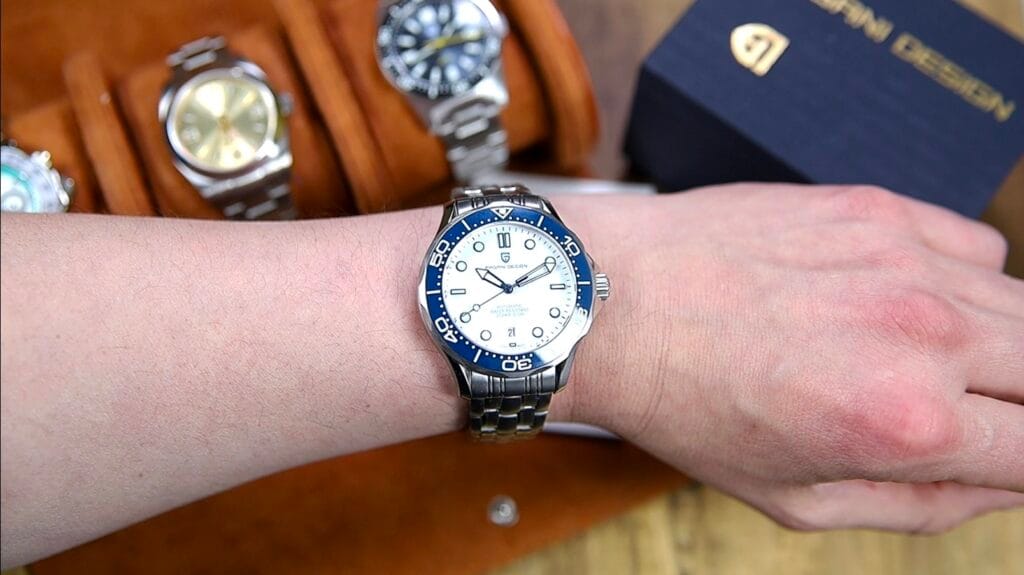
In traditional horology, proportion has always been a central design principle. Watchmaking references frequently describe a well-designed watch as one that harmonizes with the wearer’s wrist rather than dominating it. Even though modern tastes have shifted toward larger watches, the underlying principle remains unchanged: the best watch is one that feels naturally integrated with the wrist.
Understanding how watch dimensions work together allows you to evaluate watches far more intelligently. Instead of relying solely on case diameter — the number most often advertised — you learn to look at the complete design. When you do, choosing the right size becomes far easier, and the watch you select will feel comfortable and visually balanced every time you wear it.
Start With Your Wrist
Before analyzing watch dimensions, it helps to understand the dimensions of your own wrist. Most people begin by measuring wrist circumference using a soft measuring tape. This measurement provides a useful reference point, especially when comparing recommendations from manufacturers.
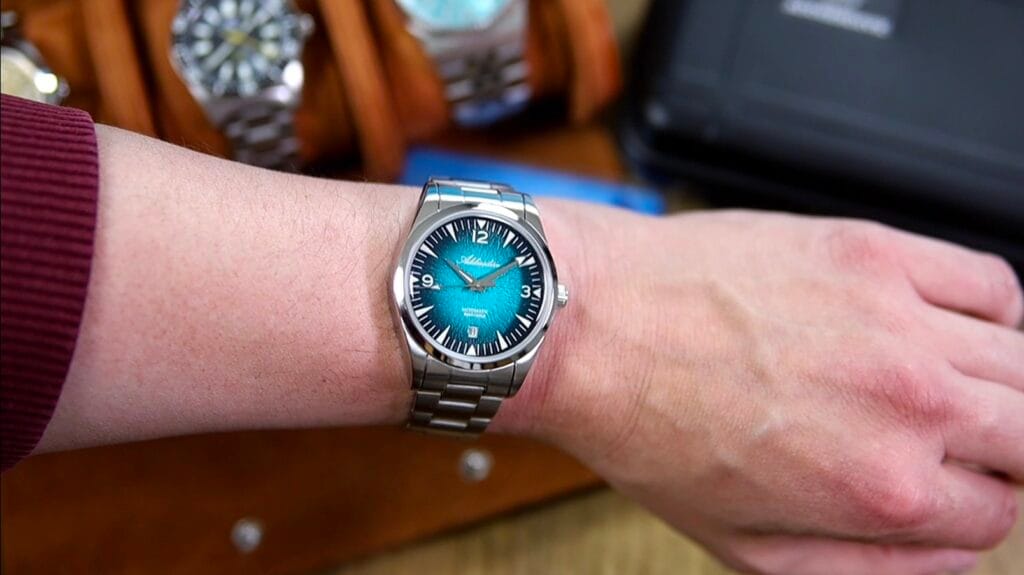
Most wrists fall somewhere between 15 cm and 19 cm in circumference, though there is enormous variation. While circumference is useful, a more meaningful measurement is the width of the wrist — the flat distance across the top of the wrist where the watch actually sits.
Why does wrist width matter? Because watches occupy horizontal space. If a watch extends beyond the natural boundaries of the wrist, it will appear oversized regardless of its diameter. This is why two people with similar wrist circumferences may wear very different watch sizes comfortably. One person may have a flat wrist that accommodates longer lugs, while another may have a narrower wrist that requires shorter cases.
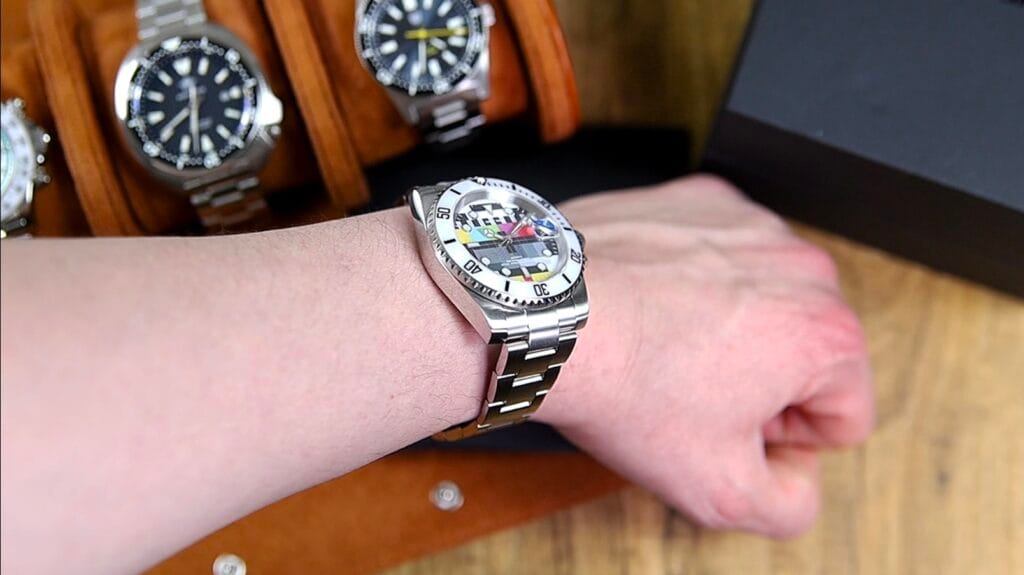
Understanding this difference immediately changes how you evaluate watch specifications. Instead of focusing solely on case diameter, you begin considering the watch as a three-dimensional object interacting with the wrist.
Case Diameter: The Measurement Everyone Talks About
Case diameter is the most commonly advertised dimension in watch specifications. It refers to the width of the watch case measured horizontally across the center, usually excluding the crown. Because it is easy to understand, diameter has become shorthand for watch size in marketing and retail descriptions.
Historically, watches were much smaller than today. Mid-20th-century men’s watches often measured 34 mm to 36 mm, which was considered standard at the time. Over the past two decades, average sizes have increased dramatically, with many modern sports watches falling between 38 mm and 42 mm, and some even larger.
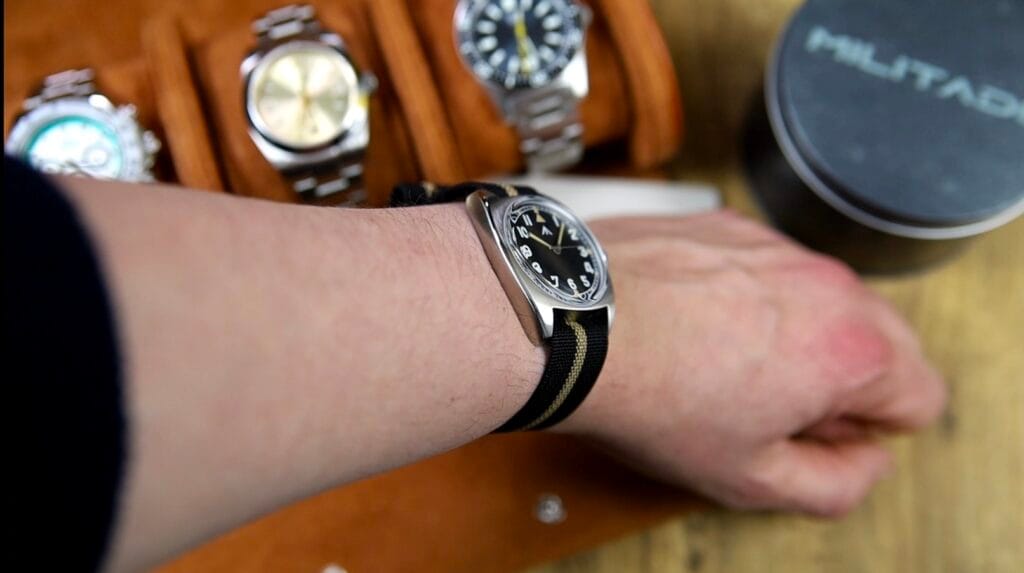
However, diameter alone does not determine how a watch wears. Two watches measuring 40 mm can feel dramatically different depending on the surrounding design.
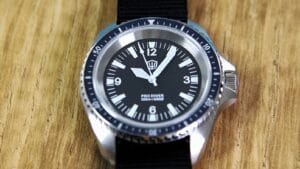
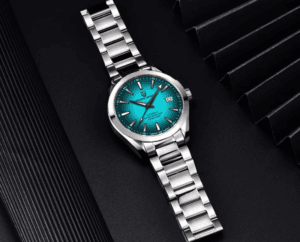
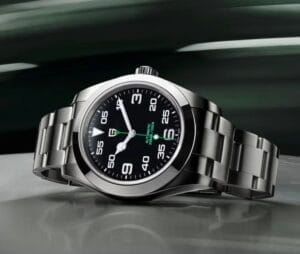
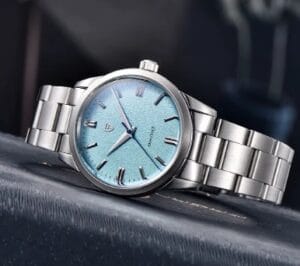
For example, a dive watch with a thick rotating bezel may visually reduce the dial opening, making the watch appear more compact. A minimalist watch with a very thin bezel may expose more dial area, making the watch appear larger even though the diameter is identical.
This is why experienced collectors rarely rely on diameter alone when judging a watch’s size. It provides a starting point, but it is only one part of a larger picture.
Lug-to-Lug: The Dimension That Actually Determines Fit
Among enthusiasts, lug-to-lug distance is often considered the most important measurement affecting wearability. This dimension measures the vertical length of the watch from the tip of the upper lug to the tip of the lower lug.
The reason this measurement matters is simple. The lugs determine how much of the wrist the watch occupies. If the lug-to-lug length exceeds the width of the wrist, the lugs will overhang the edges of the wrist. When this happens, the watch often feels awkward and visually unbalanced.
In practical terms, many collectors follow a simple rule: the lugs should remain within the natural width of the wrist.
General guidelines often look like this:
• Smaller wrists (15–16 cm): under ~46 mm lug-to-lug
• Medium wrists (17–18 cm): roughly 47–50 mm
• Larger wrists (19 cm+): 50 mm and above
These numbers are not absolute, but they provide a useful starting framework.
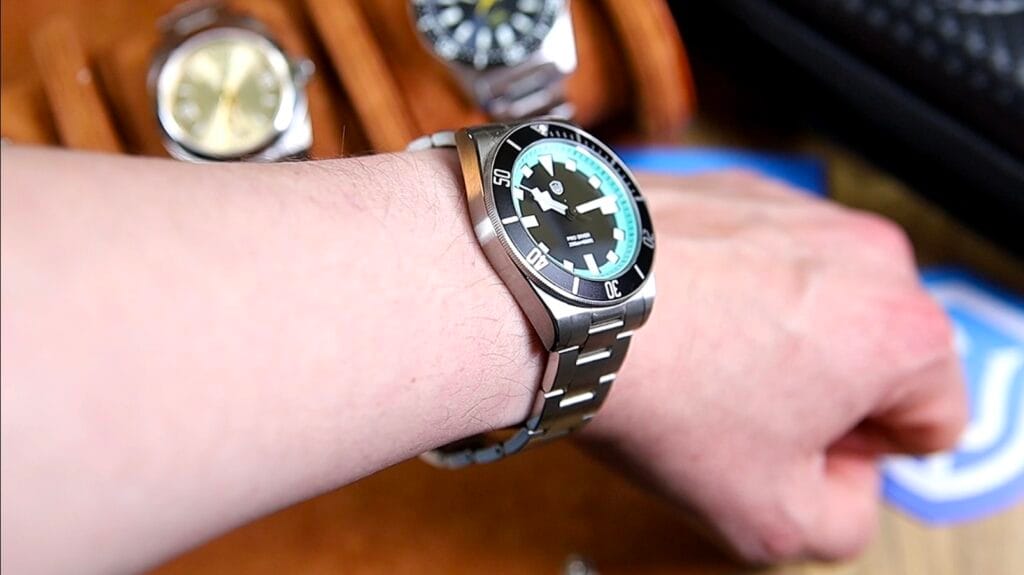
Lug shape also matters. Watches with short, downward-curving lugs tend to wrap around the wrist more comfortably than watches with long, straight lugs. As a result, two watches with identical lug-to-lug measurements can still wear differently depending on the curvature of the lugs.
Case Thickness and Wrist Presence
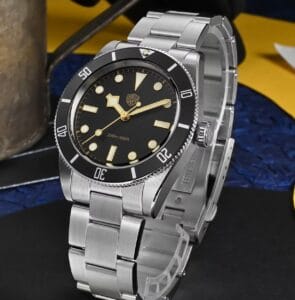
Thickness is another dimension that significantly influences how a watch feels on the wrist. A watch with the right diameter can still feel oversized if it sits too tall.
Thin watches generally sit closer to the wrist and feel more integrated with the arm. Dress watches often emphasize thinness for precisely this reason. They slip easily under shirt cuffs and maintain a refined profile.
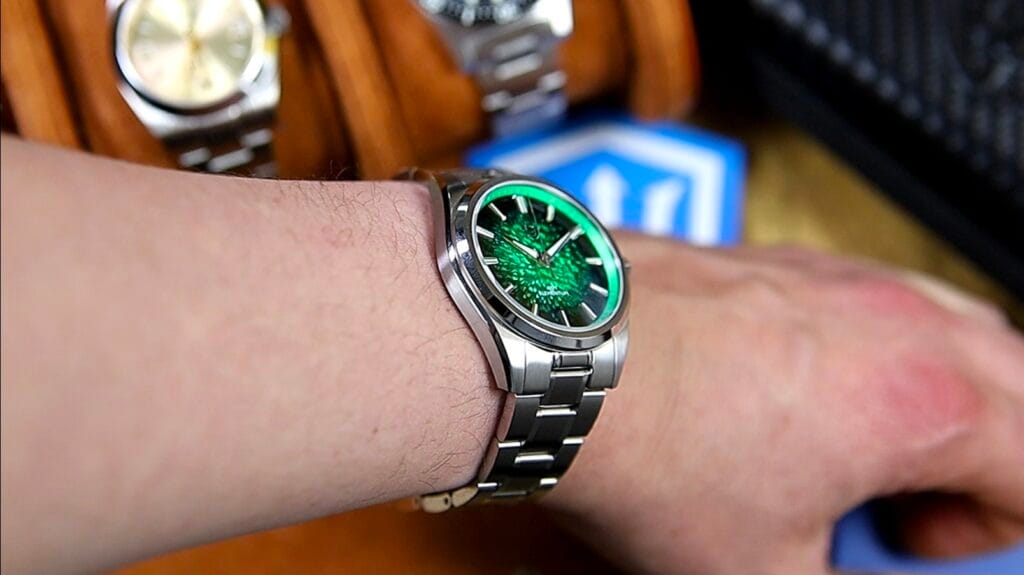
Sports watches, on the other hand, are often thicker because they incorporate additional engineering elements such as:
• Increased water resistance
• Automatic winding systems
• Rotating bezels
• Shock protection structures
However, thickness alone does not tell the full story. The shape of the case can dramatically affect how thick a watch appears. Cases with sloping sides or curved profiles often feel slimmer than cases with flat, vertical walls.
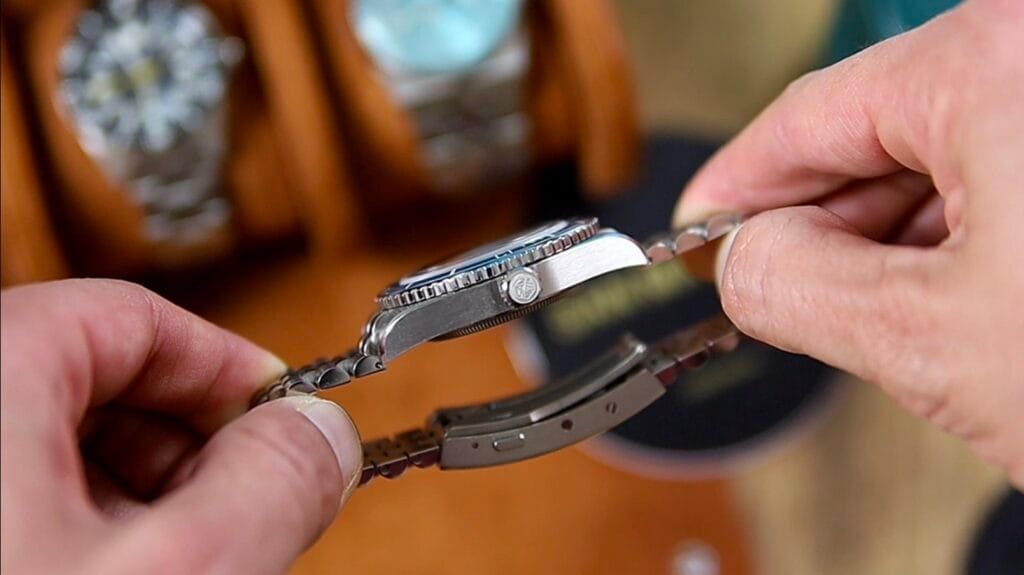
These subtle design details explain why two watches with the same thickness measurement can feel completely different on the wrist.
Dial Opening and Visual Size
Another element that influences perceived size is the dial opening — the visible diameter of the dial inside the bezel.
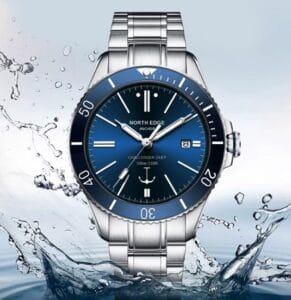
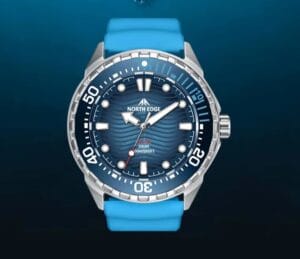
Watches with thin bezels expose more dial surface, which can make the watch appear larger than its specifications suggest. Watches with thick bezels, such as many dive watches, visually compress the dial area, making the watch feel smaller and more contained.
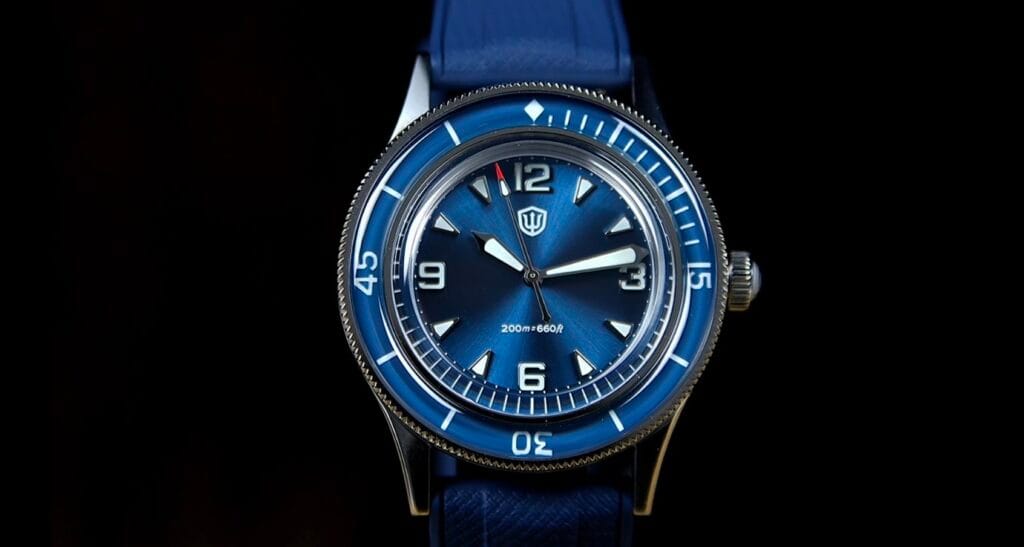
This is why a 40 mm dive watch often feels smaller than a 40 mm field watch. The rotating bezel reduces the visible dial space, creating a more compact appearance.
Dial design also plays a role. Large numerals, bold markers, and open layouts tend to amplify perceived size. Dense dial layouts, by contrast, can visually shrink the watch.
Lug Design and Case Geometry
Beyond simple measurements, the shape of the case itself influences how a watch wears. Long, straight lugs extend the footprint of the watch, making it feel larger. Shorter lugs that curve downward tend to hug the wrist more naturally.
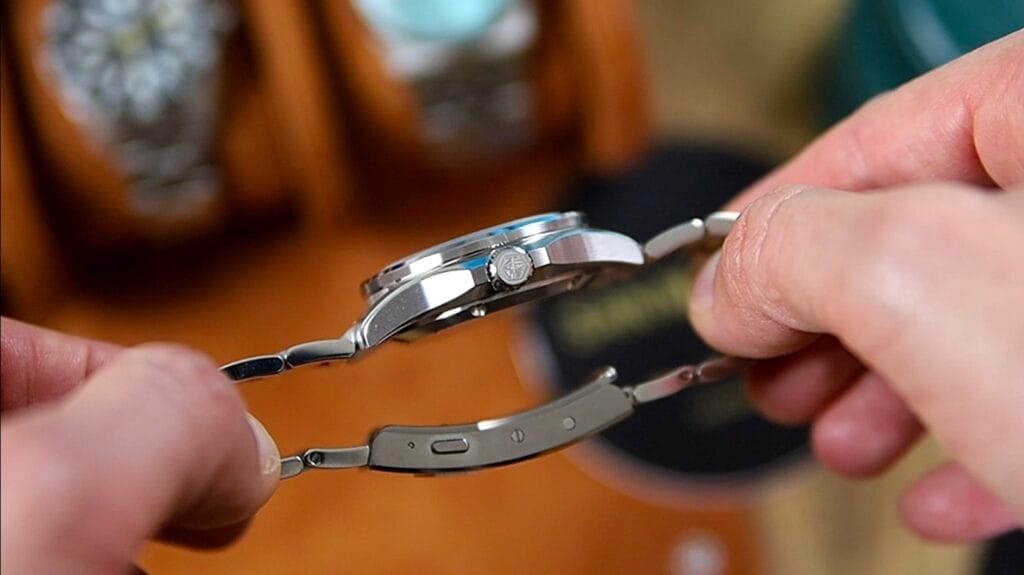
Case geometry also affects perception. A case with wide flat sides may appear bulkier than a case with chamfered edges or sculpted surfaces, even if the measurements are identical.
These design choices are often subtle, but they significantly influence comfort. Experienced collectors often notice these details immediately when trying on a watch.
Bracelet and Strap Integration
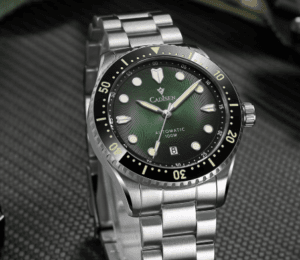
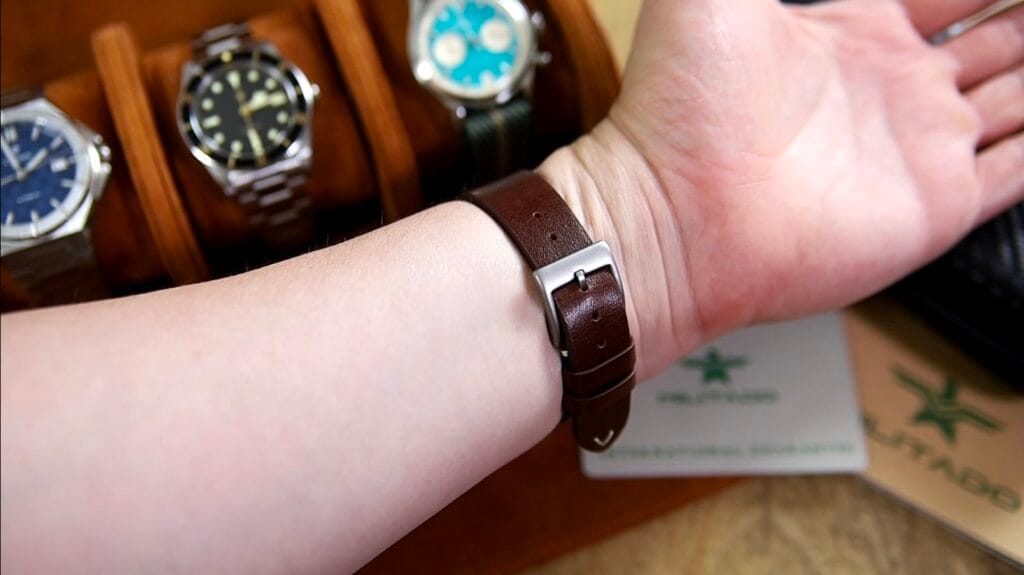
The strap or bracelet attached to the watch also affects the way it wears. Metal bracelets tend to emphasize the presence of the watch head, especially if they are wide and heavy. Leather straps often soften the appearance of the case and make watches feel slightly smaller.
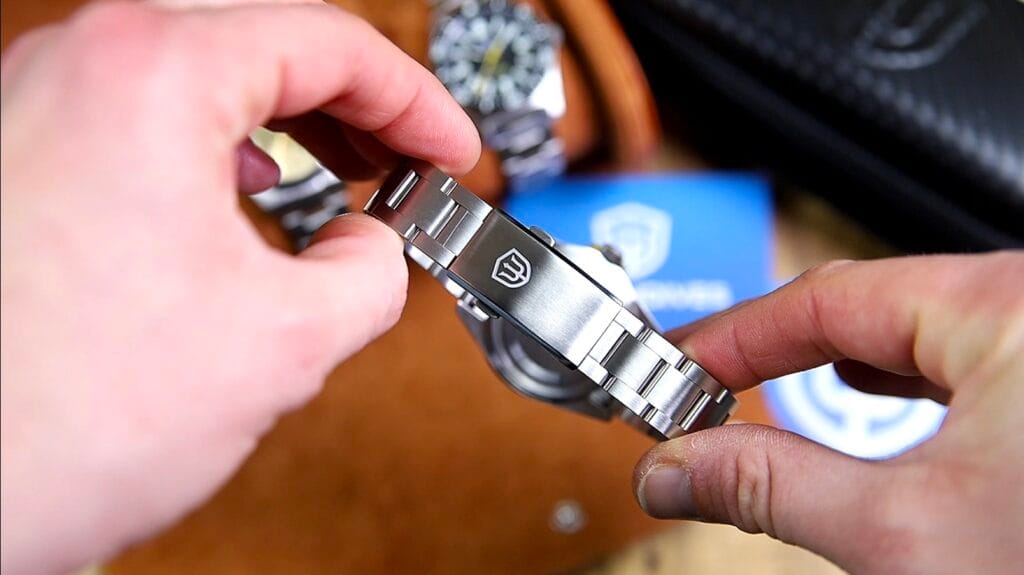
Bracelet taper can also change the visual balance of a watch. A bracelet that narrows toward the clasp often feels more refined and balanced, while a bracelet with minimal taper can make the watch feel heavier on the wrist.
Integrated bracelet watches — where the bracelet flows directly from the case — often wear larger than their diameter suggests because the case visually extends into the bracelet.
Vintage Sizes vs Modern Sizes
One of the interesting trends in modern watch collecting is the renewed appreciation for smaller watches. Vintage watches from the mid-20th century were often much smaller than today’s sports watches, yet many collectors now find these proportions more elegant and wearable.
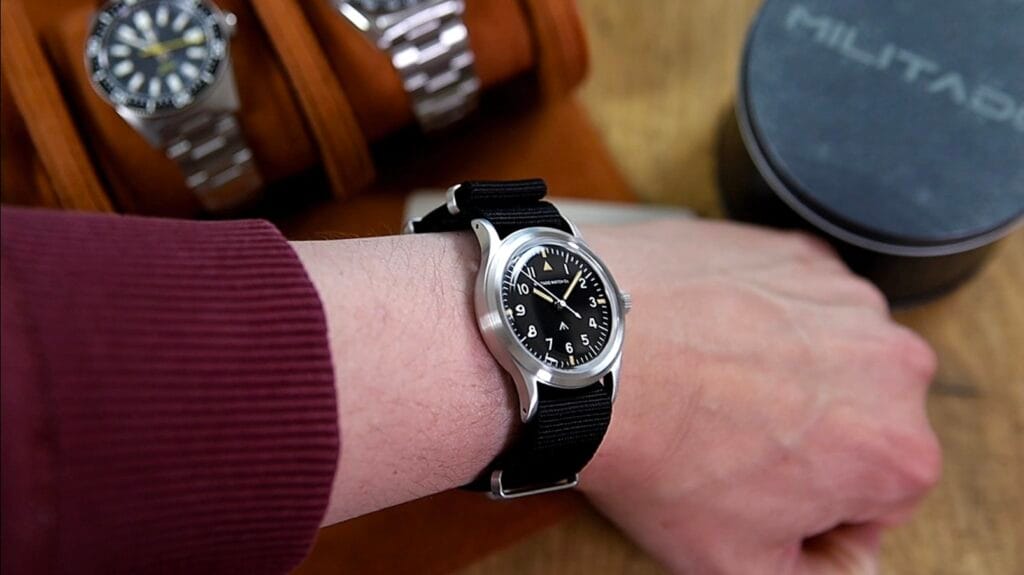
A classic 36 mm watch can feel remarkably balanced on many wrists, especially when paired with short lugs and a slim case profile.
Meanwhile, modern watches have explored larger sizes in pursuit of bold aesthetics and increased readability. Some of these designs work beautifully, while others push proportions beyond what many wrists can comfortably support.
Understanding size is ultimately about balance rather than following trends.
The Real Goal: Proportion
Choosing the right watch size is not about chasing the largest case you can wear or adhering strictly to vintage dimensions. It is about proportion.
A well-proportioned watch sits comfortably within the boundaries of the wrist. It feels stable rather than top-heavy. The lugs follow the curvature of the wrist rather than extending past it. The dial remains readable without overwhelming the arm.
When all these elements come together — diameter, lug-to-lug length, thickness, dial opening, and case geometry — the result is a watch that feels natural. It becomes part of the wrist rather than an object resting on top of it.
Once you understand these relationships, evaluating watch sizes becomes intuitive. Instead of relying on a single number printed in a specification sheet, you begin seeing the watch as a complete design.
And that shift in perspective is what ultimately transforms watch buying from guesswork into informed decision-making.
FAQ
Frequently asked questions about Watch Size and Fit
What size watch should I wear for my wrist size?
The best watch size depends on wrist circumference and wrist width. Most wrists between 16 cm and 18 cm wear watches comfortably in the 38 mm to 42 mm range, but lug-to-lug length is often more important than case diameter. A properly sized watch should sit within the edges of the wrist without the lugs extending beyond it.
How do you measure watch size correctly?
Watch size is usually measured by case diameter, which is the width of the watch excluding the crown. However, evaluating a watch properly also requires checking lug-to-lug distance, case thickness, and dial opening. These dimensions together determine how the watch actually fits and feels on the wrist.
What is lug-to-lug distance in a watch?
Lug-to-lug distance is the measurement from the tip of the upper lug to the tip of the lower lug. This dimension determines how much horizontal space the watch occupies on the wrist. If the lug-to-lug measurement exceeds the width of your wrist, the watch may appear oversized and feel uncomfortable.
Is case diameter or lug-to-lug more important?
While case diameter is the most advertised specification, lug-to-lug distance usually determines wearability. Two watches with identical diameters can wear very differently depending on their lug length and curvature. For many collectors, lug-to-lug measurement is the most reliable indicator of how a watch will fit.
What watch size looks best on a small wrist?
For smaller wrists, watches in the 34 mm to 38 mm diameter range typically provide the most balanced proportions. Shorter lug-to-lug measurements under about 46 mm also help ensure the watch sits comfortably within the wrist boundaries. Slim cases and moderate dial openings can further improve overall visual balance.
Does case thickness affect how a watch wears?
Yes, case thickness can significantly influence how a watch feels on the wrist. Thicker watches sit higher and often appear larger than their diameter suggests. Slim watches tend to feel more integrated and comfortable. This is why dress watches are usually thinner, while dive watches and sports watches often have thicker cases.
Why do some watches look larger than their diameter?
A watch can appear larger due to several design factors, including thin bezels, large dial openings, long lugs, and wide bracelets. These elements increase the visual footprint of the watch. By contrast, watches with thick bezels or compact case shapes often wear smaller than their stated diameter.
What is the most popular watch size today?
Modern watches commonly range between 38 mm and 41 mm, which many enthusiasts consider a versatile size for everyday wear. This range balances readability and wrist presence without appearing oversized. However, the ideal watch size still depends on individual wrist proportions and the overall design of the watch.
Do larger watches keep better time?
Watch size does not directly affect accuracy. Timekeeping performance depends primarily on the movement inside the watch, not the case diameter. Whether a watch is quartz or mechanical, accuracy is determined by the quality and regulation of the movement rather than the physical size of the case.
Can you wear a large watch on a small wrist?
A larger watch can still work on a smaller wrist if the lug-to-lug length remains within the wrist width and the case profile is well balanced. Short lugs, curved case geometry, and moderate thickness can make a larger diameter watch wear comfortably without overwhelming the wrist.