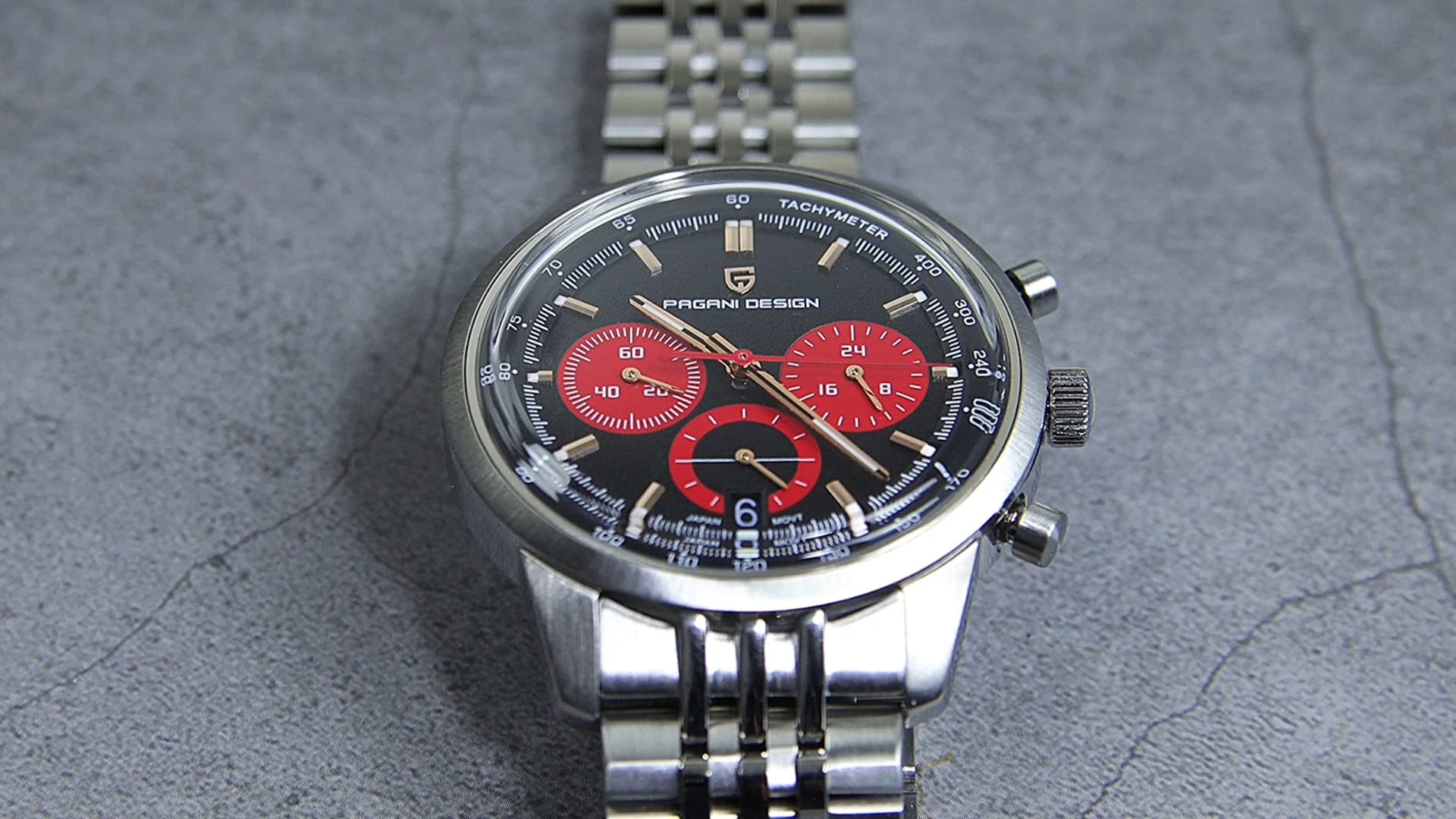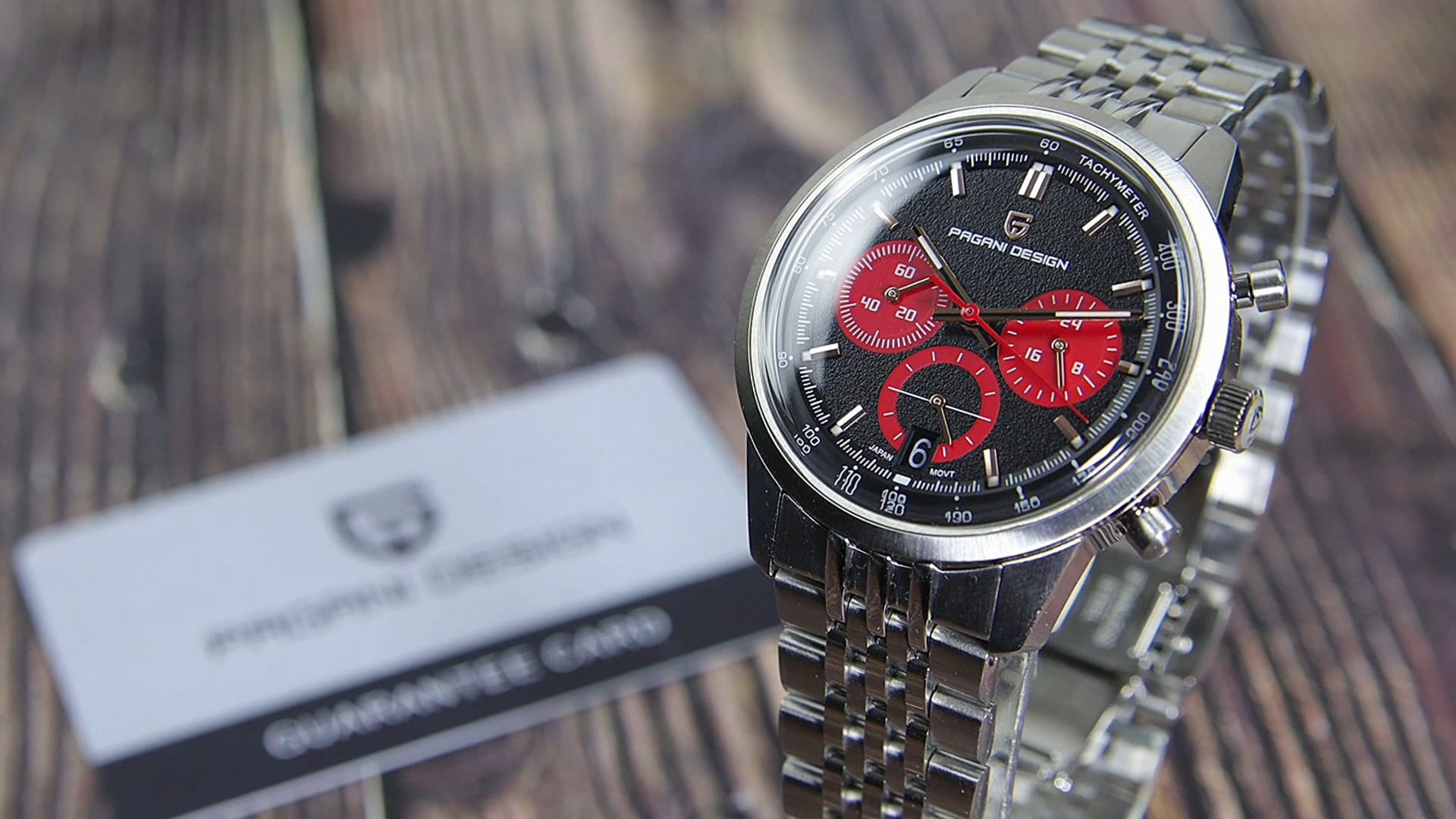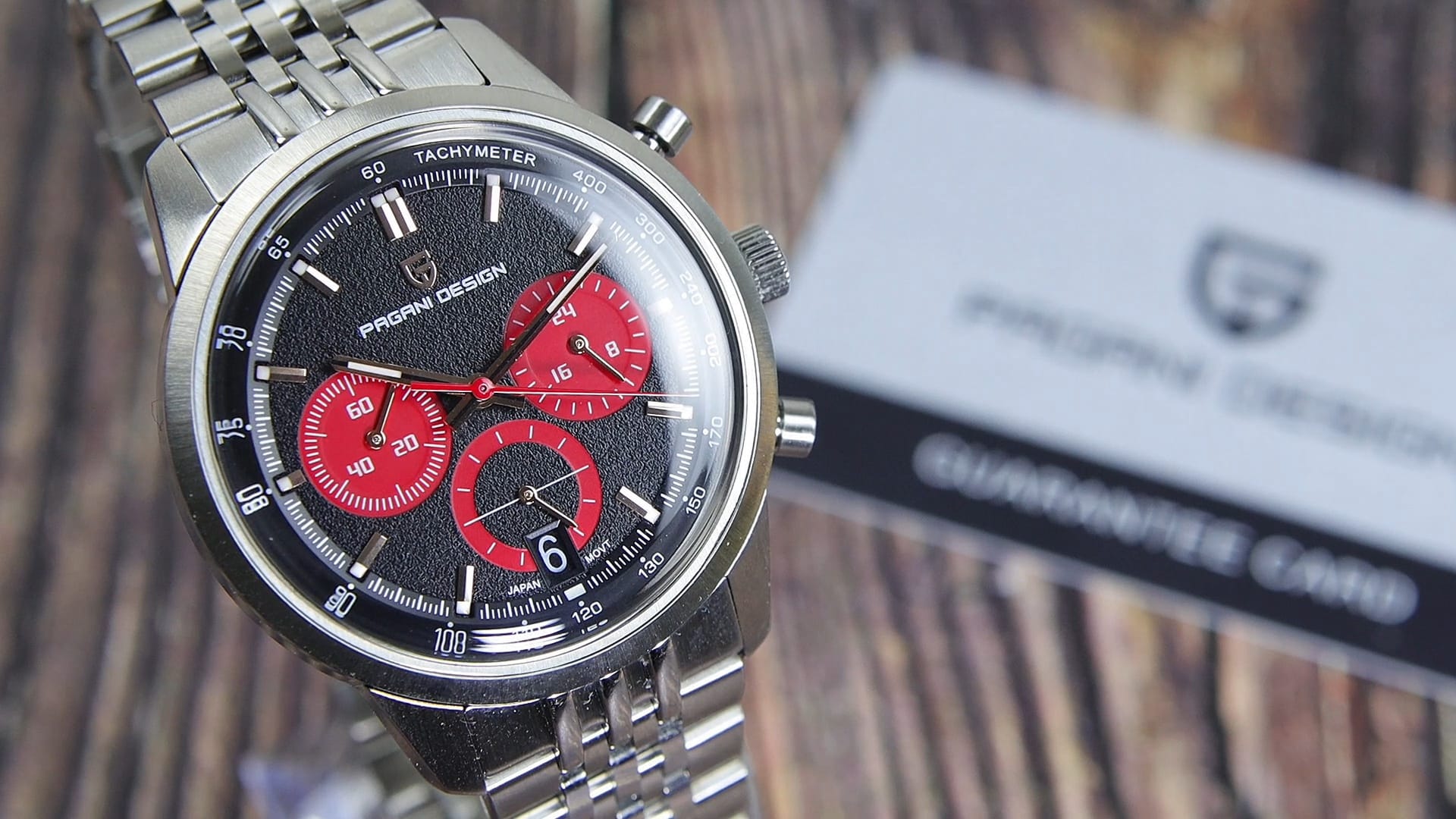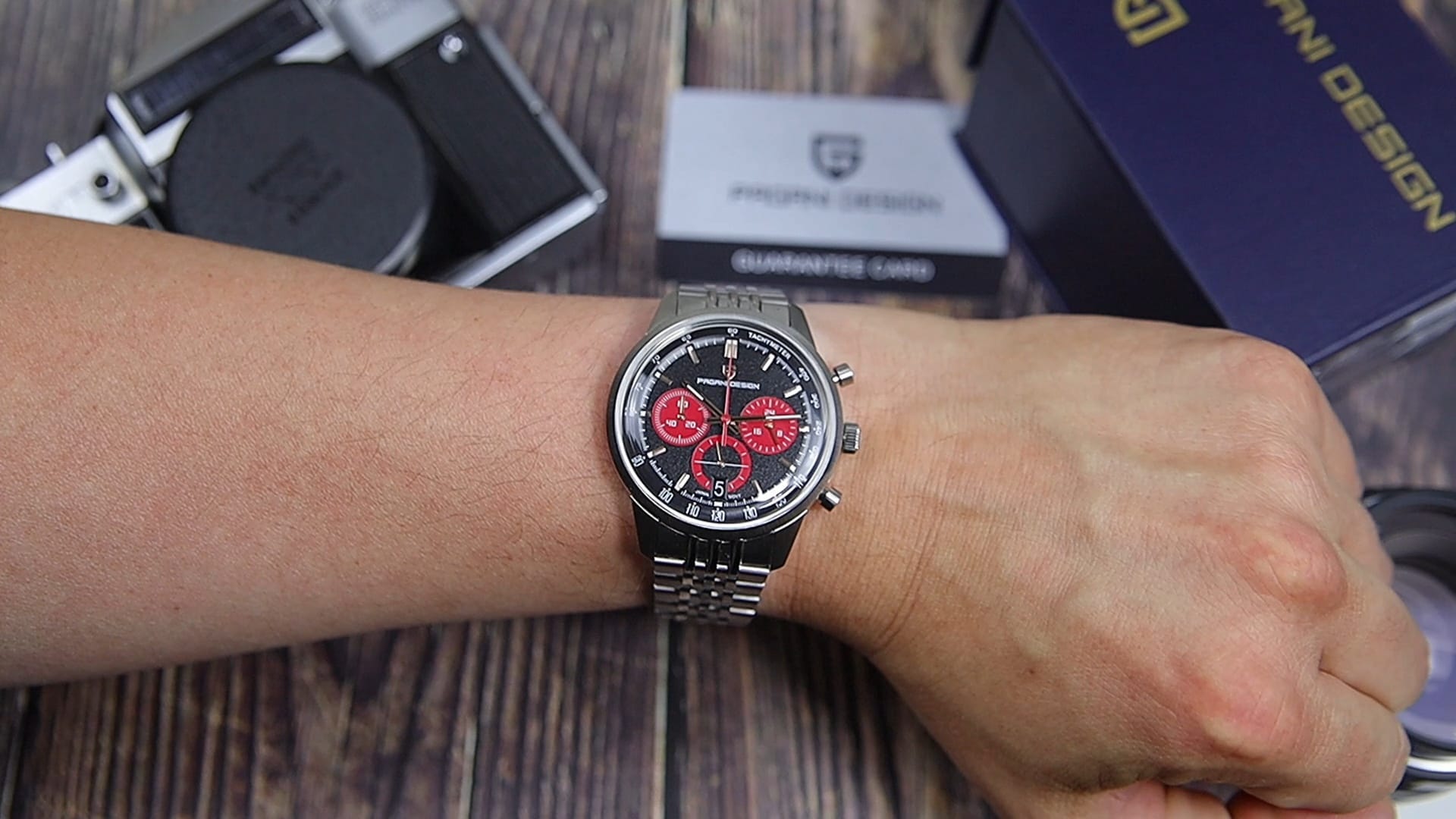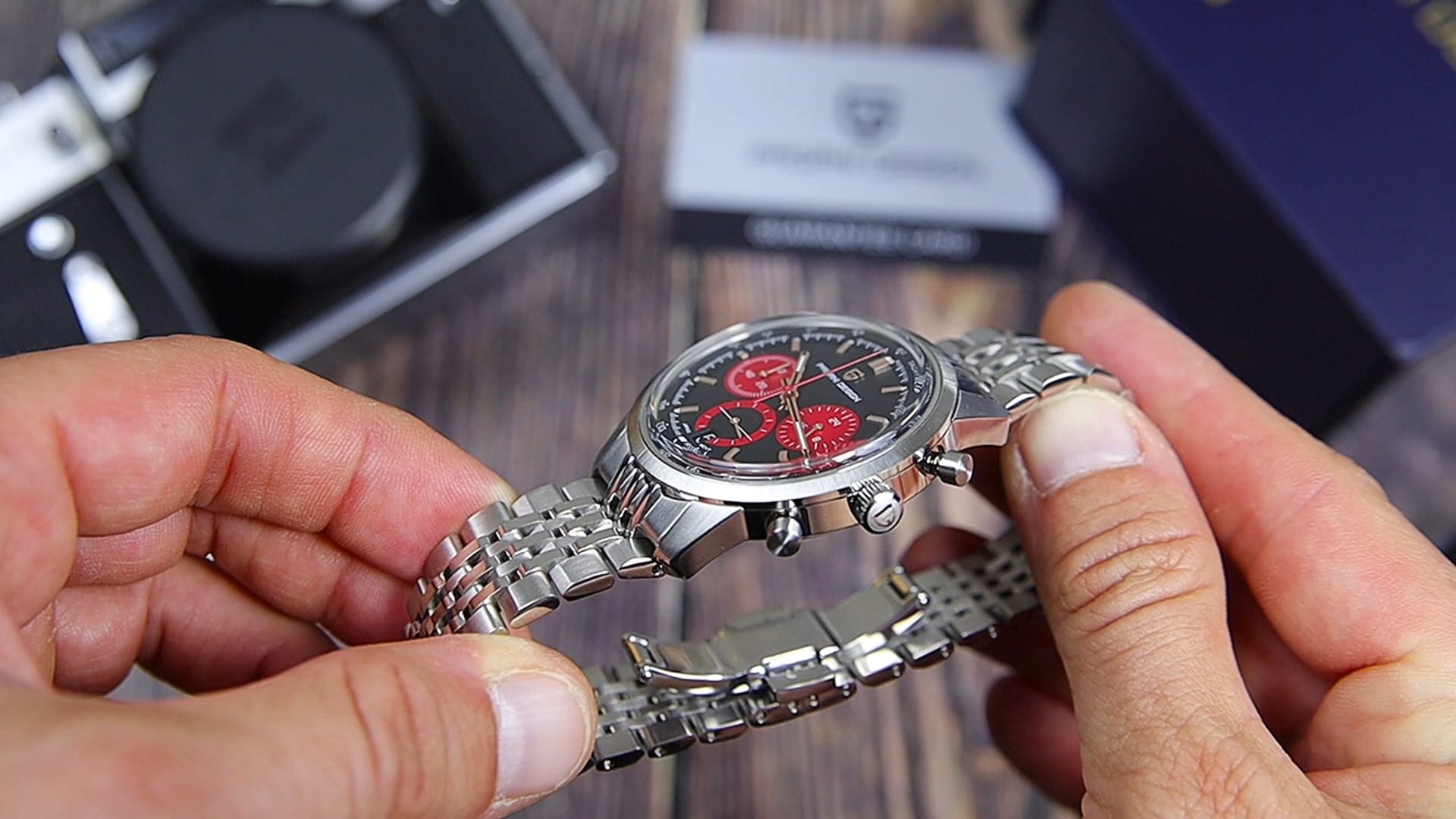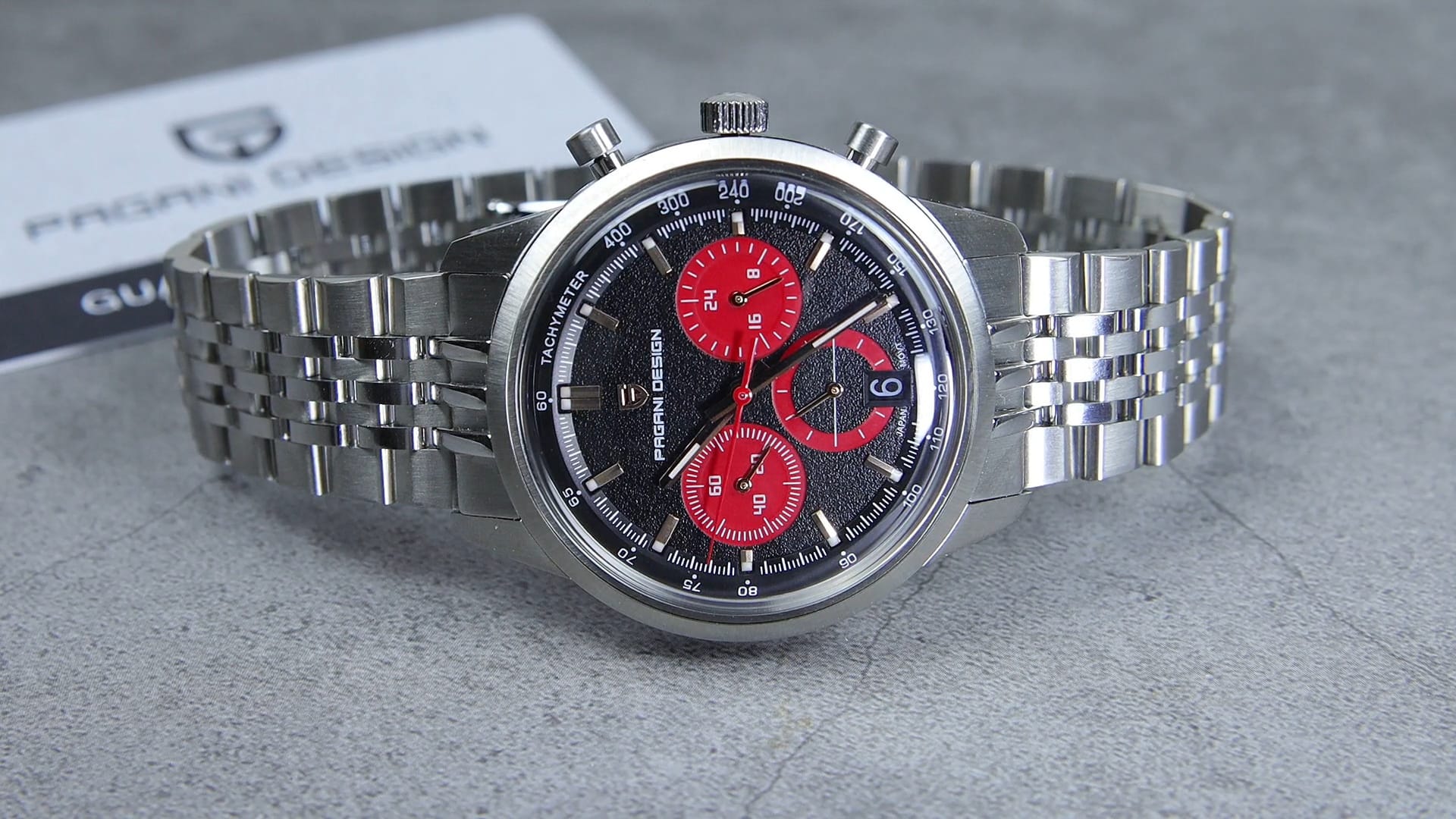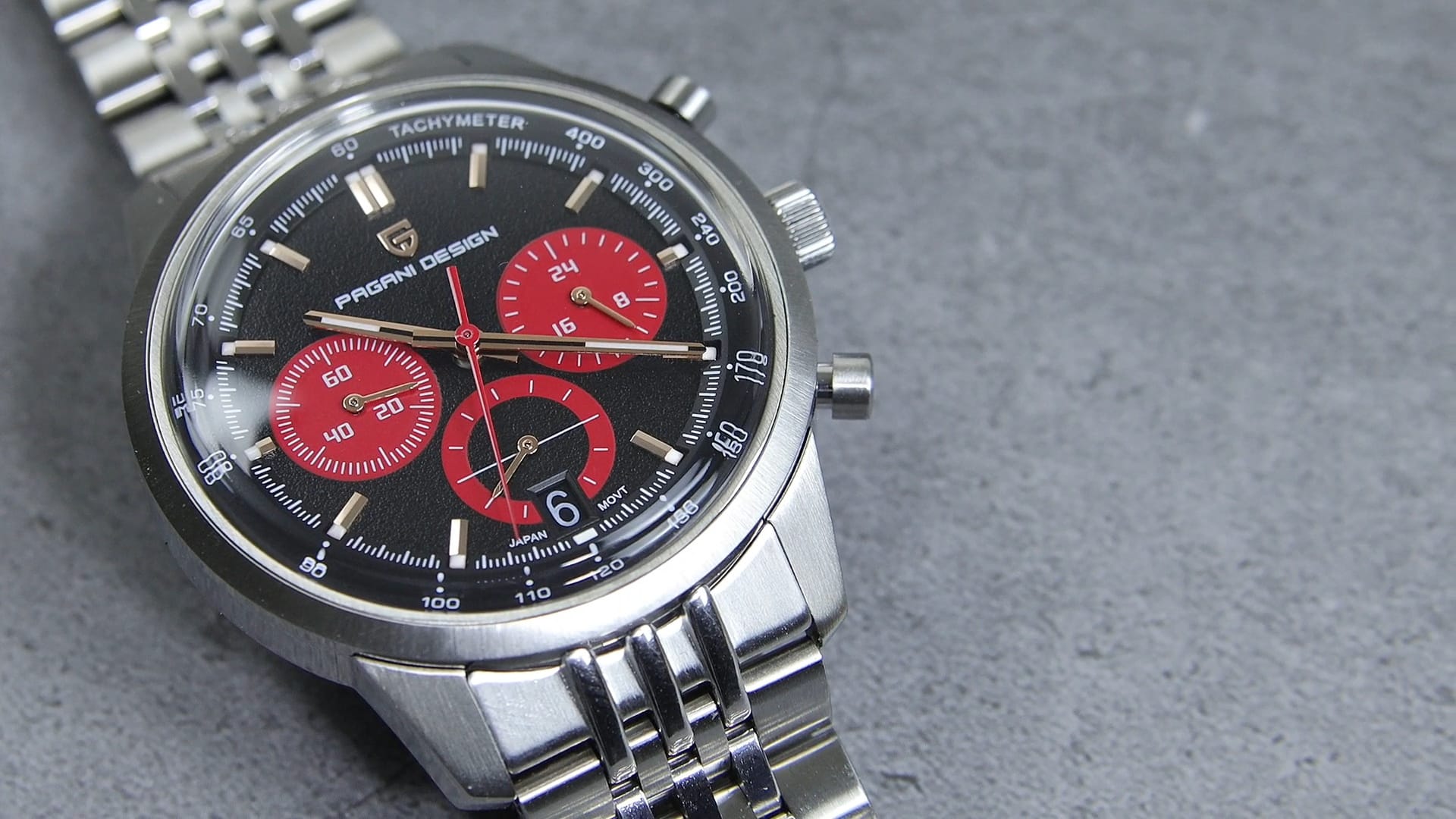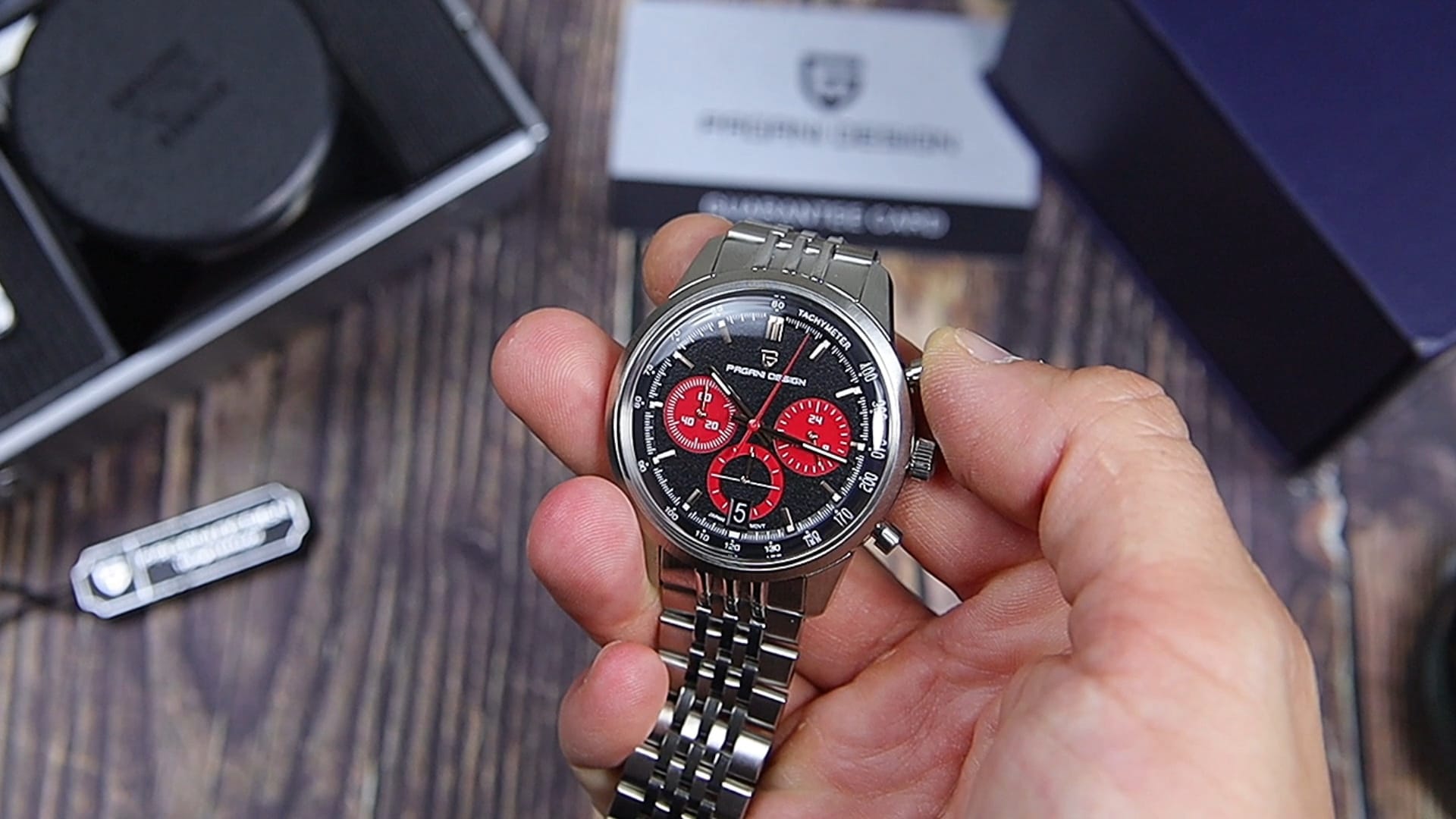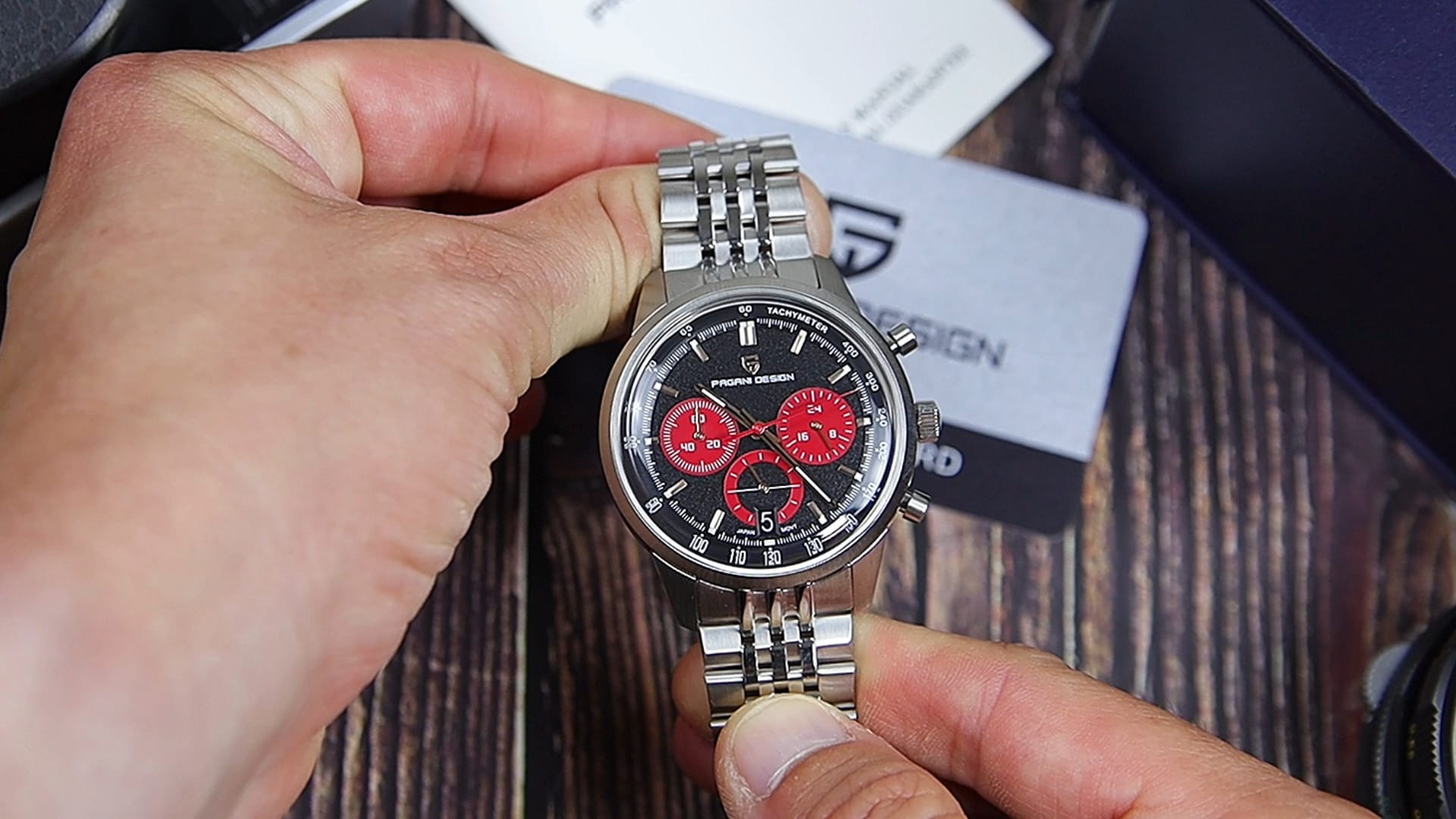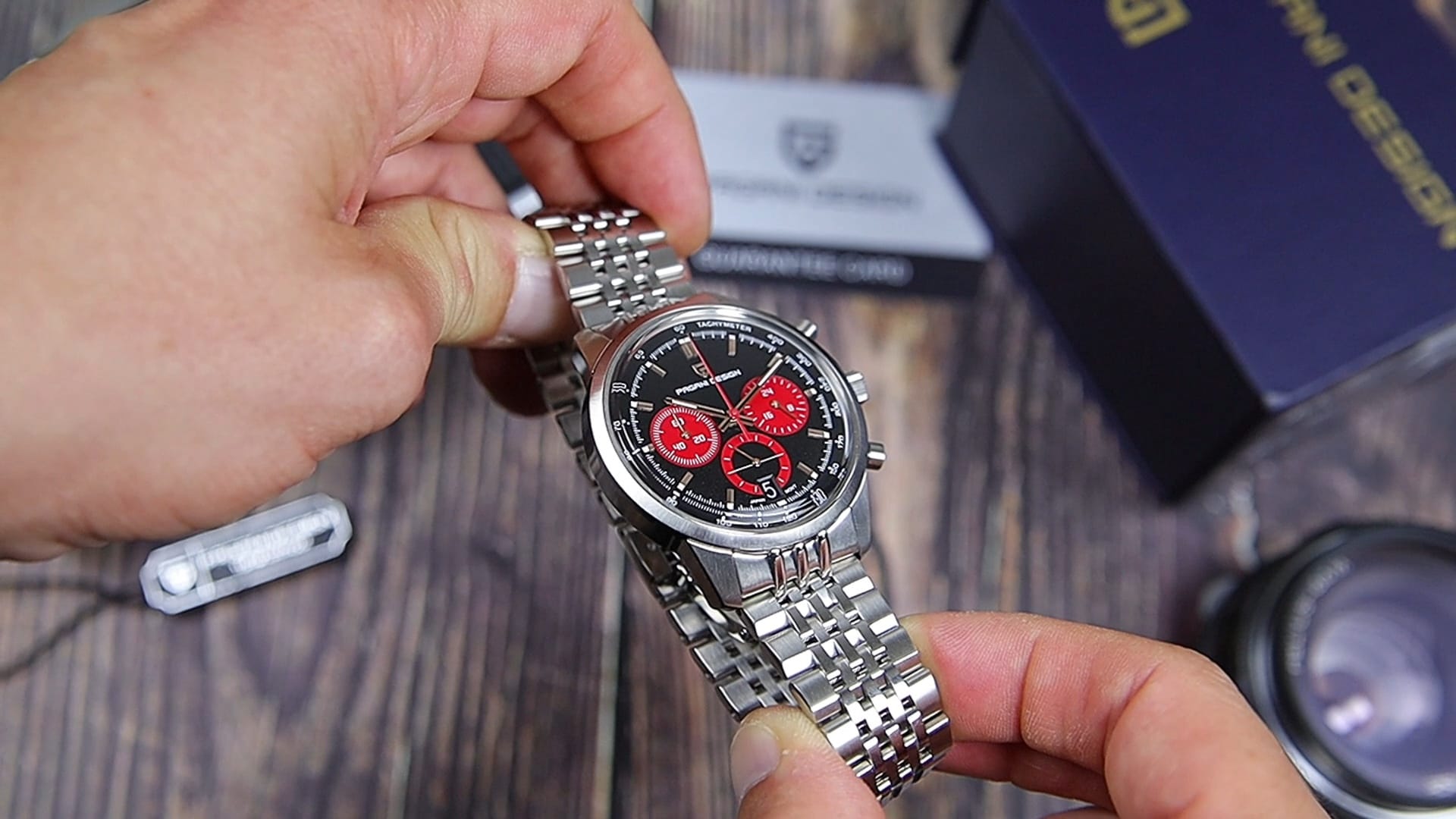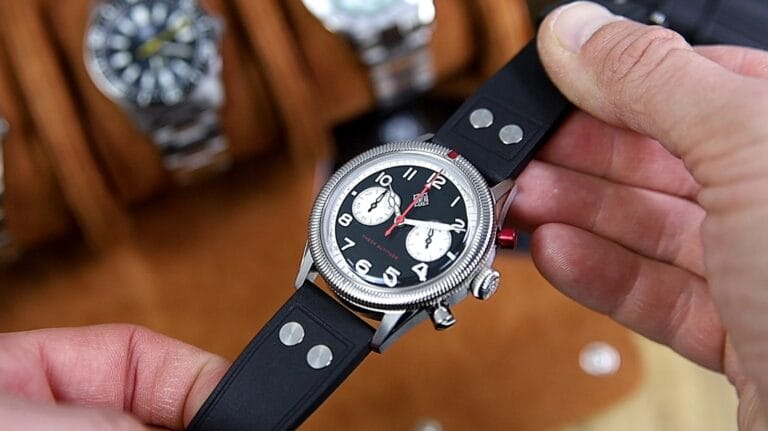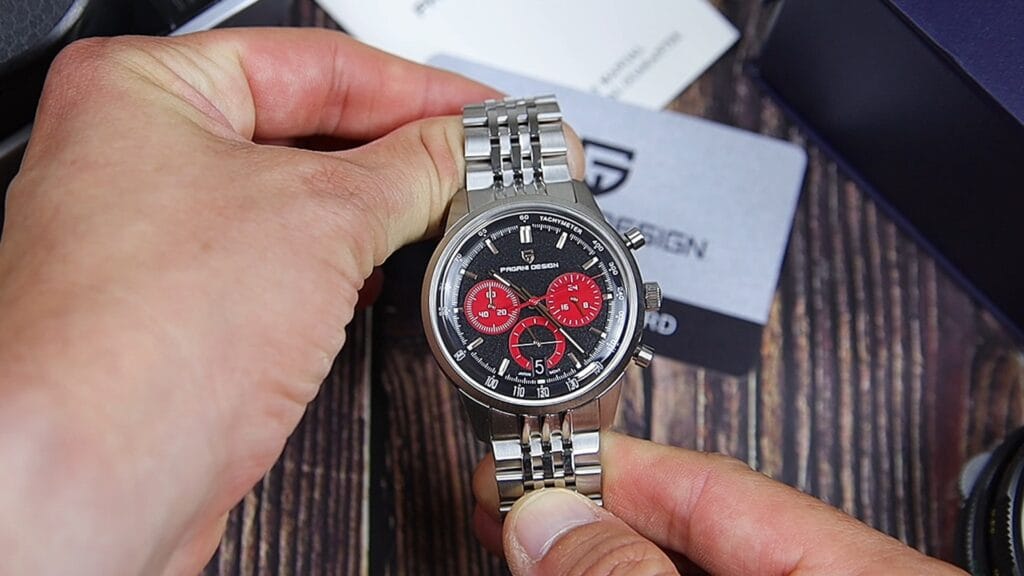
The Pagani Design PD1827 is a new retro racing chronograph powered by the Seiko VK63 mecha-quartz movement. It has a stainless steel case, seven-link bracelet, screw-down caseback, hardened mineral crystal with anti-reflective coating, and a coarse black dial with bright red recessed sub-dials.
I paid around $80 for this watch, and that price puts it directly into a very competitive budget chronograph space. The movement and bracelet are genuinely interesting, but the push-pull crown, mineral crystal, long lug span, and weak lume make this one harder to praise without qualification. Those interested in what else Pagani Design has been doing recently may want to explore some of their other releases.

Design & Case
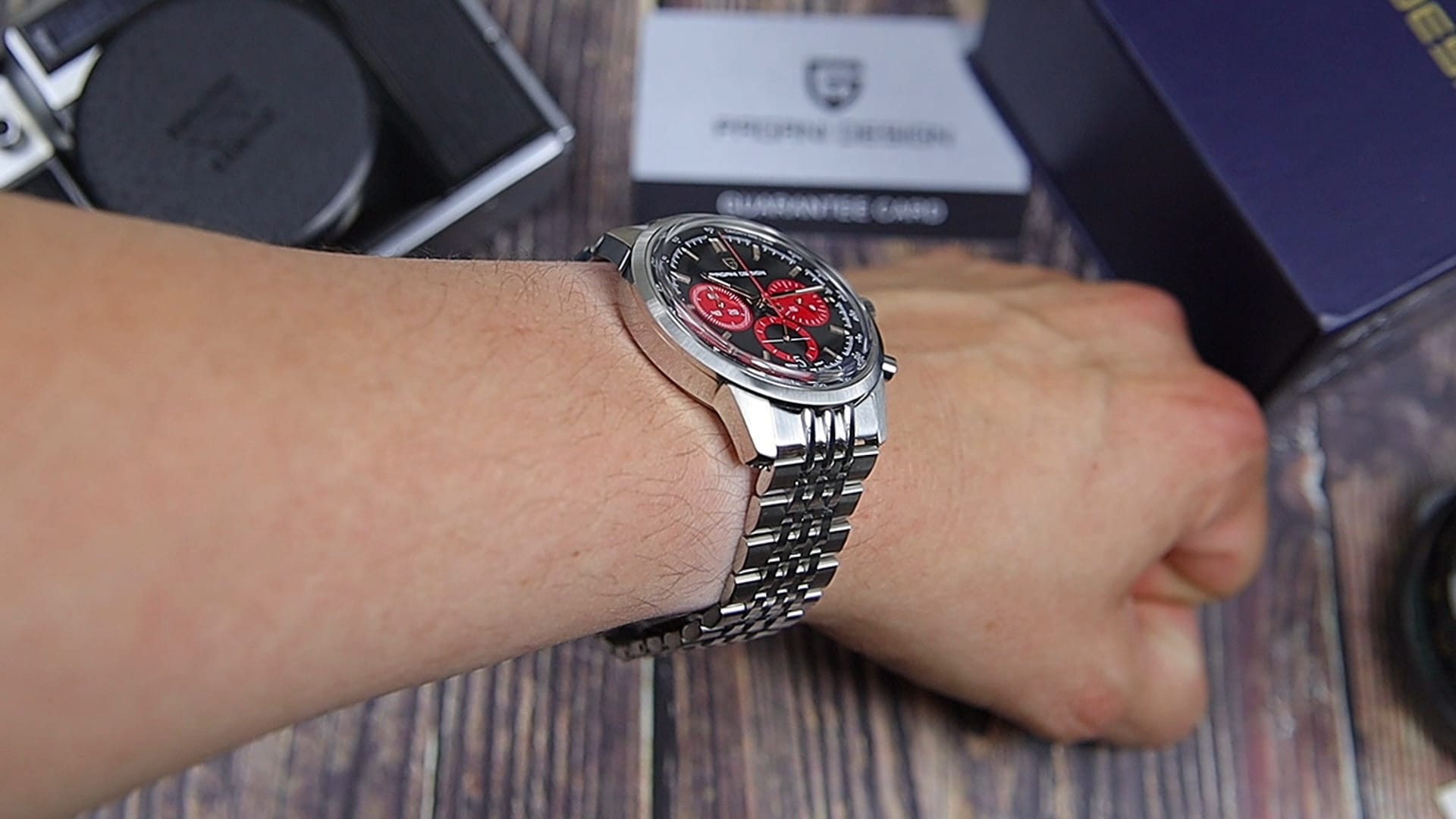
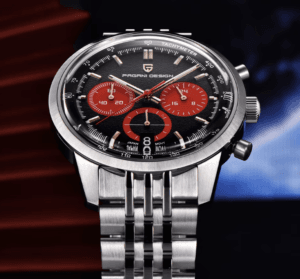
The PD1827 has a clear vintage racing chronograph personality. The case measures 41mm in diameter, 12.1mm thick, and 50.3mm lug-to-lug. That lug span is long, so the watch carries a fairly large footprint across the wrist.
The lug width is a standard 20mm, and the bracelet tapers only slightly to 18mm at the butterfly clasp. The proportions give the watch a broad, planted stance rather than a compact vintage feel.
From the side, the case flank is polished, tall, and well machined. The polished chronograph pushers catch light clearly, while the angular lugs fall down from the case and send the bracelet around the wrist.
The finishing changes from above. The lug hoods are brushed, and the fixed bezel is brushed as well, giving the top view a more restrained surface. The transition lines into the lug hoods are visually crisp while remaining smooth to the touch. There’s a familiar visual character here that aligns closely with several other racing chronograph watches we’ve reviewed. Another similar priced alternative, yet with sapphire crystal, is the Militado ML23.
Movement & Crown
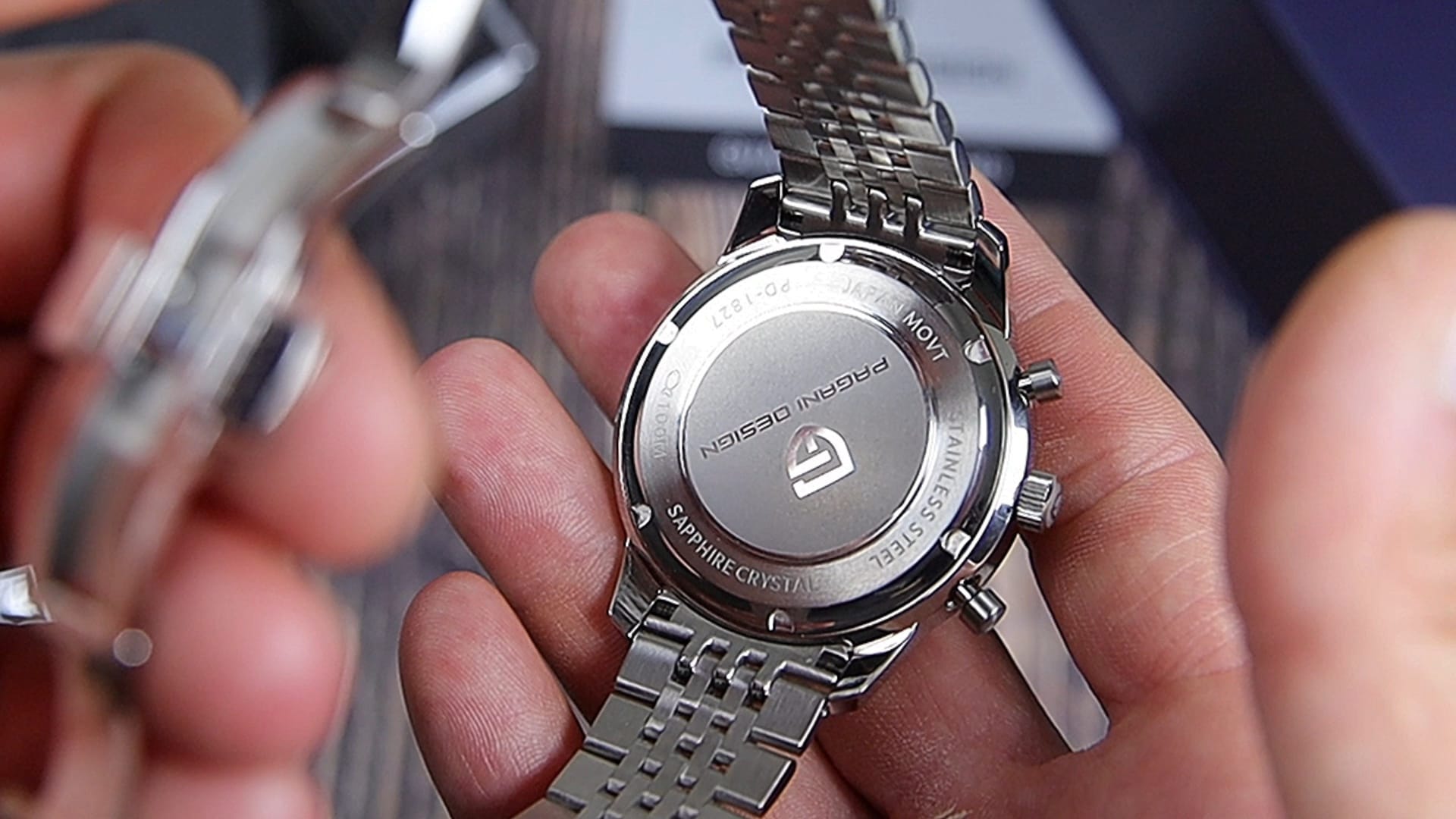
Inside the PD1827 is the Seiko VK63 mecha-quartz chronograph movement. It is a Japanese hybrid movement, with quartz timekeeping for reliability and a chronograph action that feels more mechanical than a standard ticking quartz chronograph.
The accuracy rating is around plus or minus 20 seconds per month, and the battery life is roughly two and a half to three years. That makes it a practical movement choice for a budget chronograph.
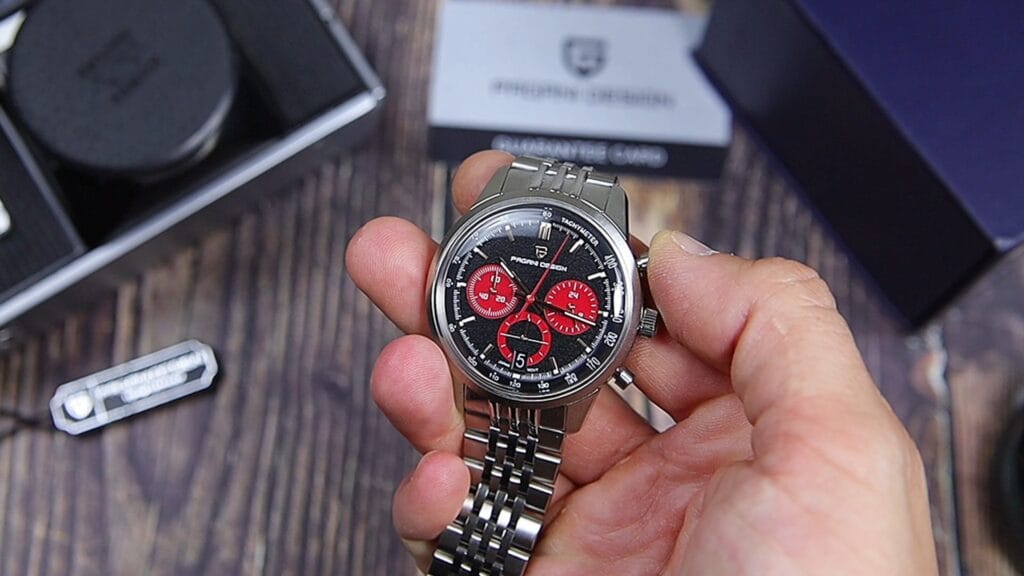
The chronograph is operated through the two polished pushers on the right-hand side. Press the top pusher and the central chronograph seconds hand starts with a smooth mecha-quartz sweep. Press it again to stop, then use the lower pusher to reset the hand sharply back to 12.
The crown is signed, push-pull, and measures 5.4mm across. That is one of my frustrations here. Pagani Design marks the watch with 100 meters of water resistance, but with a push-pull crown rather than a screw-down crown, I would treat it as splashproof in practical use.
Bezel
The PD1827 uses a brushed fixed bezel, and it works with the broader case finishing rather than trying to dominate the front of the watch. From above, the brushed bezel and brushed lug hoods give the watch a more muted tool-like surface.
That restraint is useful because the dial itself already has a lot happening. The red recessed sub-dials, red central chronograph hand, black rehaut, tachymeter scale, coarse dial texture, and date window all need room to breathe visually.
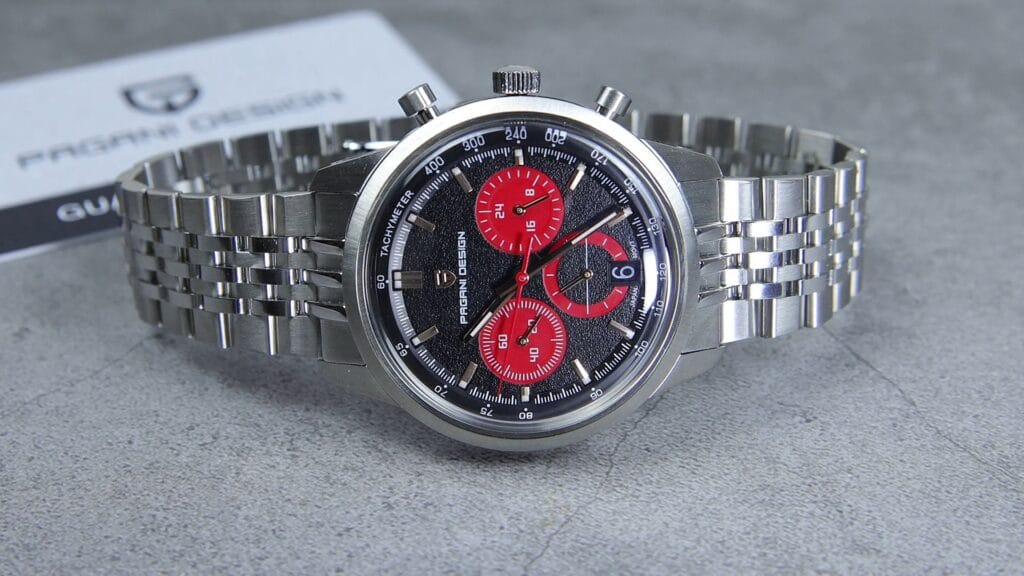
The crystal is tall, boxy, and slightly domed, rising above the brushed fixed bezel and adding height to the watch’s profile. It gives the dial more depth, especially because the rehaut and sub-dials are also layered.
The compromise is the material. This is hardened mineral crystal rather than sapphire, though it does get anti-reflective coating. For Pagani Design, that feels unusual, especially because sapphire has been such a consistent part of the brand’s appeal.
Bracelet
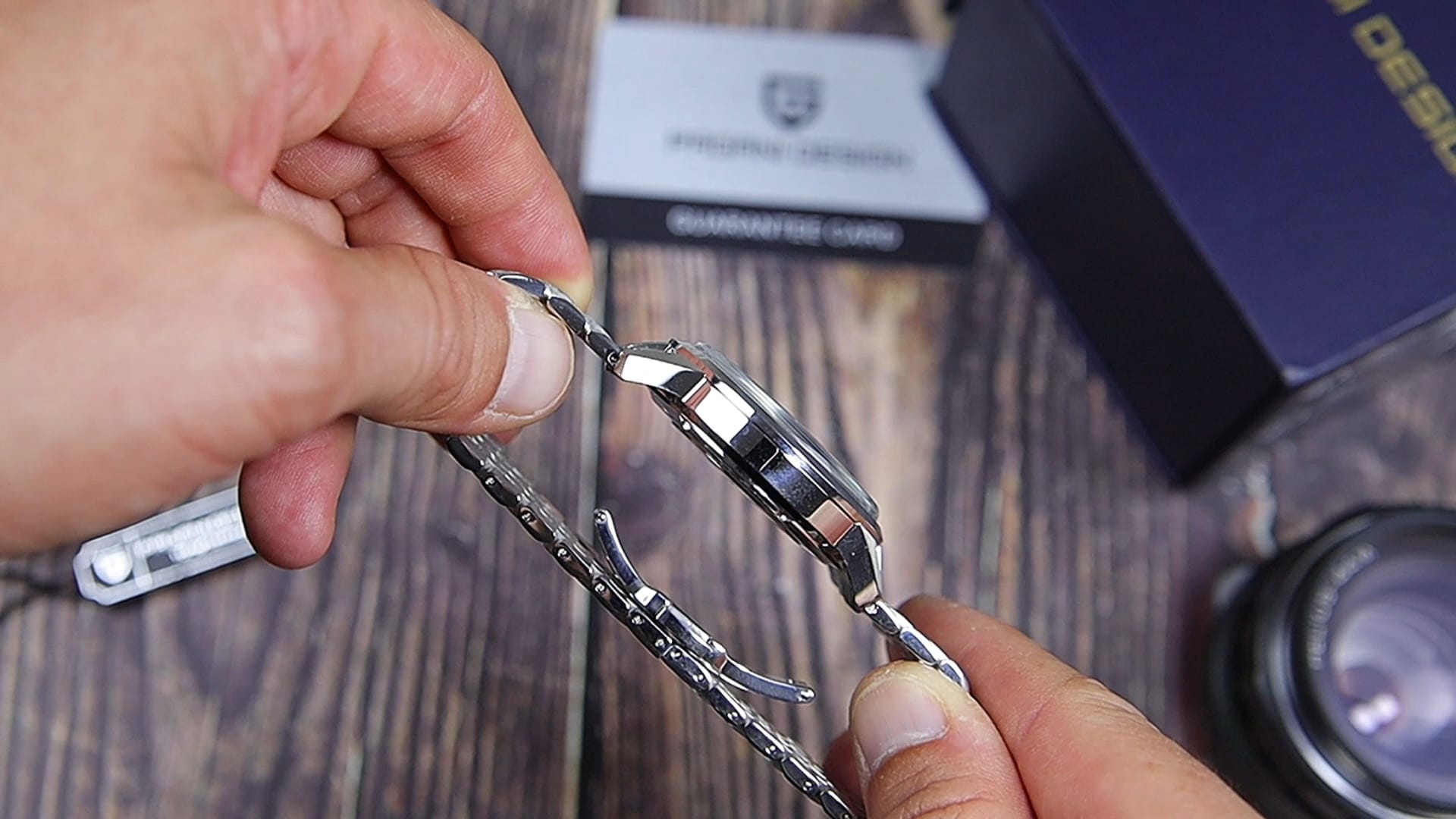
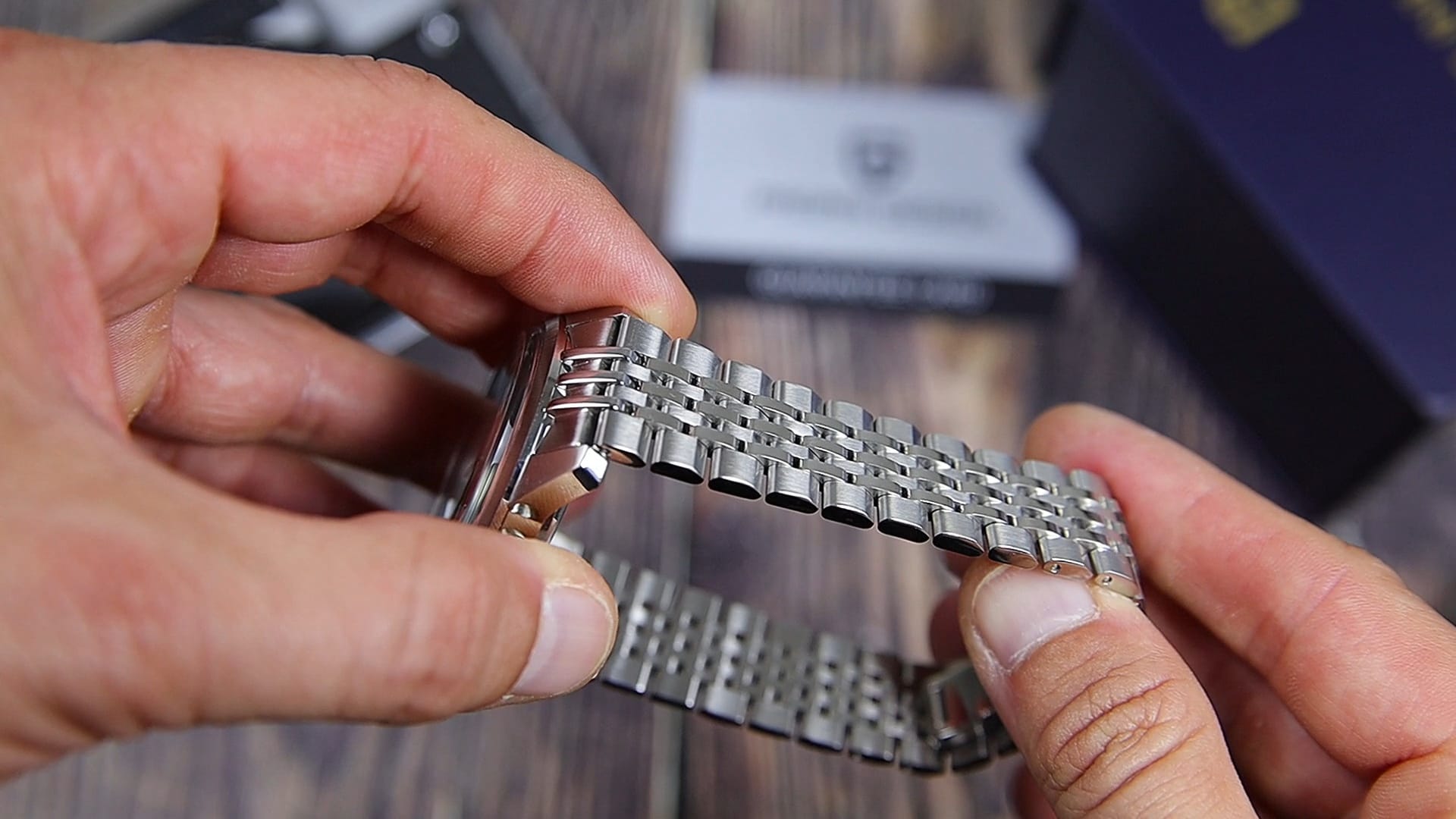
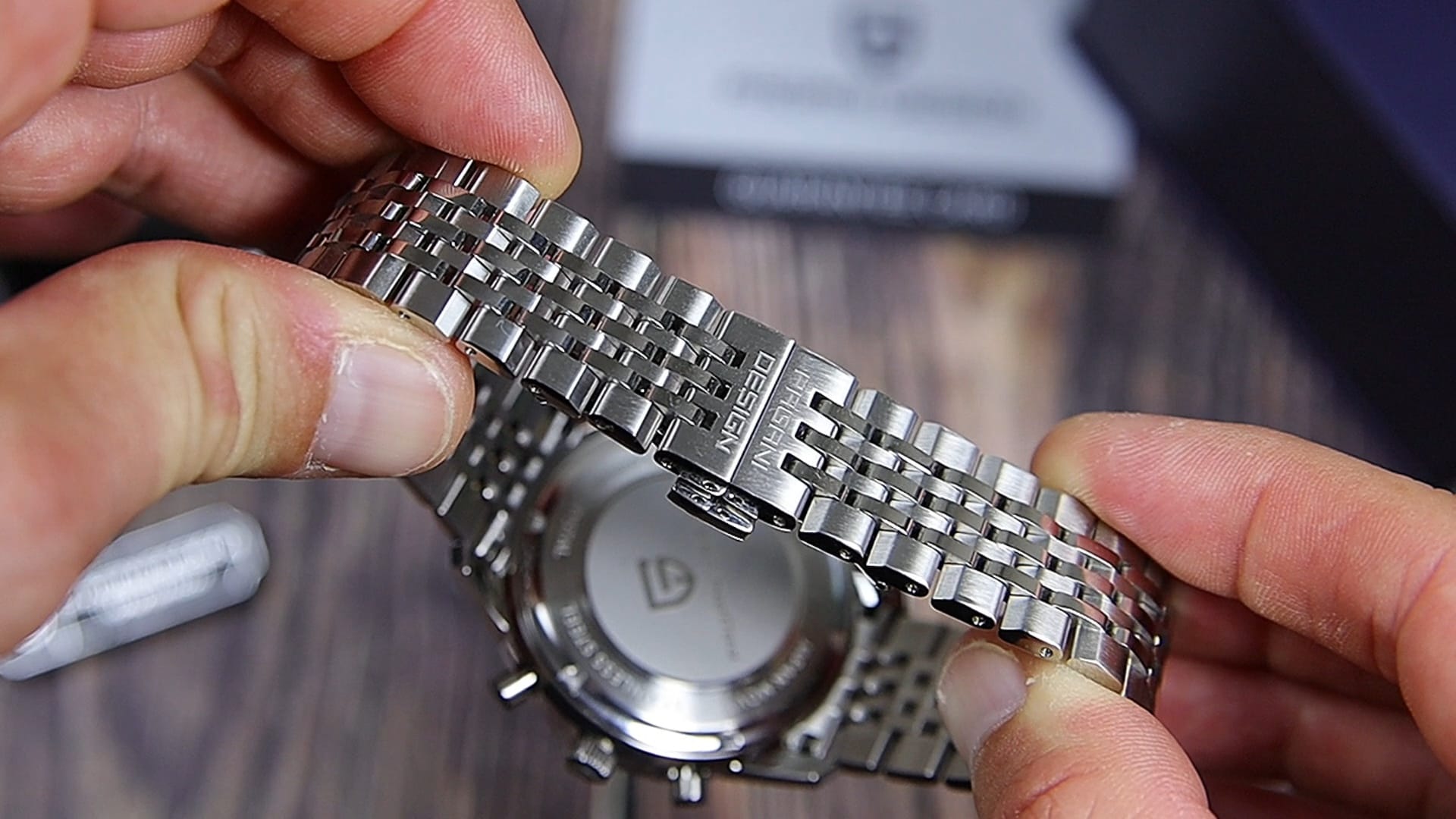
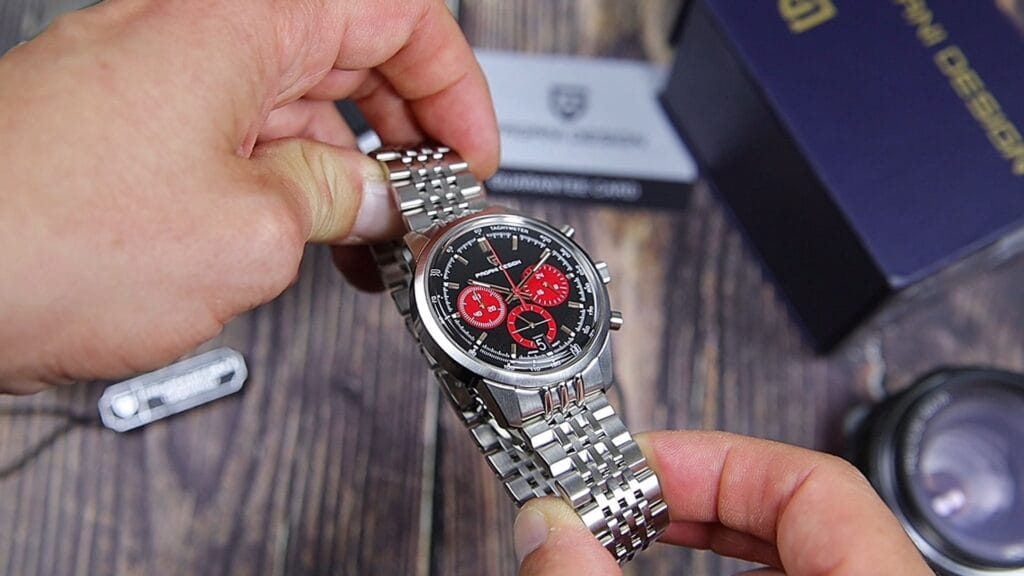
The bracelet is one of the stronger parts of the PD1827. It uses a seven-link setup rather than a simpler three-link bracelet made to look more complex. These are seven individual links across each row, and that gives the bracelet more movement, reflection, and visual detail.
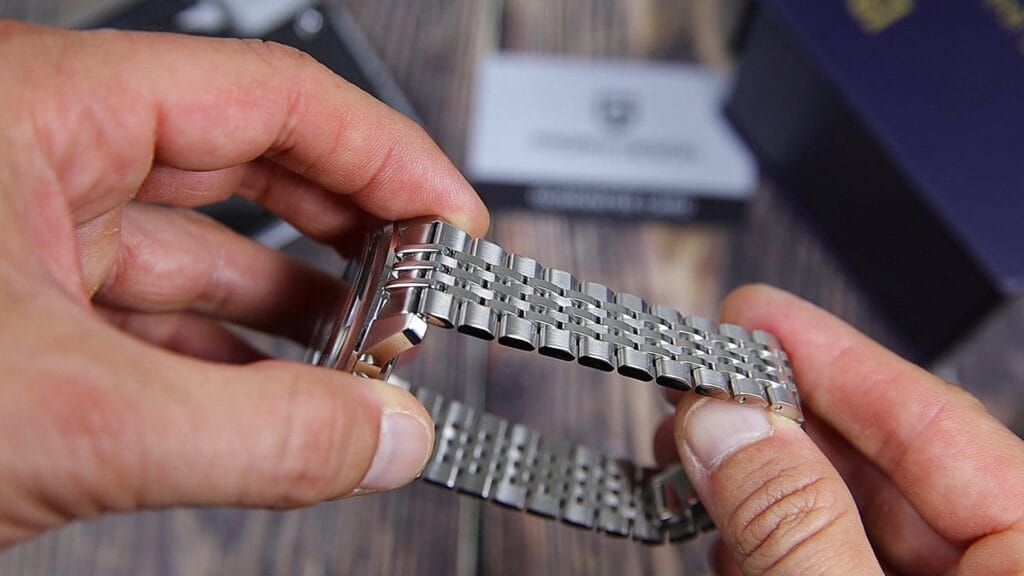
The outer links are brushed, while the five central links mix three polished elements and two brushed elements. That combination gives the bracelet more premium character than I expected at this price.
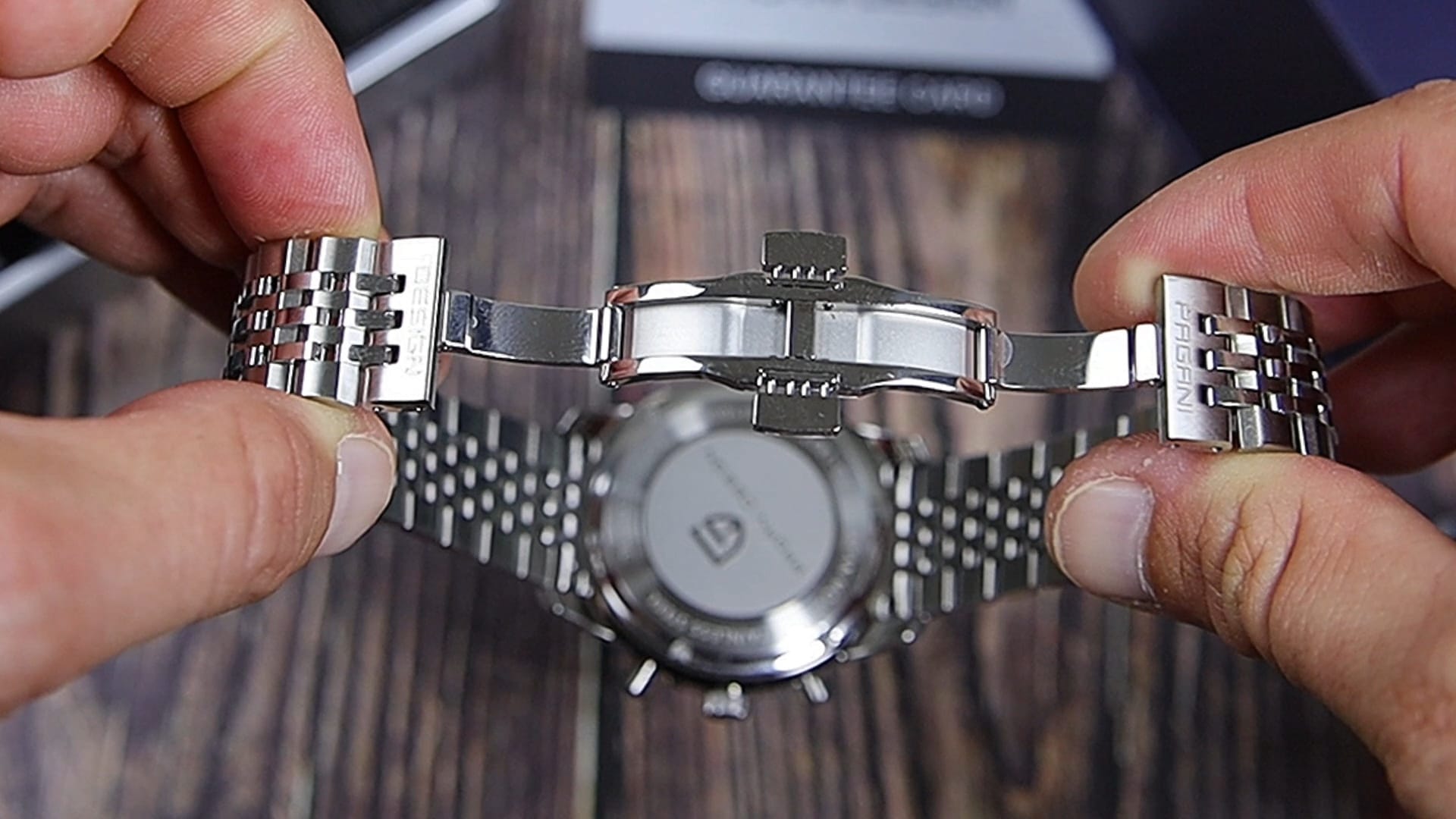
The links are relatively short at around 6mm. That matters because the clasp is a butterfly clasp and there are no half links. The shorter link length should make sizing easier and reduce the chance of being stuck between two awkward sizes.
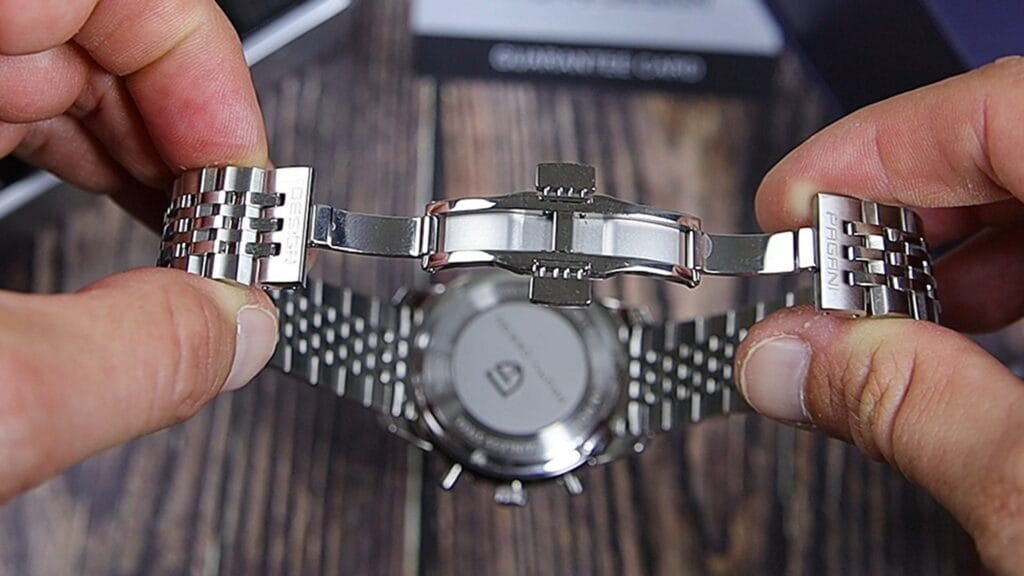
Link fluidity and articulation are good. The bracelet moves freely and drapes around the wrist without feeling stiff. Tolerances are not perfect, and when the bracelet is stretched or flexed, some gaps appear between the links.
The bracelet uses push pins, and the clasp is a signed butterfly clasp. Adjustment is limited, but visually the bracelet does help the watch feel more complete.
Crystal & Dial
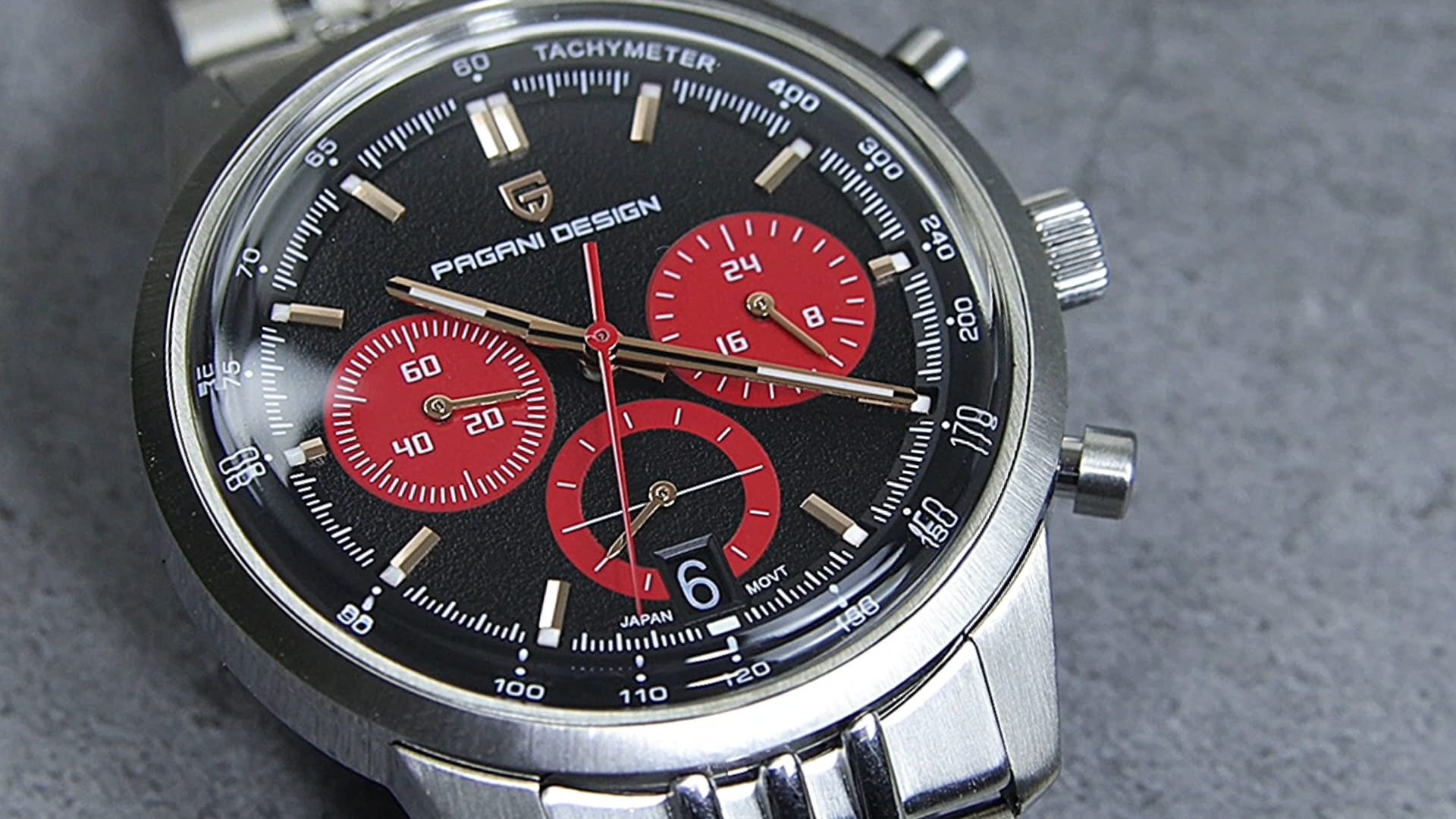
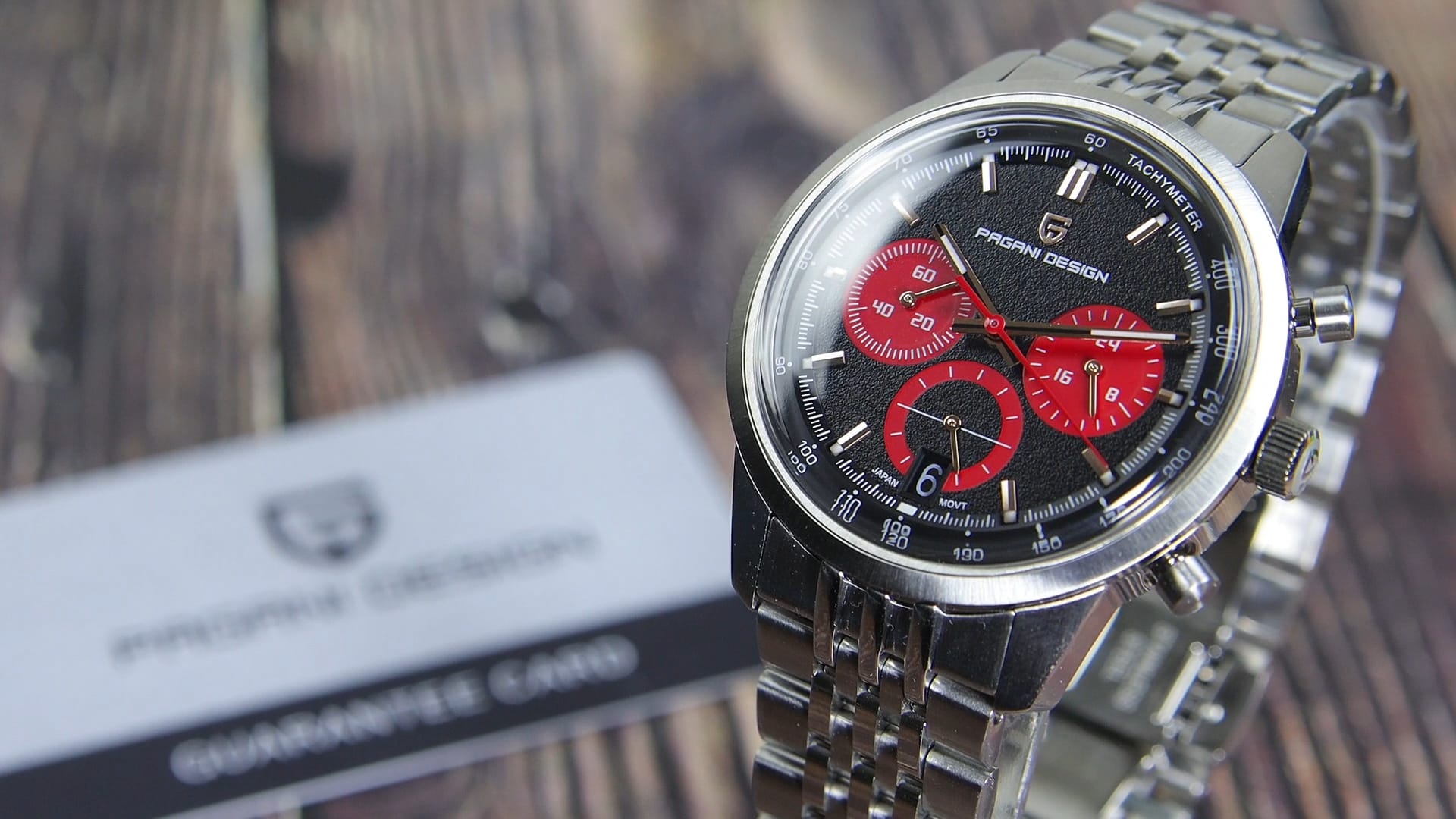
Under the tall, boxy, slightly domed crystal, the eye is first pulled down through the black rehaut. The tachymeter scale is printed there in white, giving the dial its racing chronograph frame before the view drops into the main surface.
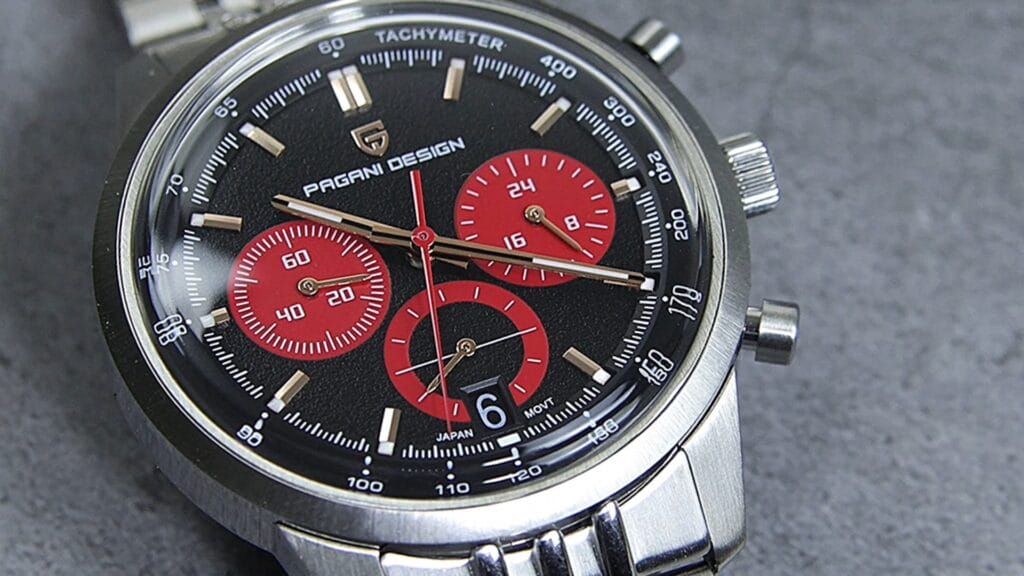
The dial itself is coarse black with a visibly grainy texture. That texture adds small micro shadows as light moves across it, creating a more rugged motorsport-style surface. It works well with the brushed fixed bezel and brushed lug hoods.
The three recessed red sub-dials sit lower than the main dial surface, with a clear step down into each register. The red is bright, saturated, and direct, giving the watch most of its visual punch. The central chronograph seconds hand is also bright red, keeping the chronograph layer clearly separated from the black dial base.
At 3, there is the 24-hour register. At 6, there is the running seconds. At 9, there is the 60-minute counter. Just below the lowest sub-dial sits the date window at 6. It is framed, beveled, large enough to read at a glance, and not set too deeply.
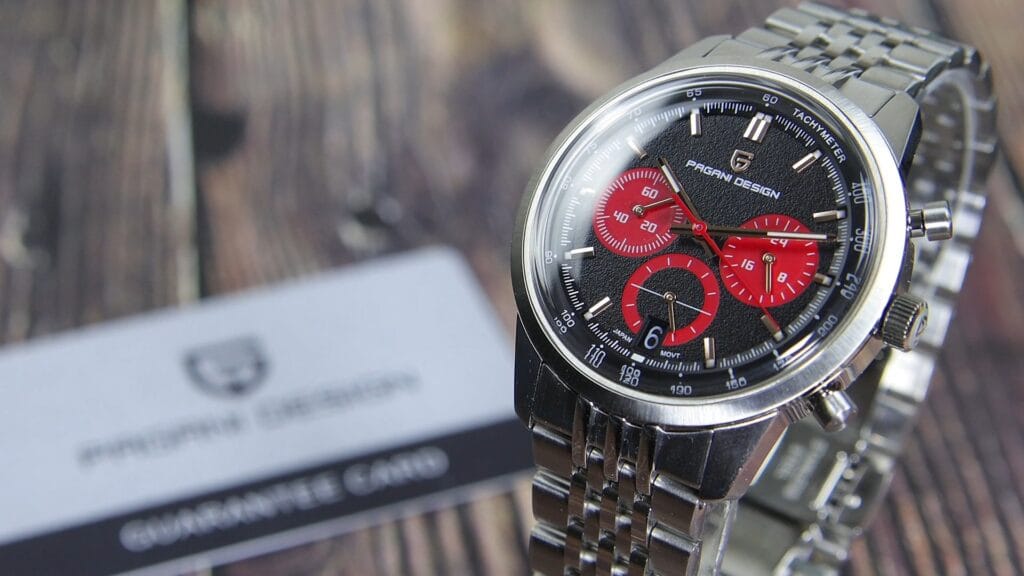
The date wheel is color matched, using a black calendar wheel with white numerals. That keeps the lower half of the dial cleaner than a white date disc would have done.
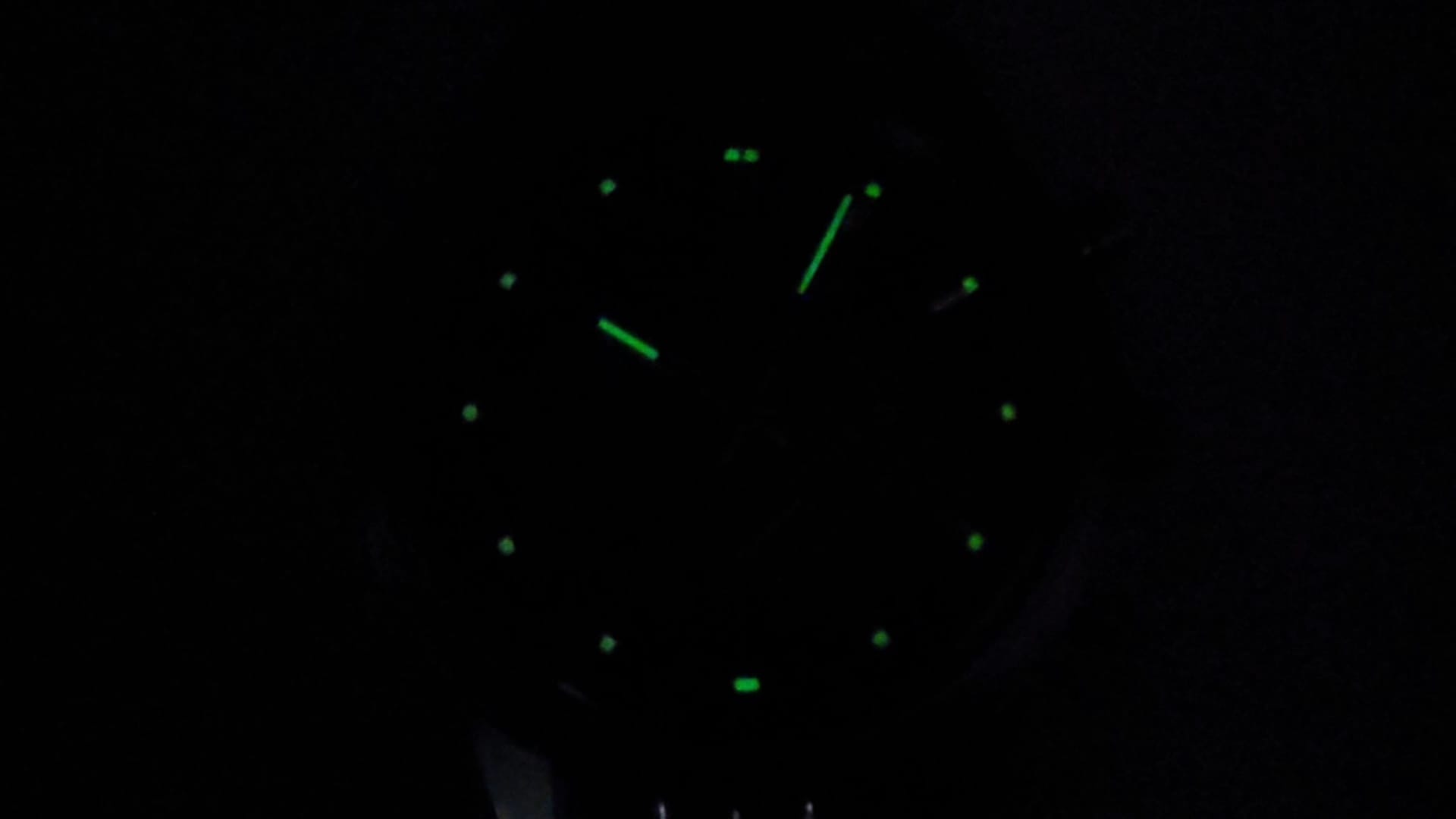
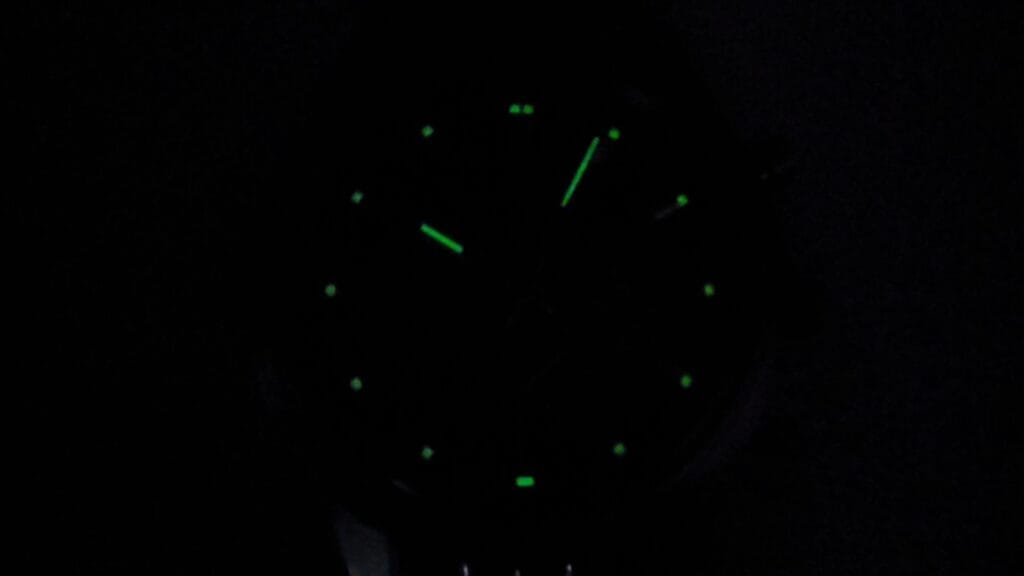
The lume is a weak point. It charges slowly, the brightness is subpar, and it fades very quickly. This feels like older Pagani Design lume rather than the stronger setups I have seen from the brand more recently.
Summary
The Pagani Design PD1827 has some genuinely good elements. The Seiko VK63 mecha-quartz movement is a strong choice, the stainless steel case is neatly finished, the seven-link bracelet is more interesting than expected, and the coarse black dial with red recessed sub-dials gives the watch real vintage racing character.
The date window is also handled well. It is framed, beveled, easy to read, and uses a color-matched black date wheel, which keeps the dial cleaner than a standard white disc would have done.
But the compromises are significant. The front crystal is hardened mineral rather than sapphire, the crown is push-pull, the claimed 100 meters of water resistance is not something I would treat as swim ready, the lug-to-lug length is long at 50.3mm, and the lume is weak.
At around $80, the PD1827 is not without appeal. I just do not see it as one of Pagani Design’s stronger releases. The movement and bracelet help, but the crystal, crown, water-resistance practicality, and lume hold it back. Anyone considering spending around $100 should take the time to compare a few closely matched alternatives.
Pagani Design PD1827 Specifications
| Specification | Details |
|---|---|
| Model | Pagani Design PD1827 |
| Dimensions | |
| Case Diameter | 41mm |
| Case Thickness | 12.1mm |
| Lug-to-Lug | 50.3mm |
| Lug Width | 20mm |
| Crown | Signed push-pull crown measuring 5.4mm |
| Crown Type | Push-pull |
| Design | |
| Case Material | Stainless steel |
| Case Finish | Polished tall case flank with brushed lug hoods and brushed fixed bezel |
| Pushers | Two polished chronograph pushers above and below the crown |
| Crystal | Tall, boxy, slightly domed hardened mineral crystal with anti-reflective coating |
| Caseback | Screw-down caseback |
| Bracelet/Strap | Seven-link stainless steel bracelet with brushed outer links and mixed polished/brushed central links |
| Bracelet Taper | 20mm to 18mm at the butterfly clasp |
| Clasp | Signed butterfly clasp |
| Bezel | Brushed fixed bezel supporting the boxy mineral crystal |
| Tachymeter Ring | Black rehaut with white printed tachymeter scale |
| Dial | Coarse black textured dial with three recessed red sub-dials |
| Dial Color | Black with bright red sub-dials |
| Sub-Dials | 24-hour register at 3, running seconds at 6, 60-minute counter at 9 |
| Date | Framed beveled date window below the 6 sub-dial with black date wheel and white numerals |
| Hands | Bright red central chronograph seconds hand |
| Lume | Charges slowly, subpar brightness, fades very quickly |
| Water Resistance | Claimed 100m |
| Movement | |
| Movement | Seiko VK63 Japanese mecha-quartz chronograph |
| Accuracy | Around plus or minus 20 seconds per month |
| Battery Life | Roughly 2.5 to 3 years |
| Price | |
| Approx. Price | Around $80 |