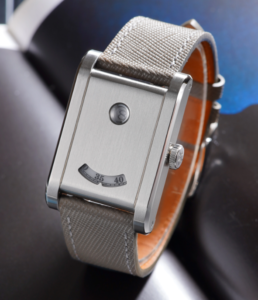
The Farasute 2305A is an unconventional interpretation of the classic dress watch, drawing inspiration from the Cartier Tank à Guichets, originally introduced in 1928. Rather than relying on traditional hands and a visible dial, it presents the time through two separate apertures set into a solid rectangular case, creating a distinctive Art Deco appearance.
Priced at approximately $350, the 2305A combines vintage-inspired proportions with a hand-wound mechanical movement and three sapphire crystal windows. Available in gold and silver finishes, it is an unusual addition to the affordable mechanical watch market. Having examined its construction and jumping hour display, I found plenty to appreciate in this rather architectural design. For other models, you can browse our Best Deals page, with current live AliExpress prices.

Design & Case
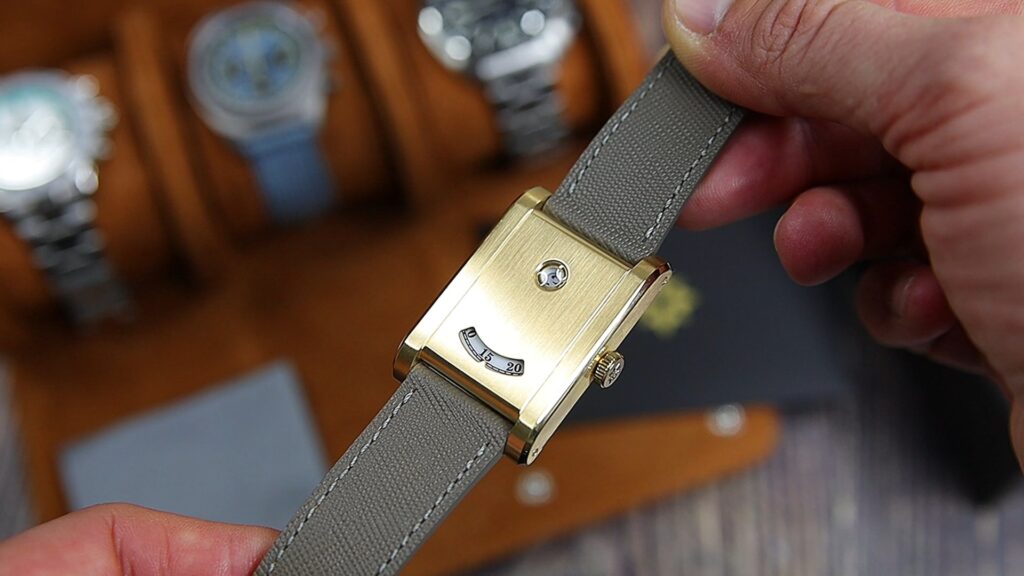
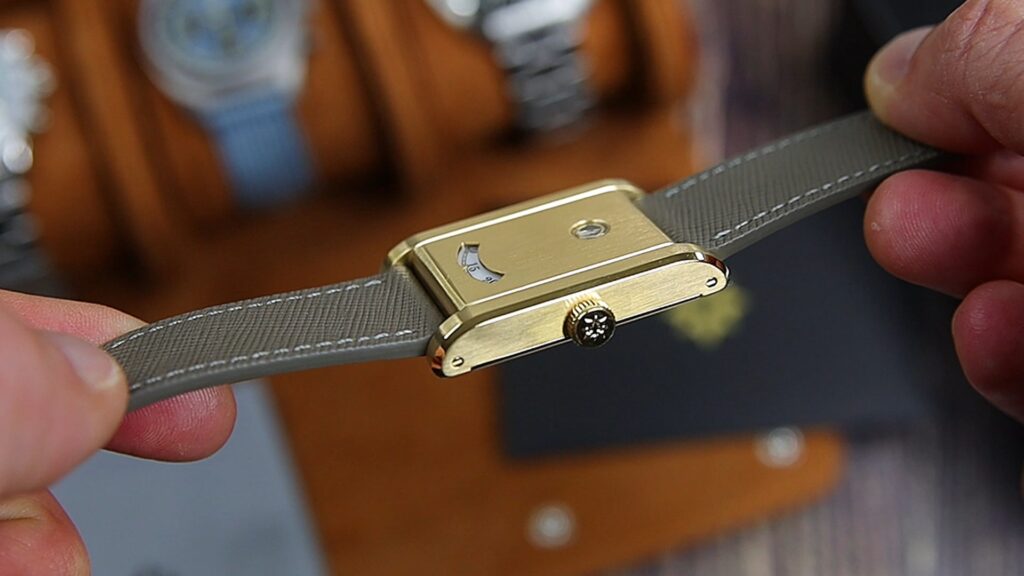
The Farasute 2305A takes an unmistakably architectural approach to watch design. Its rectangular stainless steel case measures 29.1mm wide, 40.5mm lug-to-lug and just 7.8mm thick, giving it the slender proportions associated with traditional Art Deco dress watches.
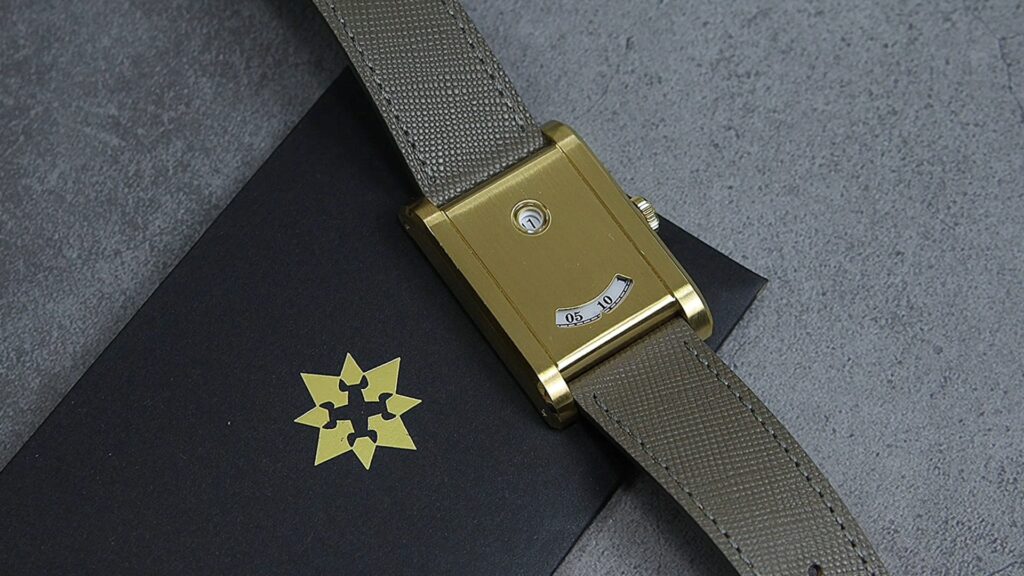
This gold-coloured variation features pronounced vertical brushing across the upper surface, contrasting with the flat, horizontally brushed case flanks. A broad polished 45-degree chamfer runs from lug tip to lug tip, separating the different finishes and introducing sharp reflections along the case edges.
The transitions are particularly effective because the watch has so few decorative elements. Much of its visual character comes directly from the geometry and the interaction between brushed and polished surfaces.
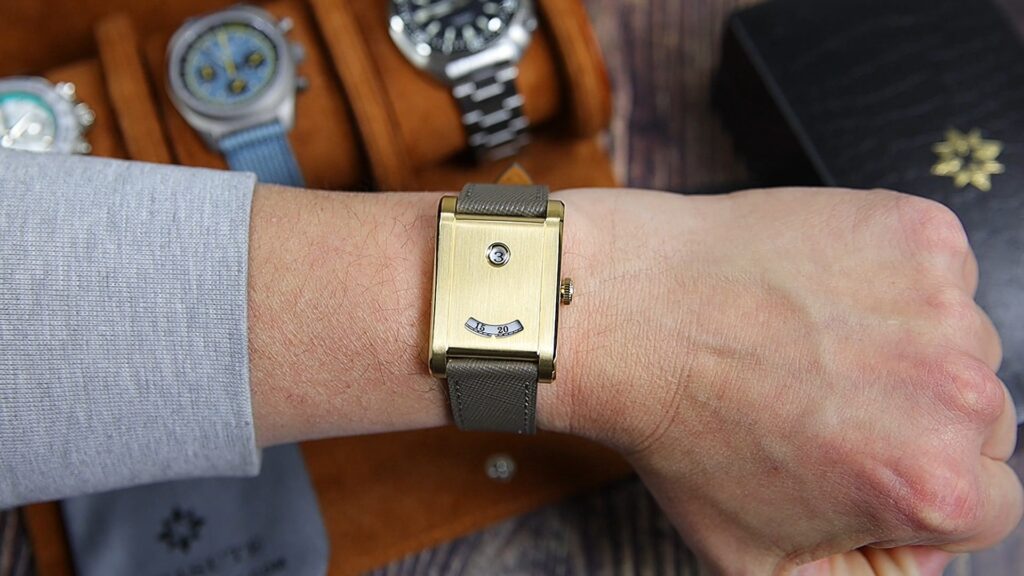
The lugs are drilled and secured using individual screws rather than conventional spring bars, reinforcing the technical appearance of the case. Despite its mechanical construction, the remarkably slim profile remains one of the most impressive aspects. The result is a watch that feels closely connected to its historical inspiration while retaining a distinctive contemporary character. If the proportions and surface finishing stand out to you here, there are several vintage dress watch alternatives built around a similar philosophy.
Movement & Crown
Inside the Farasute 2305A is the Seagull ST17, a manually wound mechanical movement featuring 20 jewels and approximately 39 hours of power reserve. It operates at 21,600 vibrations per hour, equivalent to 3Hz, providing the mechanical foundation for the watch’s unusual time display.
Unlike an automatic watch, the movement requires manual winding. This feels appropriate for a design that draws so heavily from early mechanical watchmaking, particularly considering the slim dimensions of the case.
On the right-hand side sits a signed push-pull crown measuring 6.3mm across. Its finely notched exterior provides grip, while a small sleeve separates the crown from the case.
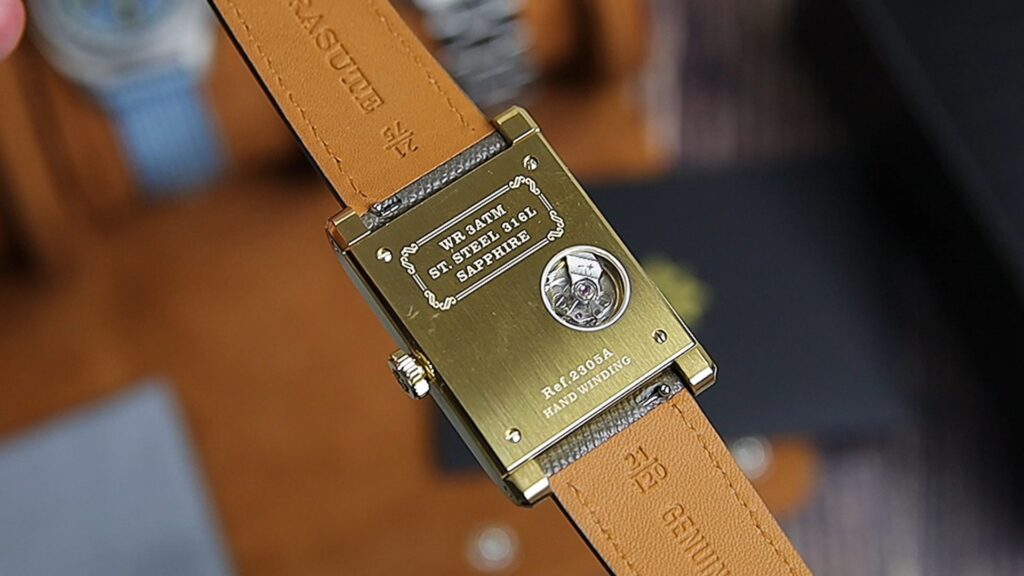
The movement can also be observed through a small sapphire exhibition window on the caseback. Rather than revealing the entire mechanism, the opening provides a focused view of the oscillating balance wheel.
I particularly appreciate this restrained approach to the mechanical display. The movement remains largely concealed, preserving the architectural character of the watch while providing a glimpse of the mechanism beneath.
Bezel
The Farasute 2305A does not have a conventional raised bezel surrounding a traditional watch dial. Instead, its entire upper surface forms a solid, vertically brushed stainless steel face, interrupted only by the two apertures used to display the time.
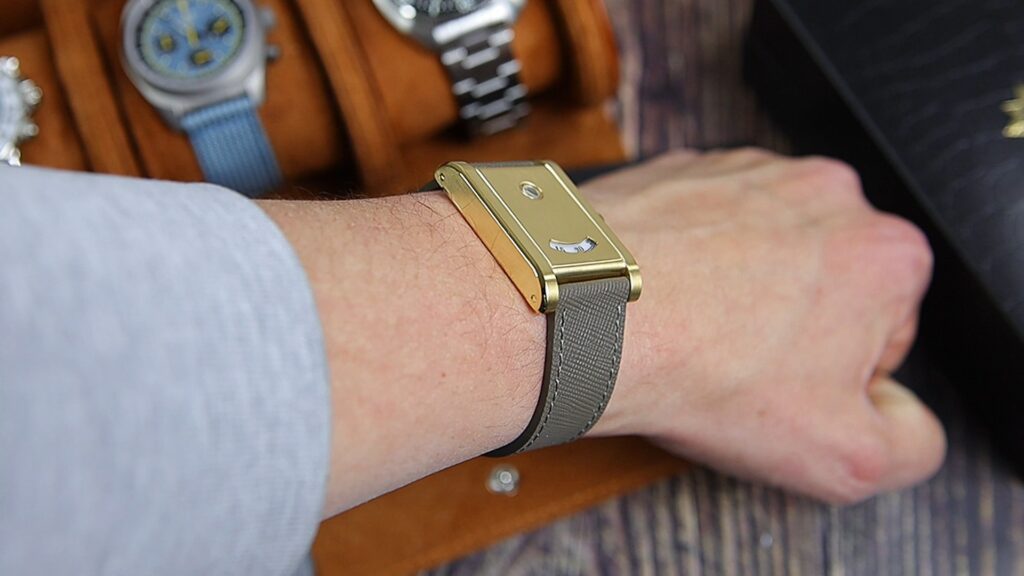
This arrangement is central to the watch’s distinctive appearance. The polished chamfers running along the case edges create a clearly defined boundary between the upper surface and the horizontally brushed flanks, effectively providing the visual framing normally associated with a separate bezel.
Viewed from above, the uninterrupted brushing reinforces the geometric proportions, while the polished edges introduce brighter highlights as the viewing angle changes.
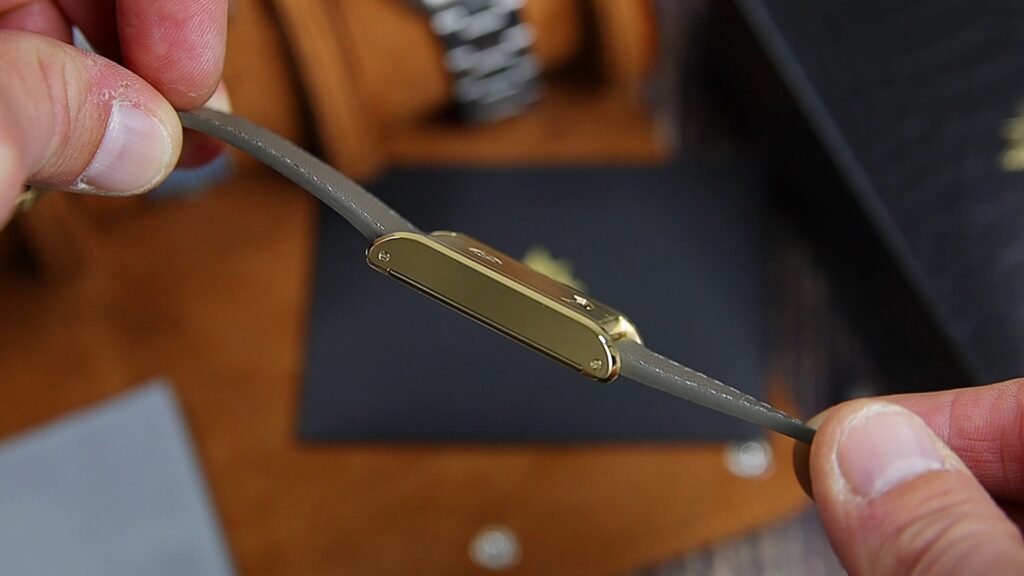
The curved sapphire windows sit within the upper openings, maintaining the unusual architecture without introducing a conventional crystal covering the entire face.
For me, the absence of a traditional bezel is entirely appropriate. The 2305A relies on the shape and finishing of the case itself to provide definition, allowing its unusual time display to remain the central visual feature.
Strap
The Farasute 2305A comes fitted with a leather strap featuring a fine crisscross texture across its outer surface. Neatly executed stitching runs along the edges, complementing the structured appearance of the rectangular case.
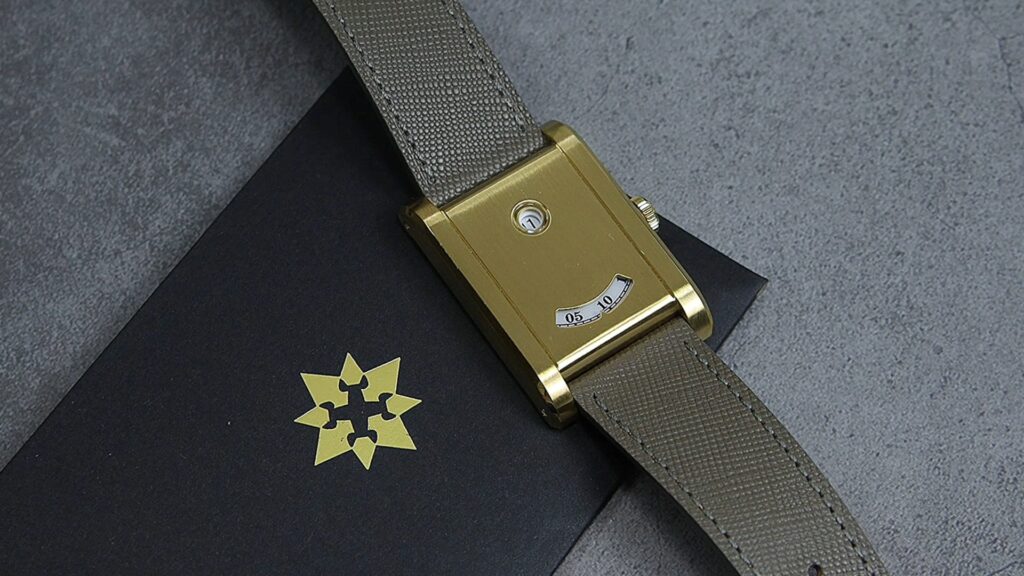
At 21mm wide, the strap is relatively substantial compared with the compact case. However, I find the proportions work particularly well. The wider attachment gives the watch a more planted appearance on the wrist without overwhelming its slender Art Deco architecture.
The strap also introduces a slightly more contemporary character to a design that otherwise draws heavily from historical watchmaking. Turning it over reveals a contrasting beige underside, with Farasute branding stamped on one section and Genuine Leather on the other. Two floating keepers secure the excess length.
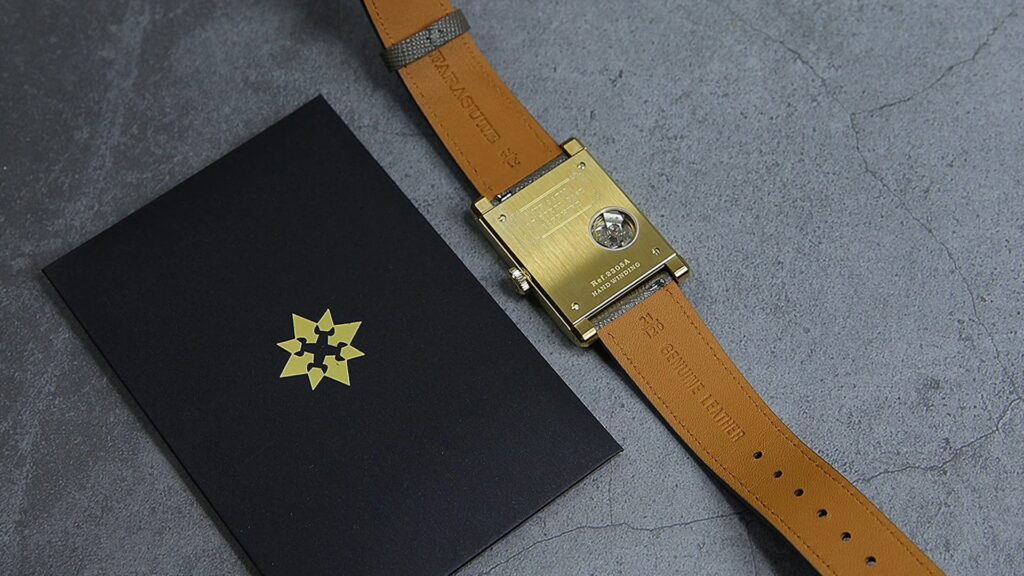
The gold-tone buckle is a proper milled unit, signed with the Farasute logo at its tip. The combination of textured leather, polished hardware and relatively broad proportions feels well considered, providing a fitting complement to the watch’s distinctive case construction.
Crystal & Dial
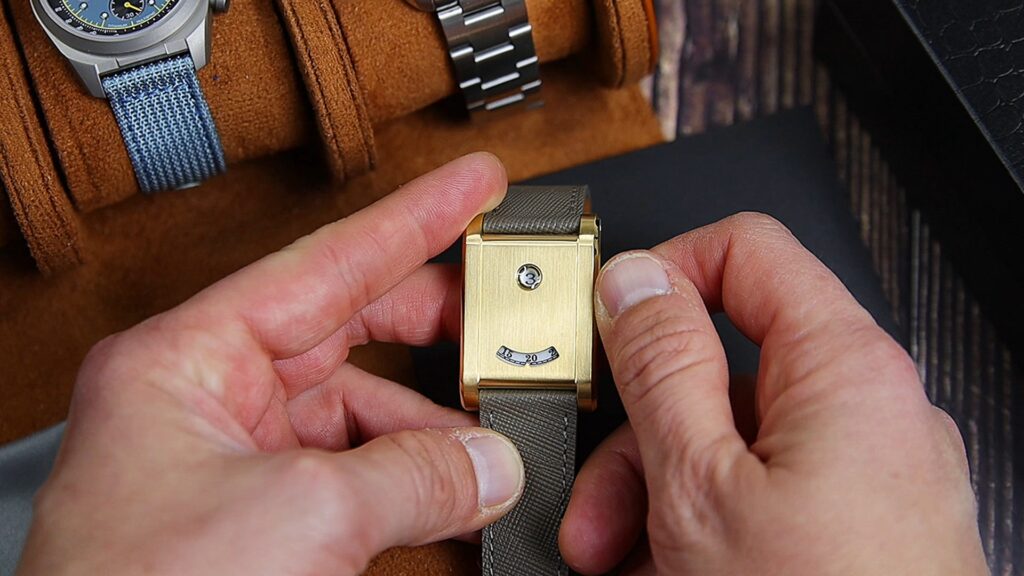
The most unusual aspect of the Farasute 2305A is that there is almost no conventional dial to examine. Instead, two sapphire-covered apertures are cut into the vertically brushed case surface, with a circular opening above and a curved window below.
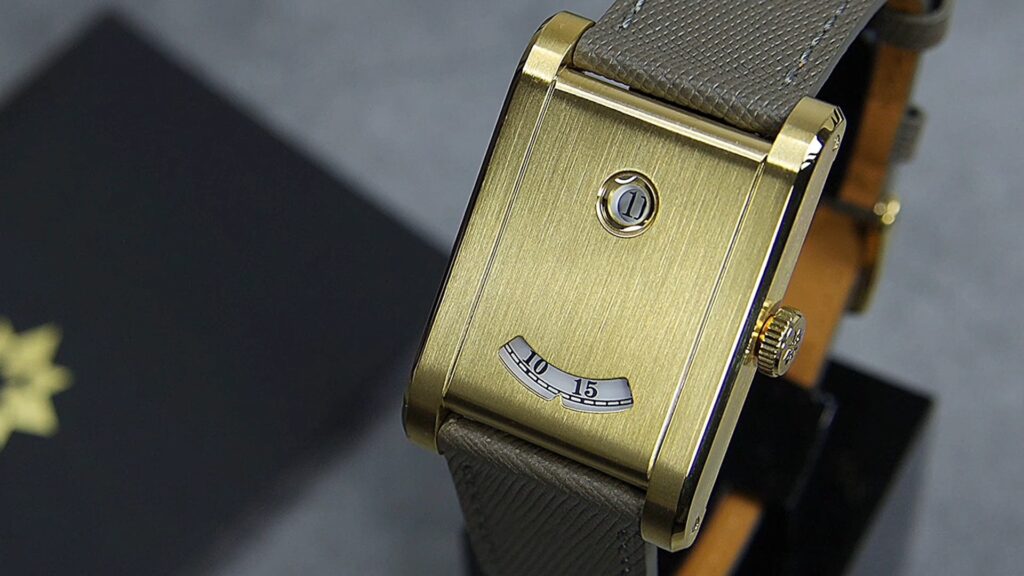
The upper aperture contains the jumping hour display. As the minute indication completes its cycle, the hour numeral changes almost instantaneously, producing the distinctive mechanical transition associated with this complication.
The lower curved aperture displays the minutes against an ivory-white background. Black Arabic numerals appear at five-minute intervals, with smaller graduations along the lower edge allowing the time to be read with reasonable precision.
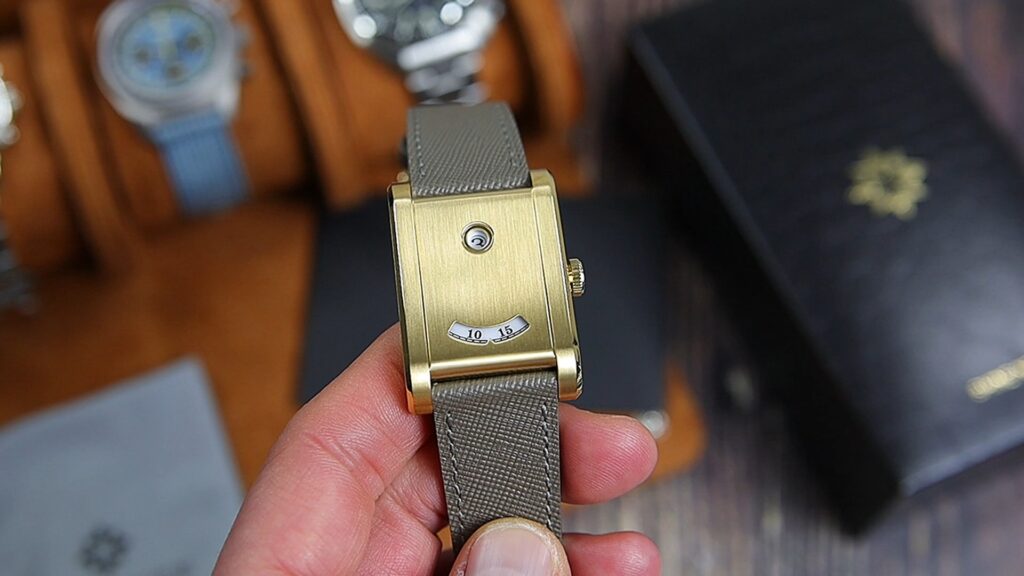
The arrangement requires a different approach to reading the time, but the displays remain clearly organised within the limited available space. There is also an unexpectedly playful quality to the design. The circular hour aperture resembles an eye, while the curved minute window forms something approaching a smile.
No luminous material is present, so the watch cannot be read in darkness. Nevertheless, the unusual mechanical display gives the 2305A much of its distinctive personality.
Summary
The Farasute 2305A is an intriguing interpretation of one of watchmaking’s more unconventional historical designs. Its inspiration from the 1928 Cartier Tank à Guichets is unmistakable, but the execution offers its own appeal through carefully defined case finishing, slender proportions and an unusual mechanical display.
I particularly appreciate the contrast between the vertically brushed upper surface, horizontally brushed flanks and broad polished chamfers. These details introduce considerable visual interest without relying on an elaborate dial.
The hand-wound Seagull ST17 and jumping hour complication provide the mechanical character, while the three sapphire windows give the watch an unusually restrained presentation. There are practical limitations. Reading the time requires some familiarity with the aperture arrangement, and the absence of lume makes nighttime legibility impossible.
Nevertheless, at approximately $350, I find the 2305A a compelling and distinctive piece. It is not a conventional everyday watch, but its Art Deco architecture and unusual time display make it a genuine conversation starter. The value proposition becomes more interesting when viewed against similarly priced, sub $500, competitors.
Farasute 2305A Specifications
| Specification | Details |
|---|---|
| Model | Farasute 2305A |
| Dimensions | |
| Case Width | 29.1mm |
| Case Thickness | 7.8mm |
| Lug-to-Lug | 40.5mm |
| Lug Width | 21mm |
| Crown | 6.3mm signed push-pull |
| Design | |
| Case Material | Stainless steel |
| Case Colours | Gold or silver |
| Case Finish | Vertical and horizontal brushing, polished 45° chamfers |
| Crystal | Two curved sapphire aperture windows |
| Caseback | Four-screw stainless steel |
| Exhibition Window | Sapphire, showing balance wheel |
| Strap | Textured leather, 21mm |
| Buckle | Signed milled gold-tone buckle |
| Dial | Solid Art Deco face with two apertures |
| Hour Display | Jumping hour, circular window |
| Minute Display | Curved aperture, five-minute numerals |
| Lume | None |
| Movement | |
| Movement | Seagull ST17 |
| Winding | Manual |
| Frequency | 21,600 vph / 3Hz |
| Jewels | 20 |
| Power Reserve | Approximately 39 hours |
| Price | |
| Approx. Price | $350 |