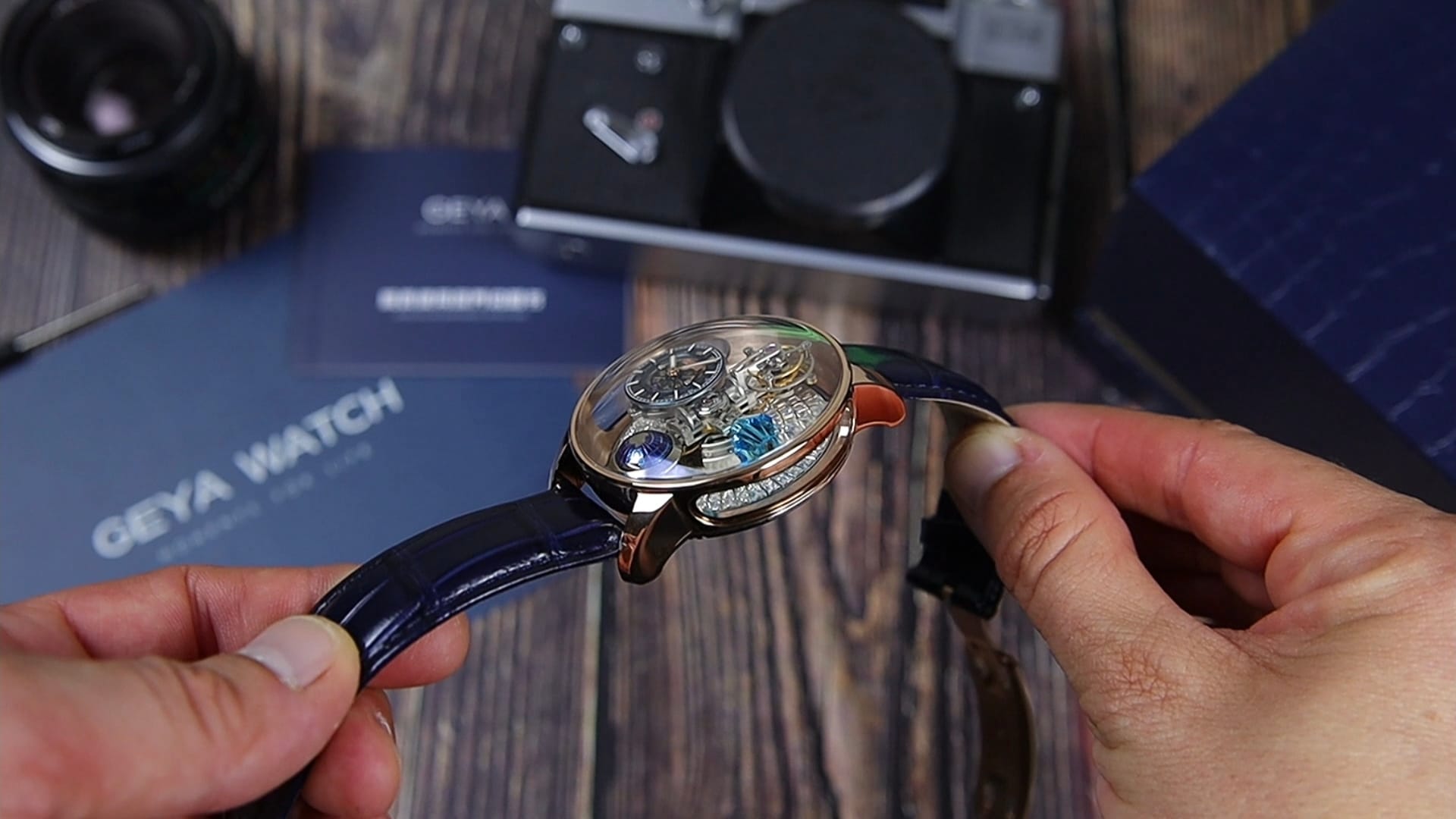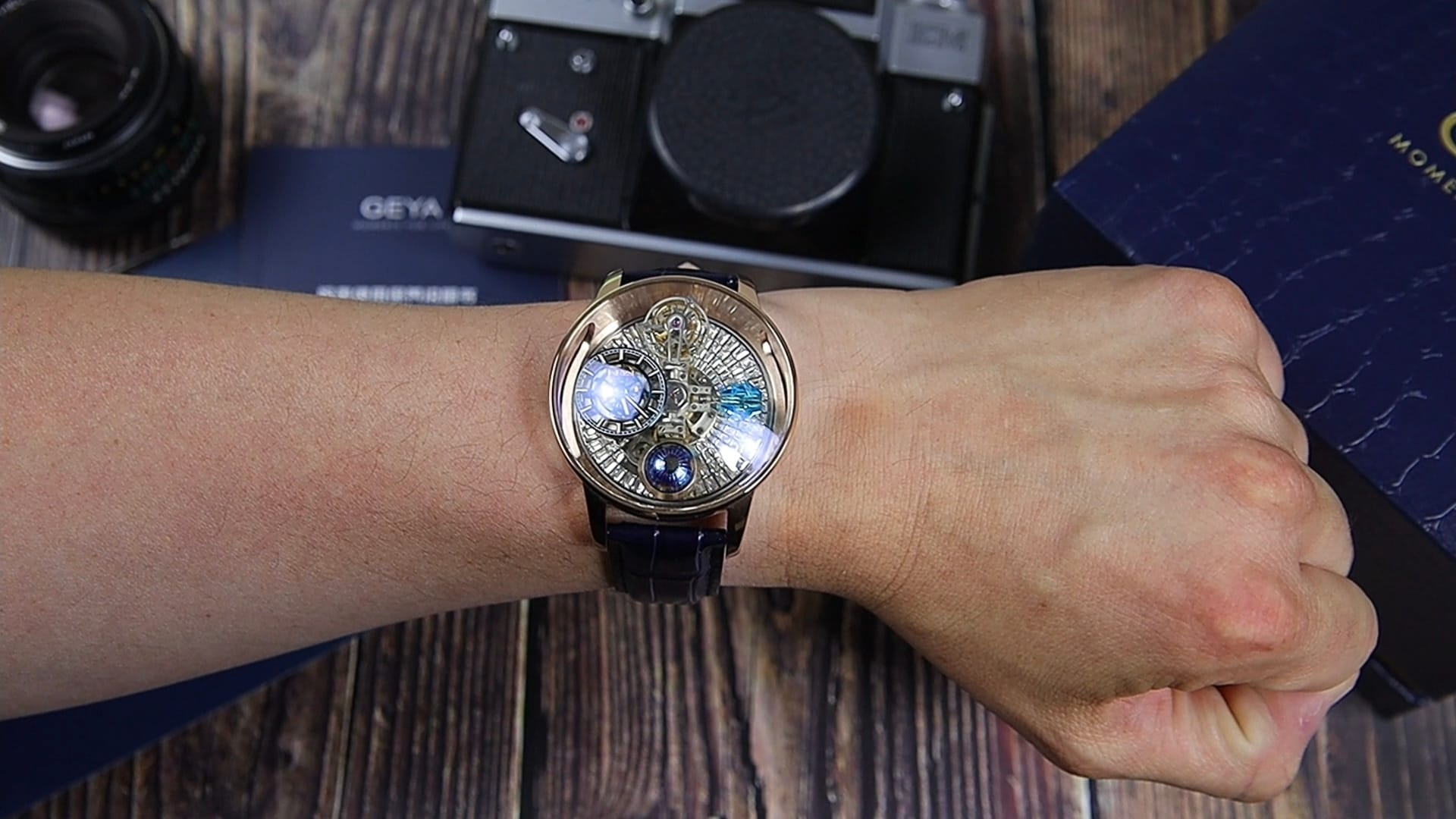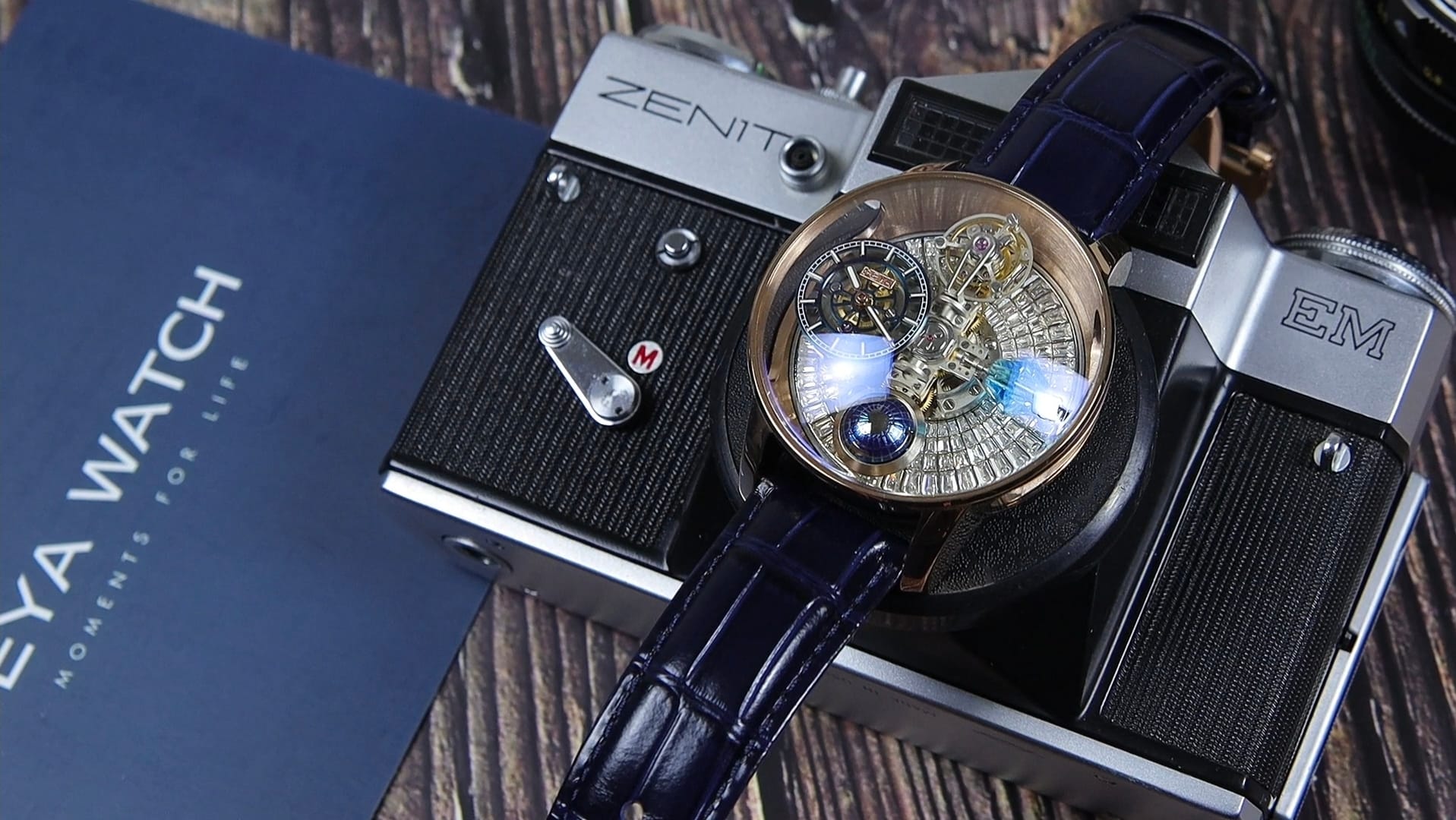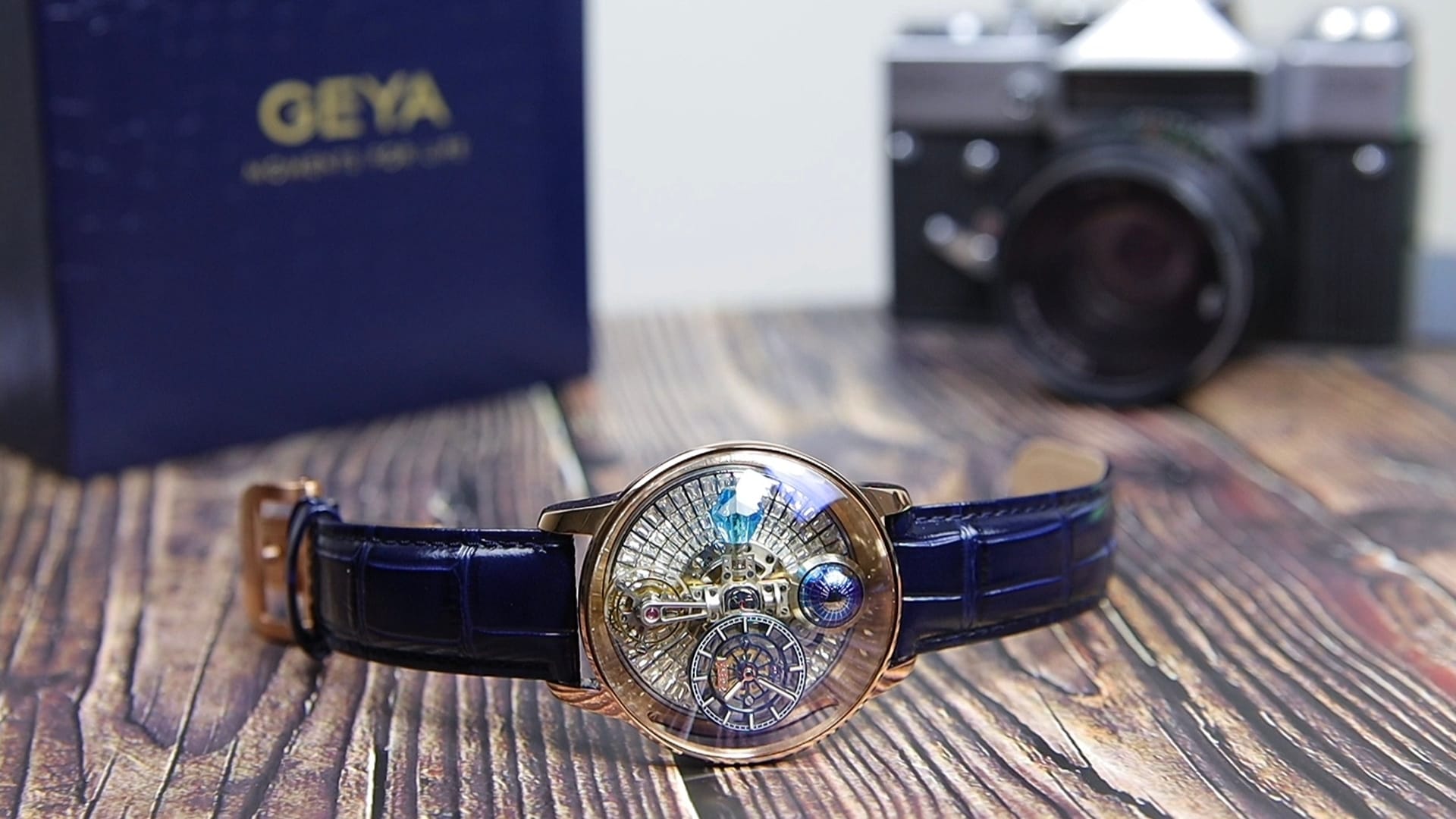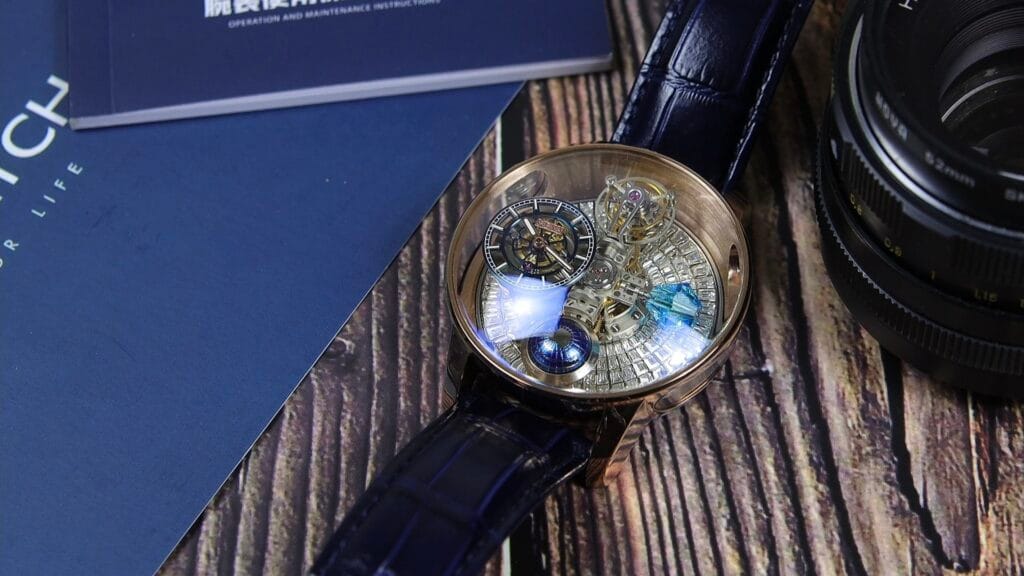
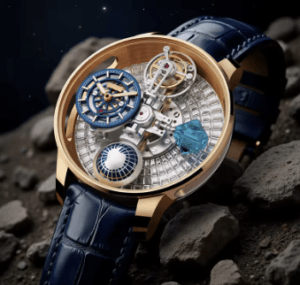
The Geya G78201 is not a conventional watch experience. It is a dual-movement, celestial-style piece that combines Swiss quartz timekeeping with a separate in-house manually wound planetary flywheel display, all housed under a heavily domed mineral crystal with exhibition-style side flanks.
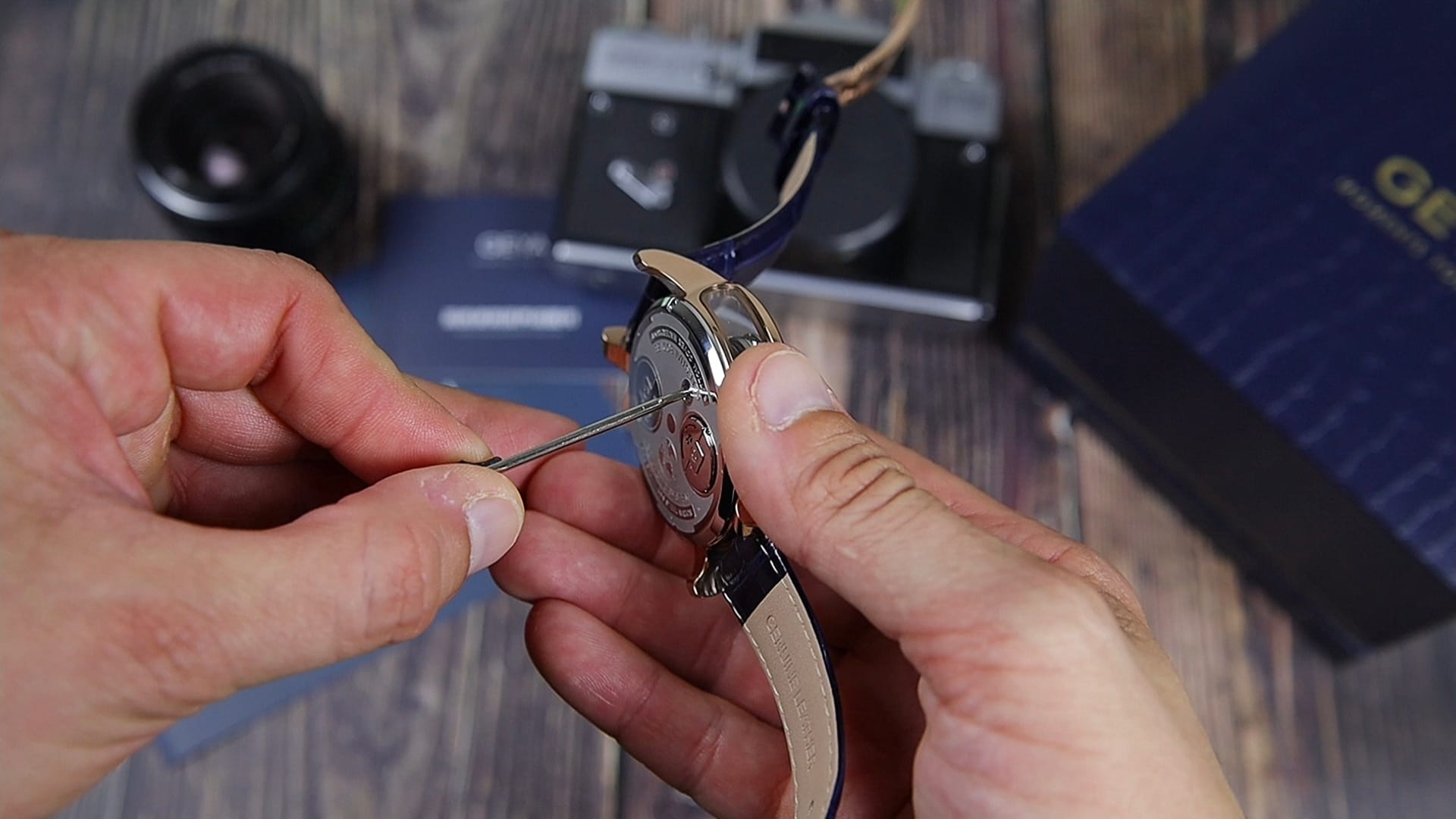
This rose gold-tone version adds a more elegant, almost jewellery-like contrast to the exposed mechanics and open dial architecture. There is no traditional crown on either side of the case. Instead, the watch is set and wound from the back, giving the whole object a very different kind of interaction.

Design & Case
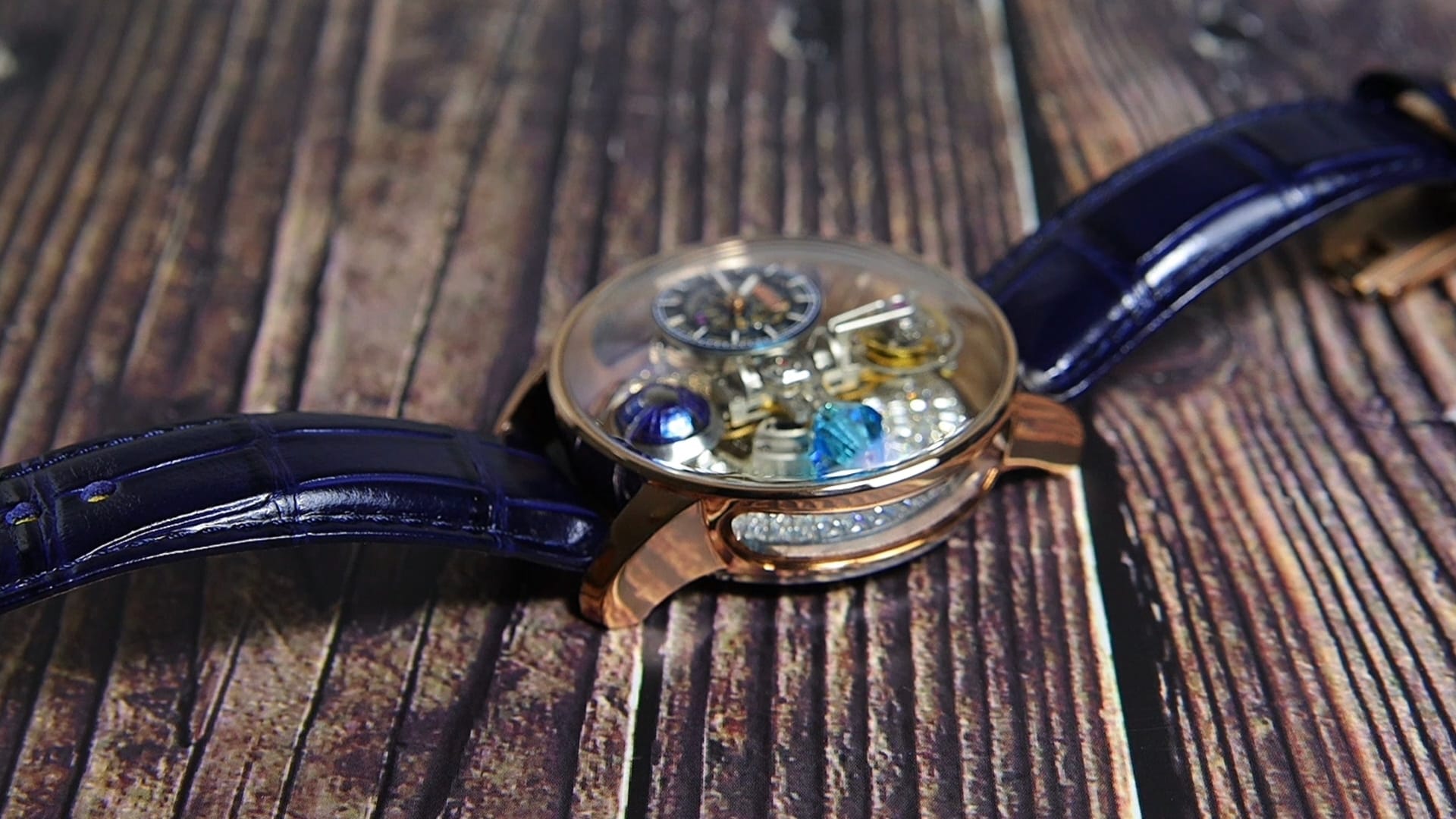
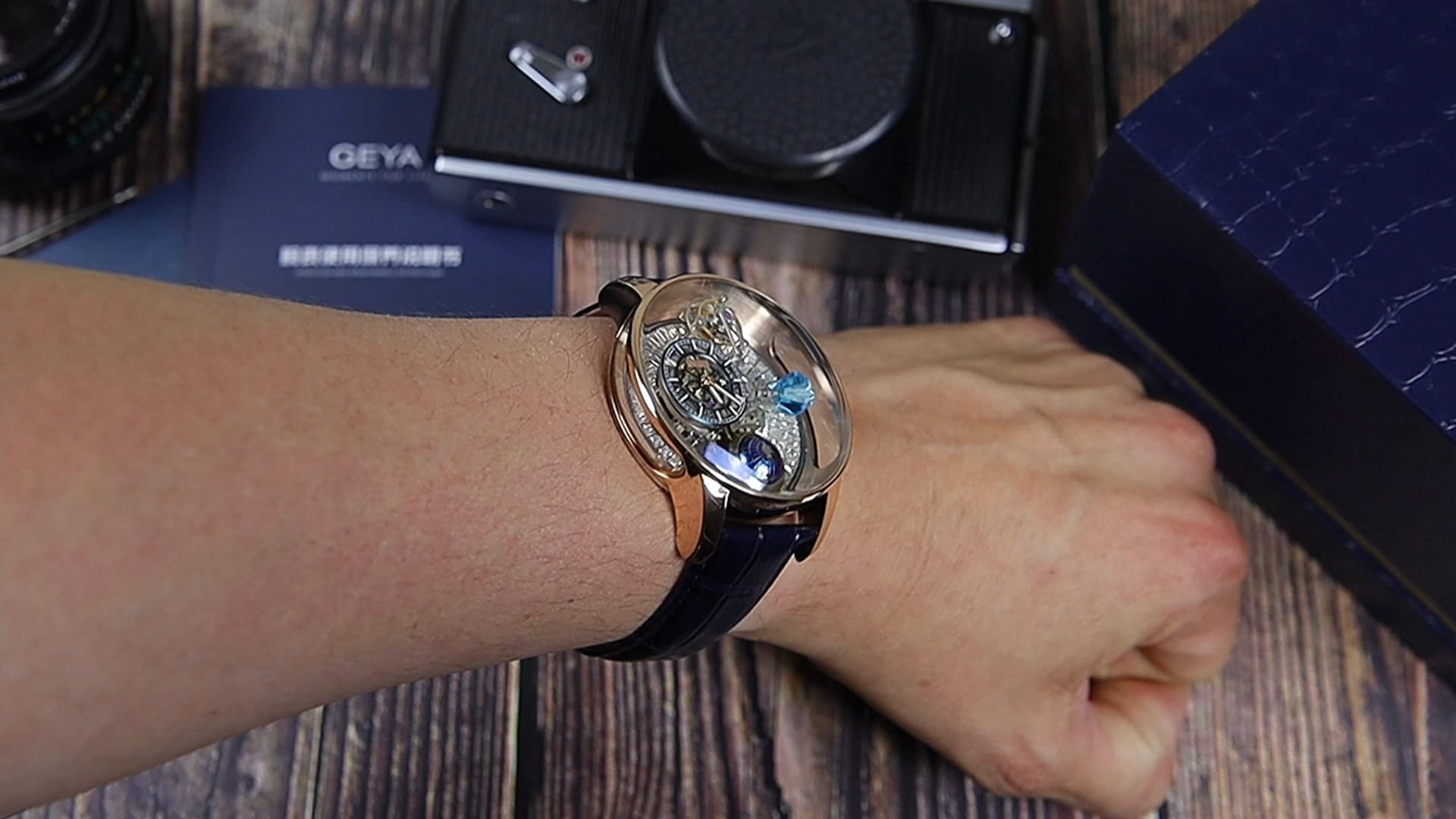
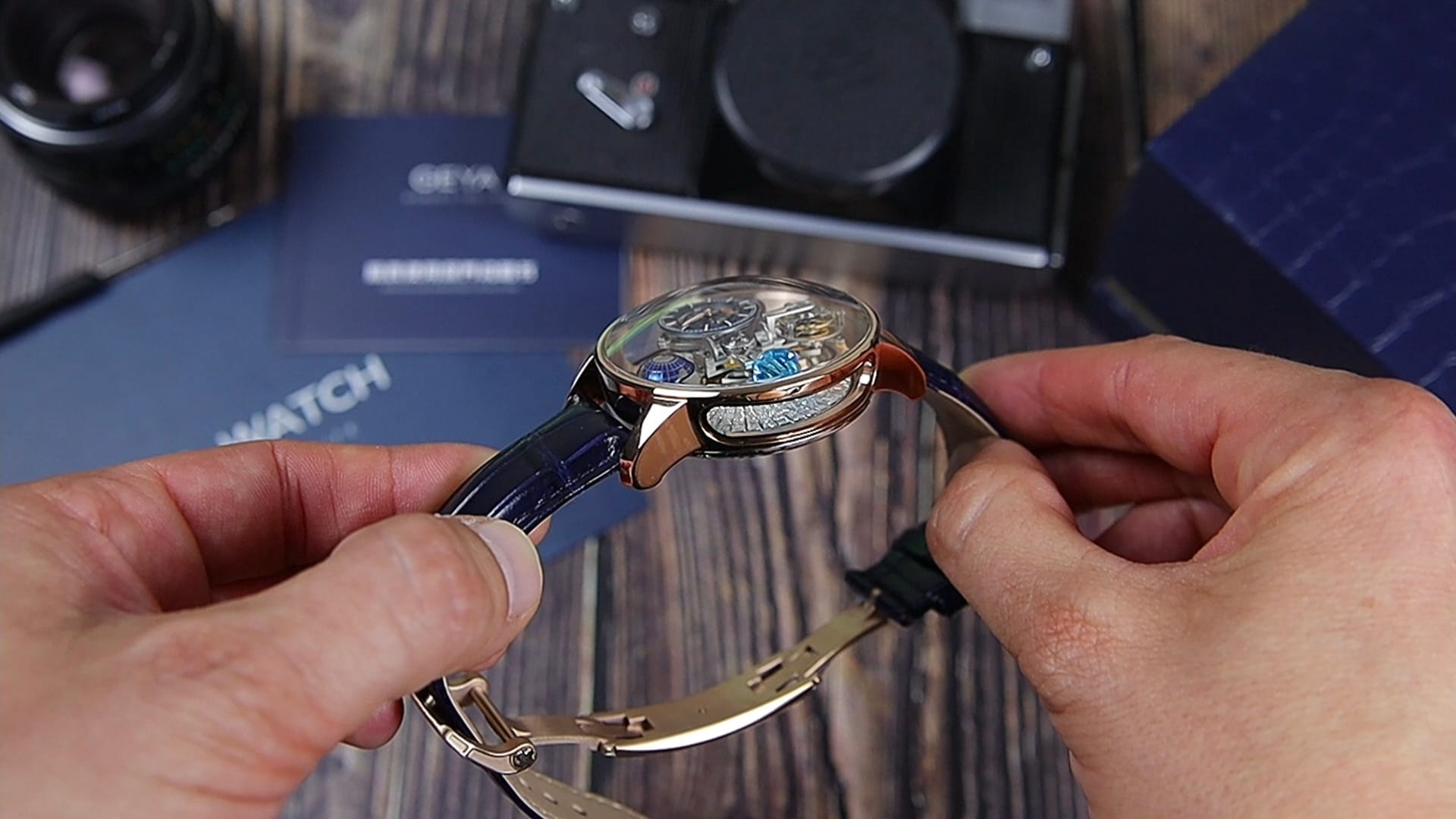
The Geya G78201 is a large watch, measuring 46mm in diameter, 53mm lug-to-lug, and 20mm thick, with a 22mm lug width. A major part of that height comes from the heavily spherical domed mineral crystal with anti-reflective coating, which shapes the entire visual profile.
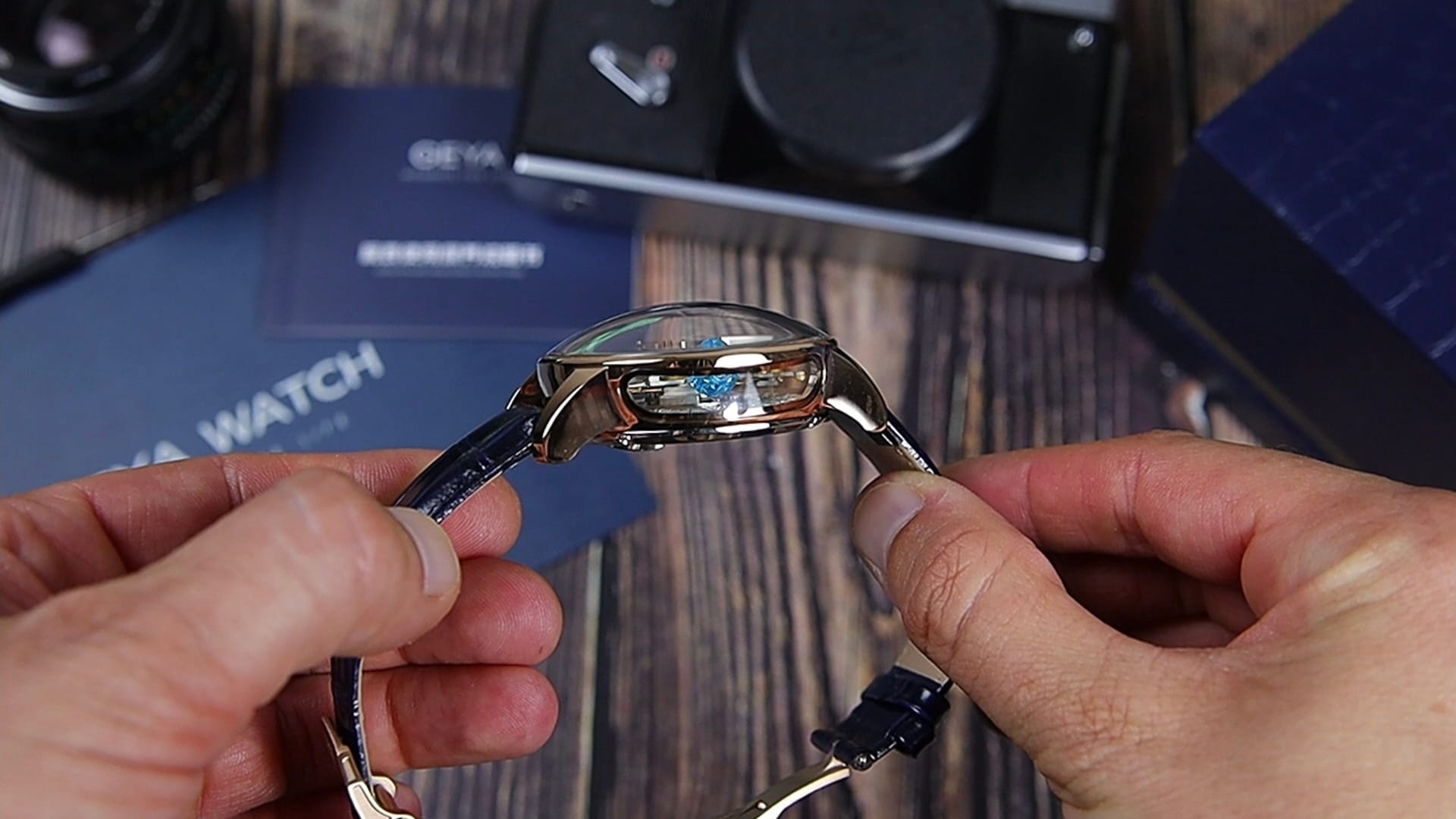
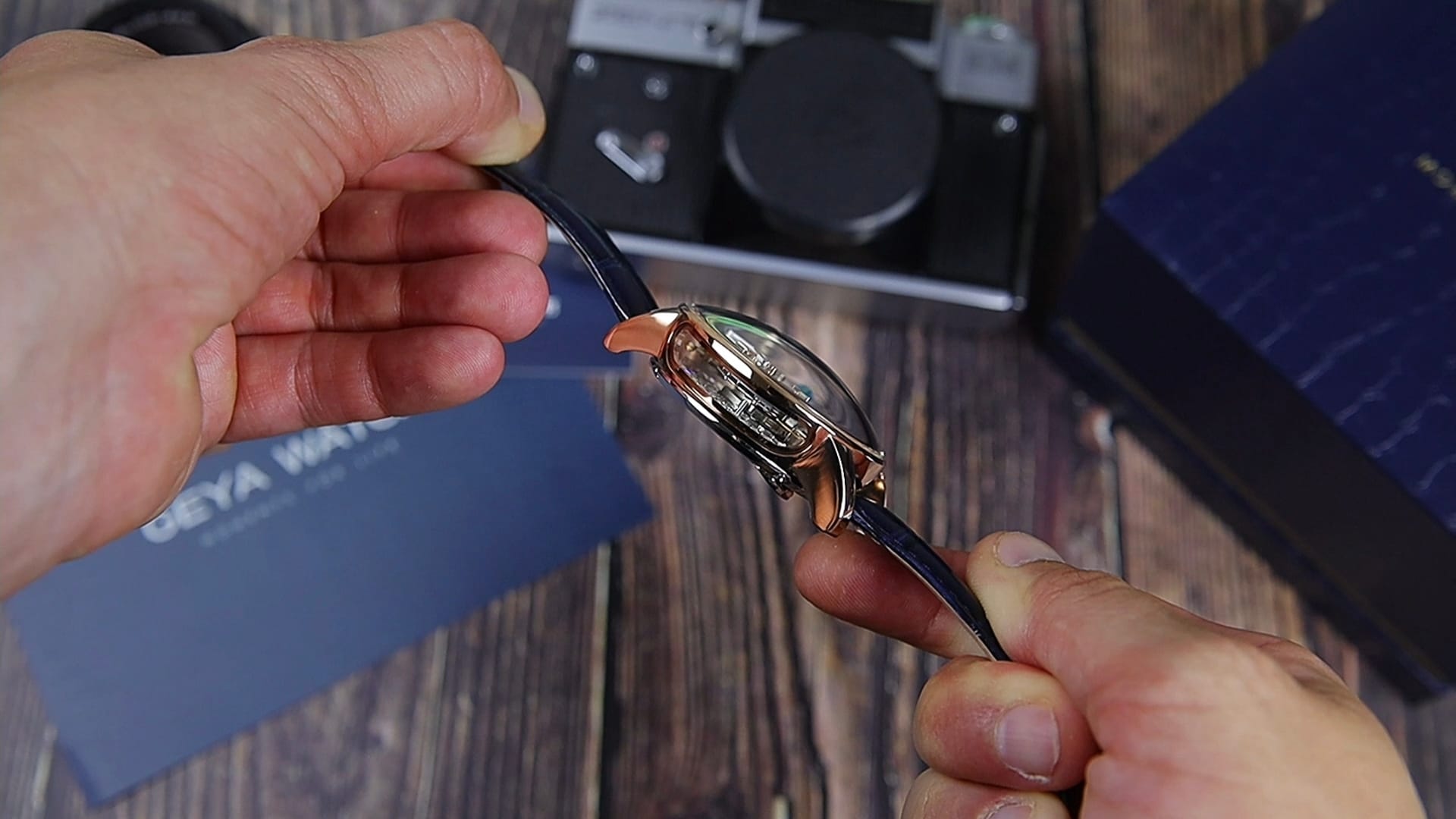
From the side, the crystal rises dramatically above the polished 316L stainless steel case. The curve of the dome flows visually into the aggressively downturned lugs, helping the watch feel more cohesive despite its size.
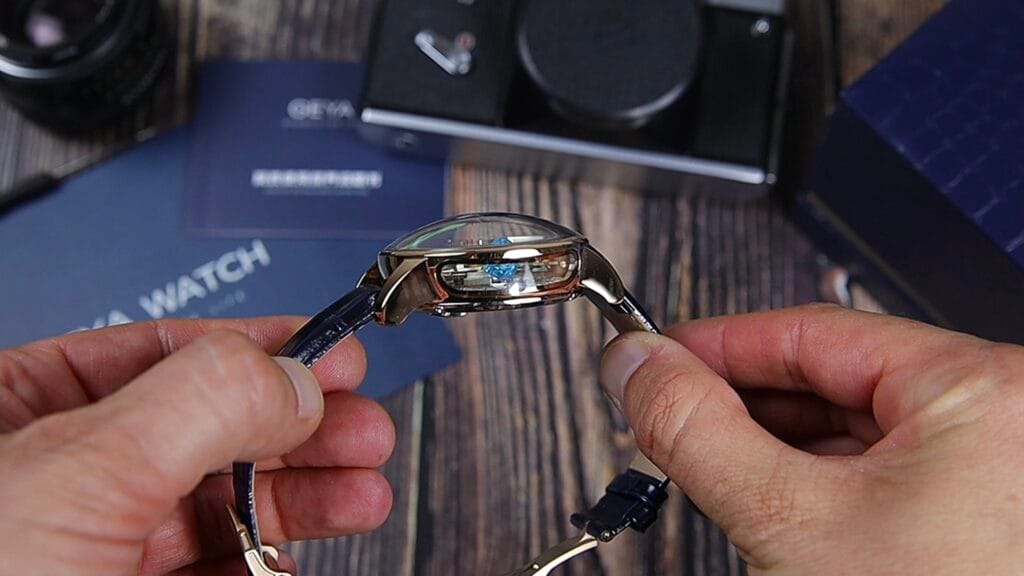
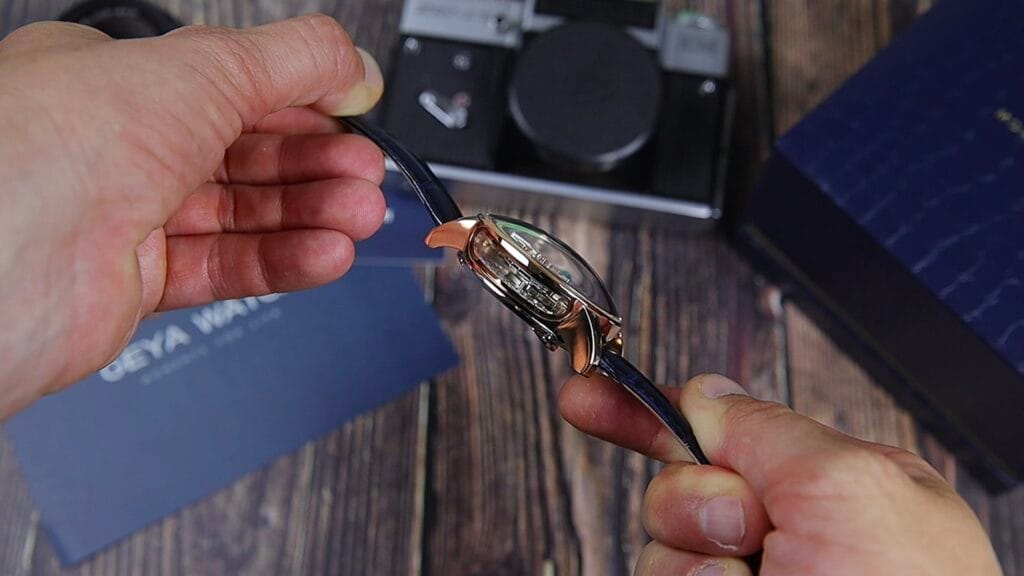
The lugs are chunky, but they fall away sharply, helping the case sit better on the wrist. The watch remains big, but the case profile does a lot of work to control the fit.
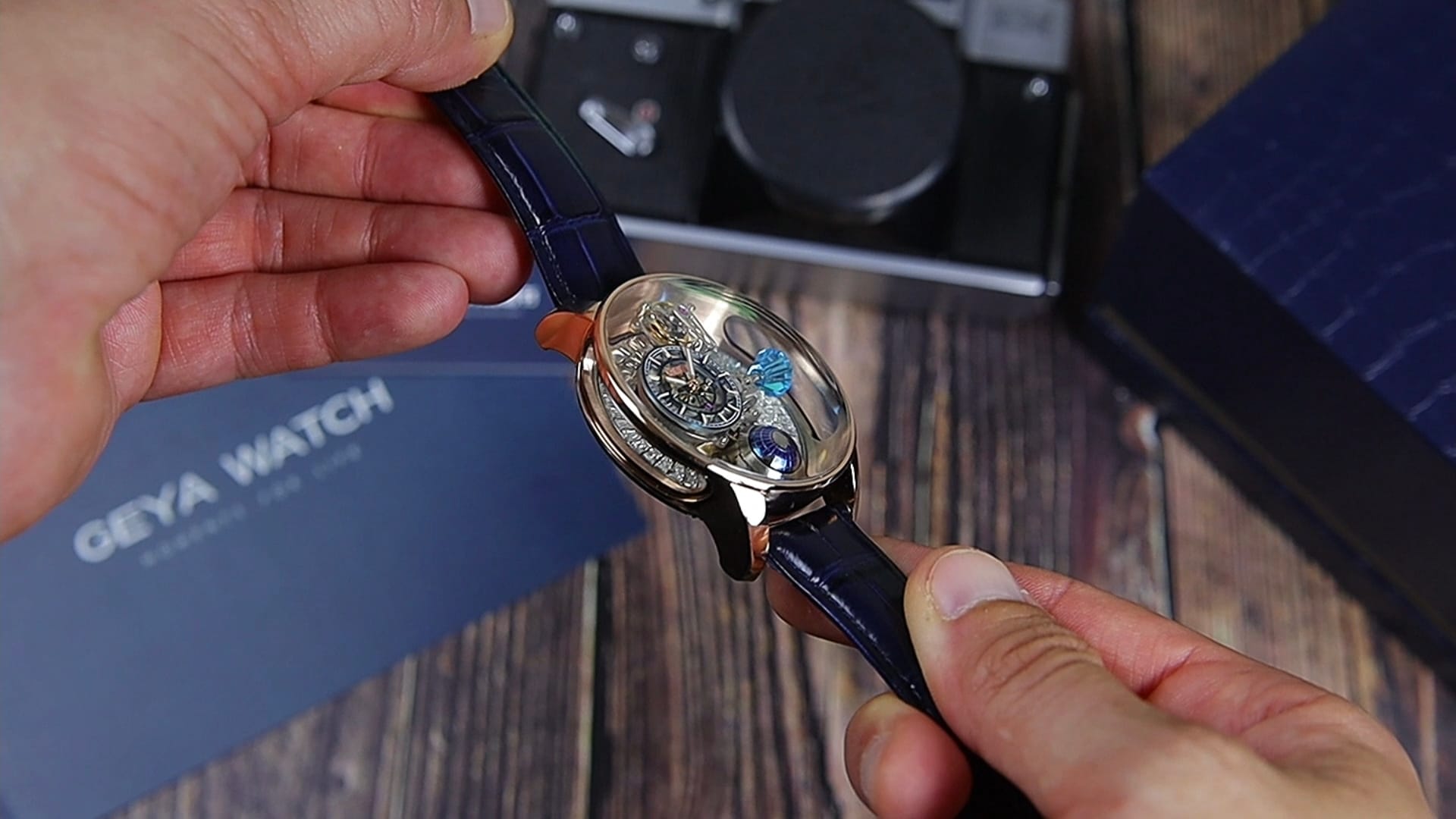
The most unusual case detail is the side construction. Mineral crystal inserts run from lug to lug across the midcase, almost like portholes, letting you look into the watch from the flank while allowing light to enter the display from the sides.
Movement & Crown
The G78201 uses a dual-movement system. The actual timekeeping is handled by the Swiss Ronda 756 quartz movement, a minimalist two-hand caliber with an accuracy rating of minus 10 to plus 20 seconds per month and a battery life of up to five years.
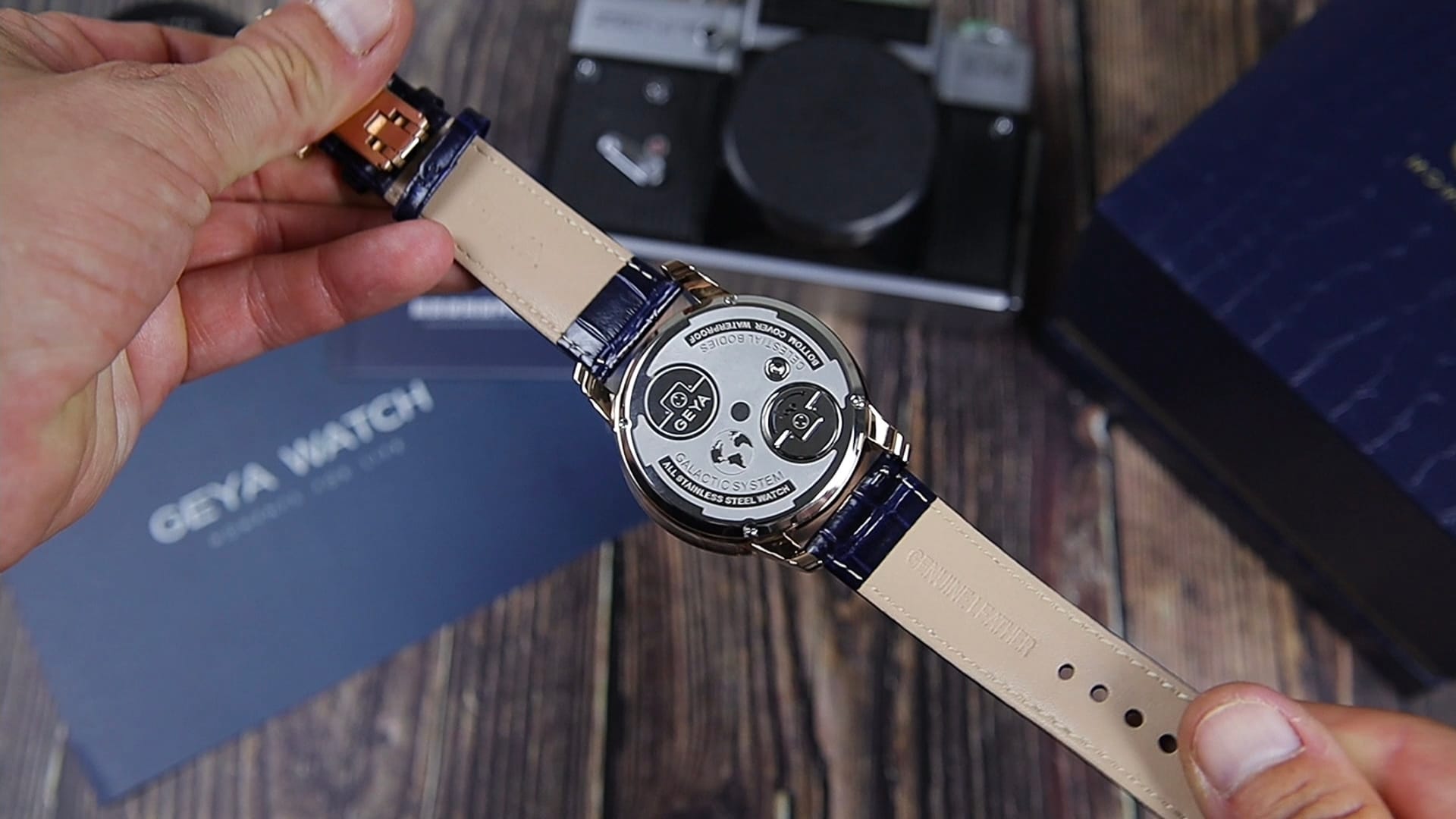
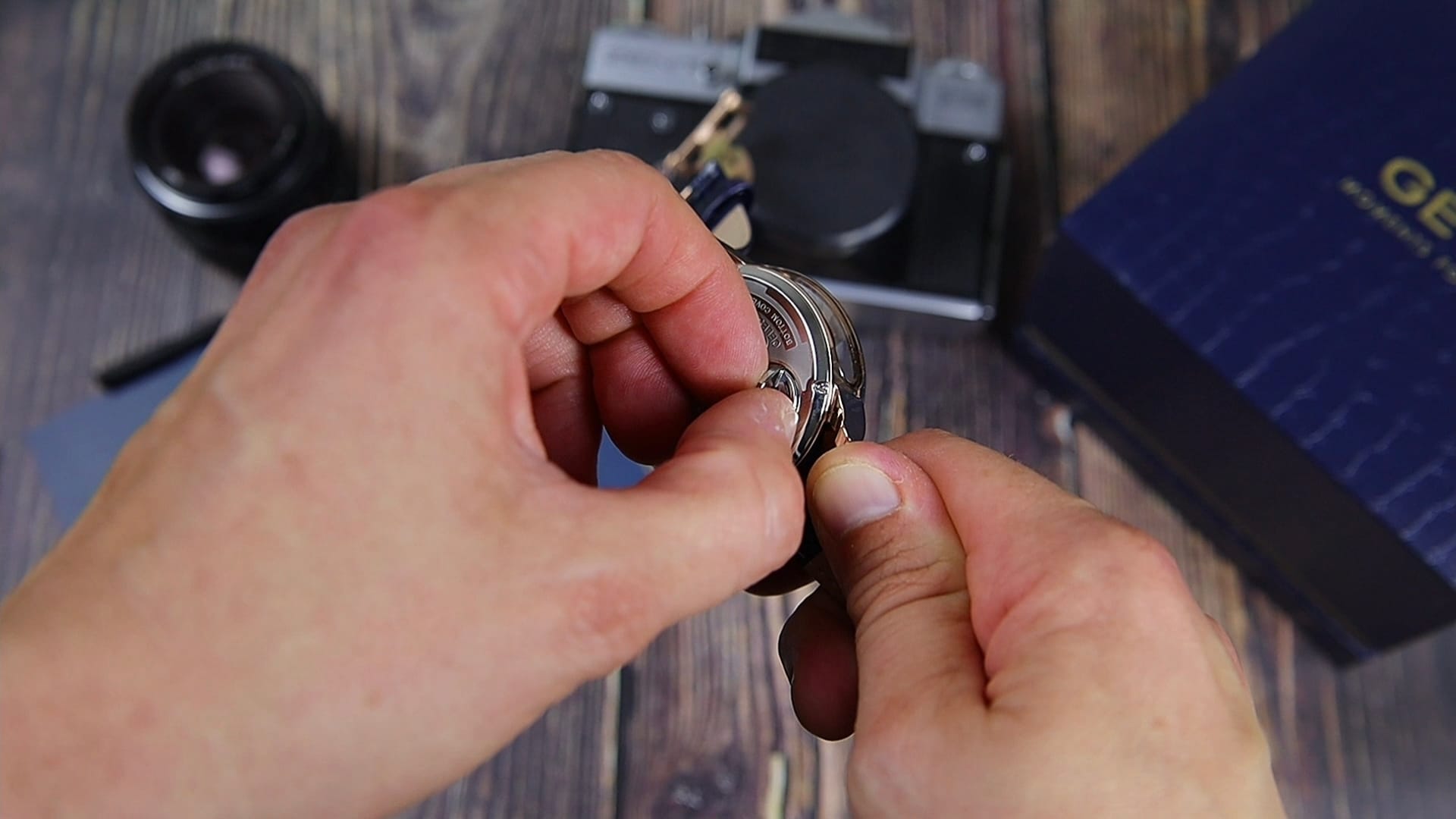
Time setting is handled through Geya’s electric time-setting system using a pressure-sensitive point on the caseback. There is no crown on the left or right side of the case, which immediately makes the watch feel different in use.
The mechanical display is powered separately by the M1T9-TDC movement, Geya’s in-house manually wound planetary flywheel mechanism. This powers the upper visual theatre of the watch while the quartz movement handles the time.
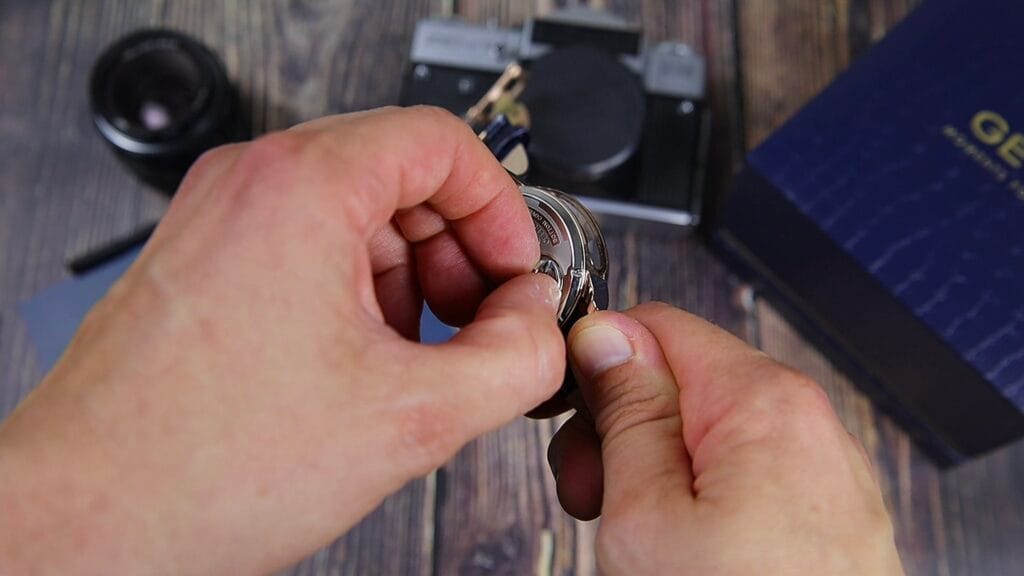
Winding is done through the rear lever. Around 18 to 20 clockwise winds power the display, giving roughly 48 hours of mechanical motion. The movement should not be overwound, as that can damage the mainspring. The design language here will feel familiar to anyone drawn to theatrical watches.
Bezel
The upper profile is built around the heavily domed mineral crystal and the polished rose gold-tone case frame beneath it. That dome gives the watch its dramatic height and creates the sense of a mechanical chamber under glass.
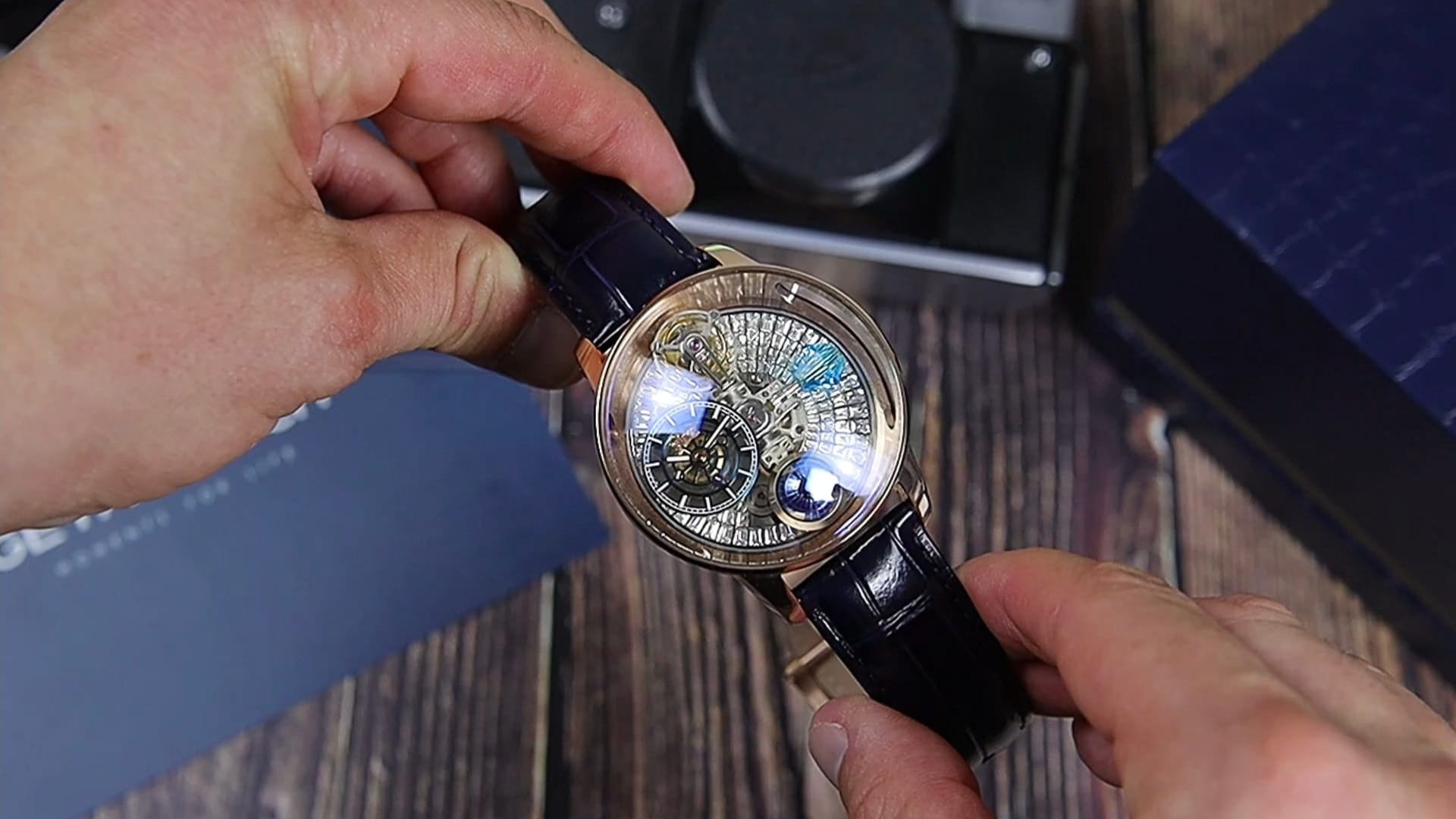
The crystal has anti-reflective coating and rises with a strong spherical shape. From above, it opens the view into the dial. From the side, it works together with the exhibition flanks, allowing the display to be viewed through multiple angles.
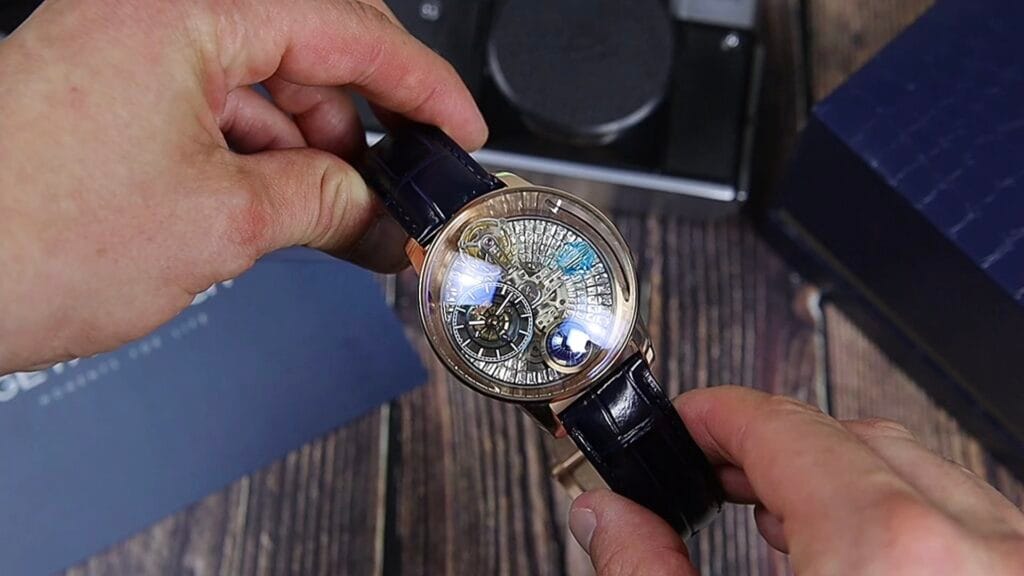
That side-light effect is important. Because light enters from the top and through the mineral crystal flank inserts, the watch feels more open and dimensional than a standard closed case construction.
The polished case edge beneath the dome keeps the exterior clean, while the visual weight stays on the exposed display, the planetary elements, and the moving mechanical assembly inside. We’ve covered several GEYA watches before, and this one continues the brand’s established design language.
Strap
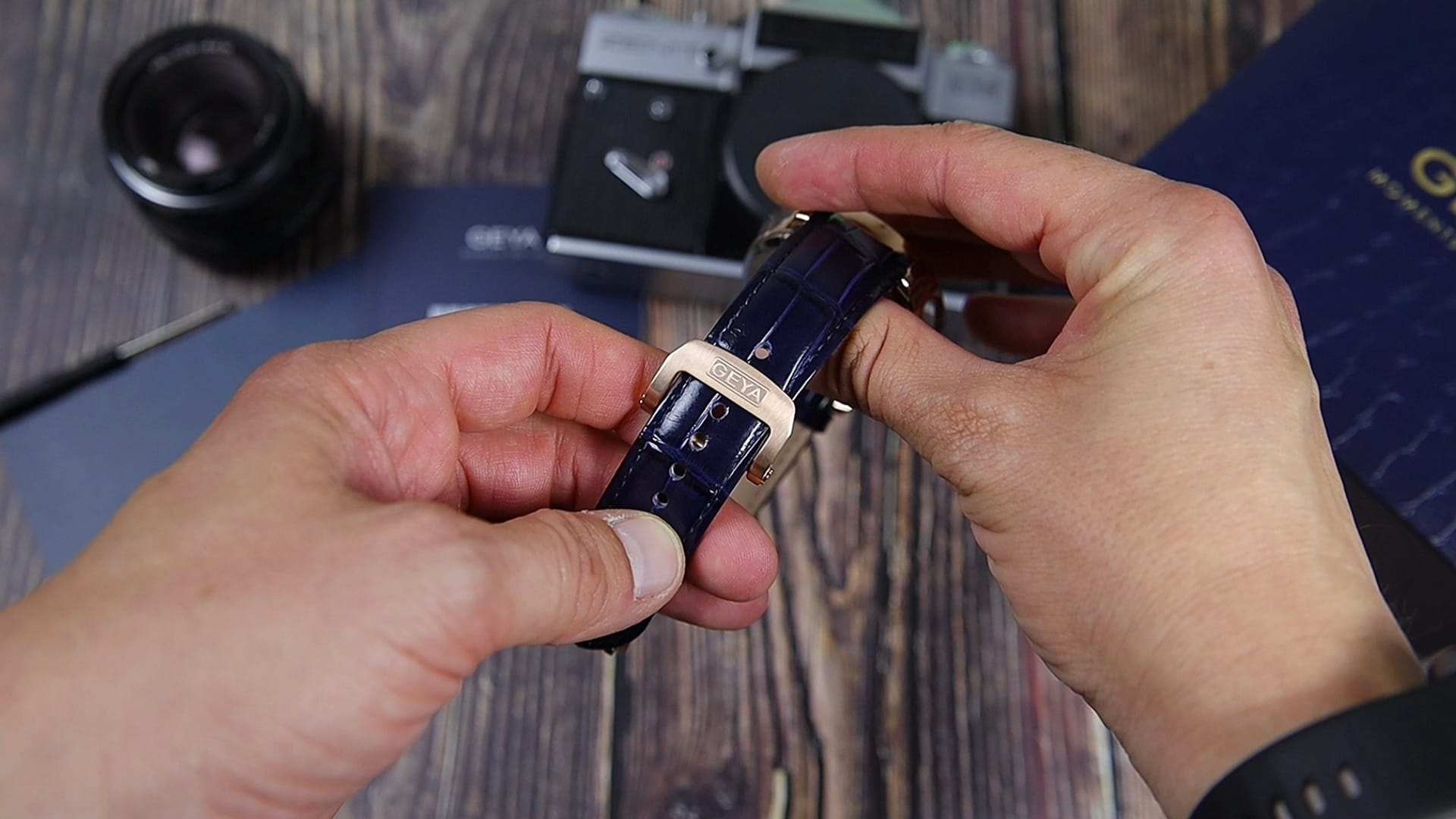
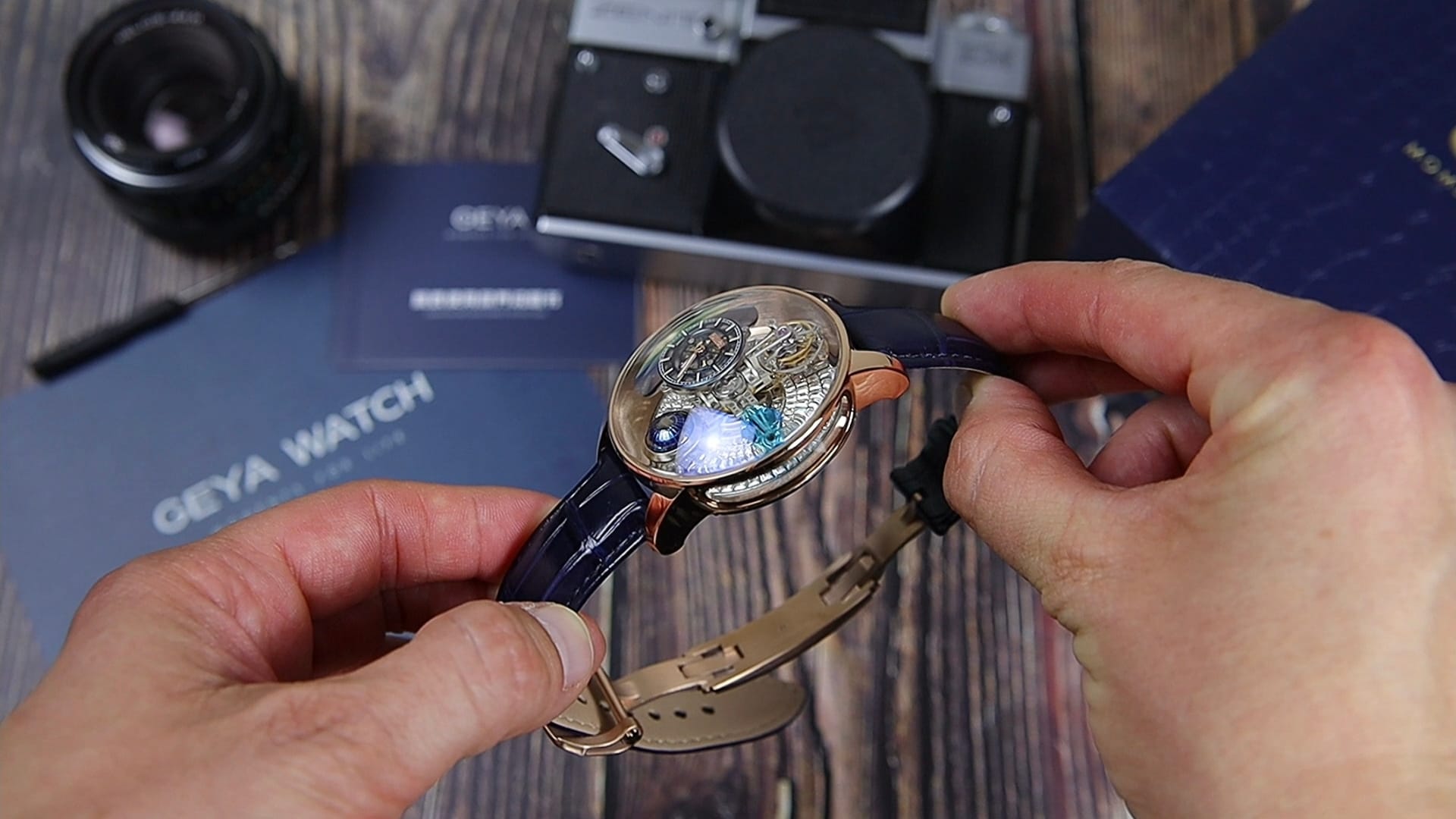
The strap is a 22mm black leather strap with a crocodile-style pattern on the outer surface. It is cushioned, stitched in black around the edge, and feels soft and pliable in the hand rather than stiff or papery.
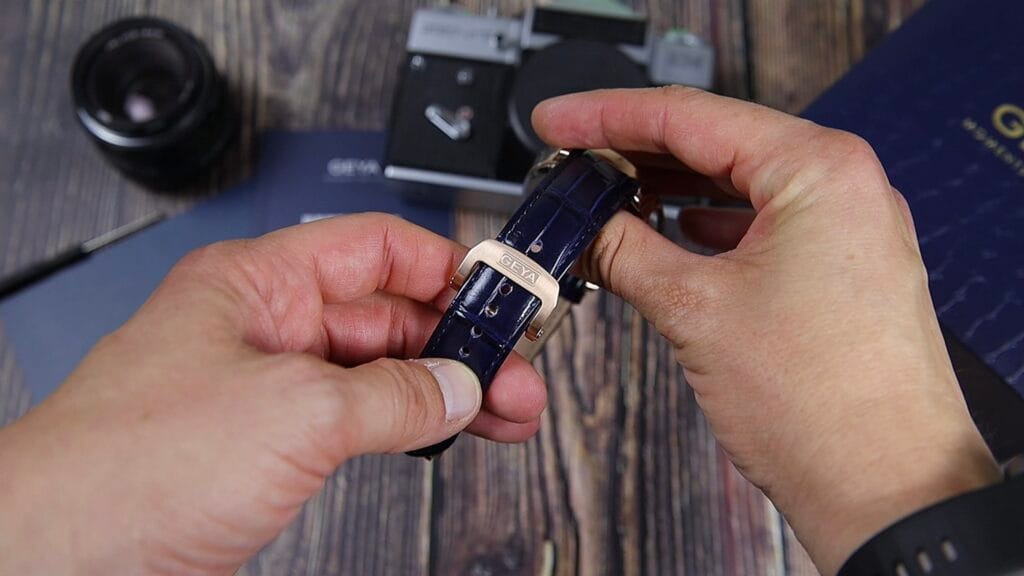
Flip it over and the beige underside carries the right details. One side is stamped genuine leather, while the other side is stamped with the Geya brand name. That makes the strap feel considered and properly matched to the watch.
The strap also uses quick-release spring bars, making strap changes very easy. Two leather floating keepers manage the excess length.
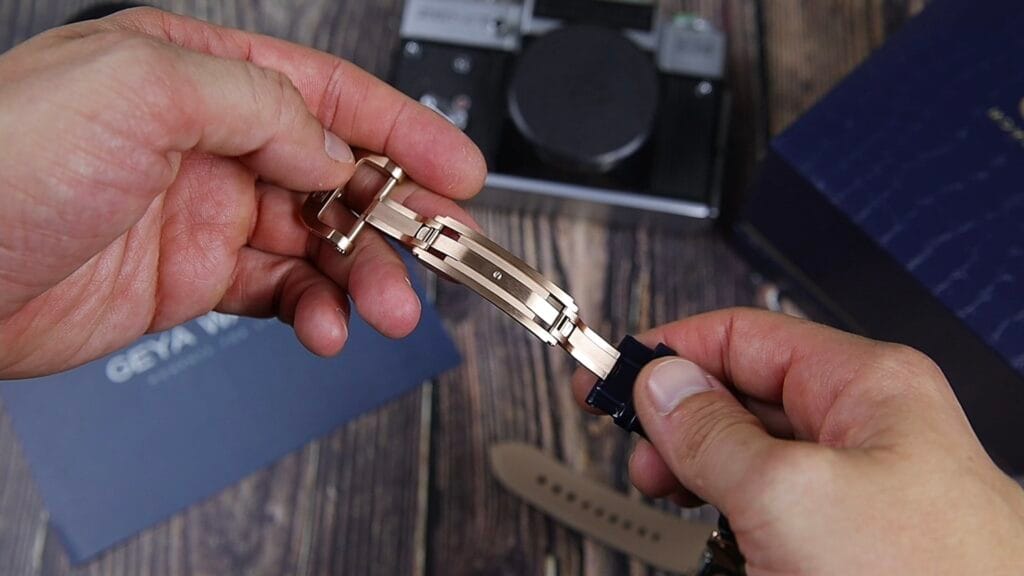
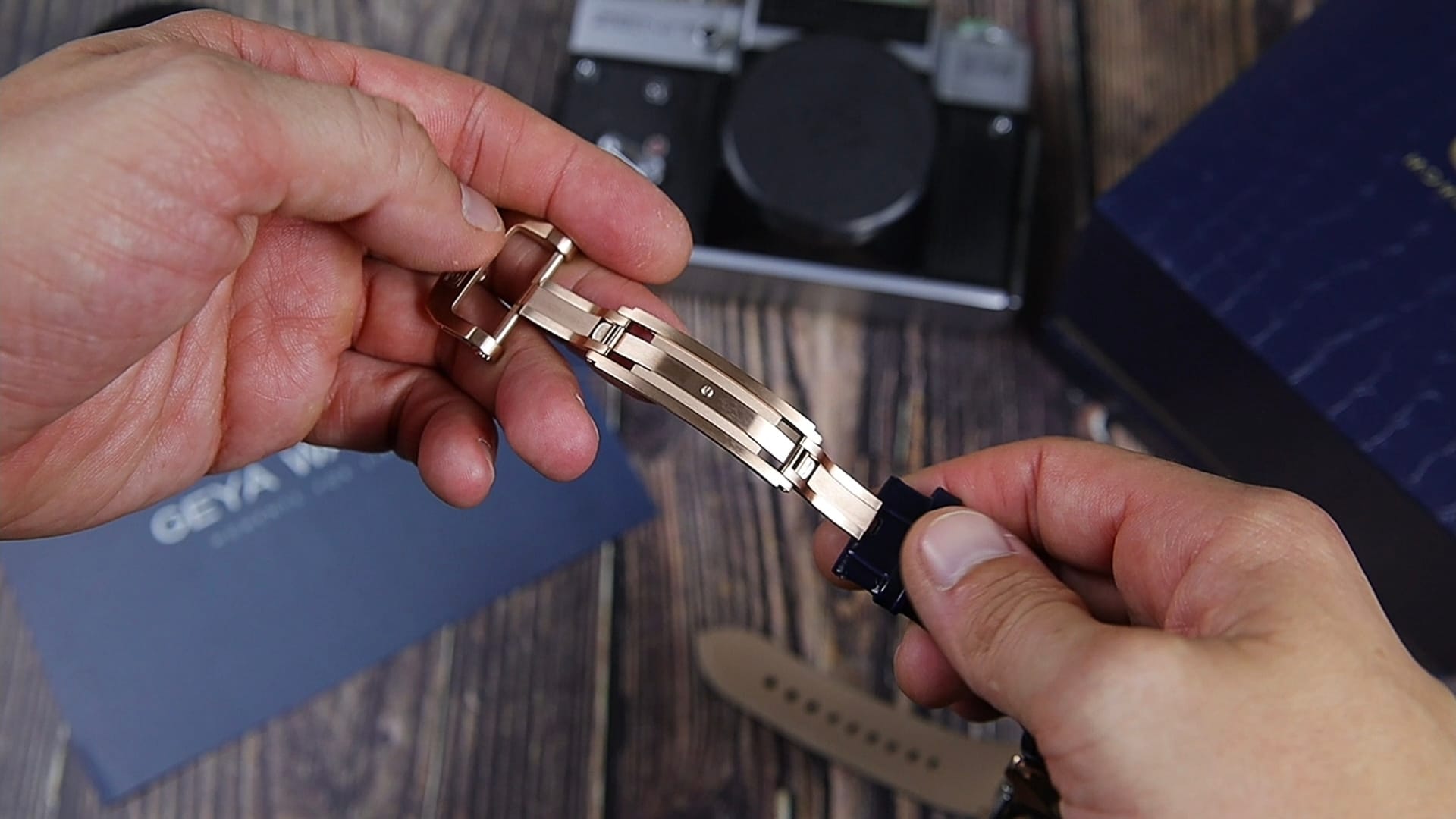
The clasp is a butterfly spring-loaded milled stainless steel clasp finished in rose gold to complement the case. It is brushed, signed at the tip, and feels complete as part of the package. The caseback is secured by four screws and carries an aerospace-style motif etched into it. With the crownless setup, the watch offers 50 meters of water resistance.
Crystal & Dial
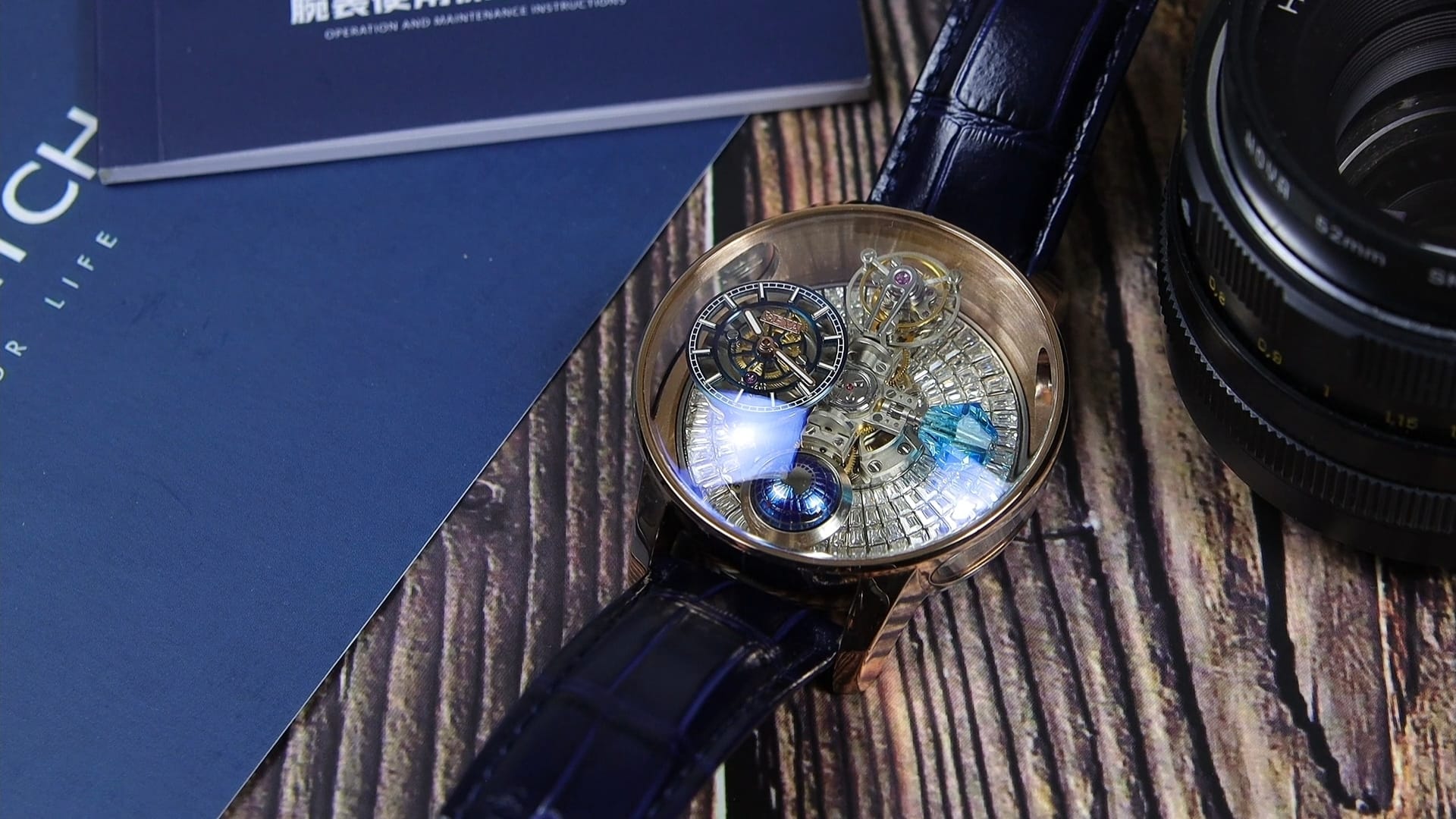
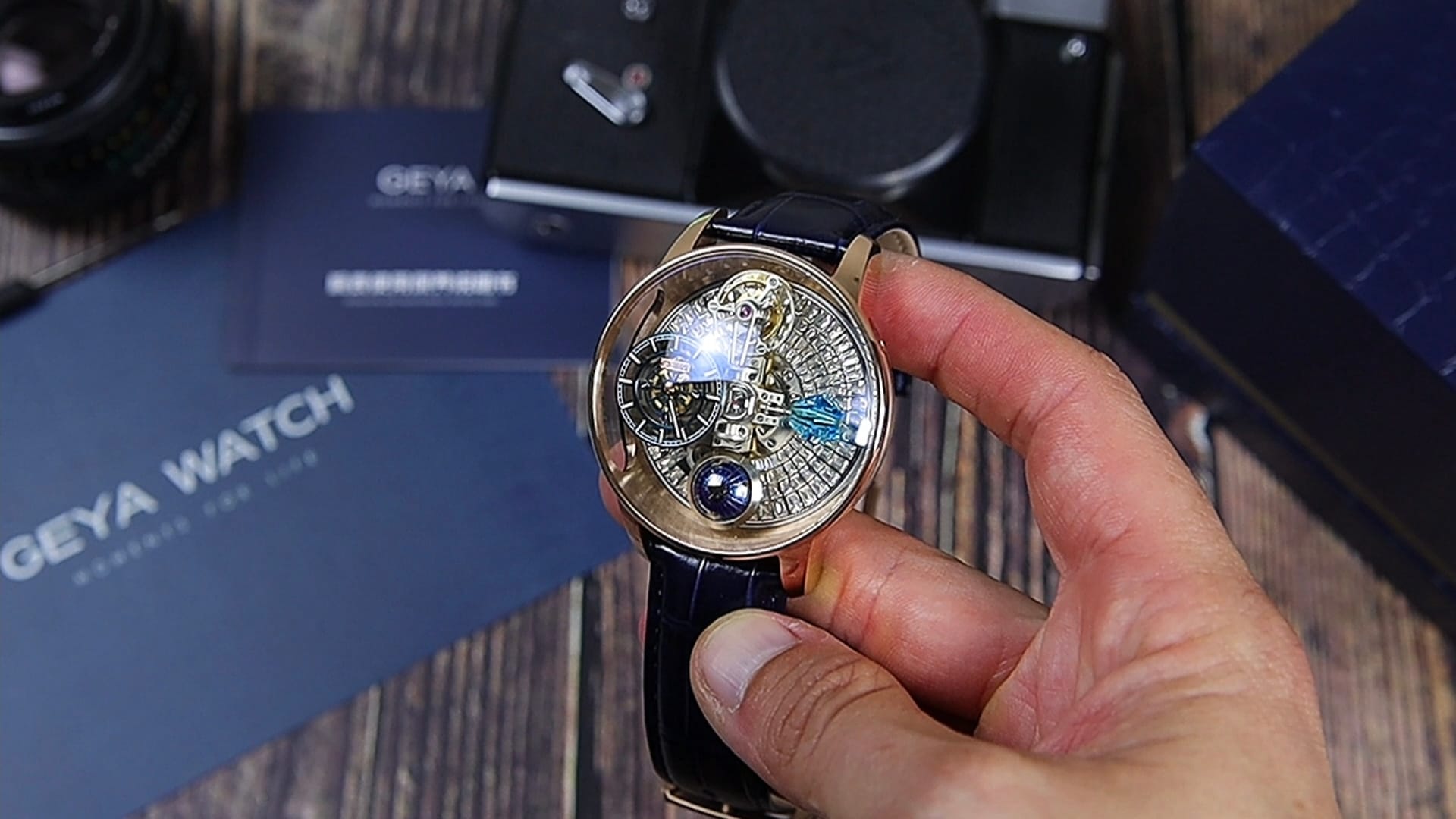
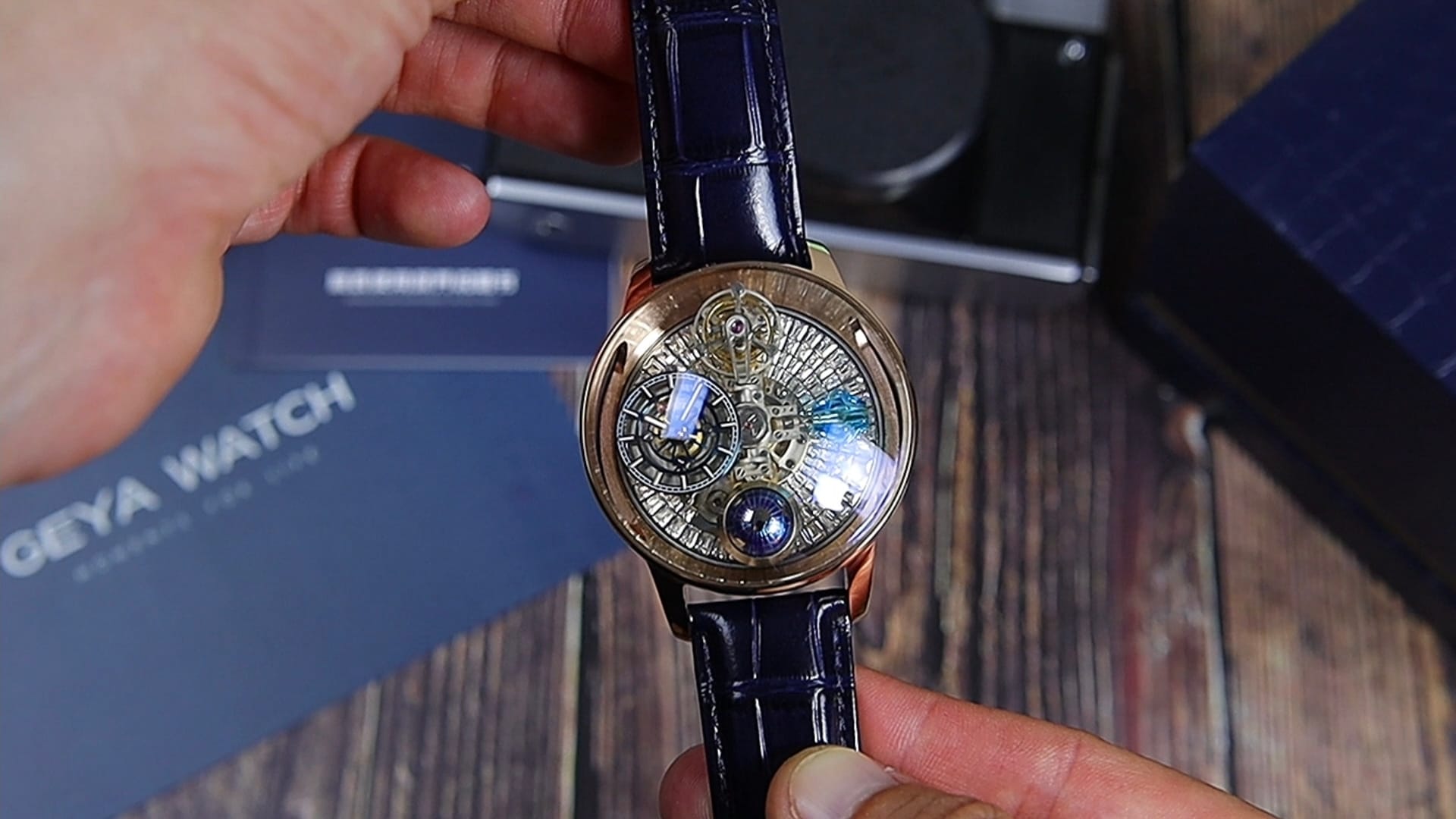
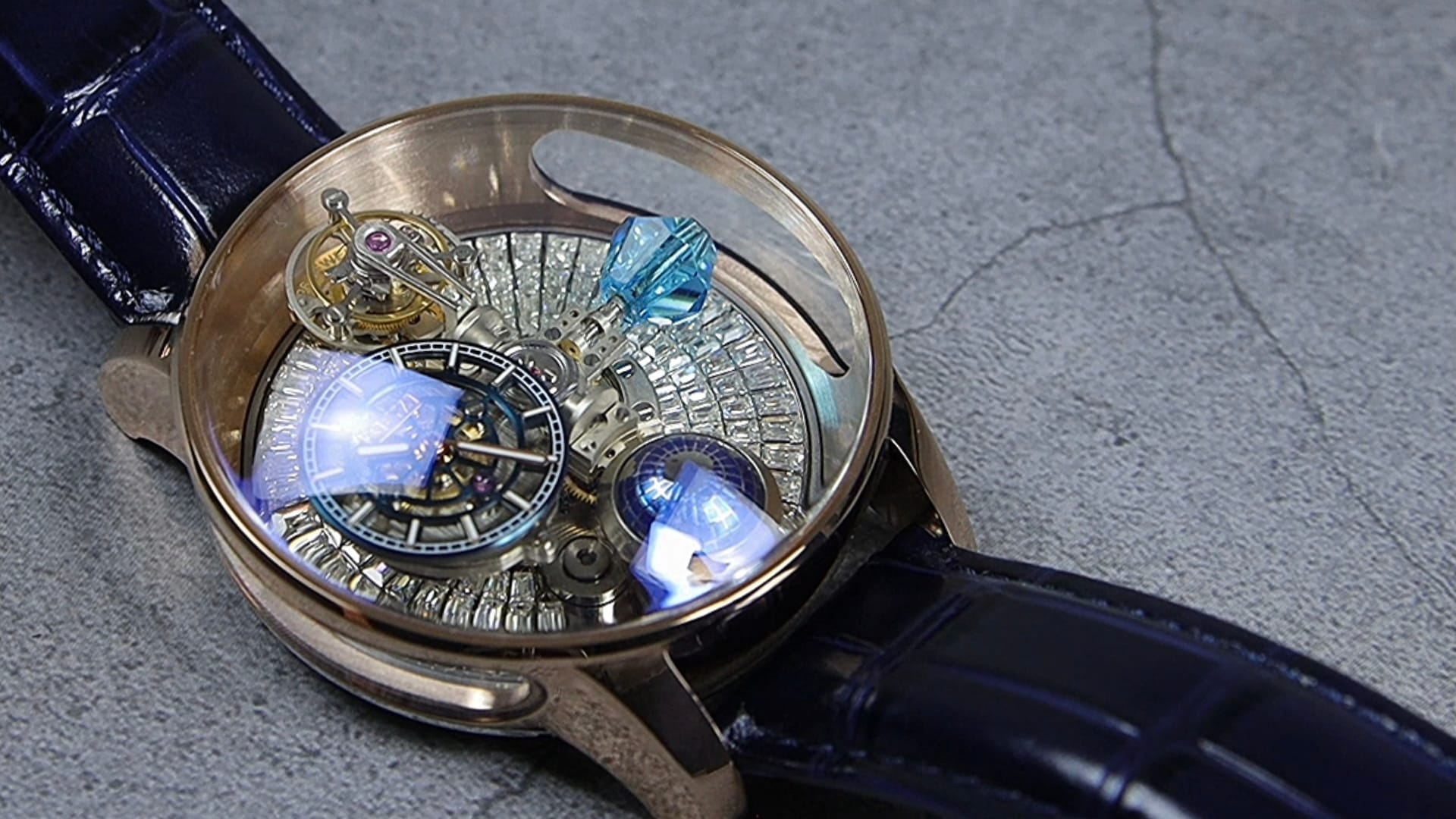
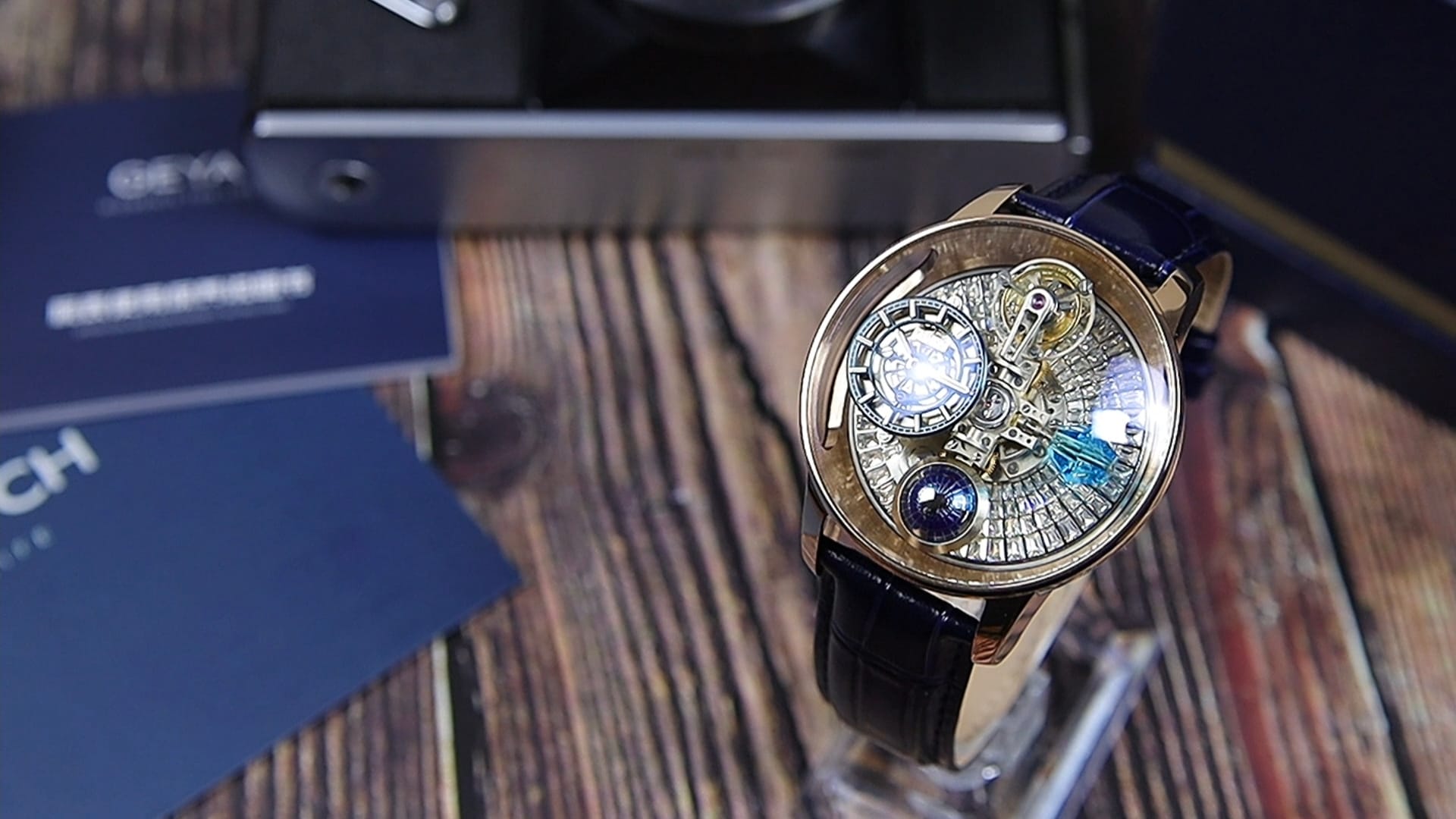
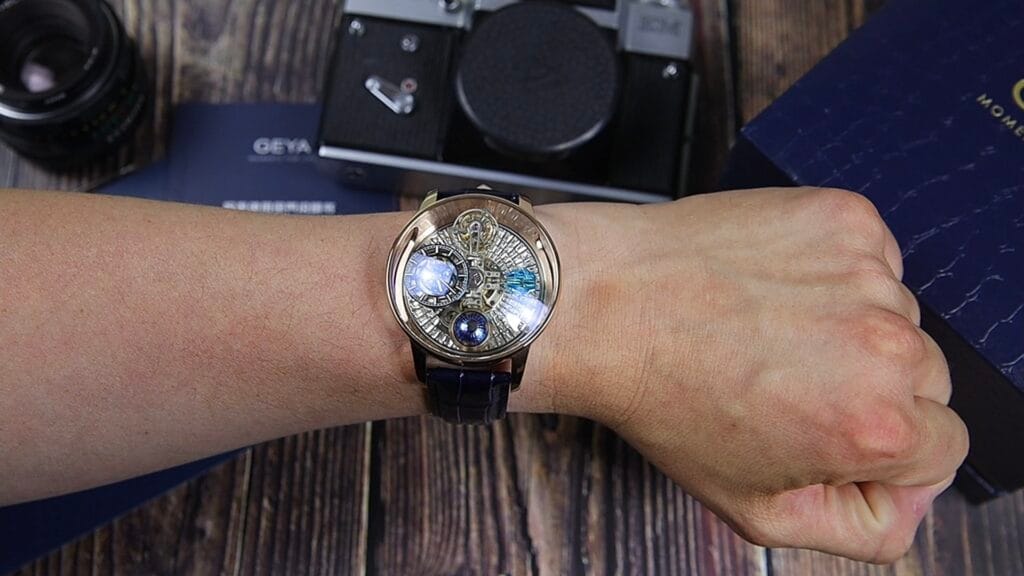
Under the heavily domed mineral crystal, the dial feels open and voluminous, almost like a mechanical chamber under glass. That impression becomes stronger when viewing the watch through the exhibition flanks, where the side windows bring additional light into the display.
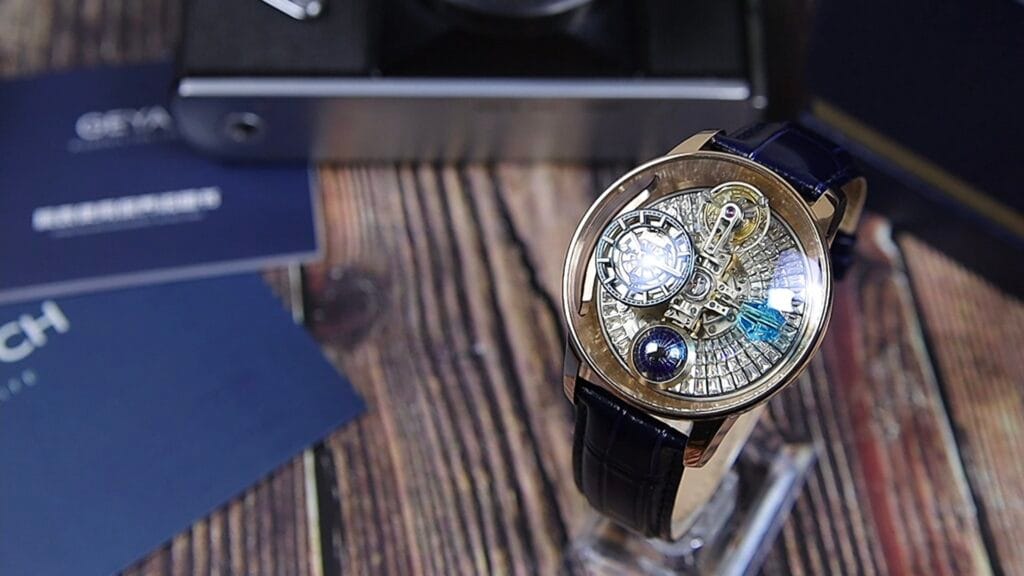
The backdrop is a shimmering zirconia-style surface with a cut-edge, tiled network across it. It creates depth, reflection, and small flashes of light as the watch moves.
Across that backdrop are textured spherical elements that catch the light and reinforce the celestial planetarium-style presentation. The actual quartz timekeeping dial sits on the left side, with branding just below 12.
Up top, the exposed oscillating mechanical assembly moves side to side while also rotating clockwise. At the bottom, the blue Earth-style sphere rotates once every second. The result is movement across multiple points: the upper oscillating display, the lower rotating sphere, and the timekeeping section on the left.
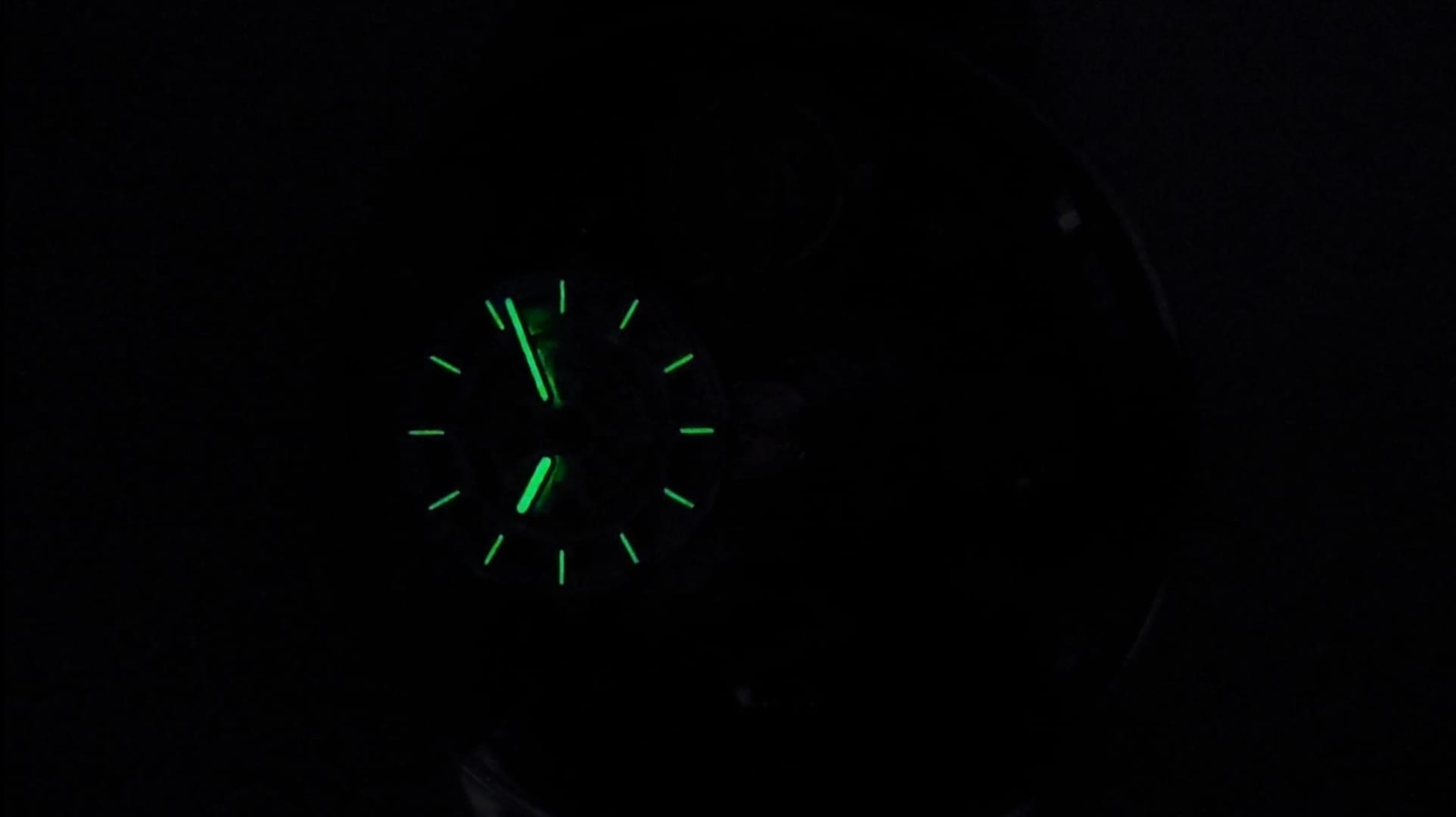
In the dark, the quartz dial remains usable. Green lume is applied to the indices and baton hands, giving enough visibility to read the time during darker hours.
Summary
The Geya G78201 is unusual in the best way. It takes a practical Swiss Ronda 756 quartz timekeeping section and places it alongside a separate in-house manually wound M1T9-TDC planetary flywheel display, creating something that feels more theatrical than conventional.
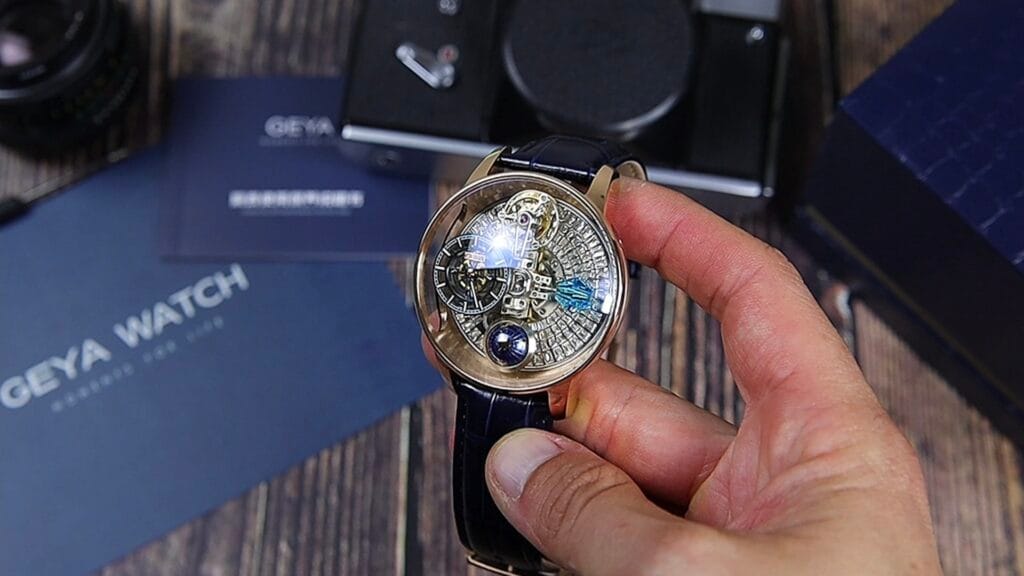
The rose gold-tone polished 316L stainless steel case gives the watch elegance, while the heavily domed mineral crystal and exhibition side flanks create the sense of looking into a miniature mechanical display case.
It is large at 46mm wide, 53mm lug-to-lug, and 20mm thick, but the sharply downturned lugs help manage the fit. The black crocodile-style leather strap, branded underside, quick-release bars, and rose gold butterfly clasp also make the setup feel properly considered.
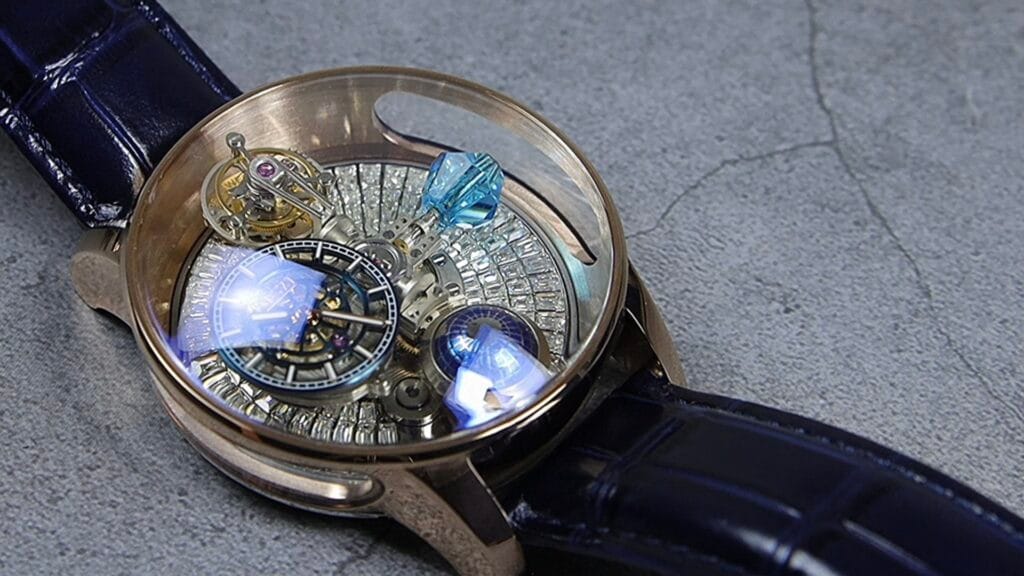
What stays with me is the visual experience: the zirconia-style backdrop, textured planetary elements, moving upper assembly, rotating blue sphere, and crownless case architecture. It is part watch, part mechanical sculpture, and part celestial display. This watch competes directly with others in a similar sub $1000 pricing bracket, each offering its own strengths.
GEYA G78201 Specifications
| Specification | Details |
|---|---|
| Model | Geya G78201 Planetary Flywheel Mechanical Watch 2 |
| Dimensions | |
| Case Diameter | 46mm |
| Case Thickness | 20mm |
| Lug-to-Lug | 53mm |
| Lug Width | 22mm |
| Crown Type | Crownless electric time-setting system using pressure-sensitive caseback point |
| Design | |
| Case Material | 316L stainless steel |
| Case Finish | Fully polished rose gold-tone case with exhibition-style mineral crystal side flanks |
| Crystal | Heavily spherical domed mineral crystal with anti-reflective coating |
| Caseback | Four-screw caseback with aerospace-style motif, pressure-sensitive setting point, and winding lever |
| Bracelet/Strap | Black crocodile-style genuine leather quick-release strap with beige branded underside |
| Clasp | Rose gold-tone spring-loaded butterfly milled clasp, brushed and signed at the tip |
| Bezel | Polished case frame beneath the heavily domed mineral crystal |
| Dial | Open celestial display with zirconia-style backdrop and textured planetary elements |
| Dial Text | Geya branding below 12 on the quartz timekeeping dial |
| Hands | Baton hands on the quartz timekeeping dial |
| Lume | Green lume on quartz timekeeping indices and baton hands |
| Water Resistance | 50m |
| Movement | |
| Movement | Swiss Ronda 756 quartz timekeeping movement and Geya M1T9-TDC manually wound planetary flywheel movement |
| Power Reserve | Planetary display runs roughly 48 hours on a full wind |
| Additional Details | |
| Timekeeping Accuracy | Ronda 756 rated minus 10 to plus 20 seconds per month |
| Battery Life | Ronda 756 battery life up to five years |
| Winding | Around 18 to 20 clockwise winds using rear lever |
| Display | Upper mechanism oscillates and rotates clockwise; lower blue Earth-style sphere rotates once every second |